Great wedding cake alternatives for a non-traditional reception include tiered wheels of artisanal cheese, interactive food trucks, gourmet doughnut walls, fresh pie buffets, macaron towers, and plated dessert flights. The right choice depends on your venue infrastructure, weather, guest flow, and caterer staffing. Swapping a traditional tier cake lets you personalize your reception menu, highlight regional flavors, and often eliminate slicing and cake-cutting fees while providing a casual, memorable dining experience.
Stepping away from the multi-tiered fondant cake gives couples freedom to showcase personal tastes, cultural traditions, or unexpected late-night comfort foods. Moving beyond convention requires thoughtful coordination around kitchen prep space, ambient temperature, serving logistics, and rental equipment so dessert service feels intentional rather than improvisational.
Venue Logistics and Temperature Realities for Cake Replacements
Before selecting a sweet or savory replacement for your wedding cake, inspect your venue contract and back-of-house capabilities. Traditional tiered cakes demand a flat, secure display table and brief air conditioning, but many alternatives introduce strict environmental and equipment requirements. Ice cream carts need dedicated twenty-amp electrical circuits that will not trip circuit breakers shared with your DJ or lighting team. Similarly, outdoor summer receptions make chocolate-dipped fruit, buttercream pastries, and delicate mousse cups susceptible to melting, separation, and insect attraction within minutes.
Assess cold storage and staging areas early in the planning process. Many historic venues, rustic barns, and public parks lack commercial walk-in coolers. If you order twelve fruit pies or five hundred miniature tartlets, determine where they will sit while guests eat dinner. Ask venue managers whether caterers have exclusive access to kitchen refrigerators and whether food drop-offs can happen during the cocktail hour rather than at morning setup. Documenting holding temperatures and shade coverage ensures delicate pastries or soft cheeses arrive at peak texture rather than spoiling under afternoon heat.
Staffing levels also change depending on your dessert format. Traditional cake involves one baker delivering the centerpiece, leaving your catering staff to portion and distribute slices. Individual desserts like mini shooters, tarts, and cupcake assortments may look simple, but they require recurring station restocking, ongoing clearing of toothpicks or discarded ramekins, and careful replenishment. Discuss with your caterer whether they charge per-server labor rates or station maintenance fees to keep your dessert tables tidy throughout the evening.
Artisanal Cheese Wheel Towers for Savory Palates
A tiered cheese wheel tower creates the dramatic, sculptural visual presence of a classical wedding cake while catering to savory preferences. Constructed by stacking whole wheels of artisan cheeses from largest at the base to smallest at the peak, this alternative fits wine-focused vineyard weddings, intimate garden dinners, and couples who prefer charcuterie over sugar. A classic arrangement balances structural integrity and flavor variety by placing firm, aged rounds like Gouda, mature Cheddar, or Gruyere at the bottom, followed by semi-hard sheep or goat cheeses, and finishing with a delicate wheel of Brie, Camembert, or ash-dusted chevre on top.
Serving a cheese wheel tower requires careful timing and accompaniment planning. Cheese should never be served refrigerator-cold, as chilling dulls complex aromas and leaves textures chalky; it should temper at room temperature for roughly one hour before guests dig in. However, soft-ripened rinds begin slumping if left in high ambient heat for hours. Have your caterer display the assembled tower during cocktail hour or dinner photos, then whisk it to the kitchen to be pre-sliced, arranged onto wooden boards with honeycombs, marcona almonds, seasonal figs, cornichons, and artisan crackers, and returned to the buffet line.
Budget considerations for cheese towers revolve around cheese density and weight rather than decorative frosting hours. Specialty whole wheels are priced by the pound, meaning a towering five-tier cheese display can cost as much as or more than a designer wedding cake. Verify minimum wheel diameters with your cheesemonger or specialty grocer to ensure the proportions look balanced without leaving you with dozens of pounds of leftover perishable cheese that your home kitchen cannot accommodate.
Handheld Baked Goods: Doughnut Displays, Macaron Towers, and Cookie Bars
Single-portion baked goods eliminate the ceremonial lull of cake cutting and allow guests to grab dessert between songs without leaving the dance floor. Gourmet doughnut walls and pegboard displays remain popular for urban industrial and modern bohemian weddings, offering bold visual texture and vibrant glazes. Macaron towers deliver clean French sophistication, vivid pastel coloring, and naturally gluten-free almond flour bases that accommodate dietary sensitivities without compromising visual grandeur. Warm cookie-and-milk stations provide nostalgic evening comfort during late-night receptions.
While handheld treats look effortless, consider guest sanitation and display ergonomics. Open doughnut walls place unwrapped food at eye level near high-traffic walkways, leaving treats exposed to dust, ambient room breezes, and accidental contact from passing guests. Pegboards also require precise dowel sizing, parchment barriers, and food-safe seals to prevent oil transfer and staining. Many planners now prefer arranging glazed pastries on tiered acrylic trays, enclosed bakery risers, or marble slabs where servers can replenish fresh batches from bakery boxes using tongs.
Plan your quantities carefully when serving variety displays. With a traditional sliced cake, one portion per guest is the standard planning baseline. When guests encounter four distinct macaron flavors, artisan hand pies, or varied cookie recipes, they rarely select just one. Caterers generally recommend ordering 1.5 to 2.5 individual pieces per attendee to prevent popular flavors from vanishing early in the evening. Inquire whether your local bakery offers bulk wholesale packaging rather than retail box pricing, and confirm delivery timing so crisp pastry shells do not soften from evening humidity.
Rustic Pies, Cobblers, and Regional Heritage Pastries
For countryside farm receptions, mountain lodge gatherings, and autumn weddings, fruit-forward baked pies and warm cobblers offer comforting, grounded alternatives to standard wedding confections. Flavors can mirror the season: wild blackberry and strawberry rhubarb in early summer, peach bourbon in late summer, and spiced honey crisp apple, ginger pear, or toasted pecan in the fall. Presenting an array of deep-dish ceramic pie pans across an antique wooden sideboard creates an approachable, domestic atmosphere that invites guests to sample across different fruit textures and flaky butter crusts.
Carving and serving fruit and custard pies can be far messier than slicing firm sponge cake. Tender, fruit-loaded fillings can run across plates, and delicate laminated crusts crumble easily under standard cake servers. To prevent an untidy dessert spread, consider pre-portioning whole pies in the kitchen, having dedicated staff plate slices alongside dollops of fresh vanilla bean whipped cream, or ordering individual mini hand pies with crimped edges that guests can handle cleanly with cocktail napkins.
Pie displays also offer a meaningful canvas for regional pride and family baking heritage. Couples often highlight local favorites, such as Key lime pie in coastal Florida, sweet potato pie across the South, whoopie pies in New England, or seasonal kringle in the upper Midwest. If you plan to incorporate family recipes, confirm whether your venue accepts desserts prepared in home kitchens. Many licensed commercial venues legally mandate that all food served on-site originate from certified, insured commercial bakeries to comply with municipal health regulations.
Interactive Dessert Food Trucks and Live Action Cooking Stations
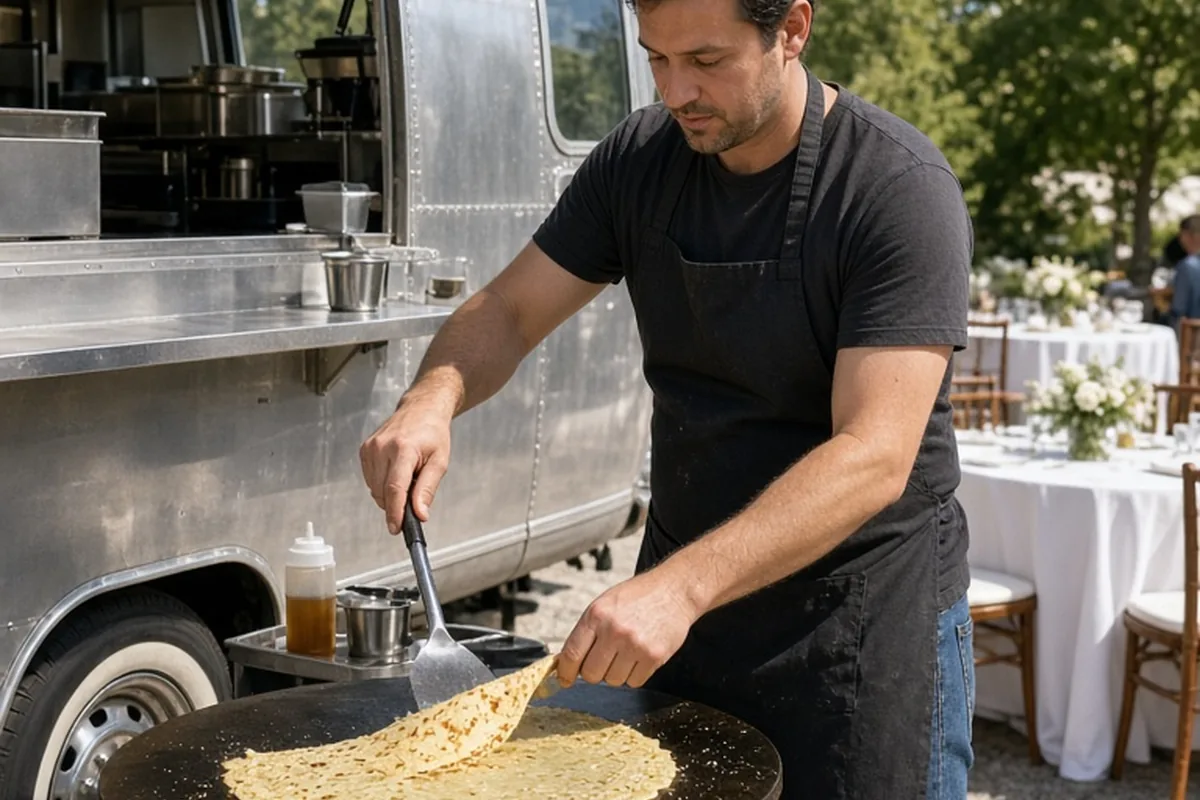
Hiring a dessert food truck or setting up live cooking stations transforms the dessert hour into active reception entertainment. Mobile units dispensing soft-serve ice cream, artisan churros dusted with Mexican cinnamon sugar, wood-fired dessert pizzas, or French crepes made to order give guests an interactive experience. The theatrical visual of molten chocolate drizzled over crisp churros or batter swirled on a sizzling crepe griddle creates a memorable sensory experience that static dessert tables cannot match.
Service speed is the central operational challenge of live dessert stations. While a stationary dessert table allows two hundred guests to grab a treat within twenty minutes, a single crepe maker or specialized soft-serve machine may only produce one or two custom orders per minute. A long queue at a truck pulls guests away from the reception hall, dampening dance floor energy. To maintain momentum, ask the food truck operator how many orders they can serve per hour. You may need to hire two trucks, establish a hybrid model where pre-made signature items are grabbed instantly while custom orders are cooked to order, or delay the truck arrival until after midnight as a departure snack.
Confirm all outdoor logistical requirements before signing a mobile vendor contract. Food trucks require level, reinforced parking pads, adequate turnaround clearance, and venue permits that allow commercial vehicles on lawns or stone courtyards. Inquire whether the vehicle runs on an onboard gas generator or requires shore power; loud, exhaust-heavy commercial generators positioned near open reception doors can ruin speeches or background music. Check city municipal codes regarding idling vehicles and late-night food service permits.
Plated Dessert Flights and Mini Tasting Menus
If you want to move away from traditional cake while maintaining the refined elegance of a black-tie or multi-course formal reception, plated dessert flights provide an elevated alternative. Rather than placing a uniform slab of cake in front of every seated guest, your catering chef presents a trio or flight of complementary miniature compositions. For example, a plate might combine a dark chocolate espresso pot de creme, a Meyer lemon tartlet with toasted meringue, and a quenelle of blackberry basil sorbet.
This approach accommodates diverse taste preferences and common dietary restrictions without segmenting your guests. One element of the flight can naturally feature vegan ingredients, another can be entirely flourless and gluten-free, and a third can celebrate rich dairy confections. Because the items are assembled in the kitchen and served directly to tables, there is no crowded congregation around a dessert table, allowing you to maintain an unhurried, synchronized dining schedule.
Plated flights require higher culinary staffing and careful plate-ware planning. Kitchen staff need workspace to assemble hundreds of delicate pastry components right before service, and the service staff must carry hundreds of additional dessert plates and specialized utensils. Speak with your catering director about plating logistics, table turnover times, and dish rental additions to ensure your kitchen can execute delicate dessert presentations cleanly alongside main course clearing.
Navigating Catering Fees, Equipment Rentals, and Vendor Contracts
Couples frequently assume that bypassing a traditional tiered wedding cake automatically slashes their reception budget. While alternatives can be more affordable, non-traditional desserts often introduce alternative catering fees, specialized service charges, and distinct rental lines that offset upfront bakery savings. Understanding how catering companies structure their invoices prevents unwelcome surprises when final balance payments come due.
Pay close attention to cake-cutting versus dessert-handling fees. Traditional venues often charge a fee per guest to slice, plate, and garnish a wedding cake brought in from an outside baker. When you bring in two hundred cupcakes, pies, or mini parfaits, ask whether the venue waives that fee or replaces it with a general outside dessert fee, station maintenance fee, or tray-clearing charge. If caterers must set out displays, arrange platters, supply small dessert forks, and bus hundreds of ramekins, they will bill for the labor hours and serviceware needed to manage that spread.
Equipment rentals represent another major cost variable. Sliced cake simply requires standard dessert plates and forks. In contrast, an elaborate dessert table often requires multiple specialized platters, tiered acrylic or metal pedestals, display shelving, glass cloches, heat lamps for warm cobblers, or ice baths for delicate cold custards. Determine whether your baker or caterer provides these presentation pieces within their package, whether they require a refundable damage deposit, and who bears responsibility for washing and packing rental displays at the end of the night.
Frequently asked questions
Can we still do a traditional cake cutting photo if we serve an alternative dessert?
Yes. Many couples order a small, single-tier cutting cake exclusively for photos and personal slicing while serving sheet cakes, pies, or food truck treats to their guests. Alternatively, you can cut into a giant glazed doughnut, slice a pie, or share an ice cream cone together for playful photo moments.
How many miniature desserts should we order per guest?
Plan on ordering between two and three individual pieces per person when offering an assortment of small items like macarons, tarts, and cake pops. When presented with multiple distinct flavors, guests almost always sample more than one item throughout the evening.
How do we accommodate food allergies with a dessert buffet?
Clearly label every dessert card with common allergens, including dairy, gluten, nuts, and eggs. Keep nut-free and gluten-free selections on elevated, separate platters with dedicated serving tongs to prevent airborne or cross-contact contamination during service.
Do venues charge cake-cutting fees for alternative desserts like cupcakes or donuts?
It varies by venue. Some waive the fee because the items do not require staff slicing, while others charge an outside dessert fee or per-person plating fee to cover busing discarded toothpicks, clearing plates, and restocking display tables.
Your next step
Review your venue contract for refrigeration limits, power outlets, and outside food policies, then request sample dessert catering packages to compare equipment and staffing costs against a standard bakery invoice.