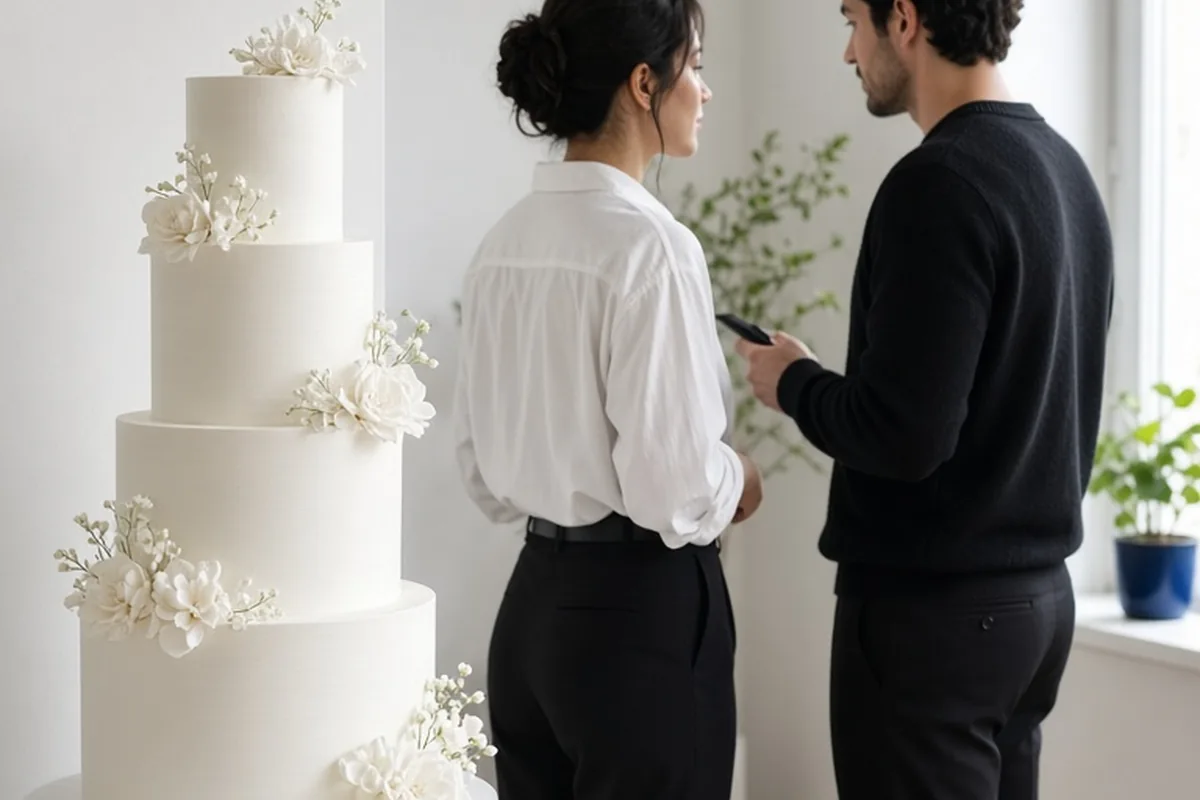
Wedding cake pricing is determined by guest count, labor hours, tier structure, custom decorative artistry, and delivery logistics rather than a flat package rate. Most professional bakeries price wedding cakes on a per-slice basis, with the base rate reflecting basic sponge and buttercream, while rolled fondant, handmade sugar flowers, and complex architectural assemblies increase the final total. To plan your budget accurately, request itemized quotes from local bakeries based on your confirmed guest list and delivery venue.
A wedding cake serves as both a primary reception dessert and a visual centerpiece, requiring careful balance between design expectations and event budget constraints.
How Custom Bakeries Price a Wedding Cake: The Per-Slice Model and Labor Hours
Professional cake designers generally calculate custom cake pricing using a per-slice or per-serving formula. This baseline figure accounts for the standard ingredients, foundational baking time, and basic exterior crumb coating. However, unlike standard retail baked goods, the majority of a wedding cake quote reflects skilled artisan labor rather than raw ingredients like flour, sugar, and butter. A custom tiered cake requires hours of structural planning, baking, leveling, filling, chilling, sculpting, decorating, and doweling to ensure it remains stable throughout transport and display.
When you request a quote, bakeries evaluate the total labor time required to execute your design. Premium fillings such as seasonal fruit compotes, imported nut pastes, chocolate ganache, or liqueur-infused syrups require more preparation and higher ingredient expenditures than basic vanilla or chocolate frostings. Additionally, specialized dietary requests, including gluten-free, dairy-free, or vegan formulations, often require dedicated equipment cleaning, alternative binders, and small-batch baking procedures that increase labor demands and reflect in the per-slice base price.
Tier Sizes, Guest Counts, and Structural Engineering That Shape the Quote
The overall physical scale of your cake directly influences the final invoice through both ingredient volume and internal structural engineering. Standard wedding cake tiers typically consist of stacked layers of sponge separated by buttercream or curd, reinforced with internal food-safe plastic or wooden dowels and supported by interior cake boards. A traditional three-tier cake featuring six-inch, eight-inch, and ten-inch rounds provides a standard baseline for medium-sized gatherings, while larger four-tier or five-tier creations demand heavy-duty central center-pole supports and specialized transport boxes to prevent structural collapse under the cake's own weight.
Couples frequently ask whether using faux or dummy tiers—composed of decorated food-safe styrofoam blocks—significantly lowers the overall price for grand designs. While styrofoam tiers eliminate baking and perishable filling labor, they require the exact same amount of surface smoothing, fondant application, precision piping, and decorative detailing as real cake layers. Consequently, bakeries often charge nearly the same rate for decorated dummy tiers as edible tiers because artisan labor represents the dominant cost factor. If you desire a tall, dramatic visual silhouette without excess leftovers, a faux tier can provide the height, but it should be chosen for portion control rather than drastic budget reduction.
Frosting Types, Fondant Work, and Decorative Sugar Artistry
The exterior finish of your wedding cake plays a significant role in determining final design labor. Standard American buttercream, Italian meringue buttercream, and Swiss meringue buttercream provide smooth, velvety textures that can be applied relatively quickly with an offset spatula and bench scraper. Naked or semi-naked styles, where the outer sponge peeks through a sheer layer of frosting, require less exterior icing but demand perfectly baked, level edges that cannot be hidden beneath thick decorative layers. In contrast, rolled fondant requires applying an undercoat of firm white chocolate ganache or buttercream before draping, rolling, smoothing, and trimming the sugar paste, making fondant consistently more labor-intensive and expensive.
Detailed decorative accents add substantial labor hours to custom cake commissions. Handcrafted gumpaste or sugar flowers, for example, must be wired, petal-shaped, dried, dusted with edible petal dust, and hand-assembled piece by piece over several days. Edible metallic leafing, intricate royal icing lacework, bas-relief sculpting, and hand-painted watercolor textures similarly require intense focus and technical skill. If you opt for fresh flowers instead of sugar blooms to manage decor expenses, you must ensure your florist or baker sources organic, pesticide-free stems and wraps every stem base in floral tape and food-safe safety picks before inserting them into edible cake layers.
Overlooked Wedding Cake Expenses: Cutting Fees, Delivery Logistics, and Stand Rentals
Budgeting for a wedding cake requires looking beyond the bakery invoice to account for reception venue policies and on-site handling charges. Many wedding venues, hotels, and banquet caterers impose a mandatory cake-cutting and plating fee for desserts brought in from external bakeries. This fee covers the banquet staff's labor to safely transport the cake to the commercial kitchen, deconstruct the internal dowel system, slice the tiers to uniform portion sizes, plate each slice with appropriate garnishes or coulis, serve guests, and clear the dessert dishware. Because this fee is charged per guest or per served slice, it can add a substantial unexpected expense to your overall reception food and beverage bill.
Delivery and setup represent another crucial line item that should never be omitted from your contract. Transporting a delicate, heavy tiered cake requires a climate-controlled vehicle, non-slip stabilizing mats, specialized level transport containers, and an experienced driver who knows how to navigate road vibrations. Upon arrival, the cake designer or trained delivery staff must unbox the tiers, assemble the final stacking elements, touch up any frosting transit imperfections, position delicate florals, and ensure the display table is perfectly level and out of direct sunlight or heating draft paths. In addition, if you rent a specialty pedestal, metallic cake stand, or vintage cake-cutting set from your baker, expect to pay a rental fee alongside a refundable damage deposit.
Strategic Ways to Lower Your Wedding Cake Bill Without Sacrificing Visual Impact
One of the most practical strategies for keeping wedding cake expenses manageable is pairing a smaller, highly styled display cake with auxiliary kitchen sheet cakes. With this approach, you order a two-tier cutting cake that features your desired decorative finishes, custom piping, and toppers for your official cake-cutting photographs. Meanwhile, the catering team keeps unadorned, matching-flavor sheet cakes in the kitchen, slicing and plating them directly for the majority of your guests. Because kitchen sheet cakes bypass the labor-intensive assembly, exterior sculpting, and doweling of multi-tiered centerpieces, this strategy lowers your total per-serving dessert cost while delivering the exact same flavor and portion sizes.
Simplifying the exterior texture is another effective method to reduce labor charges without compromising elegance. Organic buttercream textures, such as horizontal ridges, stucco sweeps, or delicate palette-knife strokes, take significantly less time to execute than perfectly smooth rolled fondant or intricate geometric stenciling. Furthermore, choosing standard seasonal flavor pairings—such as vanilla bean sponge with raspberry coulis or chocolate buttermilk cake with salted caramel buttercream—avoids specialty ingredient surcharges associated with out-of-season fruit curds or rare botanical extracts. You can also feature a compact dessert table with miniature cookies, brownies, or tartlets alongside a modest cutting cake to satisfy diverse guest preferences at lower total production costs.
Questions to Ask Cake Designers Before Signing a Contract and Paying a Deposit
Before locking in your bakery reservation with a non-refundable deposit, schedule an in-depth consultation and ask clear questions regarding their operational terms. Clarify their tasting policies, including whether the tasting fee is credited toward your final balance upon booking, and whether tasting boxes are picked up for at-home sampling or conducted in person. Confirm how they handle kitchen allergen separation if you have guests with severe nut, dairy, or gluten sensitivities, and inquire about their liability insurance coverage, as many professional wedding venues require proof of vendor insurance before granting kitchen access.
You should also examine their delivery procedures and weather policies, particularly for warm-weather or outdoor marquee receptions. Ask who will be delivering the cake, what time arrival is scheduled, and what contingency plan is in place if the primary baker encounters an emergency or transit delay. Verify the final date by which you must submit your final guest count and design adjustments without incurring penalty fees. Finally, carefully review the cancellation, postponement, and refund terms in the written contract so you understand your financial protections if event logistics shift.
Step-by-Step Guide to Calculating Your Reception Dessert Portion Needs
Ordering the correct quantity of cake requires understanding standard industry portion dimensions. Professional wedding cake portions are traditionally measured as one inch wide by two inches deep by four to five inches tall (often referred to as an event or coffee portion), which is smaller than a traditional restaurant dessert portion (typically two inches by two inches). Because wedding receptions feature heavy multi-course dinners, late-night savory snacks, and celebratory drinks, standard wedding-sized slices provide the ideal portion without generating extensive food waste at the end of the evening.
To calculate your true serving requirements, begin with your confirmed RSVP list rather than your initial invitation count, as wedding attendance typically sees a five to fifteen percent decline from the original invite total. If you are serving an extensive plated dessert as part of your catering package or offering a dessert bar featuring macarons, pastries, and donuts, you can safely order cake portions for seventy-five to eighty percent of your final headcount. Conversely, if the wedding cake serves as the sole dessert of the evening and you want to follow the tradition of saving the top tier for your first anniversary, order enough portions to cover one hundred percent of your guests while keeping the top tier excluded from the service count.
Frequently asked questions
How far in advance should we book a wedding cake baker?
Most custom cake designers recommend booking your date six to nine months before your wedding, especially if your event falls during peak spring or autumn wedding seasons. Because boutique bakeries accept a limited number of elaborate commissions per weekend to maintain quality, reserving early secures your spot on their production calendar before you finalize exact design details.
Does a buttercream cake hold up well for an outdoor summer reception?
Buttercream cakes can melt, slide, or soften significantly when exposed to direct sunlight, high humidity, or temperatures above seventy-five degrees Fahrenheit. If you are hosting an outdoor reception in warm weather, arrange for the cake to remain in an air-conditioned room until shortly before the cutting ceremony, or consult your baker about using stable white chocolate ganache or fondant under structured shelter.
Are wedding cake tastings complimentary or charged separately?
Most boutique bakeries charge a fee for curated tasting boxes or in-person sampling sessions to cover ingredient and preparation costs. Many designers will apply this tasting fee as a credit toward your total invoice if you sign a contract and place a deposit within a specified timeframe.
Your next step
Review your venue contract to confirm whether an outside vendor cake-cutting fee applies, then schedule tasting consultations with two local bakeries using your estimated guest headcount.