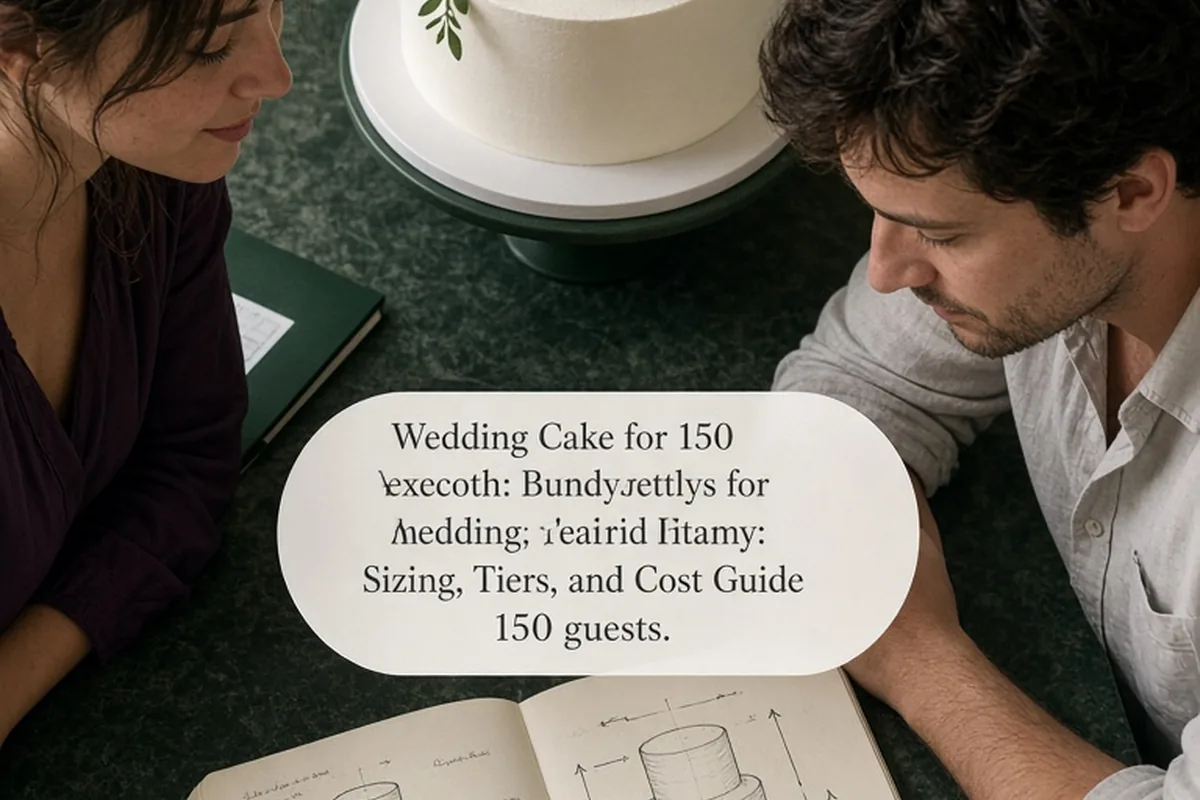
A wedding cake for 150 guests typically requires a 3-tier or 4-tier structure built to yield 150 standard event portions measuring 1 inch by 2 inches by 4 inches. Common tier combinations include a three-tier build of 6-inch, 10-inch, and 14-inch rounds, or a four-tier build of 6-inch, 8-inch, 10-inch, and 12-inch rounds. Many couples also pair a smaller two-tier display cake with supplemental kitchen sheet cakes to streamline budget and plating.
Ordering dessert for a 150-person reception requires balancing visual scale, kitchen portioning standards, and catering timelines. Understanding tier capacities and serving metrics helps you order accurately without unexpected shortages or surplus waste.
Sizing and Tier Configurations for a 150-Person Guest List
Wedding cake sizing relies on an industry-standard catering slice, which measures 1 inch wide by 2 inches deep by 4 to 5 inches high. This portion size differs from a standard home party slice, which is usually cut into 2-inch by 2-inch wedges. Because wedding cakes are constructed with multiple dense layers of sponge, filling, and frosting, these caterer-proportioned slices provide a rich, satisfying dessert portion following a multi-course dinner.
To achieve roughly 150 portions using a single tiered centerpiece, bakeries commonly recommend two round configurations. A classic three-tier arrangement using 6-inch, 10-inch, and 14-inch rounds typically yields around 140 to 155 standard portions. If you prefer a taller, more elongated silhouette, a four-tier arrangement using 6-inch, 8-inch, 10-inch, and 12-inch rounds provides approximately 135 to 150 servings. Square tiers produce higher slice counts per tier because the grid pattern yields more usable volume; a three-tier square cake with 6-inch, 9-inch, and 12-inch layers yields approximately 150 to 160 portions.
When finalizing tier sizes, clarify with your baker whether their serving charts follow standard event guidelines or custom shop portions. Some boutique bakeries cut taller double-barrel tiers that yield different slice counts, while others calculate yields assuming the top tier is saved for an anniversary. If you intend to save the 6-inch top tier, your remaining base tiers must provide the full 150 servings on their own, which may require stepping up the base diameters to an 8-inch, 10-inch, and 14-inch structure.
Pairing a Tiered Display Cake with Kitchen Sheet Cakes
A practical and widely utilized method for serving 150 guests is splitting the order between a decorative display cake and un-iced or simply frosted sheet cakes kept in the venue kitchen. With this approach, you commission a two-tier or modest three-tier cake designed specifically for the cake-cutting moment and photography, providing roughly 40 to 60 servings. The remaining 90 to 110 servings are baked as matching sheet cakes that banquet staff slice and plate out of sight.
This split strategy offers substantial cost and operational efficiencies. Tiered cakes require internal structural doweling, exterior finishing, delicate transport, and intricate structural design fees. Sheet cakes require minimal exterior labor and no vertical support hardware, lowering the average cost per portion across the total guest count. Additionally, catering staff can pre-slice the kitchen cakes during speeches or dinner, ensuring that all 150 guests receive dessert simultaneously shortly after the ceremonial cake cutting takes place.
If you choose this method, ensure that the kitchen cakes use identical sponge and filling recipes as the display tiers. Guests will notice if the plated dessert served at their table differs significantly in taste or texture from the cake presented on the reception floor. Request that your bakery prepare both elements under the same order batch to maintain flavor and quality consistency throughout the room.
Flavor Profiles and Tier Distribution for Large Receptions
Catering for 150 guests presents diverse palate preferences and potential dietary needs. A multi-tier cake allows you to offer two or three distinct flavor combinations across different tiers, giving your caterer the ability to offer guests a choice during table service. A common approach assigns a universally popular flavor, such as vanilla bean with berry compote or salted caramel, to the largest base tier, while reserving rich or adventurous profiles, like dark chocolate ganache or lemon lavender, for the middle and top tiers.
When selecting multiple flavors, coordinate with your banquet team on how slices will be distributed. Some catering operations serve alternating flavor plates down each table, while others set up a plated dessert station where guests select their preferred slice. Clearly communicate your flavor assignments to the service manager so staff can identify which tier corresponds to each recipe before slicing.
Dietary accommodations require separate handling rather than altering the entire 150-serving cake. If you have guests with severe gluten, dairy, or nut allergies, ask your bakery to provide individually boxed, certified allergen-safe cupcakes or mini-desserts. This prevents cross-contamination during transport, cutting, and plating while ensuring every attendee receives an equivalent dessert experience.
Breaking Down Bakery Quotes and Venue Service Fees
Custom wedding cakes are generally priced on a per-serving baseline, with final costs determined by labor complexity, decorative elements, and structural design. Basic buttercream finishes with simple textured lines represent the most accessible design baseline, while hand-applied fondant, sugar flower arrangements, gold leaf accents, and sculpted detailing increase production hours and total expense.
Beyond the bakery invoice, review your venue or catering contract for cake-related service charges. Many venues charge a cake-cutting or plating fee, usually calculated per guest. This fee covers the labor required for staff to transport the cake to the kitchen, slice it according to uniform catering portions, provide clean dessert plates and forks, garnish the plates, and serve the guests. Plating fees can significantly affect your overall dessert budget, so verify these terms before confirming your cake dimensions.
Additional itemized bakery expenses often include specialized delivery fees, on-site setup charges, and equipment security deposits. Delivering a 150-serving multi-tiered cake requires refrigerated transport, leveling tools, and decorative touch-up supplies. Ensure your quote transparently outlines whether delivery and final placement are bundled into the per-slice rate or billed as standalone logistics fees.
Structural Stability, Climate Control, and Setup Logistics
A multi-tiered cake built for 150 servings carries substantial physical weight, often between 20 and 35 pounds depending on the density of the sponge and moisture of the fillings. Professional bakers support this weight using food-grade internal center dowels, horizontal cake boards beneath each individual tier, and vertical support pillars. This internal framework transfers the load directly to the base cake drum, preventing lower tiers from bowing or sinking under vertical pressure.
Environmental factors at the venue dictate how the cake must be handled on the event day. Buttercream and cream-based fillings begin softening at temperatures above 72 degrees Fahrenheit, making ambient room control essential. For outdoor receptions, warm ballrooms, or marquee tents, position the display table away from direct sunlight, heating vents, and high-traffic pathways. Discuss summer event logistics with your baker; in high-humidity climates, they may recommend stable meringue buttercreams, white chocolate ganache foundations, or holding the cake in a commercial refrigerator until the reception begins.
Verify that your display table provides a rigid, level foundation. Delicate tiered structures cannot tolerate wobbly cocktail tables or soft linen surfaces that shift when bumped. Confirm that your cake stand has a flat surface diameter at least two inches wider than your bottom tier drum, ensuring complete, stable edge-to-edge support.
Ordering Timelines, Tastings, and RSVP Count Adjustments
Securing a wedding cake baker typically occurs six to nine months before your wedding date, particularly if your event falls during peak spring or autumn wedding seasons. Most bespoke cake artists limit the number of large tiered commissions they accept per weekend to ensure adequate decorating time and personal delivery oversight. Booking early secures your date on their production calendar with an initial design deposit.
Schedule formal tasting consultations five to seven months out. Tastings allow you to sample sponge textures, buttercream sweetness levels, and filling pairings in person while reviewing portfolio sizes. Bring visual references, color swatches, and venue photos to this meeting so the baker can assess room scale, lighting conditions, and aesthetic compatibility.
Your final guest count will fluctuate as RSVP cards return. Most bakeries require your finalized serving count and tier selection between three and four weeks before the event date. If your final guest list settles at 135 or climbs to 165, this three-week window allows the baker to adjust tier diameters or modify kitchen sheet cake quantities accordingly, ensuring you pay only for the exact servings needed.
Contract Specifics, Stand Rentals, and Service Day Coordination
Before signing your bakery contract, review the specific clauses governing delivery timing, handoff responsibility, and rental equipment. The contract should state the precise delivery window, the name of the assigned decorator handling setup, and explicit terms regarding liability once the cake is successfully placed on the display table. Once venue staff or your coordinator signs the delivery release form, the bakery is no longer responsible for accidental bumps or room temperature fluctuations.
If you rent a pedestal stand, vintage platter, or display risers from your baker, check the return deadline and deposit terms. Most bakers require rented hardware to be cleaned and returned within 48 to 72 hours following the event. Assign a trusted wedding party member or your day-of coordinator to pack up the stand at the end of the reception to avoid forfeiture of your security deposit.
Finally, discuss leftover cake procedures with your catering staff in advance. Provide food-safe bakery boxes so the catering team can package unserved slices at the end of the night. If you plan to preserve the top tier for your first anniversary, instruct the banquet captain not to cut that layer, to wrap it securely in multiple layers of plastic wrap and foil, and to place it in a designated refrigerator box for your transport the next morning.
Frequently asked questions
How many tiers do I need for a 150-person wedding cake?
A wedding cake serving 150 guests typically requires a 3-tier build (such as 6-inch, 10-inch, and 14-inch rounds) or a 4-tier build (6-inch, 8-inch, 10-inch, and 12-inch rounds). Alternatively, you can use a smaller 2-tier display cake paired with sheet cakes from the kitchen.
What is the standard slice size for a wedding cake?
Standard catering slices measure 1 inch wide by 2 inches deep by 4 to 5 inches tall. This differs from casual party wedges, as wedding cakes feature dense layers and rich fillings designed to provide clean, uniform portions after a full meal.
Can I save money on a 150-guest cake by using kitchen sheet cakes?
Yes. Commissioning a small decorative tiered cake for 40 to 50 servings and ordering supplemental un-iced sheet cakes for the remaining 100 to 110 servings significantly reduces overall labor and decorating fees while maintaining identical taste for every guest.
When should I give my baker the final guest count?
Most professional bakeries require your finalized guest count and tier specifications 3 to 4 weeks prior to the wedding date. This allows the baker to purchase ingredients, prepare structural dowels, and adjust sheet cake orders to match your confirmed attendance.
Your next step
Request itemized quotes from two local bakeries comparing a full tiered cake against a display cake paired with kitchen sheets, and check your venue contract for cutting fees before finalizing your design.