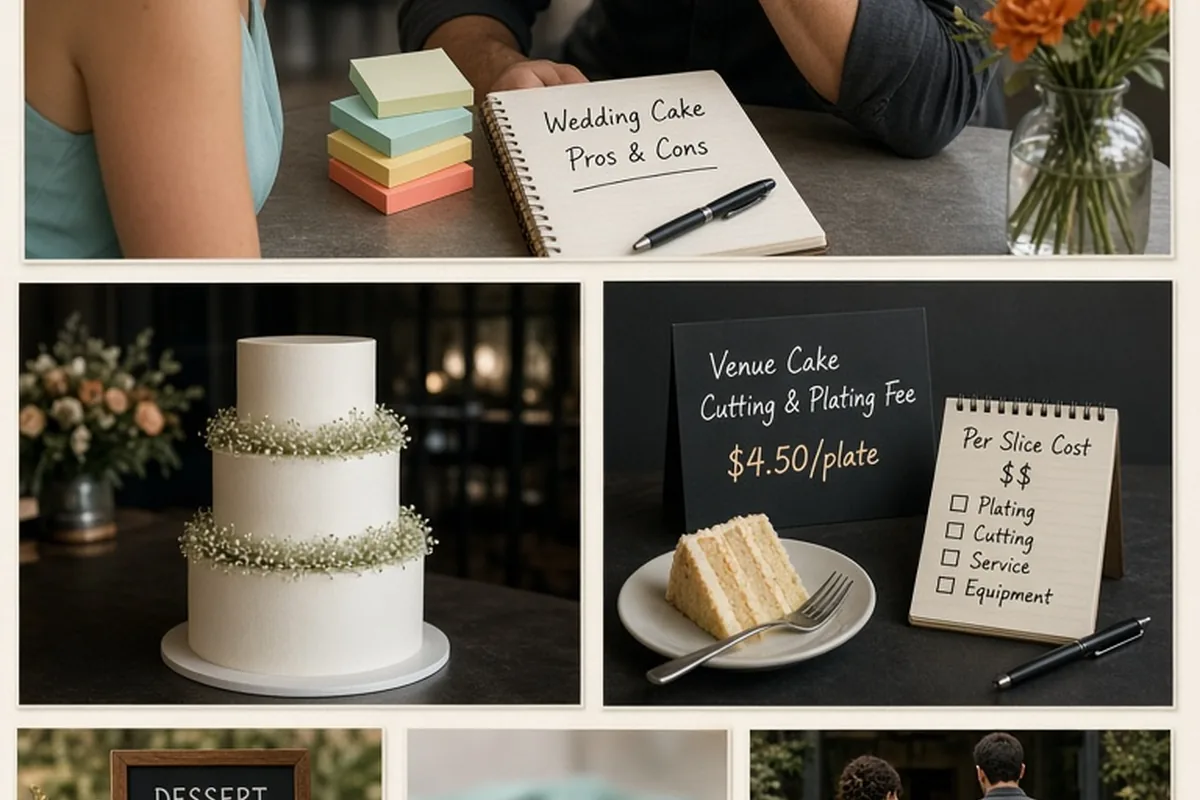
The main pros of a wedding cake include serving as a stunning visual centerpiece, honoring the time-tested cake cutting tradition, and providing memorable photography opportunities. The main cons involve substantial costs per slice, venue plating and cutting fees, logistical vulnerabilities to heat and transit, and limited flavor options for guests with strict dietary restrictions or varied dessert preferences.
Deciding on your reception dessert is one of the most visible choices in wedding planning, sitting right at the intersection of hospitality, budget, and aesthetic presentation.
The Visual and Ceremonial Appeal of a Traditional Wedding Cake
A tiered wedding cake functions as both dessert and decor. When guests walk into a reception space, a thoughtfully styled cake draws the eye and anchors the room alongside floral installations and lighting design. From smooth fondant finishes with delicate sugar flowers to rustic textured buttercream garnished with fresh citrus or greenery, the cake provides an immediate reflection of your event theme and personal aesthetic. It acts as an artistic statement piece that photographers capture extensively during room reveals and cocktail hour details.
Beyond visual presentation, the wedding cake preserves a classic ceremonial rhythm. The ceremonial cake cutting provides a natural transition point in the evening schedule, signaling to guests that formal dining has concluded and dancing or late-night entertainment is beginning. This shared ritual creates structured photo opportunities with your partner and allows family members to participate in a symbolic moment of shared hospitality. For couples who value traditional customs, skipping the cake can leave a noticeable gap in the reception timeline that requires deliberate programming to replace.
The Practical Drawbacks and Flavor Limitations of a Single Cake
The most significant limitation of a standard wedding cake is its inability to satisfy diverse palate preferences and dietary restrictions in a single confection. When you select two or three flavor combinations across different tiers, serving logistics often mean guests receive whatever slice is plated nearest their table rather than their preferred choice. Furthermore, accommodating guests with celiac disease, dairy intolerances, egg allergies, or vegan lifestyles becomes complicated and expensive when ordering through a single custom bakery that may not operate a dedicated allergen-free prep kitchen.
Tiered cakes are also delicate structural assemblies that carry inherent logistical risks. Elaborate buttercream or delicate mousse fillings are sensitive to ambient temperature and humidity, making them vulnerable during warm outdoor summer receptions or conservatory venue setups. Transporting tall, heavy tiers requires professional handling, sturdy internal dowel supports, and climate-controlled delivery vans. If transit delays occur or a tier shifts during transport, repairing custom sugar work or smooth icing on-site requires specialized emergency decorator tools that may not always be available.
Understanding the Complete Cost Structure and Hidden Service Fees
Evaluating a wedding cake budget requires looking well past the baker's initial quote for design and baking. Custom cakes are generally priced on a per-serving basis, with baseline costs increasing substantially based on intricate piping, hand-sculpted sugar flowers, metallic leaf detailing, premium fillings, and structural complexity. In addition to the confection itself, bakeries charge setup and delivery fees based on mileage, delivery windows, and on-site assembly time. Couples must also account for hardware expenses, such as cake stand security deposits, purchase fees for specialty display platters, and keepsake cutting sets.
The largest unexpected expense often originates from the venue or catering company rather than the baker. Many reception venues charge a mandatory cake-cutting or plating fee for outside desserts, which covers the labor required for kitchen staff to deconstruct tiers, portion slices evenly, provide dessert plates and flatware, and serve tables. When added to the original bakery invoice, these per-person service surcharges can increase your total dessert expenditure significantly. Reviewing your venue contract carefully before placing a bakery deposit ensures you understand the complete financial commitment.
Popular Dessert Display Alternatives and Hybrid Approaches
Couples seeking greater variety or streamlined costs increasingly turn to alternative dessert concepts or hybrid setups. A popular hybrid strategy involves ordering a small one- or two-tier display cake dedicated purely to the ceremonial cake cutting and couple photos, paired with unadorned sheet cakes stored in the catering kitchen to serve the broader guest list. Sheet cakes deliver the exact same taste and fresh sponge quality as the centerpiece cake while eliminating hours of delicate tier assembly and exterior decoration labor.
Another compelling alternative is a comprehensive dessert table featuring an assortment of handheld treats such as French macarons, mini fruit tarts, gourmet brownies, single-portion mousses, or artisanal doughnuts. Dessert buffets allow guests to select items tailored to their dietary needs while encouraging movement and mingling around the room. However, dessert stations present their own logistical considerations, including the need for multi-level display stands, individual serving tongs, clear flavor and allergen labeling cards, and active replenishment by catering staff throughout the evening.
Environmental and Venue Considerations for Cake Preservation
Your reception venue layout and local weather conditions should play a direct role in deciding whether a traditional cake makes sense. Outdoor tents, beachside lawns, and non-air-conditioned historic barns pose severe challenges for traditional frostings. Buttercream softens and droops quickly under direct sunlight or elevated temperatures, while fondant can sweat, blister, and lose structural integrity in high humidity. If your event takes place in an unconditioned environment, choosing stable icing options or keeping desserts in commercial refrigeration until immediately before service is essential.
Indoor banquet spaces and climate-controlled ballrooms provide the stability needed for elaborate displays, but they still demand careful operational coordination. You must verify that your venue has an accessible, dedicated staging area with adequate refrigeration capacity if the baker drops off the tiers several hours before guest arrival. Additionally, confirm that the display table is positioned away from direct air conditioning vents, drafty doorways, high-traffic dance floor borders, and direct spotlight beams that could generate localized heat and destabilize the structure.
Matching Dessert Formats to Your Guest Count and Timeline
The overall flow and formality of your wedding day should guide your dessert format. Formal seated dinners naturally complement a traditional plated cake service, where servers deliver a tailored dessert slice directly to seated guests alongside coffee and tea service. This approach maintains an orderly, refined dining atmosphere. Conversely, cocktail-style receptions, food truck weddings, or high-energy dance parties benefit from passed miniature sweets or station-based desserts that guests can enjoy casually while standing without pausing their conversations.
Guest count accuracy is equally critical when finalizing dessert orders. Many guests skip dessert entirely to remain on the dance floor, leading to substantial food waste when full-sized slices are automatically distributed to every seat. If your catering plan includes a late-night savory snack or an open bar with signature cocktails, overall dessert consumption tends to decline. Ordering portions for approximately eighty to eighty-five percent of your confirmed guest count, or offering bite-sized portions, frequently prevents dozens of costly slices from being discarded at the end of the night.
Questions to Ask Bakers and Venues Before Making a Commitment
Before signing contracts with a specialty baker, schedule a thorough consultation to clarify operational boundaries. Ask prospective bakers about their delivery procedures, whether the head decorator travels on-site for emergency touch-ups, and how they handle temperature control during transport. Inquire about their policies regarding fresh floral placement, specifically whether they liaise directly with your florist to secure non-toxic, pesticide-free blooms that are safe for food contact surfaces.
Simultaneously, request complete clarification from your reception coordinator regarding venue policies. Inquire whether outside dessert vendor drop-offs carry any administrative fees, what the exact per-plate cutting charge is, and whether the venue provides dedicated to-go boxes for leftover tiers. Clarifying who is responsible for boxing up the top tier, washing rented display stands, and packing remaining desserts at the end of the reception protects your security deposits and ensures seamless execution on the wedding day.
Frequently asked questions
What is the standard purpose of saving the top tier of a wedding cake?
Tradition holds that couples freeze and preserve the top tier of their wedding cake to consume on their first anniversary or at the christening of their first child. If you plan to save your top tier, ask your baker for proper wrapping guidelines, which typically involve double-wrapping in plastic wrap and sealing in heavy-duty foil to prevent freezer burn.
Are cupcakes or mini desserts cheaper than a traditional tiered cake?
Mini desserts and cupcakes often reduce direct decoration labor compared to an intricate multi-tier cake, and they eliminate venue cake-cutting fees. However, ordering a wide variety of labor-intensive miniature pastries with custom garnishes can sometimes equal or exceed basic cake pricing. Comparing itemized quotes from local bakeries provides the most accurate assessment.
How far in advance should couples book their wedding cake baker?
Most custom cake designers recommend booking six to nine months ahead of your wedding date, particularly if your event falls during peak spring or autumn wedding seasons. Early booking secures your date on the baker's delivery calendar, allowing flavor tastings and design consultations to occur closer to your final floral and linen selection.
Can venues waive the cake cutting fee if we cut the cake ourselves?
Most professional venues and caterers do not waive cutting fees for self-service due to liability, kitchen safety, and service standards. The fee covers professional slicing, plating, clean flatware, service staffing, and post-event cleanup. Always check your catering agreement for specific policy terms before finalizing your dessert plan.
Your next step
Review your venue contract for outside dessert and cake-cutting fees today, then schedule tastings with two licensed local bakeries to compare tiered cake quotes against hybrid sheet cake or dessert table options.