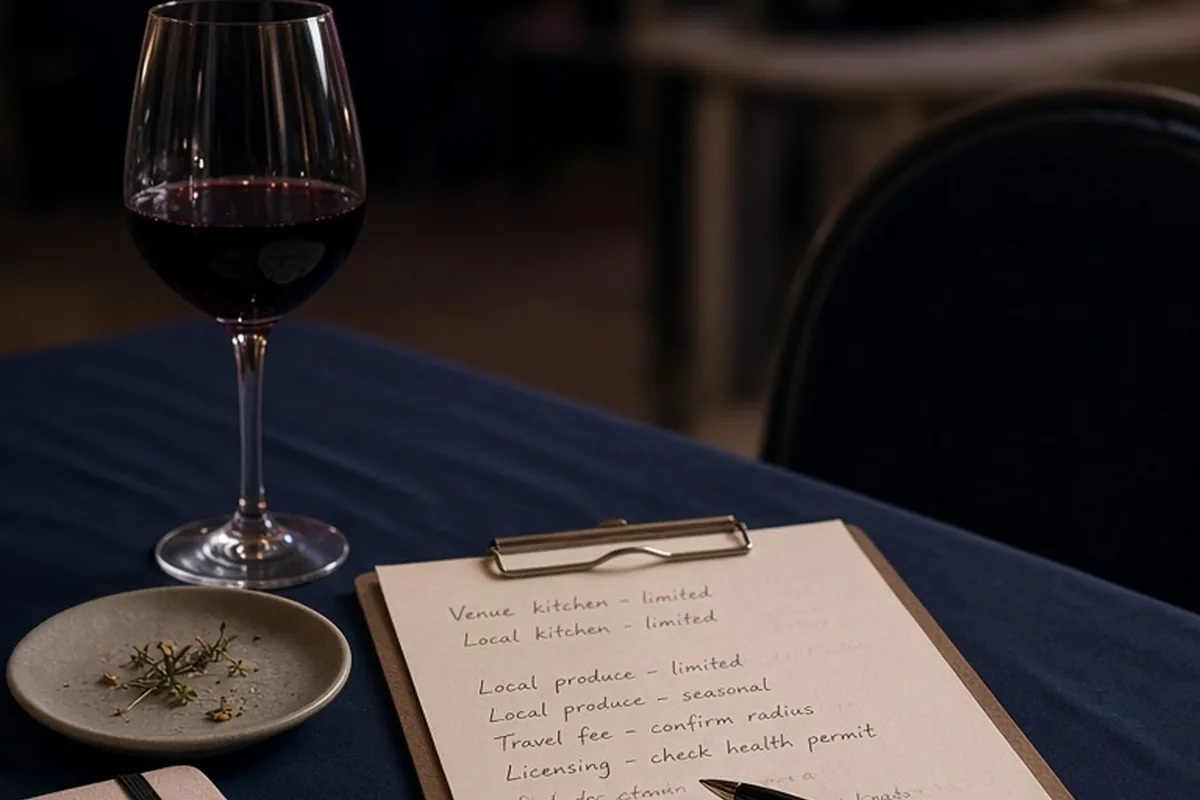
To find the right wedding caterer by location, cross-reference your venue's kitchen facilities and preferred vendor policies with caterers operating inside your geographic area. Local caterers understand municipal health regulations, travel logistics, and regional produce availability. Always request an itemized proposal detailing food costs, labor ratios, service charges, equipment rentals, travel fees, and required local licensing before booking a tasting or signing a contract.
Selecting food and beverage service represents one of the largest logistical and financial components of wedding planning. Because catering execution depends heavily on geography, local venue rules, and regional supply chains, finding a team rooted in your celebration's location ensures reliable food safety, fresh ingredients, and seamless day-of service.
Matching Wedding Catering Formats to Your Venue Infrastructure
The physical layout and culinary equipment available at your venue dictate which wedding catering formats are realistic. A historic mansion, modern loft, or downtown hotel often features a fully equipped commercial kitchen with walk-in refrigeration, convection ovens, hot-holding cabinets, and three-compartment sinks. In these fully outfitted spaces, caterers can execute complex multi-course plated dinners, delicate temperature-sensitive sauces, and rapid synchronous table service without bringing extensive auxiliary machinery.
Conversely, raw spaces such as private residential properties, rural barns, public parks, and beachfront pavilions rarely offer functional commercial cooking equipment. When hosting a wedding at a blank-canvas location, caterers must build a temporary field kitchen. This requirement influences menu choices: passed small plates, family-style platters, and buffet stations often work better than multi-course synchronized plated entrées in off-grid environments. Before finalizing your reception style, invite prospective caterers to perform a site walkthrough to evaluate electrical breaker capacity, dedicated prep space, water hookups, and lighting access.
Navigating Venue Exclusivity Lists and Approved Caterer Restrictions
Many established event venues maintain strict catering policies designed to protect their property, ensure fire code compliance, and maintain service standards. Venues typically fall into three operational categories: exclusive in-house catering, mandatory preferred vendor lists, or open vendor policies. An exclusive in-house arrangement means you must use the venue's culinary team, with external caterers prohibited entirely. Mandatory preferred lists require couples to select from a curated roster of three to ten licensed local caterers who have established working relationships with the site.
If a venue allows off-list caterers, they frequently impose specific financial and administrative hurdles. These can include a flat kitchen buyout fee, a percentage fee calculated from the caterer's total food and beverage invoice, or mandatory security deposits for equipment use. Additionally, venues may require external caterers to handle post-event trash removal, deep cleaning of kitchen surfaces, and adherence to tight load-in and load-out windows. Reviewing your venue contract's vendor clauses before contacting local caterers prevents unexpected fees and ensures your preferred culinary team meets the venue's entry criteria.
Regional Sourcing, Seasonal Availability, and Climate Considerations
Selecting a caterer situated in your event's geographic region provides significant culinary advantages regarding ingredient sourcing and freshness. Regional caterers maintain active trade relationships with local agricultural cooperatives, regional butcheries, seafood docks, and wholesale distributors. A coastal caterer, for example, has direct access to fresh morning catches, while a caterer in an agrarian valley can design menus around local stone fruits, root vegetables, and artisan dairy products harvested within miles of the venue.
Local caterers also understand the environmental demands of their regional climate. High summer temperatures in humid or desert regions require specialized cold-holding equipment to keep raw seafood bars, salad greens, and dairy-based desserts safe and appealing. In high-altitude mountain environments, baking times, water boiling points, and sauce reductions behave differently than at sea level. Working with a caterer experienced in the specific weather patterns and geographic quirks of your location ensures food quality remains stable throughout cocktail hour and dinner service.
Calculating Travel Fees, Off-Grid Logistics, and Equipment Rentals
When hiring a caterer whose headquarters sits outside the immediate town or municipality of your wedding venue, travel-related expenses will appear on the final estimate. Caterers generally charge a travel fee based on mileage, travel time for kitchen and service personnel, and fuel costs for refrigerated box trucks. For multi-day destination events or locations requiring overnight staff accommodation, hotel allowances and per diem meal rates for the culinary crew may also be billed to the client.
For remote locations lacking standard utilities, logistical expenses extend well beyond transportation. The catering quote will include specialized rental items necessary to construct a mobile commercial kitchen. These items often encompass propane convection ovens, insulated food transport carriers, portable handwashing sinks, pop-up prep tents, exterior floodlights for staging areas, and commercial whisper generators to power induction burners and portable chillers. When comparing quotes from urban versus regional caterers for a rural wedding, ensure all auxiliary rental fees and utility costs are factored into the comparison.
Staffing Ratios, Service Styles, and On-Site Labor Requirements
Labor represents a major portion of a wedding catering quote, and staffing requirements fluctuate significantly depending on your chosen service format and venue layout. Plated multi-course meals require the highest staff-to-guest ratio to ensure dishes arrive at proper serving temperatures simultaneously across all guest tables. Family-style service requires robust floor staffing to deliver heavy platters quickly and clear empty serving dishes without cluttering table settings. Buffets and interactive culinary stations require fewer floor servers but still demand dedicated carvers, line runners, and bussers.
Beyond table service, a complete catering crew includes behind-the-scenes roles that keep the event running smoothly. A typical staff roster includes an on-site banquet captain or event manager, executive chef, line cooks, dishwashers, and bar personnel. When reviewing catering estimates, distinguish between operational labor hours, administrative service fees, and gratuity. Clarify whether the hourly rate starts when the staff arrives at their commissary kitchen to pack trucks or when they step foot on your venue property.
Local Licensing, Beverage Laws, and Insurance Verification
Municipal and state regulations governing food safety, temporary event permits, and alcohol service vary significantly by location. Every professional wedding caterer must hold an active commercial kitchen license issued by their regional health department and maintain comprehensive general liability insurance. Most event venues require caterers to submit a Certificate of Insurance listing the venue as an additional insured party, typically with coverage minimums for general liability and workers' compensation.
Alcohol service introduces an additional layer of regulatory compliance. Depending on state and local laws, caterers may offer full beverage packages under their own off-premise liquor license, or the venue may require a dry-hire arrangement where you purchase the alcohol separately and hire licensed, insured bartenders to serve it. In certain jurisdictions, outdoor private properties or public municipal parks require distinct temporary alcohol permits or fire marshal permits for open-flame cooking and outdoor charcoal grilling. Confirming these licenses early prevents permit denials or shutdown risks on your wedding day.
Menu Tastings, Dietary Customization, and Contract Safeguards
Securing your wedding caterer involves a structured evaluation process that begins with a written proposal and progresses through a formal tasting. Many catering companies offer tastings only after an initial deposit is paid or charge a separate tasting fee that is credited toward your balance once a contract is executed. Use the tasting to assess not only flavor profiles and plating presentations, but also the culinary team's responsiveness to feedback, sauce consistency, and portion sizes.
Managing dietary accommodations requires transparent contract terms. Modern wedding menus regularly incorporate gluten-free, vegan, vegetarian, nut-free, kosher-style, or halal-compliant meals. Ask prospective caterers how they prevent cross-contamination in their prep kitchens and how specialty meals are marked and served to specific guests on the day. Your final contract should clearly define the deadline for submitting guaranteed guest headcounts, policy terms for vendor meals, payment schedule milestones, and force majeure clauses addressing extreme weather disruptions.
Illustrative Scenarios
Logistical Comparison: Downtown Loft vs. Coastal Field Reception
A planning team evaluated catering proposals for two distinct venues within the same region: an urban industrial loft with a certified warming kitchen and a coastal bluff requiring a temporary tent. The loft proposal focused primarily on food costs, standard staffing, and minimal cleanup fees. The coastal proposal required additional line items for portable propane ovens, refrigerated storage, a backup power generator, extra transit hours for staff, and strict wind-resistant serving ware. While the core menu items were identical, the physical infrastructure of the coastal site altered the final operational scope.
Key point: Venue infrastructure directly shapes catering line items; off-grid locations require budgeting for mobile power, sanitation, and temperature control beyond standard food and service charges.
Frequently asked questions
How far in advance should I book a wedding caterer based on my location?
In popular wedding destinations and high-demand metropolitan areas, wedding caterers frequently book six to twelve months in advance, especially for peak spring and autumn weekend dates. If your wedding takes place in a rural or remote area with a limited number of licensed commercial caterers, reaching out nine to twelve months ahead ensures vendor availability.
What is the difference between a caterer's service charge and staff gratuity?
A service charge is a mandatory administrative fee billed by the catering company to cover operational overhead, insurance, administrative coordination, and equipment maintenance. Gratuity is a discretionary payment given directly to service staff and culinary crew for exceptional service, though some contracts include a predetermined mandatory gratuity percentage.
Can I hire a caterer from another city if my venue has no preferred list?
Yes, you can hire an out-of-town caterer as long as they provide the insurance certificates and health permits required by your venue and local municipality. Keep in mind that hiring a caterer outside the local area will add travel surcharges, lodging costs, and mobile kitchen equipment fees to your final invoice.
How do caterers handle vendor meals for photographers, musicians, and planners?
Caterers typically provide simplified plated meals or hot boxed dinners for vendors at a reduced price compared to guest rates. Contracts usually ask couples to submit vendor meal counts alongside the final guest guarantee, specifying the exact time vendors should be fed so their schedule aligns with the event timeline.
Your next step
Request a copy of your venue's catering rules and kitchen inventory list today, then submit initial quote requests to three licensed local caterers with your estimated guest count.