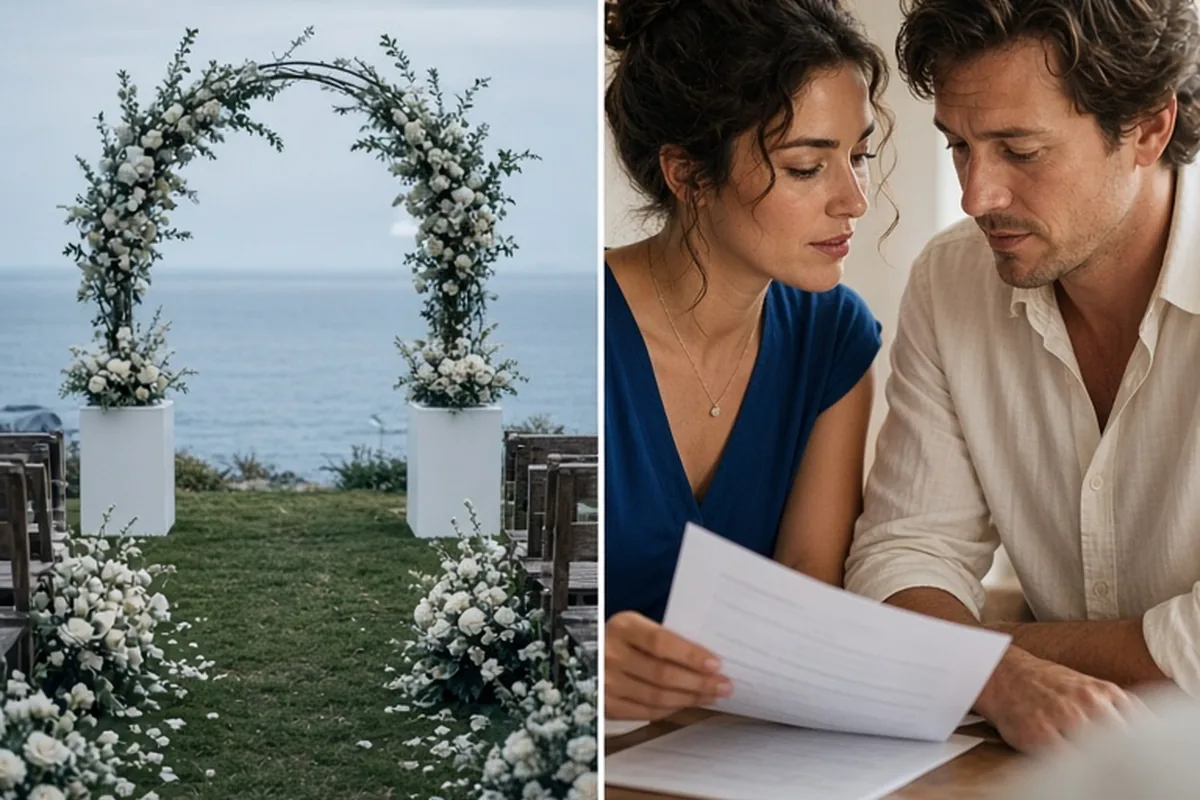
A wedding ceremony cost breakdown covers the essential expenses needed to legally marry and host your vows. Key line items include site rental or sanctuary fees, marriage license administrative costs, officiant compensation, live musicians or sound audio systems, ceremony floral arches and aisle decor, program printing, and seating rentals. Ceremony expenses vary widely based on your chosen location, municipal requirements, and vendor package inclusions.
Planning a wedding ceremony involves coordinating several independent services, legal filings, and logistical elements that carry separate pricing structures. Understanding how these distinct expenses interact helps couples allocate funds accurately, avoid unexpected site fees, and select vendors that align with their vision.
Ceremony Venue Fees and Space Rental Variables
The physical location of your vows is often the largest single ceremony expense. When booking a standalone ceremony site, such as a historic chapel, garden gazebo, or museum terrace, venues typically charge an hourly rate or a flat block fee. This fee generally grants access for a defined window that includes vendor setup, guest arrival, the ceremony itself, formal portraits, and breakdown. It is critical to confirm whether the allotted time includes the rehearsal on a preceding day, as some venues treat rehearsal access as an add-on charge or restrict rehearsal scheduling until thirty days before the event.
If you host both your ceremony and reception at the same venue, the pricing structure shifts. Many full-service venues assess a ceremony fee on top of their standard reception rental. This fee covers the dedicated staffing needed to manage guest flow, set up additional seating, coordinate directional signage, and execute a room flip if both events share the exact same floor plan. When an indoor ballroom must be transitioned from theater-style seating to dining tables during a cocktail hour, venues must deploy extra banquet staff within a tight sixty-minute window, which directly drives up the labor line item.
Houses of worship operate under different financial arrangements. Some faith communities charge a standardized facility use fee, while others request a suggested donation or discretionary contribution to the building preservation fund. In addition to the basic sanctuary charge, couples often encounter separate line items for the resident organist, sound technician, altar guild setup, and post-ceremony janitorial services. Different fee tiers often apply to active congregation members compared to non-members who are renting the sanctuary as an outside party.
Officiant Fees, Legal Licensing, and Pre-Ceremony Requirements
Legalizing a marriage requires both a government-issued license and an authorized officiant to solemnize the vows. Marriage license fees are set by county or municipal governments and vary depending on your jurisdiction. Some local jurisdictions offer reduced license fees for couples who complete an approved premarital education or counseling course. Couples should also account for the cost of ordering multiple certified copies of the official marriage certificate after the wedding, which are necessary for changing legal names, updating passports, and adjusting insurance policies.
Professional officiants charge fees that reflect their experience, custom script writing, rehearsal direction, and legal filing responsibilities. A professional celebrant typically conducts consultations to design a personalized ceremony, coordinates with photographers and musicians regarding cues, and handles the prompt submission of the signed license to the vital records office. When hiring a professional officiant, ask whether their proposal includes travel expenses, parking fees, and attendance at the previous day's rehearsal, as some officiants invoice rehearsal attendance as a separate line item.
Choosing a friend or family member to officiate can adjust your overall expenses, but it is rarely entirely free. Depending on state and local statutes, ordained or designated officiants may need to register with the local county clerk or court clerk before the ceremony, which can carry an administrative registration fee. Furthermore, couples often purchase an honorarium, thank-you gift, or formal attire for their loved one, alongside covering their lodging or rehearsal dinner expenses in appreciation of their time and effort.
Ceremony Music, Audio Engineering, and Sound Equipment Line Items
Ceremony music sets the emotional tone from the moment guests arrive until the final recessional concludes. Hiring live musicians, such as a classical string quartet, harpist, acoustic guitarist, or bagpiper, involves distinct hourly rates or package minimums. Musicians typically perform for prelude music as guests take their seats, provide processional songs for the wedding party and processional entrance, play during reflective moments or unity rituals, and conclude with an energetic recessional piece. Because live acoustic instruments have natural volume limits, larger venues or outdoor spaces may require additional amplification equipment.
Audio engineering is a critical yet frequently overlooked component of ceremony planning. Even the most carefully written vows and readings lose their impact if guests cannot hear them clearly. Sound packages often include dedicated wireless lapel microphones for the officiant and the couple, handheld wireless microphones on stands for scripture or poetry readers, and battery-powered portable sound systems for remote locations without electrical outlets.
When hiring a reception DJ or live band to manage ceremony audio, review your contract to ensure ceremony coverage is explicitly included. Many entertainment packages only cover the reception ballroom, requiring an added fee for a separate sound system setup, supplementary wireless microphones, and sound check time in an alternate ceremony room or outdoor courtyard. Having a dedicated sound technician monitoring the mixer prevents sudden wind noise, audio feedback, or dead batteries during the exchange of rings.
Wedding Ceremony Floral Arrangements, Arches, and Decor Structures
Ceremony decor establishes the visual focal point of your vow exchange and frequently represents a significant portion of the overall design budget. The primary centerpiece is typically an altar installation, such as a floral arch, grounded floral meadow, chuppah, mandap, or twin urn arrangements on pedestals. The pricing for these structures reflects not only the cost of fresh cut flowers and greenery, but also the structural mechanics, foam-free floral cages, pipe-and-drape hardware, and significant on-site labor required to build and secure heavy floral installations against wind and foot traffic.
Aisle styling adds secondary decor expenses that frame the processional walkway. Options range from lush floor meadows and floral chair ties to hurricane lanterns, pillar candles in glass cylinders, or fabric runners. Outdoor ceremonies require careful consideration regarding runners, as thin fabric or paper runners can easily bunch, tear on grass, or pose tripping hazards unless anchored securely with heavy stakes or floral borders.
To maximize value, many couples coordinate floral repurposing between their ceremony and reception. Free-standing urns, grounded floral arches, and aisle arrangements can be transferred into the reception space during the cocktail hour to decorate the head table, sweetheart table, or bar area. When planning to repurpose floral installations, verify whether your florist will remain on-site to handle the physical transfer or if your professional wedding coordinator is authorized and equipped to move fragile arrangements safely.
Seating Rentals, Weather Protection, and Outdoor Site Permits
Outdoor settings such as public beaches, municipal parks, state botanical gardens, and scenic lookouts offer stunning natural backdrops, but they introduce unique logistical line items. Local parks departments and municipal agencies generally require non-refundable special event permit fees, commercial general liability insurance riders, and occasionally security deposits or dedicated ranger fees. These public permits often specify strict rules regarding arrival times, sound decibel limits, vehicle access, and restrictions on staking items into public grounds.
Seating logistics represent another core expense for outdoor or raw space ceremonies. Standard event packages usually charge per chair, with costs varying based on the chair style, such as basic folding chairs, padded garden chairs, cross-back wooden chairs, or custom benches. Beyond the per-item rental fee, delivery fees, set-in-place labor charges, breakdown fees, and late-night weekend pickup surcharges can significantly increase the total rental invoice.
Weather contingencies require a dedicated backup plan and corresponding budget allocation. For summer outdoor ceremonies, couples may need to rent heavy-duty commercial shade canopies, handheld paper parasols, misting fans, or personalized hand fans for guests. Cold-weather ceremonies may require propane patio heaters or fleece blankets. If there is a risk of rain, reserving a tent deposit or holding an indoor backup room fee guarantees that your guests remain comfortable regardless of weather conditions.
Printed Paper Goods, Unity Elements, and Personal Ceremony Accessories
Small visual and practical details complete the ceremony environment and accumulate across multiple small line items. Ceremony stationery typically includes printed programs that outline the order of service, introduce the wedding party, provide translations for cultural traditions, and acknowledge deceased relatives. Couples can choose between individual printed booklet programs, single-sheet flat cards, or a single large decorative welcome sign and order-of-events board displayed on an easel at the entrance.
Symbolic rituals and unity ceremonies introduce their own specific accessory costs. Whether you choose a unity candle lighting, sand pouring vessel, wine box time capsule, cord of three strands, handfasting ribbons, or breaking-of-the-glass tradition, each element requires specialized materials. High-quality keepsake items, such as customized leather vow books, heirloom ring bearer boxes, and decorative marriage certificate display holders, preserve these personal memories long after the day concludes.
Final ceremony details encompass guest participation and exit supplies. These include flower girl baskets, fresh rose petals, ring bearer pillows or secure cases, and celebratory send-off materials like freeze-dried flower petals, ribbon wands, or eco-friendly confetti. When purchasing send-off items, always confirm venue policies first, as many historic properties and outdoor venues strictly ban synthetic confetti, glitter, rice, birdseed, or sparklers due to environmental regulations and cleanup restrictions.
Frequently asked questions
How does holding the ceremony and reception at the same venue change overall costs?
Holding both events at one venue typically reduces guest transportation expenses and eliminates separate rental fees for two distant locations. However, venues often add a ceremony fee to cover extra staff, sound setup, and the labor required to flip or reset shared spaces between the vows and the reception.
What hidden fees frequently appear in ceremony contracts?
Common hidden ceremony expenses include overtime fees for exceeding your allotted setup window, rehearsal attendance charges from officiants or musicians, equipment delivery and weekend pickup surcharges from rental companies, and mandatory liability insurance certificates for public or historic venues.
How should we determine officiant gratuity or donations?
For faith leaders who do not charge a fixed fee, a formal donation to the house of worship or an honorarium given directly to the leader is customary. For independent professional officiants who set their own flat commercial rates, gratuity is optional but appreciated for exceptional, highly personalized service.
Your next step
To establish an accurate ceremony budget, contact your local city or county clerk for exact marriage license fees, request itemized quotes from your preferred venue that specify rehearsal access and setup hours, and list your essential ceremony decor and musical preferences before signing vendor contracts.