Wedding ceremony order varies significantly by location because site layout, sound constraints, and institutional rules dictate the pacing. While a standard non-denominational service follows a basic sequence of processional, welcome, readings, vows, ring exchange, and recessional, structured locations like religious houses of worship, public outdoor parks, private estates, and civic courthouses impose unique logistical requirements that alter entrance timing, reading placement, and overall ceremony duration.
Couples often assume a wedding ceremony follows a single, universal template, but the physical environment dictates how smoothly the event unfolds. Mapping your running order to the specific architectural, environmental, and regulatory realities of your chosen setting ensures your guests remain engaged and your timeline stays on track.
Houses of Worship: Traditional and Liturgical Ceremony Orders
Traditional religious ceremonies conducted inside churches, synagogues, mosques, or temples adhere to distinct liturgical customs and architectural traditions that directly govern the running order. In Catholic and traditional Christian services, the processional often begins with the officiant and groom entering from the side, followed by the groomsmen, bridesmaids, ring bearer, flower girl, and finally the bride accompanied by a parent. The body of the ceremony typically alternates between formal greetings, opening prayers, scriptural readings from designated lecterns, a homily, the exchange of vows and rings, and potentially a full communion or unity candle lighting before the final blessing and recessional. These formal elements require predetermined standing and kneeling positions for the wedding party, which must be factored into the overall timeline.
In traditional Jewish ceremonies, the order of events shifts significantly based on ritual architecture. The signing of the marriage contract (ketubah) takes place prior to the public service in a private room alongside immediate family and witnesses. When the public ceremony begins, the processional moves toward the chuppah (canopy), frequently including both sets of parents walking their respective children down the aisle. The ceremony order under the chuppah proceeds through the betrothal blessings (birkat erusin), the sharing of wine, the ring presentation, the reading of the ketubah, the recitation of the seven blessings (sheva brachot), the traditional breaking of the glass by the groom or couple, and the enthusiastic recessional. Because religious venues enforce strict operational windows, checking with the venue coordinator on mandatory musical or liturgical components is essential before finalizing the program.
Outdoor Parks and Botanical Gardens: Adapting to Environmental Variables
Hosting a ceremony in an open-air public park or botanical garden introduces natural acoustic and weather dynamics that demand a streamlined ceremony order. Without walls to contain sound, guest attention spans naturally shorten, making a twenty to twenty-five minute flow ideal. The sequence typically opens with ambient prelude music while guests navigate garden paths to their seats. The processional must accommodate uneven walking surfaces like grass, gravel, or stone steps, requiring wider intervals between attendants to ensure safety and allow photographers clean sightlines against open backdrops.
The core service in an outdoor park should prioritize microphoned speaking parts early in the sequence. A concise officiant welcome is immediately followed by personal vows and ring exchanges before ambient noise, such as wind or local wildlife, interferes with clarity. Unity ceremonies involving open flames, like unity candles, are generally replaced with sand pouring, tree planting, or handfasting rituals that resist breezes. The signing of the marriage license is often shifted to a covered pavilion or immediate post-recessional holding area to protect paperwork from sudden weather shifts, leading directly into guest guidance toward the cocktail reception area.
Private Estates and Backyard Venues: Managing Custom Spatial Layouts
Backyard and private residential ceremonies offer creative freedom but lack the built-in backstage zones and wide staging areas found in commercial venues. The order of events must account for hidden staging and sound management. Because the wedding party often gets ready inside the residence while guests gather on the lawn or patio, the prelude music serves as a firm cue for guests to take their seats. The processional route often winds through residential pathways, around pools, or through French doors, which requires the officiant to build in a brief thirty-second pause after everyone arrives at the altar so the couple can settle and adjust garments.
Following the welcome and opening remarks, residential ceremonies often incorporate community blessings or personal reflections shared by close friends, leveraging the intimate setting. However, because residential noise ordinances often govern daytime decibel levels, high-volume elements and amplified vows must be sequenced carefully. The conclusion of the backyard ceremony should feature an immediate, structured transition plan: as the couple and wedding party recess back into the private home for a private moment, the officiant or planner immediately invites guests to migrate to a distinct reception zone to permit staff to turn over the ceremony space if needed.
Coastal and Beach Ceremonies: Sequencing Around Elements and Tides
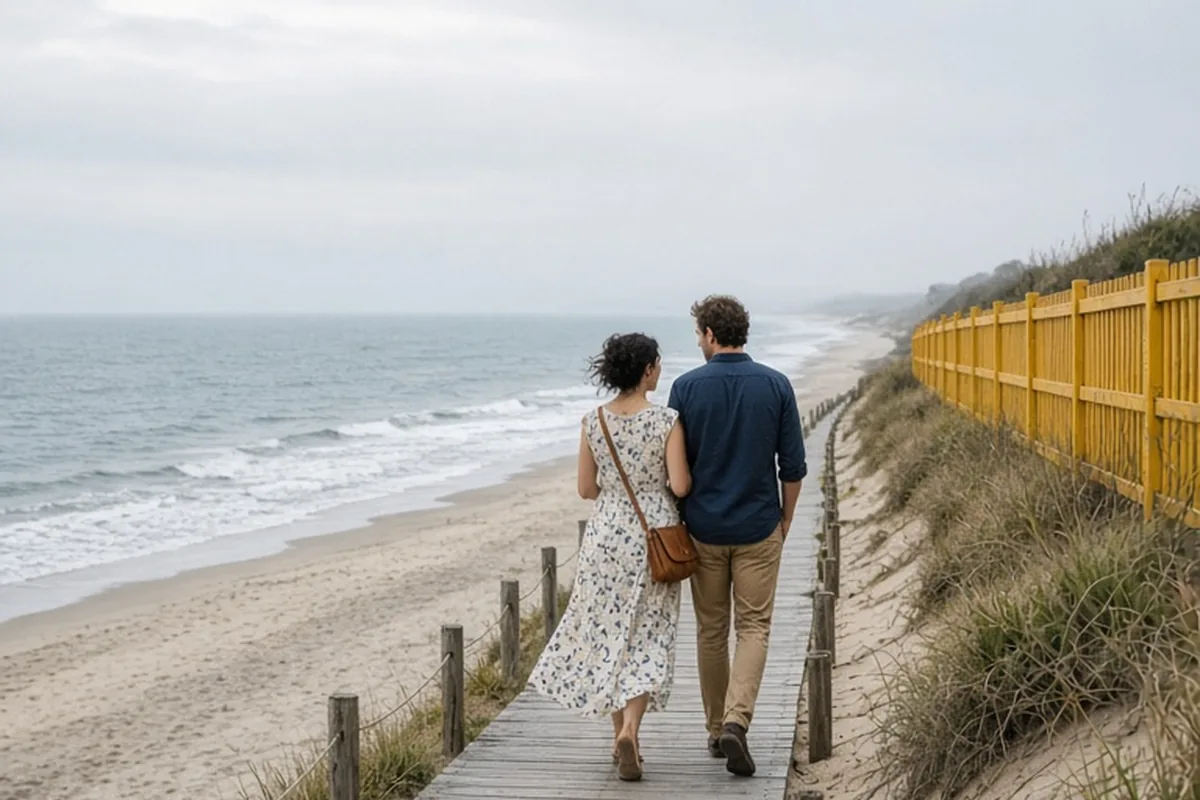
A beach ceremony order must be engineered around tide charts, sun angles, and coastal wind patterns. The overall timeline is typically tightened to fifteen to twenty minutes to protect guests from direct sun exposure and shifting sand conditions. The processional often begins with the groom and officiant waiting at the arbor, followed by attendants walking in bare feet, flat sandals, or along a reinforced runner. The pacing down the aisle is naturally slower due to the resistance of the sand, which requires the musical accompaniment to be timed with extended instrumental loops.
The service itself should minimize loose physical props, paper reading sheets, and lightweight veils that can whip in ocean breezes. Officiants generally transition directly from the opening address to the verbal commitments, vows, and ring exchanges using wind-screened lapel microphones. Instead of elaborate platform rituals, beach ceremonies often feature blessings incorporating the surrounding landscape, such as water ceremonies or shell tosses. The recessional moves swiftly toward firm ground, leading guests directly toward shaded refreshment stations to ensure comfort.
City Hall and Civic Courthouses: Navigating Rigid Time Blocks
Civic ceremonies at municipal buildings, city halls, or courthouses operate under strict scheduling blocks, often limited to ten to fifteen minutes total per appointment. The order is utilitarian, legal-focused, and fast-paced. There is generally no formal seated prelude or extensive bridal party processional; instead, the couple, along with their allotted witnesses and guests, check in with the clerk, present identification and marriage licenses, and enter the designated courtroom or ceremony chamber as a cohesive group.
Once standing before the magistrate or civil officiant, the order proceeds with minimal preamble. The magistrate delivers standard civil opening words, prompts the legal declaration of intent, invites a brief exchange of traditional or concise personal vows, and oversees the ring placement. The ceremony culminates immediately in the legal pronouncement of marriage. The final five minutes of the booked appointment are strictly dedicated to signing the marriage registry alongside appointed witnesses and taking a few indoor photographs before vacating the chamber for the next scheduled party.
Full-Service Hotel Ballrooms: Executing Seamless Indoor Transitions
Hotel ballrooms and banquet spaces provide controlled lighting, temperature, and acoustics, allowing for a fully customized ceremony order without environmental compromises. The order begins with an organized thirty-minute guest arrival and prelude period, during which hotel staff manage entry doors and direct traffic. The processional operates with standard theatrical precision: officiant and partner entry, wedding party pairs, immediate family escorts, and the entrance of the primary processional party, all coordinated against dedicated audio-visual lighting cues.
The internal ceremony structure in a ballroom can comfortably accommodate longer elements, including multiple readings, musical interludes by a live ensemble, and intricate unity traditions. Because ballroom layouts are entirely manufactured, the recessional requires clear geographic direction. Once the couple recesses down the main aisle and exits the ballroom doors, the officiant immediately steps back to the microphone to dismiss guests row by row or announce the specific ballroom or foyer hosting cocktail hour, which enables catering staff to execute the room flip smoothly if the reception is sharing the space.
Frequently asked questions
How long should a standard wedding ceremony last?
A typical secular wedding ceremony lasts between twenty and thirty minutes, which allows enough time for the processional, introductory remarks, readings, vows, rings, and the recessional without losing guest attention. Traditional religious services, such as a Catholic Mass or formal Jewish wedding, usually run between forty-five and ninety minutes to accommodate required liturgical rites.
When should the marriage license be signed during the ceremony order?
In secular and outdoor ceremonies, the marriage license is usually signed immediately after the recessional in a private room or staging area alongside the officiant and designated witnesses. In some traditions, such as Jewish weddings, the signing of the ketubah occurs prior to the public ceremony, while certain civic or European traditions incorporate the signing directly into the public order of service.
How does the processional order change if there is no traditional aisle?
When hosting a wedding in circular seating arrangements, intimate living rooms, or open public spaces without a defined center aisle, the wedding party can enter from opposing side perimeters or gather at the focal point before guests are seated. The couple can then enter together from a central entrance or walk in consecutively along the outer perimeter path to meet in the center.
Should outdoor ceremonies have a shorter running order than indoor ones?
Yes, outdoor ceremonies should generally be ten to fifteen minutes shorter than indoor ceremonies to account for ambient temperature, direct sunlight, shifting wind, and unamplified sound fatigue. Keeping the outdoor program focused on essential vows, readings, and rings ensures that guests remain comfortable throughout the event.
Your next step
Review your venue contract and walk the physical ceremony path with your officiant to confirm processional distances, sound limits, and transition rules before printing your day-of programs.