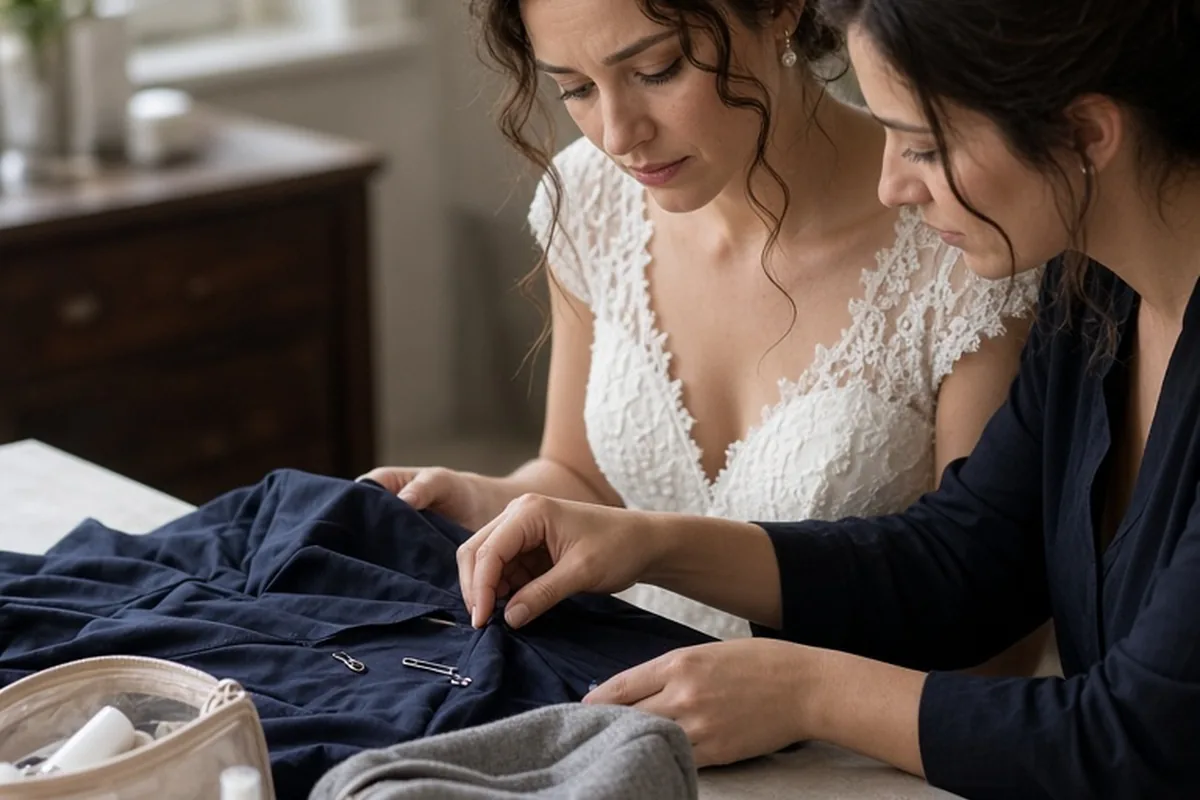
Wedding day emergency kit alternatives replace generic pre-packaged bridal kits with role-specific pouches, vendor-provided professional supplies, bathroom hospitality baskets, or a rolling utility caddy. Instead of buying a commercial kit with miniature, low-quality items, couples can coordinate with their wedding planner or venue coordinator, build custom kits using household products tailored to their specific fabrics and skin tones, or designate a local delivery plan to handle unexpected wardrobe, beauty, and health mishaps effectively.
Pre-packaged commercial wedding emergency kits often promise convenience in a compact zippered pouch, but they frequently contain novelty-sized tools, flimsy safety pins, and generic cosmetics that fail when an actual wardrobe malfunction or beauty hiccup occurs on a busy wedding morning.
The Practical Limitations of Pre-Packaged Commercial Kits
Commercial wedding emergency kits marketed online and in bridal boutiques are designed as novelty gifts rather than functional problem-solvers. These kits typically contain miniature versions of common drugstore items, such as a sewing kit with two pre-threaded needles in white and pink, a single adhesive bandage, tiny plastic scissors that struggle to cut through garment tags, and generic fashion tape that loses its grip in humid weather. Because manufacturers build these kits for broad appeal, they cannot account for your specific wardrobe fabrics, bridal party skin tones, hair textures, or personal medical requirements.
Relying on a single store-bought kit often creates a false sense of security. When a zipper splits on a heavy crepe bridesmaid dress or a boutonniere pin snaps under the weight of a thick floral stem, standard miniature tools are rarely strong enough to resolve the issue. Exploring intentional alternatives allows you to focus on durable, full-sized tools and targeted supplies that address the real points of failure on a wedding day without overpaying for unnecessary packaging and disposable trinkets.
Auditing Vendor Equipment to Avoid Duplicate Emergency Supplies
Before purchasing or assembling any emergency supplies, check the inventory carried by your hired professionals. Experienced full-service wedding planners, day-of coordinators, professional hair stylists, makeup artists, and bridal dressers routinely carry commercial-grade kits designed to handle venue-level disasters. A professional planner's kit often includes heavy-duty handheld steamers, industrial fabric clamps, corsage pins, pliers, lighters, lint rollers, and professional sewing gear that far exceed the quality of consumer kits.
Schedule a brief conversation with your lead vendors or ask during your final venue walkthrough what items they provide on-site. Ask your beauty team whether they carry extra lash glue, hair pins matched to your hair shade, and professional setting sprays for touchups. Inquire if your venue coordinator has a central first-aid kit and garment-care station available in the dressing suite. Once you know what your team brings, you only need to supply personal essentials, such as prescription medications, specialized stain removers safe for your specific attire, and comfort items.
Designing Role-Based Pouches for Attendants and Family
A major flaw of the traditional single emergency kit is accessibility. When an issue happens during outdoor portraits or right before the processional, hunting down one central pouch hidden inside a bridal suite luggage pile wastes valuable time. A decentralized alternative involves creating compact, role-specific pouches given directly to the Maid of Honor, Best Man, parents, or lead attendants who will be standing near the couple throughout the day.
A suit-and-tuxedo attendant pouch can focus on men's tailoring challenges: extra metal collar stays, black dress socks, cufflink backings, a compact lint roller, shoe-shine sponges, a pocket comb, and breathable blister pads. Meanwhile, a gown-focused attendant pouch should contain heavy-duty safety pins that can hold dense multi-layered skirts, a metal crochet hook to fasten tiny fabric-covered dress buttons quickly, translucent blotting sheets, oil-free breath mints, and fabric-safe topstick tape. Distributing these small pouches ensures the right fix is always within arm's reach.
The Multi-Compartment Utility Caddy for the Dressing Suite
If you prefer to keep all contingency items in one central location for your entire wedding party, a clear multi-tier utility caddy or tackle box is significantly more functional than a small fabric pouch. Clear craft organizers, hanging toiletry organizers, or rolling tiered craft carts allow everyone to see available supplies instantly without dumping the entire contents onto a dressing table.
Organize the caddy into distinct visual zones to streamline morning preparations. Dedicate one section to wardrobe engineering, featuring heavy-duty shears, hem tape, safety pins sorted by size, a garment steamer, and white chalk for spot treatment. Reserve a second zone for personal wellness, including electrolyte powder packets, antacids, pain relievers, eye drops, and blister cushions. Keep a third compartment for hair and makeup maintenance with travel-sized hairsprays, spoolies, makeup remover wipes, and cotton swabs. Labeling these compartments prevents clutter and allows bridal party members to find what they need without interrupting the couple.
Restroom Hospitality Baskets as a Shared Guest Solution
Instead of hoarding supplies solely inside the private dressing room, converting your emergency kit strategy into venue restroom hospitality baskets solves problems for the couple, wedding party, and guests simultaneously. Well-stocked baskets placed in the primary event restrooms provide immediate access to everyday fixes during the cocktail hour and reception, long after the dressing suite has been locked or packed up.
Effective restroom baskets feature full-sized, pump-action or individually wrapped items that maintain hygiene throughout the night. Popular inclusions include individual dental floss picks, breath spray, lint rollers, spray deodorant, hand lotion, stain-remover wipes, hair ties, and blister patches. Before placing over-the-counter medications in public restrooms, verify your venue's safety policies, as some properties prohibit leaving loose pain relievers or antacids in communal areas where unattended children might access them.
Establishing an On-Demand Delivery and Runner Protocol
Even the most thorough emergency kit cannot anticipate every rare scenario, such as a broken shoe heel, a forgotten dress shirt, or an unexpected allergic reaction requiring a specific topical cream. Instead of packing heavy luggage filled with obscure items you will likely never use, establish an on-demand runner strategy that relies on modern local delivery services or a trusted designated contact.
Identify a family friend or reliable usher who is not in the immediate wedding party and designate them as the official morning logistics contact. Provide them with a prepaid card or digital payment authorization to handle emergency errands. Additionally, check the availability of delivery apps such as DoorDash, Instacart, or local pharmacy couriers at your getting-ready location ahead of time. Knowing that a missing pair of dress socks or specialized beauty product can arrive at the bridal suite in thirty minutes eliminates the pressure to pack an oversized emergency kit.
Fabric-Safe Stain and Hardware Solutions for Fine Wedding Attire
One of the biggest hazards of generic emergency kits is the inclusion of standard chemical stain-remover pens. When applied to delicate silk, satin, chiffon, or mikado fabrics, water-based chemical pens often lift the dye, create permanent water rings, or spread oil-based makeup stains deeper into the weave. Replacing generic pens with fabric-safe alternatives prevents accidental textile damage.
Keep plain white chalk, non-scented talcum powder, or cornstarch in your wardrobe kit to mask grease spots, oil splatters, or makeup smudges on light-colored bridal gowns by absorbing the residue and blending into the fabric without liquid. For dark suits and tuxedos, keep a dry foam sponge designed to erase deodorant streaks on contact without leaving moisture behind. Pair these with professional-grade toupee tape or medical silicone tape, which provide substantially higher tensile strength and skin safety than generic fashion tape.
Building a Budget-Friendly Kit from Everyday Household Supplies
Creating a customized alternative to a commercial kit does not require buying expensive specialty goods. Most households already contain the core components needed for a resilient wedding contingency kit in their bathroom cabinets, sewing baskets, and utility drawers. Gathering existing full-sized items and packing them into a reusable tote bag saves money while delivering higher quality.
Audit your home for reliable, full-sized tools you already trust, such as sharp sewing scissors, your preferred brand of waterproof band-aids, high-hold hairspray, tweezers, and specialized blister gels. If you need additional items, purchase multipacks of essentials like bobby pins and safety pins from local discount stores and split them across your bridal party bags, home supply, and restroom baskets. This practical approach ensures every tool is dependable and familiar when you need to use it under pressure.
Frequently asked questions
Do professional wedding planners usually provide emergency kits?
Yes, most professional wedding planners and month-of coordinators carry extensive commercial kits containing steamers, sewing tools, first-aid items, and hardware. Check with your planner during your final preparation meeting to see their specific inventory list before building your own kit.
What is the most commonly overlooked emergency item for bridal attire?
A sturdy metal crochet hook is frequently overlooked. It allows attendants to fasten dozens of tiny fabric-covered buttons on the back of a wedding dress or bustle in minutes without sore fingers or damaged manicures.
Can I leave over-the-counter pain medications in guest restroom baskets?
Venues have differing liability rules regarding open medications in public restrooms. Always check your venue contract first; if open medicines are restricted, keep pain relievers in a private bridal suite organizer or ask attendants to carry them individually.
Your next step
Review your venue and planner contracts today to see what emergency gear they provide, then assemble a simple, role-based pouch of personal essentials tailored to your specific wardrobe.