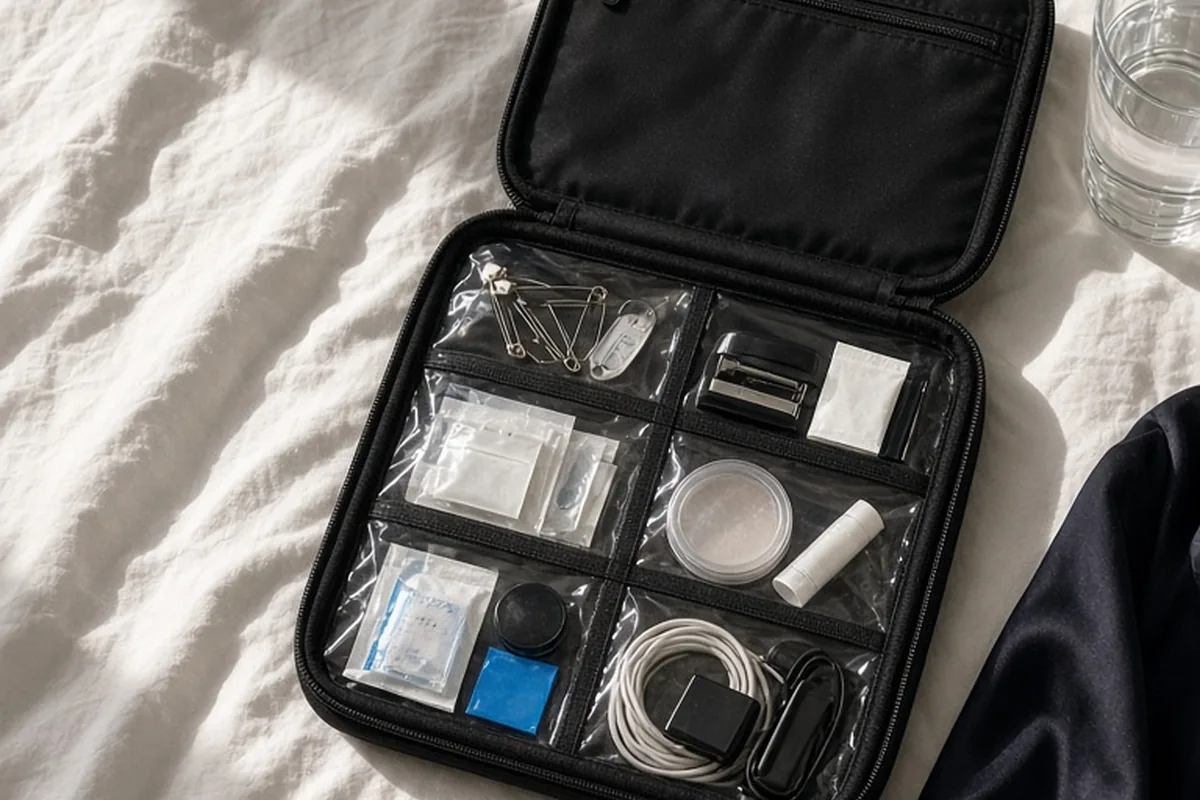
A wedding day emergency kit checklist includes wardrobe repair tools, personal first aid, beauty touch-ups, and utility hardware. Essential supplies include safety pins, a sewing kit, clear fashion tape, stain remover wipes, blister cushions, pain relievers, translucent powder, hairpins, blotting sheets, portable phone chargers, and a garment steamer. Organize these items in labeled, clear pouches and assign a trusted attendant or day-of coordinator to manage the kit throughout the event.
Even the most meticulously planned weddings encounter unexpected friction, such as a loose button, a sudden headache, an oily forehead before portraits, or a scuffed shoe. Having a dedicated emergency kit on site ensures minor inconveniences remain brief logistical footnotes rather than stressful disruptions to your schedule.
Wardrobe and Garment Fixes for Delicate Wedding Attire
Wardrobe malfunctions are among the most common wedding day disruptions, ranging from stepped-on hems to split seams and snagged lace. Your garment care sub-kit needs to account for delicate fabrics like silk, tulle, organza, and crepe, as well as heavy tuxedo wools and structured corsetry. Standard safety pins are essential, but you should pack them in multiple sizes and finishes, including matte white and black, to blend seamlessly against different garments without drawing attention under direct lighting.
Include a pre-threaded needle set with neutral tones such as ivory, white, grey, and black, alongside heavy-duty clear fashion tape to secure shifting necklines or gap-prone button plackets. Fabric-friendly stain treatment wipes or pens should be tested on an inconspicuous seam beforehand, as harsh solvents can leave water rings on silk or satin. A stick of plain white chalk or a pouch of cornstarch provides an immediate dry fix to disguise oil stains, makeup transfer, or scuffs on white bridal gowns when liquid cleaners might spread the pigment.
Do not overlook smaller structural accessories that keep formalwear crisp. Pack spare cufflinks, collar stays, black and white spare buttons, a small lint roller, and a handheld static-guard spray to prevent synthetic linings from clinging in dry venue air. A small crochet hook is also invaluable for quickly fastening long rows of tight satin buttons without stressing the loops or damaging manicured fingernails.
First Aid and Personal Comfort Supplies for Long Event Days
A wedding day frequently spans twelve to sixteen hours of standing, moving between temperature-controlled rooms and outdoor environments, and sustained social energy. Physical discomfort easily builds up if minor ailments are not addressed immediately. Your first aid selection should focus on everyday physical relief rather than complex medical equipment, ensuring the wedding party remains energized and comfortable from pre-ceremony photos through the final dance.
Hydrocolloid blister cushions and anti-friction foot sticks are critical additions. Dress shoes, heels, and new formal footwear often cause friction hot spots within the first hour of portraits, and standard bandages tend to slip off once feet get warm. Pair these with pain relievers, antacids for nervous stomachs, non-drowsy antihistamines, anti-diarrheal medication, and soothing eye drops to clear redness caused by lack of sleep, emotional tears, or contact lens irritation.
Personal hygiene and comfort items also belong in this category. Pack single-use deodorant wipes, individually wrapped feminine hygiene products, breath strips or mini mints instead of chewing gum, unscented hand lotion, and electrolyte hydration packets that can be mixed into bottled water. Having compact nail clippers, an emery board, and a small tube of fast-drying liquid bandage will resolve painful hangnails or minor paper cuts before they snag on fine lace or soil light-colored fabrics.
Hair and Makeup Touch-Up Essentials for Photos and Transitions
Professional hair and makeup artists build looks designed to withstand tears and movement, but environmental factors like humidity, wind, and hugging guests will require maintenance. Your beauty emergency kit should focus on supporting and refreshing the original application rather than attempting full reapplications on a tight schedule. Blotting papers and a finely milled translucent pressed powder with a clean sponge are foundational for controlling shine without adding heavy, cakey layers of pigment.
Keep a collection of hairpins and bobby pins matched specifically to the hair colors of the couple and the wedding party. A travel-sized flexible-hold hairspray allows you to tame flyaways without creating stiff residue, while a clean spoolie brush or edge-taming wand helps smooth down baby hairs along the hairline. Clear, brush-on eyelash adhesive is vital for securing lifting false lash corners, which often loosen after emotional ceremony vows or outdoor wind exposure.
Include the exact lip color, pencil, and clear gloss or hydrating balm chosen during the bridal trial, as eating, drinking, and regular speech wear down lip products rapidly. Cotton swabs with pointed precision tips allow for clean smudge corrections around the lash line and lower eyelids without wiping away foundation. A compact mirror with built-in LED lighting ensures touch-ups can happen discreetly in dim bridal suites, transit vans, or venue hallways.
Technical Tools, Hardware, and Utility Supplies
Beyond clothing and personal care, day-of logistics regularly demand practical hardware to handle unexpected environmental or physical obstacles. A compact utility kit solves small venue and decor complications that could otherwise cause delays. A sharp pair of fabric shears or embroidery scissors is essential for cutting hanging garment tags, trimming loose threads cleanly, or adjusting ribbon lengths on floral arrangements without fraying the edges.
Pack a high-capacity portable power bank alongside multi-tip charging cables compatible with both modern USB-C and older device ports. Bridal suites often have limited, awkwardly placed wall outlets that quickly become crowded with hair styling tools, leaving personal phones without power when coordinating with vendors. A mini multi-bit screwdriver can tighten loose sunglasses arms, secure floral frames, or adjust small structural components on decorative displays.
Consider environmental management items as well. A handheld garment steamer is far safer and more effective for smoothing transit wrinkles than venue irons, provided it is filled only with distilled water to prevent mineral spitting on fine fabrics. A miniature lighter helps sear synthetic ribbon ends to prevent unraveling and lights ceremonial candles if the venue matches go missing. Pack two compact umbrellas and a battery-operated handheld fan to manage sudden rain showers or unexpected heat during outdoor photo sessions.
Organizing, Packing, and Assigning the Emergency Kit System
An extensive checklist is only useful if items can be located in seconds during an urgent situation. Packing everything loose into a single duffel bag creates clutter and forces your wedding party to dump out supplies during stressful moments. Use a multi-compartment carrier, such as a hanging toiletry organizer, a tiered craft caddy, or a set of clear vinyl zippered pouches labeled by category: Wardrobe, Medical, Beauty, and Hardware.
Assigning clear ownership of the emergency kit is just as important as packing the right tools. The couple should never carry or manage this kit personally. Designate a trusted individual, such as the maid of honor, a personal attendant, or the professional day-of coordinator, to oversee the kit. This person should know exactly where the main organizer is stationed in the dressing suite and carry a compact, palm-sized clutch containing high-frequency essentials—such as fashion tape, mints, blotting sheets, and safety pins—during the portrait sessions and ceremony transitions.
Prepare a transition plan for moving the kit between locations. If your wedding involves getting ready at a hotel, holding the ceremony at a place of worship, and hosting the reception at an event venue, the designated kit keeper must ensure the organizer travels in the primary bridal transport vehicle. Once at the reception, place the kit in a designated, secure spot in the bridal holding room or behind the DJ or coordinator's station so anyone in the wedding party can access it instantly.
Fast Resolution Strategies for Common Wedding Day Mishaps
Knowing how to use emergency supplies correctly under time constraints prevents well-intentioned fixes from making a problem worse. For example, when treating a beverage or food spill on delicate formalwear, never scrub the fabric vigorously, as friction can break delicate silk fibers or push pigment deeper into the weave. Instead, place a clean white paper towel behind the layer and gently press a clean, damp cloth or stain wipe from the outer edge of the spot inward to lift the residue without spreading it.
When dealing with stuck or separated metal or nylon zippers, avoid pulling forcefully, which can tear the surrounding teeth or fabric backing. Rubbing the tip of a graphite pencil or a dry bar of clear unscented soap along the zipper teeth provides dry lubrication that helps the slider move smoothly. If a zipper pull snaps completely off, thread a sturdy safety pin or a matching paperclip through the slider head as a temporary mechanical lever, then conceal it under the dress fold or jacket flap.
If a boutonniere pin bends or fails to hold heavy blooms upright against a lapel, use a small piece of floral tape or clear fashion tape behind the stem to anchor it flush to the fabric before securing it from behind with two crossed safety pins. For scuffed leather shoes, a dab of unscented neutral hand cream buffed with a soft microfiber cloth will restore shine and reduce the appearance of surface scratches when dedicated shoe polish is unavailable.
Frequently asked questions
Should I buy a pre-made wedding emergency kit or build my own?
Building your own emergency kit allows you to customize supplies to your specific wardrobe fabrics, bridal party health needs, and exact makeup shades. Pre-made commercial kits provide a convenient starting base, but they often contain trial sizes that run out quickly and lack customized items like your specific lip color, prescription-safe medications, and specialized fabric tools.
Who should be responsible for carrying the emergency kit on the wedding day?
The day-of coordinator, maid of honor, or an organized personal attendant should manage the emergency kit. The couple should not worry about transporting supplies, so ensure your designated kit manager knows where the bag is stored and carries a mini pouch of high-priority essentials during photo sessions.
How far in advance should the emergency kit be packed?
Assemble and organize your emergency kit at least two to three weeks before the wedding date. This timeline gives you sufficient margin to purchase missing items, check expiration dates on over-the-counter medications, and test stain removers on spare fabric swatches from your garment alterations.
What items are most frequently used from a wedding day emergency kit?
The most frequently used supplies are blister cushions, pain relievers, safety pins, fashion tape, breath mints, and blotting papers. Preparing generous quantities of these specific items ensures you do not run out during high-activity portions of the day.
Your next step
Download or print this checklist, cross-reference it against your wedding attire and venue requirements, and begin assembling your categorized pouches into a single travel container two weeks before your event.