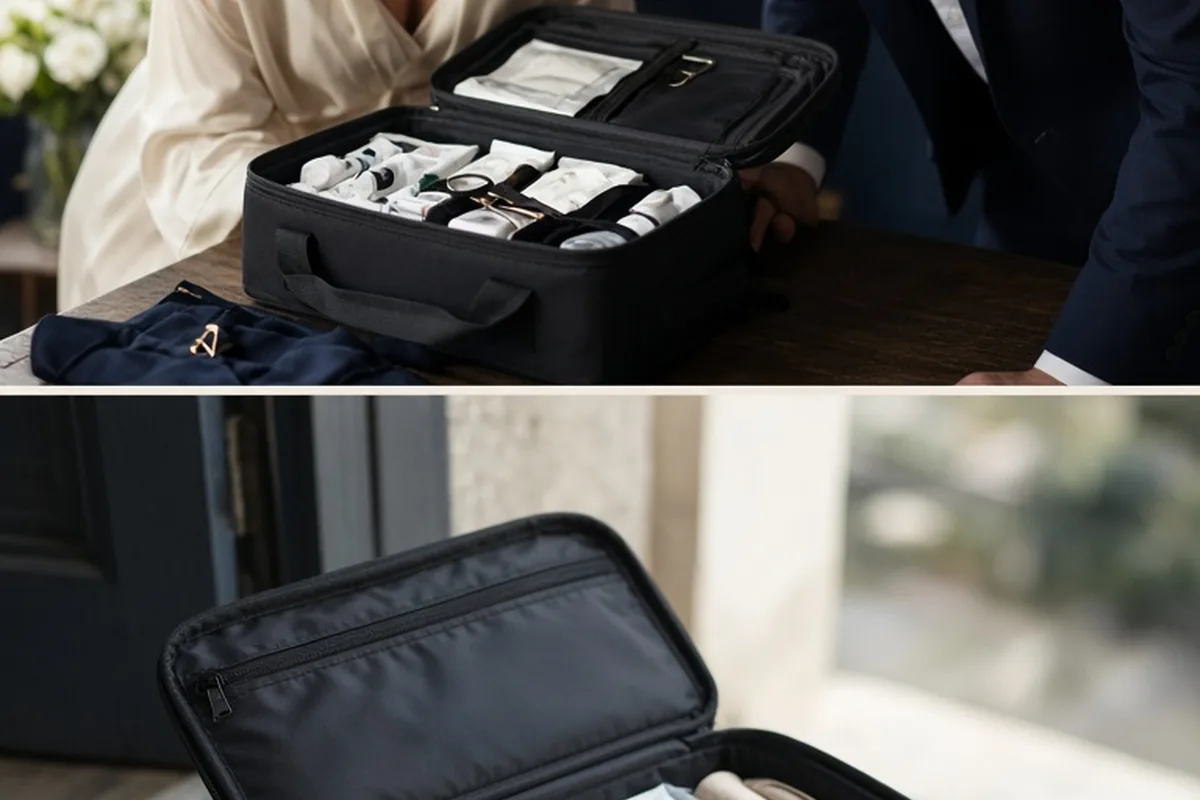
A wedding day emergency kit contract checklist verifies that your vendor agreement clearly defines who provides the kit, which specific supplies are included, and who handles garment repairs or inventory restocking. It must outline liability boundaries for over-the-counter medications and delicate fabric stain removal, detail any additional usage fees, and specify where the kit is accessible throughout preparation, ceremony, and reception transitions.
Wedding morning mishaps happen quickly, from snapped bustle loops and popped tuxedo buttons to sudden headaches or spilled wine on silk. While many wedding planners, bridal concierges, and day-of coordinators advertise an emergency kit as part of their service, the legal and practical terms governing that kit vary significantly across vendor agreements.
Assigning Kit Ownership and Onsite Management Responsibilities
A standard service contract should explicitly name the vendor responsible for maintaining, transporting, and managing the emergency kit. In many full-service wedding planning contracts, the kit is categorized as professional tooling supplied by the primary coordinator. In other scenarios, bridal dressers, hair and makeup teams, or day-of bridal concierges carry specialized kits tailored to their trade. When contracts simply state that emergency supplies are provided, ambiguity can leave critical gaps if two vendors assume the other is bringing specific hardware or tailoring items.
Your contract must distinguish between an unmonitored drop-off kit and an actively managed service. An unmonitored kit is essentially a curated tackle box left in the dressing suite for the wedding party to use independently. An actively managed kit means a trained professional is physically present to execute quick garment fixes, steam dresses, pin boutonnieres, or address wardrobe malfunctions. Review the staffing clauses in your agreement to confirm whether the vendor will stay on hand to deploy supplies or if their operational role ends once the materials are delivered to the bridal suite.
Garment Care, Emergency Alterations, and Fabric Liability Limits
Wardrobe emergencies require specialized tools such as sewing needles, heavy-duty thread, safety pins, hem tape, seam rippers, and stain-absorbing powders. However, handling luxury bridal textiles involves legal risk. Professional wedding planners and bridal stylists regularly include limitation-of-liability clauses regarding garment care. If a coordinator attempts to remove an oil stain from a silk satin bodice or cuts into an intricate lace applique during an emergency bustle repair, the contract must clarify who bears financial responsibility for any resulting fabric damage.
Check whether your vendor contract restricts the types of fabric treatments or alterations the vendor is authorized to perform. Many agreements specify that emergency fixes are temporary, structural stopgaps rather than permanent tailoring, and they explicitly disclaim liability for dye bleeding, fabric discoloration, or accidental snags. If you are wearing a vintage, rented, or high-value couture gown, confirm whether your contract requires written consent before a vendor applies chemical spot cleaners, adhesives, or hot irons to the garment.
Medical and Topical Supply Restrictions in Vendor Agreements
One of the most frequent points of confusion in wedding day emergency kits involves over-the-counter medications, pain relievers, antacids, allergy treatments, and blister patches. Because of licensing laws and insurance liabilities, professional wedding vendors generally cannot legally dispense, distribute, or administer ingestible medication to clients or wedding guests. A well-drafted vendor contract will explicitly outline these medical restrictions to protect both parties.
Contracts typically handle first aid in one of two ways: either the kit completely excludes internal medicines, or the vendor carries an open-access first aid caddy from which clients and guests must self-select and self-administer any over-the-counter remedies. Ensure the contract states this boundary clearly so you know in advance if you must assemble your own personal supply of prescription medications, specialized allergy treatments, eye drops, or daily pain relievers for your wedding party.
Restocking Fees, Consumables, and Supply Ownership Clauses
Emergency kits contain two distinct categories of items: reusable capital equipment and consumable supplies. Reusable equipment includes garment steamers, professional tailoring scissors, handheld fans, charging banks, and styling tools. Consumables include static guard, lint roller sheets, fashion tape, breath mints, bobby pins, sewing thread, and blister bandages. The contract should clarify whether the cost of consumables is built into the vendor package or billed on a post-event basis.
Some vendor agreements include a clause stipulating that any depletion of high-cost items, specialized dress tape, or entire multipacks will be invoiced after the wedding as a restocking fee. Other vendors treat standard consumables as an overhead business expense with no additional line-item billing. Check your payment and incidentals terms for any language regarding reimbursement for emergency supplies, and ask how the vendor tracks and verifies consumed items to prevent surprise charges after the wedding.
Kit Accessibility and Staging Logistics Across Multiple Wedding Venues
A comprehensive emergency kit is useless if it is locked in a vendor vehicle or left at a prep hotel while the bridal party is taking photos at an offsite park. The logistics section of your vendor agreement or timeline addendum should define how and where emergency supplies travel throughout the event. If your wedding involves multiple locations, such as a morning preparation suite, a separate ceremony venue, an outdoor photography site, and an evening reception hall, the contract must account for kit transit.
Specify in your scheduling agreement who carries the mobile emergency pack during formal photo sessions and transit windows. A compact mobile kit should contain immediate essentials like clear umbrella packs, blotting papers, bobby pins, safety pins, and hem tape, while the heavy-duty restoration kit with professional steamers and hardware can transfer directly to the primary reception venue. Clear scheduling terms prevent scenarios where a bridal party is stranded without quick-fix supplies during pre-ceremony portraits.
Identifying Contractual Red Flags and Ambiguous Emergency Kit Language
When reviewing wedding vendor contracts, be cautious of vague one-line promises such as full emergency kit provided on site without any accompanying parameters. Such language leaves critical operational questions unanswered, including what happens if high-draw electrical equipment like commercial steamers trips a venue circuit breaker, or who is responsible for securing delicate items against loss in shared dressing suites.
Another potential red flag is an overly broad indemnification clause that attempts to absolve the vendor of ordinary professional negligence during hands-on wardrobe assistance. While it is reasonable for a vendor to protect themselves against unavoidable fabric reactions, you should ensure the contract does not permit untrained personnel to use aggressive tools or adhesives without your knowledge. Ensure all terms regarding kit contents, staff training, and equipment usage are stated in plain, unambiguous language before finalizing the agreement.
Wedding Day Emergency Kit Contract Review Checklist
Before signing your wedding planning, day-of coordination, or bridal styling agreement, cross-reference the written contract against this functional checklist to verify that all expectations, liabilities, and operational duties are clearly documented. Use these specific checklist points during contract negotiations to confirm complete alignment between you and your service provider.
First, confirm vendor staffing by checking whether the agreement states that a dedicated coordinator or assistant will manage the kit in person throughout the event. Second, verify the inventory scope by confirming whether the vendor provides both hardware tools and consumable supplies. Third, review the medication policy to verify what over-the-counter remedies you must bring yourself. Fourth, examine the garment alteration liability terms to understand how fabric risks are handled. Finally, confirm transition protocols to ensure emergency supplies remain accessible during offsite photo sessions and venue moves.
Frequently asked questions
Can a wedding coordinator legally give pain medication to a bride or groom?
Most professional wedding coordinators do not dispense or hand out medication directly due to insurance regulations and personal liability laws. They may provide an accessible, self-serve first aid station where individuals can review the packaging and choose their own over-the-counter remedies.
Are emergency kit supplies usually included in wedding planner fees?
Basic emergency kit access and standard consumables like bobby pins, safety pins, and tape are typically included in full-service and day-of coordination packages. However, contracts vary, and some vendors may bill separately for significant restocking or specialty garment care products.
What should the bride supply separately even if the vendor provides a kit?
You should always personally pack prescription medications, specialized skincare or allergy treatments, matching touch-up lip products, duplicate contact lenses, and replacement earring backs. These personal items are customized to your specific health and beauty needs.
What happens if a vendor damages a wedding dress while attempting a stain removal?
Most vendor contracts contain limitation-of-liability clauses stating that emergency stain treatments or temporary stitching are performed at the client's risk. Review your contract's liability section to confirm whether written authorization is required before chemical spot cleaners are applied.
Your next step
Pull out your current wedding planner or day-of coordinator contract and verify that emergency kit ownership, medication rules, and fabric liability terms are written explicitly into the scope of services.