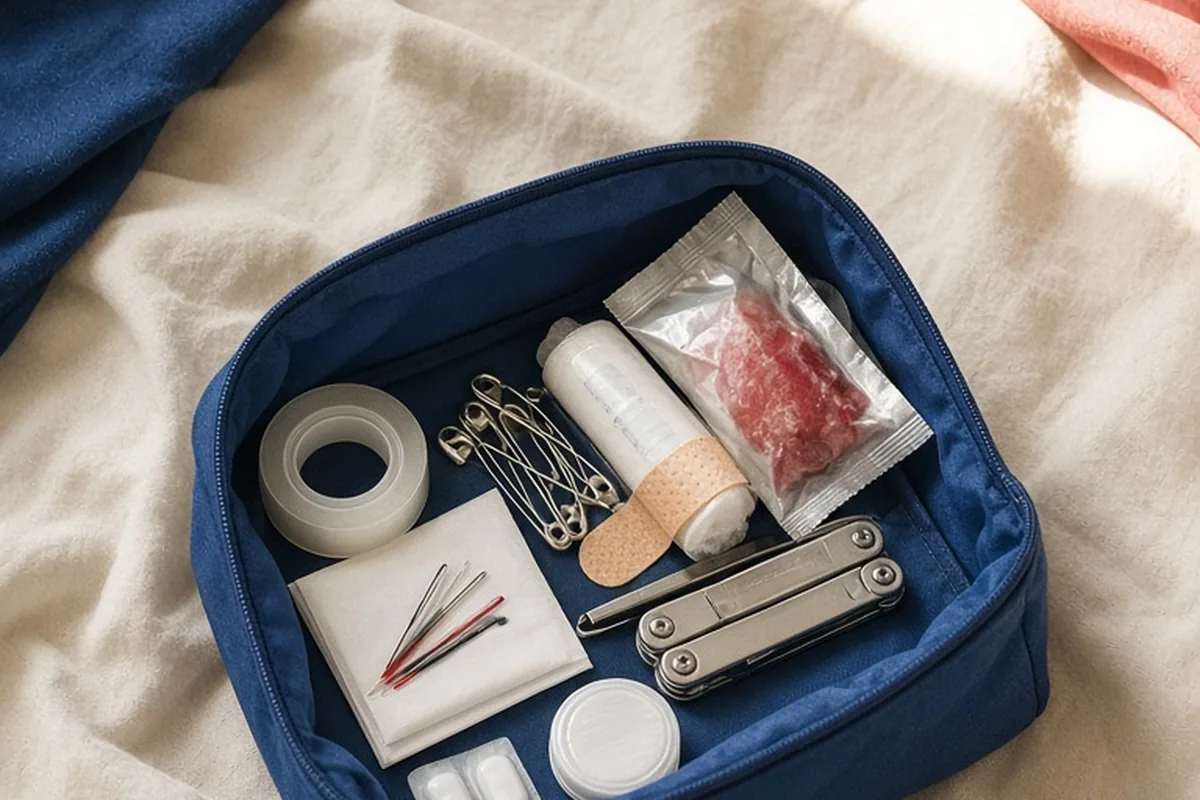
A wedding day emergency kit for small weddings focuses on wardrobe repairs, comfort, and unexpected venue hurdles without packing industrial clutter. Intimate ceremonies often lack full-day coordinators or large bridal parties, meaning couples handle sudden issues directly. Practical kit items include clear fabric tape, pre-threaded sewing needles, safety pins, blister bandages, stain-lifting wipes, compact multi-tools, travel pain relievers, and breath mints. Pack these essentials in a designated, organized pouch assigned to a trusted guest.
Intimate weddings, micro-weddings, and private elopements offer relaxed schedules and deep personal connections, but they also change how unexpected hitches get handled on site. Without a venue banquet manager, on-site bridal attendant, or expansive wedding party circulating through the dressing rooms, the couple and their closest guests must manage any wardrobe snag, scuffed heel, or sudden weather change on their own. Creating a focused emergency kit specifically suited to a smaller celebration helps you address surprises quietly and keep the focus on the moment.
Small Wedding Logistics: Why Intimate Gatherings Need a Tailored Kit
Large weddings often assemble oversized plastic storage tubs filled with duplicates of everything from curling irons to spare neckties. In an intimate setting, such as a rented historic home, a private garden patio, or a quiet backcountry overlook, oversized storage bins create unnecessary clutter and can easily be misplaced during venue transitions. A small wedding emergency kit must be compact enough to move quickly between lodging, photo sites, and dinner tables, while still covering the specific vulnerabilities that smaller groups encounter.
Small gatherings also lack the buffer of sheer numbers. At a two-hundred-person reception, a guest who forgets a stain pen or spare cufflink can easily borrow one from someone in the crowd. In a gathering of fifteen to forty people, every guest is in close proximity, every family member is frequently photographed, and there is no sprawling secondary crew to run last-minute errands. If an outdoor gust snaps a boutonniere pin or a wine splash lands on a jacket lapel, you need the right solution within arm's reach rather than a thirty-minute drive away at a local convenience store.
Because spaces at intimate venues can be tight, your kit should fit neatly inside a sturdy, multi-pocket toiletry bag or divided packing cube rather than an open tote bag. Clear zippered pouches allow anyone in your inner circle to locate a critical item instantly without dumping contents onto a crowded makeup table. Designing your kit around your specific venue type, transport requirements, and clothing choices turns potential stress points into simple, thirty-second corrections.
Garment and Fabric Fixes for High-Resolution and Close-Up Photos
In a micro-wedding, photographers spend significantly more time capturing close portraits, candid conversation shots, and detailed embraces. Wrinkled hems, gaping buttonholes, and unexpected fabric pulls are far more noticeable in intimate photos than in wide-angle banquet shots. Wardrobe repair items form the primary backbone of any wedding kit, but you should select tools tailored to delicate silks, structured wools, or lace rather than heavy hardware store fixes.
Pre-threaded sewing needles in white, ivory, neutral beige, and black eliminate the frustration of trying to thread an eyelet while hands are shaking or time is running short. Pair these with heavy-duty safety pins in multiple finishes so you can secure a broken bustle or anchor a loosened strap from the underside of a garment without visible silver metal reflecting the camera flash. High-grade double-sided apparel tape is equally vital for keeping necklines flat, securing pocket squares, or tacking down a lifted hem when you do not have time to stitch it by hand.
Stain management requires a balanced approach. Pre-moistened, individually wrapped fabric wipes and gentle chalk sticks work far better than traditional liquid stain pens, which can leave noticeable rings or wet outlines on silk, satin, and chiffon. Keep a compact lint roller on hand for dark suits, especially if your venue is pet-friendly or surrounded by pollen-heavy floral arrangements. A miniature pair of precision scissors rounds out fabric care, ensuring you can cleanly snip a stray thread rather than pulling it and unraveling an entire seam.
Weather, Outdoor Terrain, and Remote Venue Preparations
Smaller ceremonies frequently take advantage of unconventional locations, including botanical terraces, windswept coastal headlands, park pavilions, and mountain overlooks. While these scenic settings provide memorable backdrops, they expose clothing, shoes, and guests to shifting elements that a conventional ballroom avoids. Factoring outdoor surfaces and temperature changes into your emergency kit protects both your comfort and your footwear.
Heel protectors and non-slip sole grips are essential for couples and guests navigating grass lawns, flagstone walkways, or wooden deck slats. Clear silicone heel caps widen the base of slender heels to prevent them from sinking into damp turf, protecting leather finishes and avoiding ankle twists. Keep a microfiber towel tucked into an outer pocket to wipe away morning moisture from ceremony benches, dry off shoes after damp portrait walks, or clean dust from leather boots before indoor toasts begin.
Sudden wind can unravel carefully styled updos or blow delicate veils off course. Pack extra matte bobby pins matching your hair color, a travel-sized finishing hairspray, and hidden hair weights or dress weights to hold lightweight fabrics steady during outdoor vows. If your venue is exposed to sun or high heat, include travel-size mineral sunscreen that absorbs without leaving greasy white residues on formal attire, alongside compact insect-repellent towelettes for woodland or waterside settings.
Touch-Up, Hygiene, and Comfort Essentials for Close Quarters
At an intimate reception, you will spend your entire afternoon and evening interacting closely with every single guest. Without a separated head table to insulate you from the crowd, freshness and personal comfort are paramount. The goal is not to bring a duplicate of your entire dressing vanity, but rather to keep targeted grooming supplies accessible for quick, discreet refreshes between the ceremony and dinner.
Oil-blotting papers are an indispensable comfort item because they absorb shine from foreheads and noses without disturbing makeup or creating the cakey buildup that repeated powdering can cause. Individually packaged dental flossers and gentle breath mints are far more practical than chewing gum, which can show up awkwardly in spontaneous photography. Keep a travel-size antiperspirant spray or deodorant wipe in the kit to renew personal confidence after energetic photos or hot midday sun.
Shoe discomfort can derail an intimate evening faster than almost anything else. Prepare for friction by stocking hydrocolloid blister bandages and anti-friction chafe sticks before hot spots turn into open wounds. Adding clear silicone arch cushions or heel grips gives immediate relief if your wedding footwear starts rubbing unexpectedly during your first dance or a brief stroll around the grounds.
Tooling, Fasteners, and Technical Supplies for DIY Setups
Small weddings often feature a high degree of personal involvement, with couples, siblings, or close friends arranging signage, floral centerpieces, sound gear, and place cards themselves. When you are managing your own decorative details, standard household fasteners become essential problem-solvers. Having practical hardware supplies in your emergency pouch prevents an awkward scramble when an easel wobbles or an electrical cord creates a tripping hazard.
A slim, pocket-sized multi-tool containing pliers, a wire cutter, and a flathead screwdriver provides surprising utility throughout the day. It allows you to tighten a loose screw on a ceremony chair, trim excess wire from a flower arrangement, or pry open a stubborn shipping package. Pair this with a roll of clear florist tape, a small coil of floral wire, and miniature zip ties to quickly anchor drooping garland or secure lightweight welcome banners against sudden drafts.
Adhesive solutions should always be surface-safe to protect rental properties and historic venues from damage penalties. Removable mounting putty and matte gaffer tape hold seating cards, menus, and microphone cords in place securely without stripping paint or leaving sticky adhesive residue behind on wooden floors. Finally, pack an extra multi-cable phone charger and a fully charged portable power bank; your personal phone frequently serves as your music controller, vendor contact directory, and navigation hub for guests arriving at an unfamiliar address.
Health, Hydration, and Calming First-Aid Basics
Wedding schedules, excitement, and shifting meal times can easily trigger headaches, indigestion, or fatigue. Because intimate ceremonies move smoothly without the prolonged lulls typical of massive banquets, the couple has fewer opportunities to slip away unnoticed to locate a medicine cabinet. Including a curated selection of over-the-counter wellness basics keeps everyone feeling steady from morning preparation through the final send-off.
Assemble small blister packs or travel tubes of common pain relievers, non-drowsy antihistamines, antacids, and anti-diarrhea tablets. It is equally helpful to pack eye-rewetting drops, especially for contact lens wearers facing windy outdoor vows or dry indoor heating. Standard first-aid supplies should focus on minor, practical abrasions: assorted flexible adhesive bandages, antiseptic cleansing wipes, and a small tube of soothing skin ointment to treat small cuts, zipper pinches, or paper cuts from stationary.
Dehydration is a quiet threat during celebratory days filled with champagne toasts, coffee, and emotional conversations. Pack a few individually portioned electrolyte drink powder packets that can be mixed into a glass of tap water in seconds. Pair these with protein bars or nut packets that do not melt or crumble easily; having a quick, nutrient-dense bite nearby prevents lightheadedness and irritability when photos run long before the sit-down meal begins.
Assigning Ownership and Packing the Kit Efficiently
Even the most thoughtfully curated emergency kit is useless if nobody knows where it is stored or who has access to it. At a small wedding, the couple should never personally carry or worry about locating the emergency pouch. Assigning kit ownership to one responsible family member, close friend, or day-of coordinator ensures that fixes happen rapidly without the couple having to step away from their guests.
Walk your designated kit keeper through the contents the day before the wedding. Show them where the bag will be stored during each phase of the day: in the primary preparation suite during morning getting-ready hours, behind the bar or near the sound equipment during the ceremony, and under the couple's table or near the coat rack during the reception dinner. Labeling internal compartments or using see-through mesh pockets prevents frantic rummaging during a quick touch-up window.
When packing the pouch, separate items logically by frequency of use. Keep items you may need within seconds—such as safety pins, blotting papers, mints, and fabric tape—in an easily accessible front sleeve. Deeper compartments can house items needed only in true anomalies, such as sewing needles, multi-tools, and technical fasteners. Keeping the overall footprint roughly the size of a standard dopp kit or small camera bag ensures it travels easily in any passenger vehicle without getting buried beneath luggage.
Frequently asked questions
What items should be left out of a small wedding emergency kit to save space?
Leave behind bulky full-size cans of hairspray, duplicate curling irons, oversized first-aid boxes, and full bottles of stain remover. Stick to travel-size grooming items, multi-use tools, and individually packaged wipes. If an item cannot fit inside a standard toiletry case, it is likely too large for an intimate wedding kit.
Can I buy a pre-made emergency kit instead of assembling one myself?
Commercial bridal kits offer convenience, but they often include miniature novelty items that are flimsy or impractical for specialized venues. If you purchase a pre-assembled kit, open it in advance to supplement it with your specific garment thread colors, comfortable blister dressings, and your preferred over-the-counter comfort items.
Who should hold the emergency kit if we do not have a bridal party?
Ask a parent, an organized sibling, an officiant, or a trusted close friend to be the guardian of the kit. Make sure they place the kit in a designated, consistent spot at each location so you or your partner can access it instantly without disrupting the flow of your gathering.
How far in advance should I pack our wedding day emergency supplies?
Pack your kit two to three weeks before the wedding date as you finalize clothing alterations and accessory choices. Assembling it early gives you time to pick up correct thread shades, verify that medication expiration dates are current, and ensure all portable power banks are fully charged.
Your next step
Take twenty minutes this week to inspect your ceremony attire, note your venue surfaces, and gather your wardrobe fasteners and comfort basics into a single compact pouch.