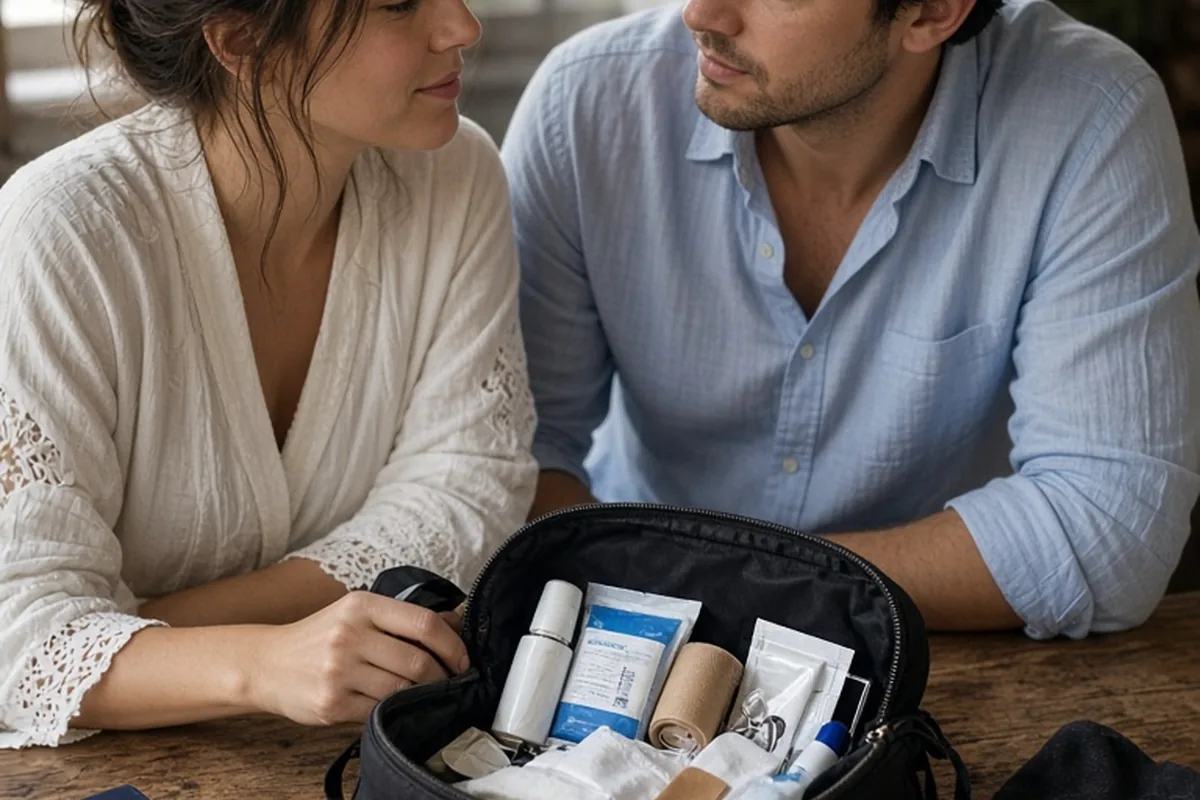
Couples planning a wedding day emergency kit must ask five primary questions: What supplies do our venue and planner already supply on-site? Who is physically transporting and managing the kit throughout the timeline? What specific fabric, hair, and medical needs are unique to our wedding party? Where will supplies be stored during key transitions? And which urgent items require dedicated backups? Clarifying these questions prevents duplicate spending, ensures quick access during wardrobe or health mishaps, and avoids uncoordinated chaos.
While generic checklists offer a starting point, unexpected issues on a wedding day usually come down to access, compatibility, and coordination rather than a lack of safety pins.
Wedding Day Emergency Kit Questions for Your Venue and Coordinator
Before purchasing miniature toiletries or specialized sewing tools, couples should schedule a direct conversation with their venue manager and professional wedding coordinator. Professional coordinators routinely bring exhaustive, industrial-grade emergency kits containing everything from professional garment steamers to heavy-duty shears, high-strength adhesives, and multi-tool hardware. Asking your coordinator what their kit specifically contains prevents you from spending personal funds on redundant items that a hired vendor already has on hand. Ask for an itemized list of what they bring, where they position their kit during each phase of the day, and whether their package includes hands-on assistance with minor garment repair or stain management.
Similarly, venues often have strict limitations or existing resources that influence what you should pack. Ask the venue coordinator whether the property maintains a commercial first-aid station, automated external defibrillators, or an inventory of utility equipment such as extension cords, zip ties, and ladders. Inquire about venue-specific restrictions, particularly regarding open flames, aerosol sprays, or certain types of adhesives that could damage historic millwork, vintage wallpaper, or polished stone flooring. Knowing whether the venue locks dressing suites once the ceremony begins is equally critical; if access is restricted after guests arrive, a kit left in a dressing room becomes useless during the reception.
Clarifying liability boundaries with both vendors is another practical necessity. Many venue contracts and coordinator insurance policies strictly prohibit staff from dispensing over-the-counter medications, treating minor cuts, or altering garments with needles while they are on a person. Asking these institutional boundary questions in advance clarifies who is authorized to administer basic comfort items and ensures that your personal kit bridges any regulatory gaps.
Wardrobe and Fabric Questions for Your Wedding Day Emergency Kit
Wedding attire involves a diverse mix of materials, from delicate silk crepe, lace, and tulle to stiff canvas, velvet, and structured wool. A generic emergency kit typically contains standard stain wipes, pre-threaded sewing needles with white cotton thread, and double-sided fashion tape. However, standard solutions can ruin specialty garments. Couples must ask their bridal salon, tailor, or seamstress how each specific fabric behaves under stress and what emergency measures are safe to use. Ask your tailor what thread weight and needle gauge are required to reattach a dropped hem or reinforce an intricate multi-point bustle without tearing the underlying gown.
Stain response requires equal precision. Traditional solvent-based stain wipes frequently leave noticeable water rings on untreated pure silk or delicate matte fabrics. Ask your alterations specialist which spot-cleaning techniques suit your exact attire, whether that involves plain white chalk for grease spots on light fabrics, cornstarch for absorbing oil, or distilled water applied with an un-dyed microfiber cloth. If a suit or tuxedo features dark wool, pack a compact horsehair lint brush rather than an ultra-sticky adhesive roller, which can leave residue on natural fibers.
Mechanical fasteners represent the most frequent clothing failure points. Ask whether your garments rely on delicate nylon zippers, heavy metal teeth, mother-of-pearl buttons, or hook-and-eye closures. A broken zipper pull can be temporarily secured with a small brass safety pin or a discrete zip tie, but only if the kit contains the correct dimensions. Pack extra clear nylon thread, heavy-duty safety pins that resist bending under tension, backup collar stays, spare cufflink hardware, and hem tape that holds securely against body heat and humidity.
Health, First-Aid, and Environmental Questions to Ask Before Packing
A functional emergency kit addresses personal wellness long before minor discomfort turns into an event disruption. Start by asking what physical demands the wedding timeline places on the couple and their attendants. Long hours of standing, restricted eating schedules, warm photography sessions, and emotional tension frequently trigger tension headaches, dehydration, gastric distress, and foot blisters. Rather than packing random pharmaceuticals, ask the immediate wedding party about common wellness needs, sensitivities, and seasonal allergy triggers so that appropriate remedies are readily accessible.
Storage conditions directly impact the safety and efficacy of personal care products. Outdoor summer ceremonies or unconditioned historic venues require asking whether your kit needs temperature protection. Certain prescription medicines, eye drops, and liquid cosmetics degrade when exposed to heat, while chocolate snacks, oil-based concealers, and lipsticks will liquefy if kept in an unshaded bridal suite or a hot vehicle trunk. Consider whether you need an insulated pouch with a reusable ice pack for items that must remain cool. Conversely, winter weddings demand extra skin hydration, barrier creams, and hand warmers.
Footwear management is another area requiring deliberate preparation. New dress shoes and high heels routinely cause friction points within two hours of wear. Ask whether anyone in the party has pre-broken-in footwear and pack blister-prevention friction sticks, hydrocolloid blister bandages, and gel cushions. Basic first-aid items should focus on practical utility: sterile antiseptic wipes, assorted adhesive bandages, liquid skin protectant, eye-soothing saline drops, and high-strength tweezers for handling splinters or securing small decorative accessories.
Comparing Pre-Packaged Commercial Kits Against Custom DIY Builds
Couples often weigh the convenience of purchasing a mass-market bridal emergency kit against the time required to build one from scratch. To evaluate which path fits your timeline and priorities, ask how thoroughly a commercial kit addresses your specific circumstances. Commercial kits offer compact, attractive packaging and cover elementary needs such as basic safety pins, miniature nail files, breath drops, and travel-sized sewing supplies. However, their containers are frequently cramped, leaving little room for personalized makeup, tailored thread matches, or prescription necessities.
Building a custom DIY kit requires sourcing items individually, which demands additional planning time but allows for superior quality and customization. Ask yourself whether your group has distinct beauty routines that commercial kits overlook, such as specific hair texture tools, textured hair pins, lash adhesive that matches the bridal party's lash extensions, or specialty blotting papers for reactive skin. Custom builds also allow you to include full-sized tools—such as sharp dressmaker scissors and industrial lint removers—that perform significantly better than miniature travel versions.
A hybrid strategy often delivers the most practical balance. If you purchase a pre-made commercial pouch for convenience, treat it as a foundational base rather than a complete solution. Review the contents item by item, discard expired or substandard components, and supplement the pouch with specialized fabric adhesives, extra quantities of critical pins, personal medications, and shade-matched cosmetic touch-ups. This approach preserves the organizational compactness of a commercial case while resolving the omissions inherent in one-size-fits-all manufacturing.
Custody and Timeline Questions: Who Holds the Kit and Where Does It Live?
An emergency kit provides zero utility if nobody knows where it is stored or who possesses the key to the room where it sits. Establishing kit custody is an operational question that couples must resolve well before rehearsal day. Designate a specific, highly organized attendant, family member, or wedding coordinator to act as the primary kit custodian. This person should be responsible for bringing the kit to the morning preparation venue, transferring it during the ceremony interval, and placing it in a discreet, universally known location during the evening reception.
Map the physical location of the kit across your day-of timeline. During morning preparations, the kit should rest on an open, visible vanity or central table away from wet sink counters. Prior to the ceremony, the custodian must evaluate whether an abbreviated mini-kit needs to travel directly with the wedding party during off-site photo sessions. A compact clutch containing blot paper, breath mints, safety pins, clear lip balm, and tissues can remain with a designated attendant while the primary kit transitions ahead to the dinner venue.
During the reception, the kit should never be left inside a locked dressing room that requires a security escort to access, nor should it remain in the trunk of a vehicle parked across an expansive venue property. Place the secondary or main container under the head table, behind the DJ booth, or at the venue coat check where attendants can retrieve items in seconds without drawing attention from attending guests.
Partner and Attendant Suite Questions: How Many Kits Do You Actually Need?
When wedding parties prepare in separate locations, a single centralized kit inevitably fails one half of the group. Couples must determine early in their planning whether they require two distinct kits tailored to different preparation environments. Groomsmen, partners, and attendant suites encounter unique challenges that rarely mirror the needs of a bridal salon. Ask what specialized grooming and hardware failures are common to suits, kilts, or traditional formalwear before finalizing your supply run.
Partner suites require dedicated attire support, including extra black and ivory socks, backup suspender clips, spare bowties, magnetic boutonniere holders, and a shoe-shine cloth for removing scuff marks on leather. Heavy-duty garment steaming tools, a sturdy razor, styptic pencils to immediately halt shaving nicks, and lint rollers are critical inclusions. Men's suiting also frequently encounters popped jacket buttons and failing trouser hems, requiring heavy-duty black, navy, and charcoal thread alongside stout sewing needles that can pierce thick suiting canvas.
Coordinating two distinct kits does not mean doubling your budget. Instead of duplicating every single tool, ask which shared resources can stay with a centralized coordinator and which immediate-care items must exist independently in each suite. Each dressing room should have its own supply of pain relievers, stain wipes, breath refreshes, water bottles, and basic sewing supplies. Once both groups converge for the formal ceremony and portrait sessions, the two kits can be merged into a single station for the remainder of the evening.
Post-Event Recovery and Repurposing Your Unused Wedding Supplies
An overlooked aspect of wedding planning is managing the aftermath of surplus preparation gear. After the reception concludes, emergency kits frequently end up forgotten in packing totes, resulting in wasted money and neglected personal items. Ask yourself what protocol you will follow for gathering and repurposing leftover supplies once the reception ends. Designate someone in charge of packing to collect the kit alongside personal luggage, gifts, and decor at the end of the night.
Unopened, non-perishable travel toiletries, bandages, safety pins, and miniature sewing tools make exceptional additions to personal travel bags, vehicle glove compartments, or household first-aid boxes. If you assembled a comprehensive kit that went largely unused, ask friends or family members with upcoming weddings if they would like to adopt the container. Passing along clean, organized emergency supplies saves upcoming couples money and extends the utility of specialized tools like seam rippers, collar extenders, and fabric-safe garment tapes.
Frequently asked questions
When should we finalize and assemble our wedding day emergency kit?
Assemble your kit approximately two to three weeks before the wedding date. This timeline provides ample cushion to consult your tailor during final dress or suit fittings, verify what supplies your coordinator provides, and order specialized fabric remedies without incurring rush shipping charges.
What is the most frequently used item in a wedding day emergency kit?
Safety pins and fashion tape are consistently the most utilized tools across all wedding formats. They offer instant fixes for slipping dress straps, loose button plackets, sagging boutonnieres, and broken bustle loops without requiring needle-and-thread repairs during time-crunched schedule transitions.
Can our wedding coordinator dispense medication from their personal emergency kit?
Most professional planners and coordinators maintain insurance policies that prohibit them from handing out over-the-counter or prescription medications to clients and guests. To ensure headache or allergy treatments are available, couples must pack their own pain relievers and antihistamines in their personal kit.
Should we include snacks and hydration supplies inside our emergency kit?
Yes, non-perishable snacks like protein bars, dried fruit, or electrolyte powder packets are vital inclusions. Emotional excitement and full-day photo schedules often delay meal times, making accessible, mess-free calorie sources essential for preventing lightheadedness or fatigue before the ceremony.
Your next step
Draft an inventory checklist today, share it with your wedding coordinator to eliminate overlapping items, and assign one trusted attendant to hold custody of the kit throughout your wedding timeline.