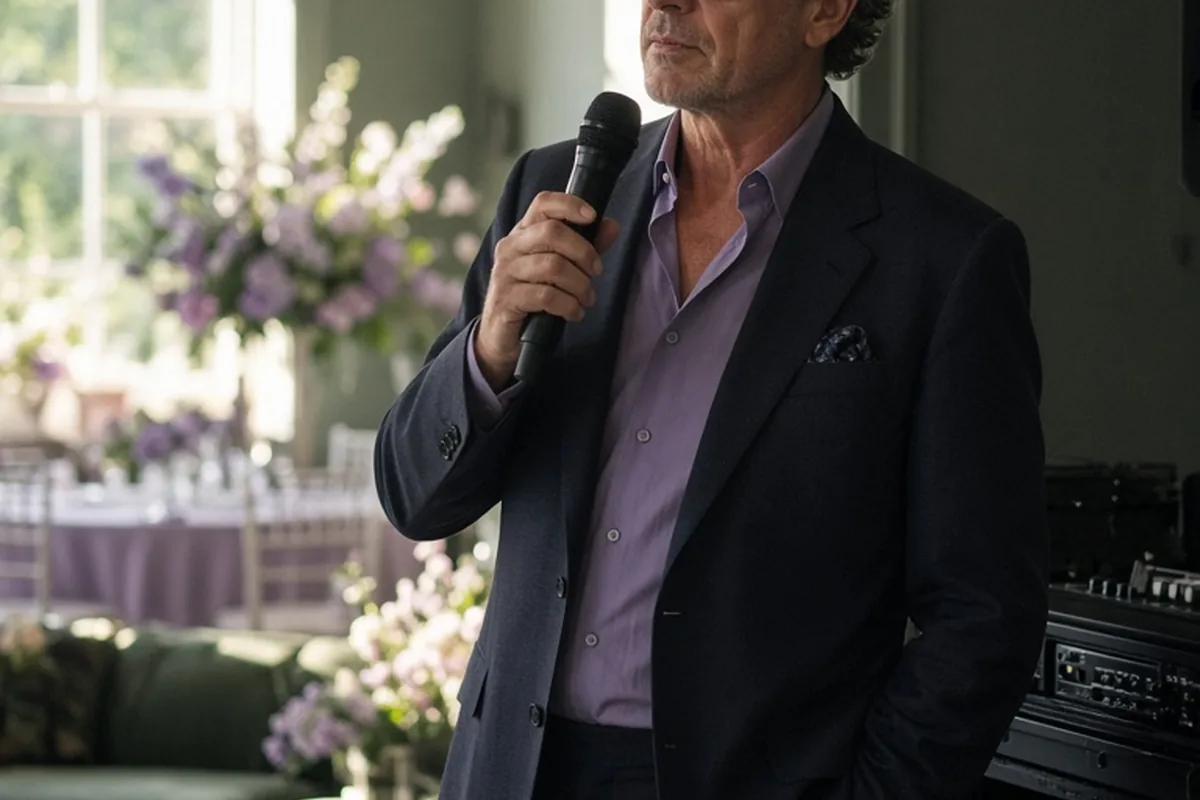
Hiring a wedding DJ for 200 guests requires prioritizing sufficient sound reinforcement and experienced crowd management. A crowd of 200 absorbs substantial acoustic energy, demanding at least two high-output 12-inch or 15-inch powered main speakers paired with at least one dedicated subwoofer, plus reliable wireless microphones. Your DJ must also serve as a confident emcee capable of directing large groups, managing the reception timeline, and coordinating seamlessly with catering and photography teams.
A guest count of 200 places a wedding well into large-event territory, where casual audio setups and informal announcements no longer work. At this scale, room dynamics, background noise levels, and timeline logistics require deliberate technical planning and experienced stage presence to keep the celebration organized and engaging.
Audio Hardware and Sound Coverage for 200 Guests
Sound reinforcement for 200 seated or dancing guests involves far more physical volume and acoustic displacement than an intimate gathering. Human bodies naturally absorb high and mid-range audio frequencies while clothing dampens natural room reverberation. To deliver clear sound across a banquet hall without creating painfully loud hot spots near the front tables, a DJ must deploy professional-grade active loudspeakers with adequate dispersion patterns. Standard consumer PA systems or standalone single-speaker setups will distort when pushed to the gain levels needed to fill a room of this footprint.
A standard baseline rig for 200 guests consists of two high-power 12-inch or 15-inch mid-high tops mounted on stable stands above ear level, paired with at least one, and preferably two, 15-inch or 18-inch powered subwoofers. Subwoofers relieve the primary speakers from handling heavy low-end frequencies, ensuring that spoken toasts remain intelligible while dance tracks retain full punch and energy. Additionally, professional digital or UHF wireless handheld microphones with multi-channel frequency switching are necessary so toasts and speeches can be delivered from anywhere in the room without signal drops, interference, or feedback squeals.
Managing Venue Acoustics Across Different Event Layouts
The physical architecture of your venue dictates how sound travels and where equipment must be positioned. In high-ceilinged ballrooms, industrial warehouses, or modern glass venues, hard surfaces create reflective echoes that turn speech into an unintelligible wash. A skilled DJ counters this by using targeted speaker angles and volume leveling rather than simply cranking the master fader. In carpeted hotel spaces, sound is absorbed quickly, often requiring supplementary satellite or delay speakers positioned halfway down the room so rear tables can hear announcements at a comfortable volume.
Outdoor settings, such as open-air lawns or vineyard pavilions, present the opposite acoustic challenge: sound energy dissipates rapidly into open space without walls to contain it. In an outdoor tent, canvas traps low frequencies differently while wind can cause high frequencies to drift. If your cocktail hour, dinner, and dancing take place in distinct zones or across indoor and outdoor spaces, you will need secondary remote audio setups to maintain consistent music and announcements throughout the evening without awkward dead zones.
Master of Ceremonies Responsibilities for Large Receptions
Controlling the flow of 200 people requires a clear, polished emcee who commands attention without relying on gimmicks or overbearing banter. When a large room is buzzing with conversation, background chatter can easily drown out timid announcements. An experienced wedding DJ acts as the vocal focal point of the reception, efficiently guiding guests through transitions such as moving from cocktail spaces to dinner seating, introducing the wedding party, orchestrating the timing of formal toasts, and opening the dance floor.
Beyond vocal announcements, managing a 200-person dance floor demands refined crowd-reading skills and quick adaptation. Large guest lists represent diverse musical tastes spanning several generations, from grandparents to college friends. The DJ must construct cohesive musical sets that bridge eras, utilizing smooth transition mixing and dynamic pacing rather than abrupt track cuts. They should also maintain a structured system for handling guest song requests, balancing crowd enthusiasm against your pre-established preferences and do-not-play list.
Understanding DJ Pricing Structures and Quote Components
Pricing for wedding DJs varies widely based on geographic market, peak versus off-peak dates, and the specific scope of services requested. Rather than relying on generic flat estimates, review the distinct line items that comprise a comprehensive quote for a 200-guest event. Basic packages typically cover four to five hours of continuous performance time with a standard sound system, but a full-scale wedding usually requires additional technical elements that influence the final total.
Common itemized variables include separate ceremony audio setups with dedicated lavalier and handheld microphones, remote satellite sound for secondary cocktail areas, dance floor wash lighting, programmable uplighting to cover large perimeter walls, and early setup fees. For an event with 200 guests, many professional DJs also bring an assistant or audio technician to help manage load-in, monitor audio levels from the rear of the room, and keep equipment secure, which may be factored into the overall labor cost. Always verify whether quoted rates include travel time, setup and breakdown labor, and basic insurance coverage.
Power Requirements and Logistics for a 200-Person Setup
A full audio and lighting production suitable for a 200-person reception draws significant electrical power. High-output powered subwoofers, primary tops, wireless receivers, laptops, DJ controllers, and uplighting fixtures should not be connected to a single overloaded wall outlet. Professional DJs typically require at least two independent 15-amp or 20-amp circuits dedicated exclusively to their equipment to prevent circuit breakers from tripping during peak bass transients on the dance floor.
Logistical planning also requires confirming setup buffer times and venue access routes. A comprehensive audio-visual rig for 200 guests cannot be loaded in, wired, and sound-checked in thirty minutes. Professional vendors generally require two to three hours before guest arrival to position speakers, run clean cable lines taped securely to floors for safety, tune the room's frequency balance, and test wireless microphones across the entire venue perimeter. Confirm that your venue provides elevator access, loading dock permissions, and clear staging areas to avoid last-minute delays.
Contract Protections, Equipment Redundancy, and Liability
When entertaining 200 guests, a technical failure or last-minute vendor cancellation can disrupt the entire reception timeline. Your contract should explicitly detail the DJ's backup policies and emergency protocols. Inquire about equipment redundancy: a professional will carry secondary laptops, duplicate hard drives with offline music libraries, backup audio interfaces, extra mixing controllers, spare wireless microphones, and redundant cabling directly on site in case of hardware malfunction.
Contract language must also clearly state the primary performer's name, illness substitution guarantees, exact arrival and departure times, overtime billing rates calculated in half-hour or hourly increments, and cancellation refund schedules. Furthermore, nearly all established reception venues require outside vendors to submit a certificate of general liability insurance naming the venue as an additional insured before granting property access. Ensure your DJ holds active commercial liability coverage and can provide standard proof of insurance directly to your venue coordinator.
Interviewing Candidates: Essential Vetting Criteria
When interviewing prospective DJs, tailor your questions to their real-world experience with medium-to-large guest counts. Ask candidates to describe how they configure their audio systems for rooms holding 200 people, how they handle acoustic challenges like high ceilings or outdoor open spaces, and how they coordinate real-time announcements with catering managers and photographers to prevent missed moments.
Request full-length audio mix samples or recorded live performance clips that showcase their transition blending and emcee tone rather than brief, heavily edited marketing reels. Pay attention to how clearly they communicate during your consultation: an organized, responsive DJ who asks specific questions about your venue layout, guest demographics, and electrical access is far more likely to execute a seamless, stress-free reception.
Frequently asked questions
Is one subwoofer enough for a wedding of 200 guests?
A single high-powered 15-inch or 18-inch subwoofer can provide adequate low-end support in standard, enclosed ballrooms. However, in cavernous industrial spaces, outdoor venues, or wider layouts, two subwoofers are strongly recommended to distribute low-frequency energy evenly without overloading the dance floor.
Do I need a separate sound system for the ceremony and cocktail hour?
If your ceremony or cocktail hour occurs in a different room or outdoor area from the main reception, a separate compact sound system is usually necessary. Moving and re-cabling equipment between spaces causes disruptive noise and risks timeline delays during guest transitions.
How far in advance should I book a wedding DJ for a large reception?
Most established wedding DJs book their peak weekend dates 9 to 18 months in advance. Because high-capacity weddings require specialized equipment and experienced lead performers, early booking ensures you secure a top-tier emcee rather than an unvetted substitute.
Can a wedding DJ also manage my ceremony microphones?
Yes, most professional wedding DJs offer ceremony sound packages that include discrete wireless lavalier microphones for the officiant and couple, a handheld microphone on a stand for readers, and separate music playback for processional and recessional tracks.
Your next step
Request a scaled floor plan and electrical map from your venue coordinator, then schedule consultations with three insured local DJs to review their specific audio deployment plans for a 200-person room.