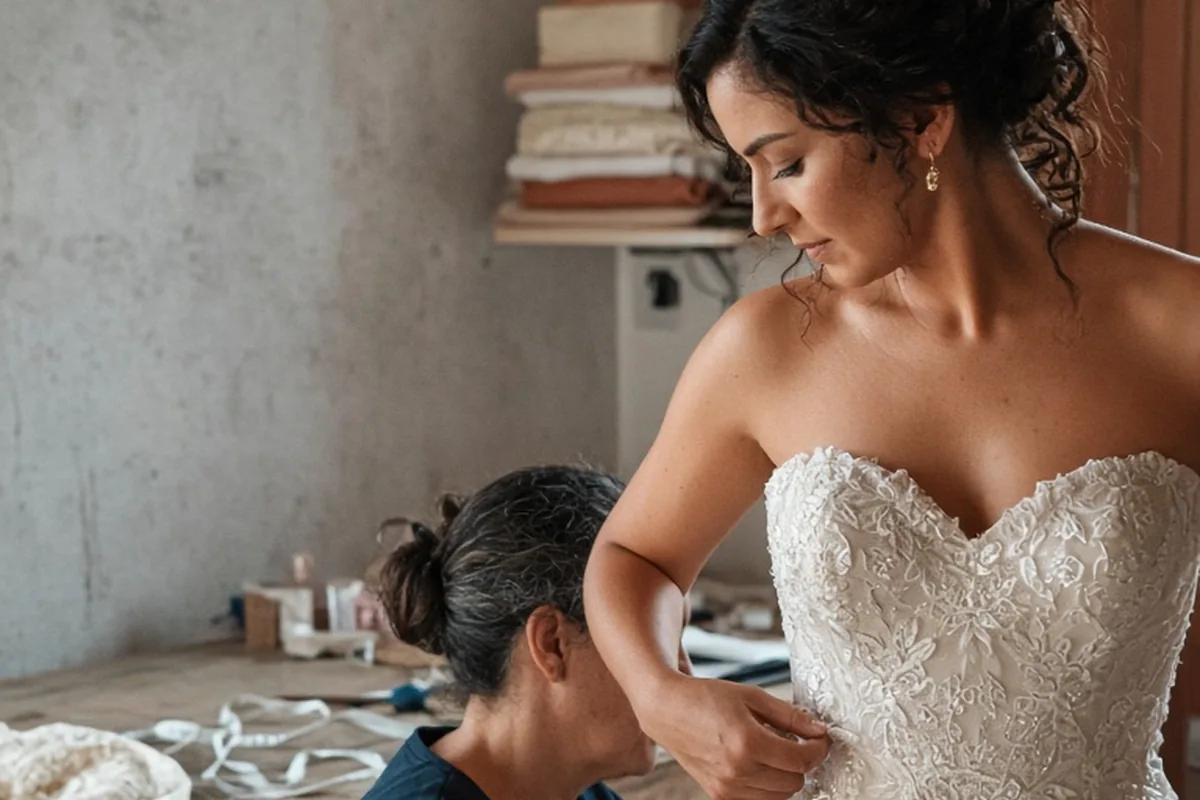
A wedding dress alterations cost breakdown divides into three primary categories: structural fit adjustments such as taking in the bodice or shaping the bust, skirt modifications including multi-layer hemming, and functional finishing work like bustle installation. Bridal seamstresses price their work based on labor hours, fabric fragility, interior garment construction, and total fitting sessions. Because gowns feature complex boning, beading, and delicate linings, final quotes reflect the specific technical difficulty of each seam rather than flat sizing fees.
Purchasing a wedding gown is rarely the final financial step in securing a wedding day wardrobe. Almost every bridal gown requires custom tailoring to align standard designer proportions with a bride's unique posture, height, and torso measurements.
The Three Core Components of a Wedding Dress Alterations Invoice
A formal alterations quote is rarely a single flat fee. Instead, bridal tailoring specialists structure their pricing around distinct functional zones: the bodice, the hemline, and the bustle. The bodice involves shaping the garment from the waistline up through the shoulders, ensuring the neckline lays flat against the chest and the internal support holds the dress securely in place without slipping. Adjusting the bodice often requires opening multiple internal seams, redistributing boning channels, re-aligning zipper or button closures, and modifying side seams to match the bride's natural ribcage contour.
The second major tier is the skirt hemline, which accounts for vertical proportions. Hemming a bridal gown is significantly more complex than shortening standard evening wear because bridal skirts typically incorporate horsehair braid trim, crinoline volume layers, delicate silk or satin linings, and outer overlays of tulle or embroidered lace. Each distinct layer must be unpicked, measured, cut, and finished independently to maintain the original drape and sweep. The third standard tier encompasses functional hardware, primarily the train bustle, which lifts the excess fabric off the floor for the reception, alongside custom additions such as sewn-in bust cups, strap shortening, or modesty panels.
Hemming and Layer Architecture: How Skirt Design Shapes Labor
The construction of a gown's skirt is one of the most substantial contributors to overall alterations labor. A simple crepe sheath skirt with a basic polyester lining requires straightforward measuring, cutting, and blind-stitching. In contrast, a multi-tiered ballgown or an A-line silhouette with stacked layers of tulle, organza, and petticoat netting requires the specialist to treat each tier as an independent skirt. If a dress has five layers of crinoline and tulle underneath a lace overlay, the seamstress must alter all six individual plies to ensure the inner skirt does not bunch up or peek out from beneath the outer hem.
Scalloped lace borders introduce another significant layer of labor. When a gown features a continuous scalloped lace border along the bottom edge, shortening the dress from the bottom edge by trimming would destroy the designer's decorative finish. Instead, the tailor must meticulously unpick yards of lace trim by hand, cut the excess foundational fabric from beneath, reposition the lace border higher up on the skirt, and re-stitch the pattern seamlessly so no line of demarcation shows. Alternatively, the gown must be shortened from the waist seam, requiring the entire skirt to be detached from the bodice, lifted, re-gathered, and re-attached without distorting pocket placements or zipper alignments.
Bodice Resizing, Internal Boning, and Illusion Mesh Modifications
Modifying a gown's bodice requires delicate structural engineering because the torso of a wedding dress provides the mechanical support for the entire garment. When taking in or letting out a bodice, the seamstress does not simply sew a new line down the existing side seams. They must deconstruct the lining, navigate plastic or metal boning channels, remove and reset invisible zippers, and adjust delicate cup padding. If a dress needs to be brought down two sizes, excess fabric must be removed evenly across multiple panels—such as the princess seams, back darts, and side seams—to prevent the bust apex from shifting off-center.
Illusion mesh and sheer necklines present unique tailoring hurdles. Unlike solid fabrics, sheer illusion tulle cannot easily hide seam allowances or stabilizing stay-tape. When an illusion back or neckline is too loose, the tailor must lift the excess fabric through the shoulder seams or re-sculpt the armholes while keeping every stitch nearly invisible. Additionally, if the dress features delicate button loops down the spine, any adjustment along the back seam requires removing every individual loop and pearl button, resetting the closure line, and re-anchoring the fasteners by hand into the reinforced seam.
Bustle Mechanics: Anchor Points and Structural Engineering
A bustle is an engineered suspension system designed to secure a long train during the reception, preventing the skirt from dragging on dance floors or creating tripping hazards. Because wedding dresses do not come from designers with bustles pre-installed, every bustle must be designed and built from scratch to accommodate the gown's weight, train length, and skirt volume. Tailors evaluate whether the aesthetic calls for an over-bustle (American bustle), which gathers the train onto external buttons or hooks along the waistline, or an under-bustle (French bustle), which folds the excess length underneath itself using an internal system of numbered ribbons or clear eyelets.
Pricing for bustle installation directly correlates with the number of anchor points required to distribute the dress's physical weight safely. A lightweight sweep train might only require a single-point or three-point bustle. However, a cathedral-length train made of heavy satin or dense brocade often requires seven, nine, or upwards of fifteen individual attachment points. If a heavy train relies on too few connection points, the sheer tension can tear the delicate lace or sheer tulle during movement. Each anchor point requires individual placement, reinforcement with interior backing discs to prevent fabric tearing, and careful alignment during active fitting sessions.
Embellishments, Beading, and Applique Reconstruction Work
Intricate surface decorations dramatically elevate the manual labor involved in tailoring a bridal gown. When a seamstress takes in a seam covered in micro-beading, sequins, or crystal stones, passing the fabric directly through an industrial sewing machine will shatter the needle, snap the thread, and damage the fabric. The specialist must first sit with a seam ripper and hand-remove every single bead, pearl, and rhinestone along the future stitch line and seam allowance path.
Once the new structural seam is sewn, pressed, and stabilized, the tailor must hand-sew the decorative elements back onto the raw area. This process ensures the beaded pattern continues uninterrupted across the new seam line with no bald patches or abrupt gaps. If a dress features three-dimensional lace appliques that float across side seams or over the hip, those appliques must be carefully snipped away from the underlying tulle, pinned out of the way while the base garment is resized, and then meticulously hand-appliqued back onto the altered silhouette using invisible thread.
Turnaround Schedules, Rush Fees, and Physical Body Fluctuations
Bridal alterations typically operate across a multi-month schedule requiring two to four distinct fitting appointments. The initial fitting establishes the hemline and major structural adjustments, the second fitting refines the contouring and tests the newly pinned bustle, and the final appointment verifies the exact drape and teaches the bridal party how to fasten the bustling mechanics. When a bride brings a gown to a tailor with less than six to eight weeks before the wedding date, the tailor must fit the labor-intensive project between existing bookings, often triggering overtime labor premiums or dedicated rush fees.
Physical changes during the engagement period also influence the total cost. Weight loss, muscle toning, or pregnancy can necessitate unexpected rounds of alterations. If major weight changes occur after a bodice has already been deconstructed, fitted, and restitched, the specialist must repeat the deconstruction and re-pinning process from the beginning. To avoid duplicate tailoring expenses, specialists recommend booking your initial consultation early while timing the primary structural fitting roughly eight to twelve weeks prior to the event date when measurements are most stable.
Evaluating Alterations Providers and Requesting Transparent Quotes
When planning your bridal budget, comparing in-house boutique alteration packages against independent bridal couture seamstresses requires understanding how each bills for services. In-house salon tailoring departments often operate on tiered flat-rate packages that cover basic hemming, side seam adjustments, and a simple bustle regardless of the exact hours spent. While this structure provides budget predictability upfront, it may prove costly for brides who only require minor adjustments like strap shortening or simple bust cups.
Independent bridal tailors typically quote via itemized a la carte pricing or direct labor-hour estimations based on an in-person physical assessment. To secure an accurate quote, avoid relying on telephone or email estimates based solely on designer photos, as a seamstress cannot evaluate internal boning tension, fabric weight, or zipper condition without seeing the dress on your body. Bring the exact shoes and undergarments you plan to wear to your consultation, and ask for an itemized written breakdown detailing the cost per layer hemmed, the cost per bustle point, and any additional fees for hand-beading or custom cup insertion before authorizing the work.
Frequently asked questions
Can I save money on alterations by buying a wedding dress in a larger size?
Buying a dress that is significantly too large usually increases alterations costs rather than saving money. While taking a dress in is generally safer than letting it out, reducing a gown by more than two standard sizes often requires deconstructing the entire bodice, recutting armholes, and rebuilding the neckline to maintain balanced proportions.
What items must I bring to my first wedding dress alterations fitting?
You should bring the exact shoes you plan to wear on the wedding day, as heel height dictates the precise hem measurement. You must also bring your planned foundation garments, shapewear, and wedding day bra, because internal padding and undergarment compression directly alter your torso circumference and bust height.
How do independent seamstress rates differ from bridal salon package pricing?
Bridal salons frequently offer flat-fee alteration packages that bundle standard fit services together, which can simplify budgeting if extensive work is required. Independent tailors usually charge a la carte based on individual line items or dedicated hourly bench work, which can be more cost-effective for targeted, minor alterations.
Your next step
Schedule an in-person consultation with an experienced bridal seamstress with your wedding shoes and undergarments in hand to receive a line-item estimate before authorizing alterations work.