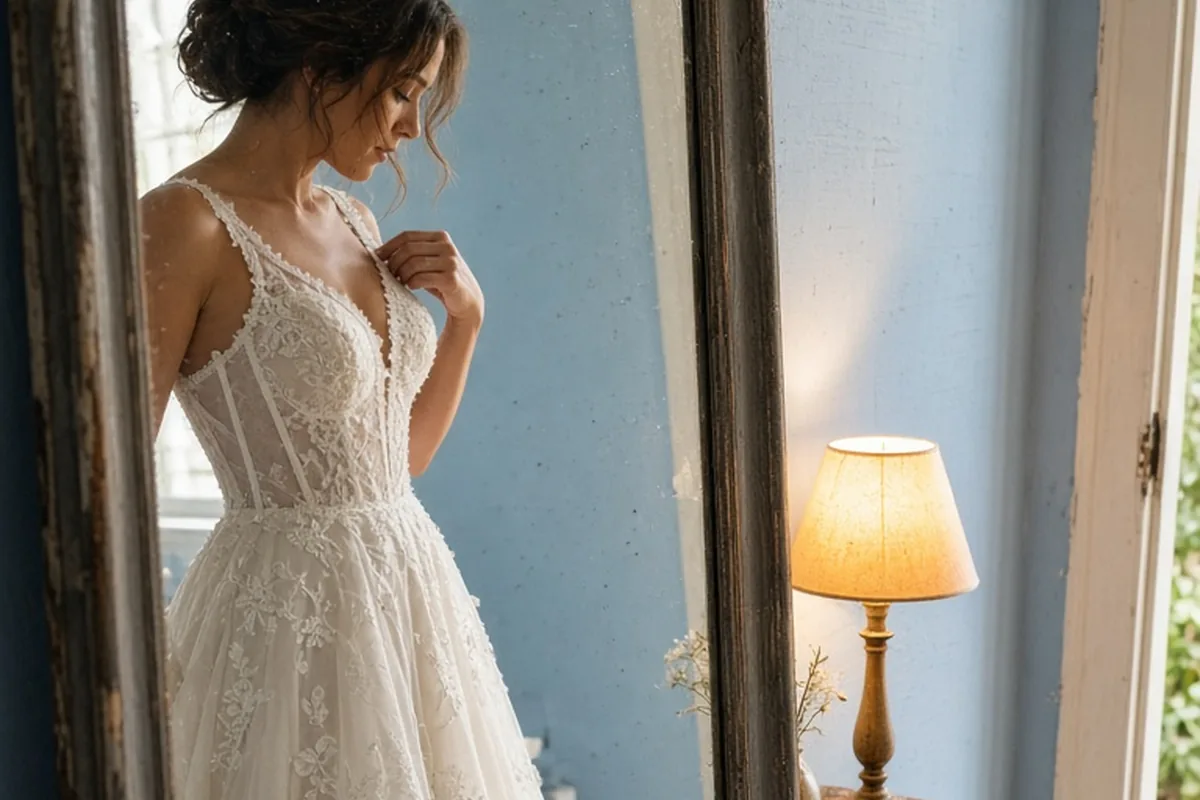
Wedding dress alterations for a 100-guest wedding require tailoring your gown for close social interaction, table navigation, and sustained physical comfort. Key priorities include securing a functional bustle that withstands constant mingling, establishing a hemline with adequate floor clearance for your specific venue surface, and reinforcing the bodice so it stays secure during hours of hugging, seated dining, and dancing. The process typically spans two to three fittings over eight to twelve weeks.
A guest list of one hundred people creates an intimate yet active wedding environment where you will personally interact with nearly every attendee, navigate moderate reception floor plans, and move constantly between photos, dinner, and the dance floor.
How a 100-Guest Wedding Format Shapes Your Alteration Needs
A wedding with approximately one hundred attendees presents distinct physical demands compared to either an elopement or a grand ballroom gala. At this scale, the celebration is social and interactive. You will likely spend significant time circulating through dining tables, hugging friends and relatives during cocktail hour, and moving across varied venue spaces such as boutique garden patios, historic estates, or urban loft dining rooms. Your alterations must balance elegant proportions with absolute freedom of movement so you are not constantly adjusting your neckline, tripping over excess hem fabric, or feeling constricted while sitting.
In a gathering of this size, guests remain in close proximity throughout the day. High-contact moments such as extended receiving lines, table-to-table greetings, and crowded group photographs mean your bodice must withstand friction, movement, and physical contact without shifting or slipping down. Tailoring should focus heavily on internal architecture, such as reinforced waist stays and custom-positioned bra cups, ensuring your gown stays anchored securely to your torso regardless of how many hugs you share.
Choosing the Right Bustle Style for a Moderate-Sized Reception
The bustle lifts and secures your train off the ground after the ceremony, transforming a dramatic ceremonial silhouette into a practical reception dress. In a 100-guest setting, floor space is actively shared between dining tables, lounge areas, and a lively dance floor. A dragging train or poorly supported bustle is prone to being stepped on by well-wishing guests, which can tear delicate tulle, rip out anchor points, or pull at the waistline of your gown.
Your seamstress can recommend several bustle constructions based on your dress weight, fabric, and train length. An over-bustle, often called an American bustle, lifts the train upward and fastens it to external buttons or hooks placed along the lower back or waistline. An under-bustle, or French bustle, uses color-coded ribbons beneath the skirt to fold the train under itself in gentle, tiered folds. For heavy satin or multilayered ballgowns, a multi-point ballroom bustle tucks the entire train seamlessly beneath the hemline, distributing the skirt weight across five to ten secure attachment points so no single thread bears excessive stress.
Hemline Tailoring for Diverse Venue Terrain and Movement
Proper hem adjustment requires balancing aesthetic drape with safe foot clearance. For a 100-guest wedding held in boutique spaces like historic inns, vineyards, or private clubs, you may transition across multiple ground textures, including outdoor ceremony lawns, flagstone terraces, and polished indoor wooden floors. A gown hemmed too low will catch on uneven paving stones or collect grass moisture, while a hem cut too short alters the intended proportion of the skirt silhouette.
A standard bridal hem should clear the finished floor by approximately one-half to one inch at the front and sides when you are standing in your exact wedding shoes. This slight clearance allows you to walk forward with a natural stride without kicking or catching the front edge of the fabric. If your skirt contains horsehair braid along the hem, structured crinoline, or heavy embroidered lace borders, shortening the length requires unpicking and repositioning each structural element by hand rather than performing a simple scissor cut.
Bodice Structure, Boning, and Undergarment Engineering
The bodice serves as the structural foundation of your wedding dress, carrying the physical weight of the skirts and train so that pressure does not rest solely on delicate shoulder straps or cause strapless necklines to slide downward. In a moderately sized wedding where you will be on your feet mingling for hours, bodice comfort directly affects your posture and stamina. A professional fitter will assess the placement of internal boning, ensuring channels follow the natural curve of your ribcage without poking into your hips or underarms when seated.
Selecting and bringing your intended foundation garments to every fitting is essential. Whether you plan to wear a seamless bodysuit, a low-back bustier, or have supportive molded cups sewn directly into the dress lining, any change in undergarments alters the circumference of the bust and waist by fractions of an inch. Sewing custom cups directly into the bodice often provides the cleanest look for backless, sheer illusion, or deep-V gown styles, eliminating visible bra lines while maintaining structural shape.
Fabric Complexity and Construction Challenges Across Gown Types
The time and craftsmanship required to alter a wedding gown depend heavily on its material and construction methods. Lightweight, single-layer crepe or silk slip dresses require precise side-seam adjustments and hand-rolled hems, where any uneven tension in the thread can cause visible puckering along smooth surfaces. Conversely, classic ballgowns and A-line designs often feature multiple tiers of organza, horsehair-stiffened petticoats, and dense lining that must each be trimmed and finished separately.
Intricate embellishments, such as hand-sewn glass beading, three-dimensional floral appliques, or scalloped Alençon lace, require extensive deconstruction prior to altering the structural seams. A specialist must carefully remove beads and applique motifs along the alteration path to prevent sewing machine needles from shattering, sew the structural seam to your exact measurements, and then reapply the lace motifs by hand over the new seam line so the pattern flow remains uninterrupted and natural.
The Three-Fitting Timeline and Booking Schedule
To ensure a seamless alteration process without rush fees or scheduling conflicts, plan a sequence of three distinct fitting appointments over an eight-to-twelve-week window before your wedding date. Booking your alteration specialist three to four months in advance is recommended, particularly if your wedding takes place during peak spring or autumn event seasons when local bridal ateliers operate at full capacity.
Your first fitting focuses on foundational structure: pinning the side seams, assessing bodice support, determining the hemline height, and mapping out the initial bustle configuration. The second fitting, usually scheduled four to six weeks later, allows you to evaluate structural changes, test the bustle mechanics, and make minor fine-tuning adjustments to the bust or straps. The final fitting takes place two to three weeks before the wedding day to verify that the dress fits your current body shape perfectly, after which the gown is professionally pressed, steamed, and packaged for transport.
Managing Alteration Costs and Requesting Transparent Quotes
Bridal alterations are priced based on the complexity of garment construction, the number of fabric layers, and the estimated hours of skilled hand labor involved. Because gowns vary widely in design, reputable seamstresses provide customized estimates after physically examining your dress rather than offering generic flat fees over the phone. Standard scope items typically include taking in or letting out side seams, adjusting straps, hemming multiple skirt layers, inserting bust cups, and constructing a multi-point bustle.
When requesting an estimate from an independent bridal tailor or boutique alteration department, ask for an itemized breakdown of labor tasks. Inquire whether basic pressing, final garment steaming, and follow-up adjustments are included in the quote or billed as separate line items. Confirming whether the specialist charges an hourly rate or a fixed package price per modification helps prevent budget surprises and clarifies what alterations fit comfortably within your overall wedding planning finances.
Day-of Wardrobe Logistics and Training Your Bustle Attendant
Executing your dress transitions smoothly on the wedding day requires preparation and clear delegation. Because you cannot see the back of your own dress, designate a trusted wedding party member, family member, or day-of coordinator to serve as your primary bustle attendant. Bring this person to your second or final fitting appointment so the seamstress can demonstrate exactly how to locate, fasten, and secure each hook, loop, or ribbon anchor.
Prepare a compact bridal emergency kit tailored to your gown type to handle unexpected wardrobe needs at the venue. This kit should include clear safety pins, pre-threaded hand needles matching your dress color, mini fabric scissors, double-sided garment tape, and a stain-removal pen. Keep a printed or video guide on your phone showing how the bustle attaches so your designated attendant can reference it quickly between the ceremony and the cocktail hour reception.
Frequently asked questions
What items must I bring to my first wedding dress fitting?
You must bring the exact shoes you plan to wear at your wedding, as heel height dictates your precise hem measurement. You should also bring the specific undergarments, shapewear, or bra you intend to wear so the bodice can be fitted accurately to your silhouette.
How can I prevent my dress train from tearing in a crowded 100-guest reception?
Opt for a multi-point French or ballroom bustle that distributes the skirt weight across several reinforced anchor points rather than relying on a single button. Fasten the bustle immediately following your formal post-ceremony photos before entering the cocktail hour or reception floor.
When should I schedule my final wedding dress fitting?
Schedule your final fitting approximately two to three weeks before your wedding day. This timing ensures the fit accounts for any minor weight fluctuations while leaving adequate time for final pressing, steaming, and secure garment packaging.
Can a wedding dress be altered if it has intricate lace or heavy beading?
Yes, but it requires specialized labor where the tailor unpicks and removes beading or lace appliques along the seams before sewing the structural adjustments. Once the fit is perfected, the artisan hand-stitches the decorative elements back in place across the new seam lines.
Your next step
Book your first bridal alteration fitting 8 to 12 weeks before your wedding date, ensuring you have purchased your exact wedding day shoes and undergarments before your initial pinning appointment.