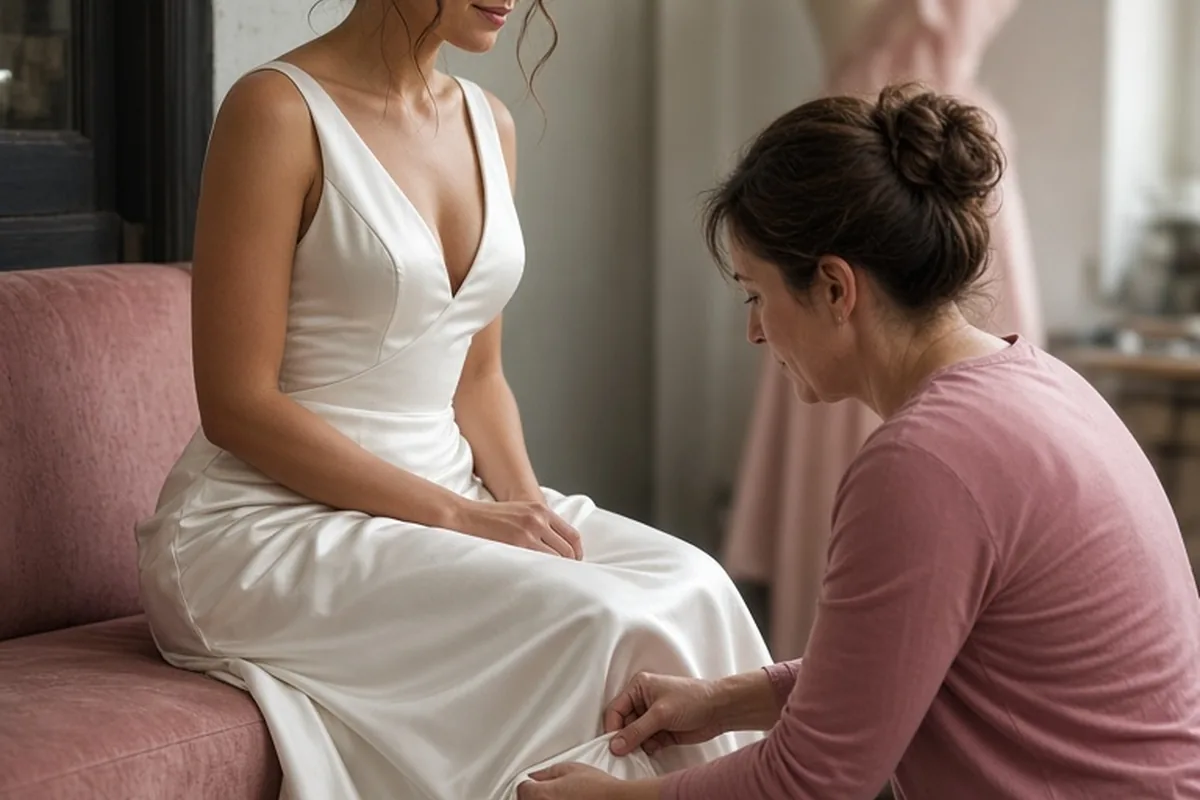
Wedding dress alterations for a 50-guest wedding focus on tailoring the gown for close-proximity social interaction, comfort during prolonged seated dining, and ease of movement in smaller venues. Because intimate celebrations typically involve continuous face-to-face mingling, customized bustles, flexible bodice adjustments, and precise hem lengths take priority. Planning begins roughly three to four months before the ceremony across three standard fittings to ensure the garment moves naturally without pinching, tripping, or gaping under close inspection.
An intimate gathering of fifty guests changes the physical dynamics of a wedding day, placing the couple in direct, sustained contact with every attendee throughout the ceremony and reception. Tailoring a bridal gown for this setting requires a distinct balance between visual polish and tactile ease, ensuring the garment performs well in cozier venue spaces.
Tailoring Bodices and Necklines for Close-Proximity Guest Interaction
In a large ballroom celebration, guests often view the wedding gown from a distance during the processional and first dance, meaning minor gaps in structure or slight fabric tensions may go unnoticed. At a fifty-guest wedding, attendees sit close to the altar and share communal tables or compact lounge areas during the reception. Every angle of the dress receives close attention during hugs, seated toasts, and tabletop conversations, making precise upper-body fitting essential for both confidence and aesthetics.
A tailor must adjust the bodice to lie flat against the ribcage and chest without relying on excessive tightness that restricts natural breathing or posture. If the dress features an illusion neckline, strapless sweetheart cut, or deep plunge, custom boning and soft cups can be inserted directly into the lining to eliminate the need for separate foundation garments that might slip. The tailor will typically pin the side seams and darting while you are seated as well as standing, ensuring that the neckline does not buckle forward or create unwanted friction against the skin when leaning in to speak with seated guests.
Selecting Hem Lengths and Train Bustles for Intimate Venues
Fifty-person weddings frequently take place in non-traditional venues such as private dining rooms, boutique hotels, historic estates, or outdoor gardens. These spaces often feature narrower aisles, varying floor surfaces, and tighter seating arrangements than standard banquet halls. Hemming a gown precisely to the intended ceremony shoe height prevents the front edge from catching on antique rugs, lawn turf, or polished wood floors as you navigate between dining tables.
Choosing the right bustle style is equally critical when floor space is limited. An intricate French or under-bustle gathers long layers neatly beneath the skirt, creating a compact silhouette that avoids sweeping across floor lamps or brushing against guest chairs. Alternatively, an American or over-bustle lifts the fabric to secure points on the outer waistline, which allows for quick fastening between the ceremony and cocktail hour. Work with your seamstress to test how the bustled fabric behaves while walking backwards, turning in tight corridors, and sitting in standard dining chairs.
Scheduling Fitting Milestones Around a Micro-Wedding Timeline
Intimate weddings are sometimes organized on condensed planning timelines compared to traditional large-scale events, making early scheduling with a skilled bridal tailor a top priority. Standard bridal tailoring generally spans eight to twelve weeks across three distinct appointments, though complex customizations such as adding sleeves, lowering a backline, or reshaping heavy lace can require additional sessions.
The first fitting should occur approximately eight to ten weeks before the event date, where the tailor pins the major structural adjustments, including side seams, shoulders, and basic hem lines. The second fitting, usually scheduled four weeks prior, checks the initial stitching, refines the contouring through the waist and hips, and establishes the bustle placement. The final fitting takes place one to two weeks before the ceremony, serving as a final verification of fit, pressing, and steaming before the dress is taken home for the wedding.
Managing Alteration Variables and Tailoring Budgets for Fifty-Guest Events
Alteration costs vary widely depending on the gown's fabrication, the number of fabric layers, and the complexity of the internal construction. Rather than a flat service fee, most bridal tailors bill based on the specific tasks required, such as shortening multi-layered horsehair hems, taking in beaded side seams, or reconstructing delicate lace appliqués by hand. A smaller guest count allows couples to reallocate overall wedding funds, but unexpected tailoring complexity can still strain an overall wardrobe budget if not planned early.
To obtain an accurate quote, request an itemized estimate during your initial consultation before authorizing any cuts into the fabric. Inquire whether basic pressing, steaming, and bustle hardware are included in the estimate or billed as separate line items. If your celebration includes a transition from daytime outdoor ceremonies to an evening indoor dinner, discuss functional modifications—such as detachable sleeves or removable overskirts—that provide two distinct looks without the expense of purchasing and altering a second separate gown.
Fitting Essentials to Bring to Every Seamstress Consultation
Consistency in undergarments and accessories across every fitting is the single most effective way to prevent costly alterations rework. Even a quarter-inch difference in heel height or a change from a structured strapless bra to seamless cups can alter how the skirt drapes or cause the bodice to gap unexpectedly. Preparing a dedicated fitting kit ensures your tailor works with the exact geometry you will wear on the actual day.
Bring your exact wedding shoes, chosen shapewear, sticky cups, and day-of jewelry to the very first appointment. If you plan to wear a veil or specialized hair accessory, bring that as well so the seamstress can evaluate how it interacts with the back closure and neckline. Having a trusted friend or partner attend the second or final fitting allows them to record a brief video demonstration of how to fasten the bustle points, ensuring smooth handling during the reception transition.
Addressing Fabric Mobility for Active Hosting and Communal Dining
At a fifty-guest wedding, hosts rarely remain stationary behind a head table; they actively move between clusters of friends, participate in shared family-style meals, and engage in impromptu conversations across the room. A dress that looks striking while standing perfectly still in a fitting room mirror may feel restrictive after an hour of continuous movement, sitting, and laughing.
During your fitting sessions, intentionally mimic the movements you will perform on the wedding day. Raise your arms to shoulder height to ensure the armholes do not pinch or pull the waistline upward. Sit down fully in a firm chair to confirm that the hip seams and boning do not dig uncomfortably into your torso or thighs. If the fabric feels unyielding, ask your seamstress to adjust the seam allowance or insert tiny elastic gussets along internal support bands to grant subtle flexibility without sacrificing clean external lines.
Frequently asked questions
How many fittings are usually required for wedding dress alterations?
Most bridal alterations require three separate fittings spread over two to three months. The first appointment addresses structural pinning and hems, the second refines the fit and marks the bustle, and the final session confirms all adjustments before steaming and pickup.
Can a wedding dress be altered if my weight changes before an intimate wedding?
Yes, professional bridal seamstresses can accommodate minor weight fluctuations during the fitting process. However, you should notify your tailor promptly if significant changes occur so they can adjust their schedule before final structural seams and delicate lace are permanently trimmed.
What is the best bustle style for a smaller venue with limited floor space?
An under-bustle (French bustle) or a secure multi-point ballroom bustle is often ideal for compact venues because it folds the train completely under the skirt. This keeps the hem line flush with the floor, preventing the train from snagging on furniture or guests' feet in tight spaces.
When should I schedule my first bridal alteration appointment?
Schedule your initial consultation as soon as you have your dress and ceremony shoes in hand, ideally eight to twelve weeks prior to the wedding date. In peak bridal seasons, booking your tailor three to four months in advance guarantees availability on their production calendar.
Your next step
Locate an experienced local bridal tailor, gather your ceremony footwear and undergarments, and schedule your initial consultation eight to twelve weeks ahead of your event date.