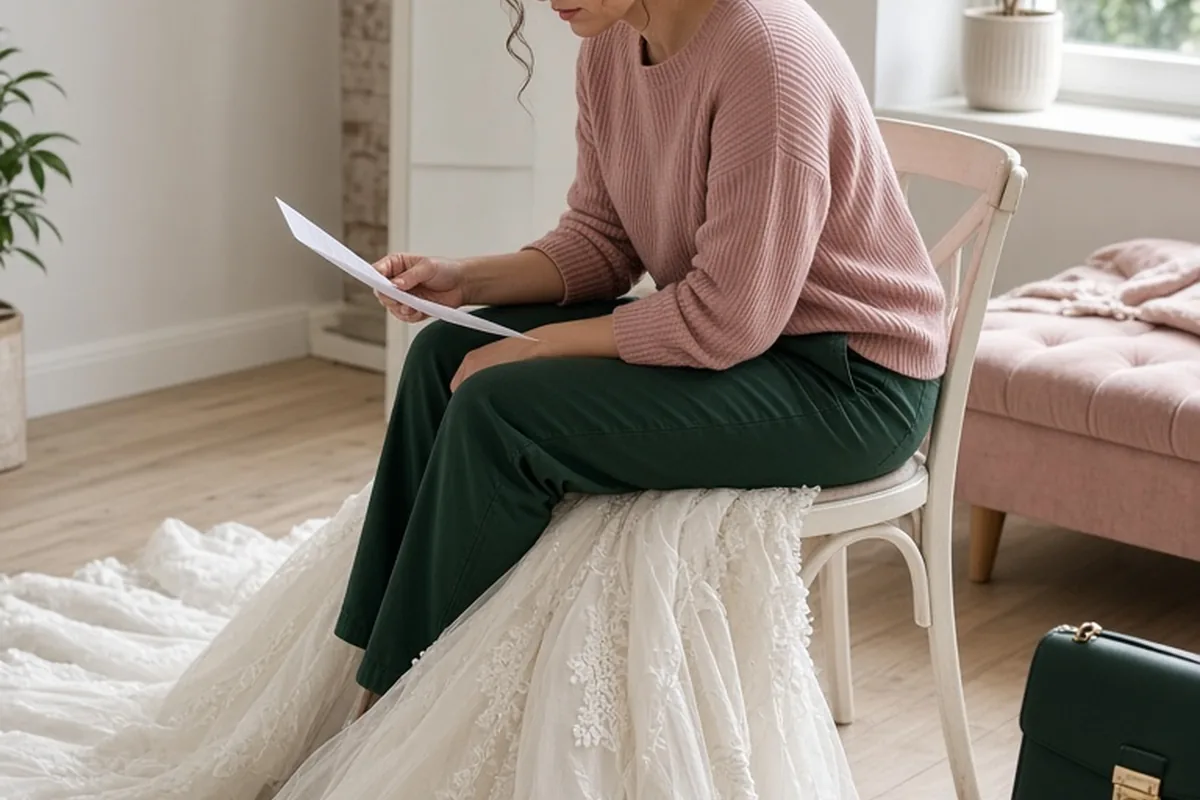
Wedding dress alterations often incur hidden costs beyond basic sizing adjustments due to labor-intensive structural work. Unanticipated expenses frequently stem from complex bustles for long trains, multi-layered or horsehair braid hems, delicate lace or beadwork applique repositioning, structural bodice rebuilding, and rush fees for compressed timelines. Because formalwear tailoring requires specialized hand sewing, charges are calculated per layer and modification rather than as a single flat fee.
Purchasing a wedding gown is often treated as the final financial hurdle of bridal attire, yet alterations represent a significant, separate expense that frequently catches planners unprepared. Understanding where tailoring complexity creates extra labor charges enables you to anticipate true costs, negotiate clear contracts, and avoid unexpected final invoices.
Complex Multi-Layered Hems and Horsehair Braid Detailing
A standard floor-length hemline on a ready-to-wear dress involves cutting and re-stitching a single piece of fabric. Bridal gowns, by contrast, frequently feature four to eight distinct skirts layered beneath the outer silhouette, including crinoline petticoats, stiffening tulles, lining fabrics, and delicate outer chiffons or organzas. Tailors must measure, cut, pin, and finish each layer independently to ensure the skirt drapes naturally and moves without dragging. Because pricing in bridal alterations is largely calculated by the sheer volume of hours required, a multi-tiered ballgown or dramatic A-line skirt accumulates individual labor charges for every single layer shortened.
The presence of specialized trim along the hemline compounds these expenses further. Horsehair braid, a flexible synthetic mesh sewn into the lower circumference of many modern gowns to create structural volume and rippling waves, cannot simply be chopped off at the bottom. The seamstress must carefully unpick the internal braid along the entire perimeter, shorten the skirt fabric from the raw bottom edge, and re-anchor the braid by hand to preserve the garment's intended shape. Similarly, skirts with scalloped lace borders or continuous beaded edges require tailors to remove the embellishments entirely, shorten the base fabric, and hand-appliqué the border back into place, multiplying the total labor investment.
Bustling Elaborate Trains and Adding Hidden Anchor Points
Many brides assume that a wedding dress with a train comes naturally equipped with a mechanism to lift the fabric off the floor for the reception. In reality, dresses arrive from manufacturers without bustles because every wearer requires custom anchor heights based on their shoes, height, and posture. Constructing a secure bustle is an intricate engineering task that requires custom-placed hooks, eyes, clear buttons, internal ribbons, or fabric loops designed to bear significant fabric weight during movement and dancing.
The hidden cost in bustling arises from the train's volume and the chosen bustle style. While a simple single-point American (over) bustle on a lightweight sheath requires minimal hardware, dramatic chapel or cathedral trains often require multi-point French (under) bustles or Austrian ruching techniques. A complex train may require anywhere from five to twenty distinct connection points to prevent heavy satin or embroidered lace from tearing out the anchors. Tailors charge per individual anchor point or tier, meaning that the more dramatic your train, the higher the bustle construction fee will climb.
Bodice Reconstruction, Boning Adjustments, and Custom Cups
Adjusting a bodice involves far more than taking in a simple side seam. Bridal bodices are reinforced architectural structures containing vertical plastic or steel boning, internal waist stays, floating linings, and structural interfacings designed to support the weight of the gown without shoulder straps. When a bodice must be resized or reshaped to match a specific torso length, the seamstress must deconstruct the garment down to its individual structural elements, reshape each pattern piece symmetrically, trim the boning channels, and rebuild the internal frame from scratch.
Customizations within the bust area also carry separate itemized charges. Adding structured push-up or contour bra cups requires careful positioning and hand-stitching to ensure they remain invisible under thin fabrics while providing appropriate lift. For illusion necklines, low-back designs, or strapless gowns requiring maximum stability, tailors may need to insert additional boning channels or install custom hidden waist stays to keep the bodice securely anchored to the ribcage, each representing an add-on service outside a standard fitting quote.
Hand-Sewn Applique, Beading Removal, and Fabric Relocation
Intricate decorative work is among the largest contributors to unexpected alteration fees. Machine needles cannot sew directly through dense crystal beading, glass pearls, or metallic embroidery without snapping the needles or damaging the surrounding fabric. Before taking in a side seam or altering a zipper placement on an embellished dress, the tailor must meticulously snip threads and remove individual beads by hand along the alteration path.
Once the structural seam is sewn, pressed, and finished, the seamstress must reapply those decorative elements by hand over the new seamline to conceal the adjustment and restore the continuous pattern. If a dress features scattered lace appliques across the waistline, hips, or hem, altering the silhouette requires lifting the lace motif, adjusting the underlying fabric foundation, and meticulously hand-sewing the applique back into its new proportionate position. Because this handwork cannot be automated, tailors bill for these delicate adjustments through dedicated applique and beading surcharges.
Timeline Surcharges, Rush Fittings, and Emergency Steaming
The calendar schedule of your fittings plays a decisive role in final tailoring costs. Standard bridal alteration workflows typically span two to four months across multiple progressive fittings to accommodate weight fluctuations, fabric settling, and sequential construction phases. When a dress is purchased close to the wedding date or alterations are delayed, bridal studios impose significant rush surcharges to prioritize the project over standard-timeline garments or to accommodate evening and weekend labor.
Finishing and preservation services also appear as unexpected line items near the completion of the process. Professional bridal steaming, pressing, and wrinkle-release treatments require specialized industrial equipment, particularly for delicate silks, multi-layered tulles, and voluminous skirts that cannot tolerate standard household irons. Some alteration boutiques bundle this final pressing into their packages, while others bill it separately, alongside breathable garment bags or acid-free storage materials needed to transport the gown safely to the venue.
Undergarments, Shoes, and Fitting Accessory Dependencies
A frequent and costly mistake in the alterations process is changing foundational accessories between fittings. Hem lengths are measured down to fractions of an inch based entirely on the exact heel height of your chosen wedding shoes. If you select your shoes after your first fitting or decide to switch to a lower heel for comfort midway through the process, the tailor must re-pin, cut, and re-hem every single skirt layer a second time, essentially doubling your hemline expenses.
The same principle applies to undergarments, shapewear, and adhesive bras. Changing from a seamless high-waisted brief to a structured corset between the first and second fitting alters the circumference of your waist and the position of your bustline, invalidating earlier seam adjustments. Tailors will bill standard hourly or modification rates to undo prior work and re-tailor the dress to the new silhouette, making consistent undergarments and early shoe selection essential components of alteration cost control.
Itemized Quotes and Questions to Ask Bridal Tailors
To prevent surprises when the final invoice arrives, obtain a detailed, itemized estimate in writing during your initial consultation before authorizing any cutting or sewing. Some bridal shops offer flat-rate alteration packages that bundle basic adjustments together, while independent couture seamstresses typically charge per individual modification or bill at an hourly rate. Understanding the exact billing structure allows you to evaluate whether specific aesthetic modifications are worth their individual costs.
Bring a clear list of diagnostic questions to your consultation. Inquire specifically whether the quote includes the bustle and pressing, how many total fittings are covered under the agreed price, what fees apply if your weight fluctuates and requires re-adjusting, and whether there are separate charges for hand-beading work. Confirming these parameters in writing ensures mutual clarity and protects your overall wedding budget from unexpected secondary charges.
Frequently asked questions
Why are wedding dress alterations billed separately from regular clothing alterations?
Bridal gowns utilize specialized couture construction, including internal boning, multi-tiered skirts, delicate illusion fabrics, and hand-sewn beading that require advanced technical expertise. The work must be performed largely by hand across multiple structural layers, requiring significantly more labor time than standard everyday tailoring.
Can a tailor give an accurate alteration estimate from photos alone?
Photos provide only a rough visual impression and cannot reveal internal gown construction, fabric stretch, boning quality, or exact fit discrepancies. An accurate estimate requires an in-person fitting where the seamstress can physically inspect the garment layers and pin the fabric directly on your body.
What happens to alteration costs if I change my bridal shoes after the hem is pinned?
Changing your shoe heel height after the hemline has been marked or cut forces the tailor to discard the initial measurement and repeat the pinning, trimming, and finishing process for every layer of the skirt. This results in duplicate labor fees for the entire hem adjustment.
Is it cheaper to alter a dress that is too large or one that is too small?
Taking in a slightly oversized dress is generally more straightforward than letting out a tight gown, provided it is within one to two sizes. Expanding a small dress often requires sourcing matching fabric, installing gussets, or converting a zip back to a corset lace-up, which can increase labor complexity and cost.
Your next step
Schedule an in-person consultation with your exact wedding shoes and undergarments to secure a written, itemized alteration quote before approving any tailoring work.