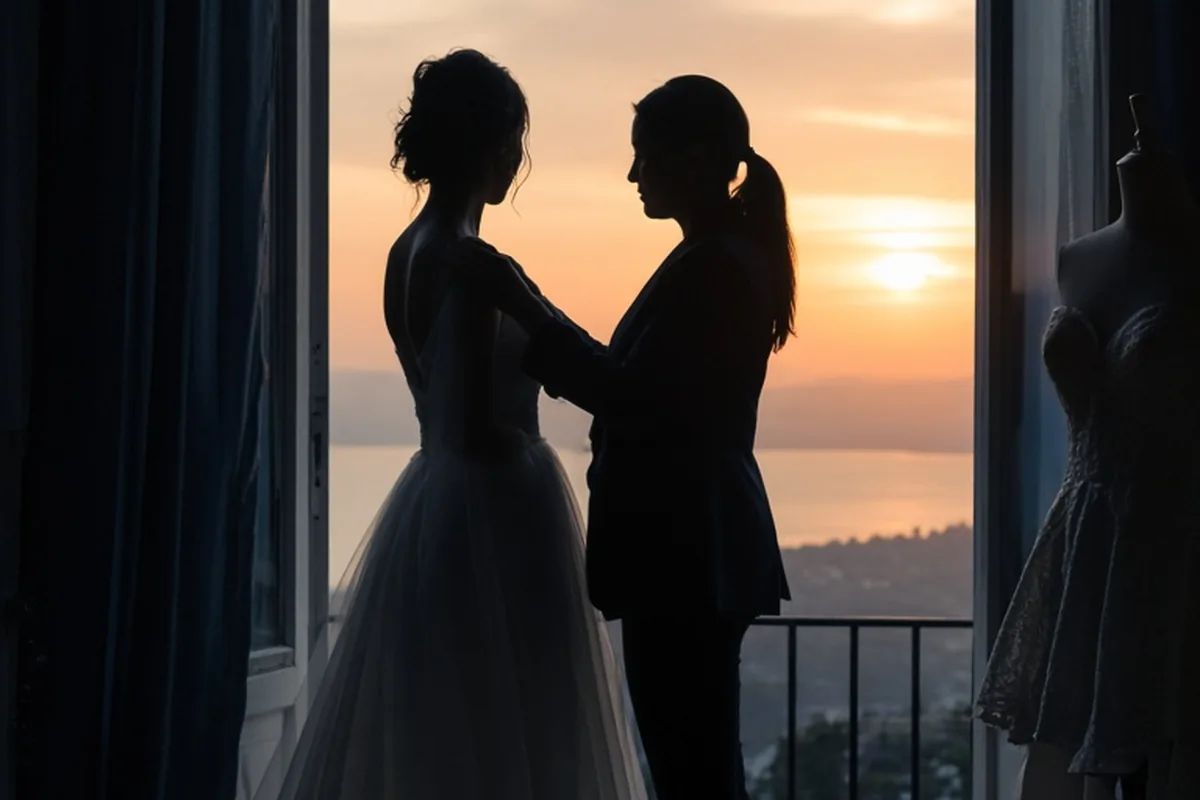
Wedding dress alterations offer the distinct advantage of transforming a standard-sized garment into a secure, flattering silhouette tailored to your exact posture and height. However, the process also brings notable drawbacks, including substantial added labor expenses, rigid multiple-fitting schedules, and the risk of irreversible fabric damage if complex structural changes are handled improperly. Weighing these trade-offs depends heavily on your gown's fabrication, your overall bridal budget, and the degree of structural reconstruction required.
Purchasing a wedding gown is rarely the final step in securing your wedding day attire. Because bridal designers construct standard sample sizes based on generalized measurement charts, almost every gown requires some degree of professional tailoring to sit correctly, support your movement, and ensure full comfort throughout an extended event.
The Core Advantages of Tailoring Your Wedding Gown
The primary benefit of wedding dress alterations is achieving an exacting, ergonomic fit that standard production sizing cannot provide. Off-the-rack and made-to-order gowns are cut to proportion ratios based on static bust, waist, and hip parameters. In reality, human bodies possess unique shoulder slopes, torso lengths, back curves, and asymmetrical proportions. An experienced bridal seamstress sculpts the internal foundation of the dress around your specific skeletal alignment, ensuring the neckline hugs the chest without gaping, the waist seam rests precisely at your natural waistline, and the skirt drapes evenly without twisting.
Beyond aesthetics, professional tailoring fundamentally improves physical comfort and mobility during an eight-to-twelve-hour celebration. A gown that fits properly distributes weight evenly across the torso or shoulders rather than dragging downward at the waist or pulling at delicate straps. Tailors can install custom bust cups, re-anchor internal waist stay bands, and adjust boning channels to provide reliable bust support without requiring uncomfortable separate undergarments. This functional support prevents the constant shifting, tugging, and adjusting that can detract from your presence and enjoyment on the wedding day.
Alterations also offer an opportunity for custom aesthetic customization. Brides frequently use tailoring appointments to personalize their look by adding bespoke sleeves, lowering backlines, lowering or filling in illusion panels, incorporating sentimental heirloom lace, or re-embroidering beading. Furthermore, adding a tailored bustle system—whether an over-bustle, under-bustle, or ballroom bustle—allows a gown with a dramatic chapel or cathedral train to transition smoothly into a manageable, floor-length skirt suitable for dancing and socializing.
The Drawbacks and Hidden Risks of Wedding Dress Alterations
The most immediate downside of bridal alterations is the substantial financial investment, which frequently catches brides unprepared. Because bridal sewing requires meticulous handwork, specialized equipment, and extensive labor hours, tailoring can easily add hundreds or even thousands of dollars to the total garment cost. If a gown requires complex labor such as shortening multi-layered tulle skirts, hand-moving scalloped lace appliques, or resizing heavily beaded bodices, the alteration fees can sometimes equal or exceed the initial purchase price of the gown itself.
Timeline rigidity and logistical demands present another significant drawback. A standard bridal alterations schedule typically involves three to four separate appointments spread across several months, demanding consistent schedule availability. If your body weight, muscle tone, or posture fluctuates between fittings due to stress, fitness routines, or medical changes, additional rounds of adjustments become necessary. These subsequent alterations can create heightened emotional stress, timeline compression, and unexpected fee additions close to the wedding date.
There is also an inherent risk of irreversible cosmetic or structural damage. Unlike standard apparel tailoring, bridal fabrics often feature delicate silk chiffons, sheer illusion mesh, delicate crepes, and intricate embroidery. Seamstresses must balance the limits of available seam allowances with the structural integrity of fragile materials. If an inexperienced tailor cuts away internal fabric or improperly presses high-heat irons against sensitive synthetic fibers, the damage is often impossible to reverse without replacing entire pattern panels, potentially compromising the gown's original silhouette.
Major Cost Variables in Bridal Tailoring
Bridal alteration pricing varies widely because costs are determined by labor intensity, garment complexity, and regional market rates rather than a flat per-dress fee. A simple side-seam take-in on an unadorned crepe sheath requires far less bench time than taking in a structured corset covered in hand-strung pearls, crystals, and three-dimensional lace appliques. When beading is present, seamstresses must painstakingly remove embellishments along the seamline by hand, sew the new structural seam, and manually re-stitch the beads back onto the finished surface to prevent thread unraveling.
Hemming is another area where construction details drastically alter labor demands. A clean, single-layer satin skirt hem is a straightforward task. Conversely, a ballgown skirt featuring six layers of crinoline, horsehair braid trim, and a scalloped lace border requires the seamstress to unpick the lace border completely, hem every individual lining and tulle layer to calibrated lengths, and hand-appliqué the lace border back onto the shortened hem. Understanding these structural layers helps explain why quotes for seemingly minor length adjustments can vary dramatically between different gown styles.
To protect your wedding budget, request an itemized estimate before committing to a tailor. Inquire whether the quoted price covers a flat-rate alterations package with unlimited fittings or if each adjustment is billed à la carte. Clarify whether basic additions—such as sewing in bra cups, steaming the final garment, or installing complex multi-point bustles—are included in the estimate or billed as separate line items upon completion.
Altering Off-the-Rack and Sample Gowns Versus Ordering Standard Sizes
Brides often evaluate buying a discounted sample gown off the showroom floor against ordering a newly produced gown matched to their general measurements. Purchasing an off-the-rack sample gown can yield significant initial retail savings, but it frequently introduces heightened alteration challenges. Sample gowns have been tried on by numerous individuals, which can lead to stretched seams, missing hook-and-eye closures, or soiled hem edges that require restorative tailoring and professional cleaning alongside standard sizing adjustments.
Furthermore, sample gowns rarely match a buyer's exact size, requiring substantial resizing. While taking a dress down by one or two sizes is standard practice for a qualified tailor, taking a dress down by more than two or three sizes involves completely deconstructing the bodice, reshaping armholes, repositioning bust apexes, and altering the skirt balance. In extreme cases, aggressive downsizing shifts the designer's intended proportions, resulting in pockets sitting too far back or neckline straps resting at unnatural angles on the collarbone.
Conversely, ordering a new gown in the designer size closest to your largest measurement minimizes the need for extensive reconstruction. Although minor adjustments to the hem, straps, and waist will almost certainly still be required, the core foundation of the garment remains intact. When choosing between a deeply discounted sample dress and a made-to-order standard size, always factor the estimated cost and feasibility of extensive structural reconstruction into your total comparison.
Boutique In-House Alterations Versus Independent Bridal Specialists
When planning alterations, you will generally choose between your bridal salon's in-house alteration service and an independent bridal tailor. In-house alterations provide streamlined convenience. The salon already holds your dress upon delivery, the seamstresses are intimately familiar with specific construction quirks from the designers the shop carries, and the boutique retains continuous liability for the gown from arrival through final pickup. If a flaw or sizing discrepancy arises from the manufacturer, the salon can often resolve it directly with their design rep.
However, in-house salon services can sometimes come with premium price structures, rigid scheduling packages, or limited flexibility for non-standard custom design changes. Independent bridal tailors, by contrast, frequently operate with direct, highly personalized communication and flexible à la carte pricing. An independent specialist who works solely on private commissions may offer greater technical creativity if you want to perform radical gown redesigns, such as adding a structural corseted back or transforming a neckline.
The trade-off with an independent tailor is that the logistical burden rests entirely on you. You must arrange secure transportation for the gown, research the artisan's portfolio independently, verify their insurance coverage, and manage timelines without salon oversight. Whichever path you choose, verify client reviews that specifically showcase completed bridal work rather than general dry-cleaning or basic garment alterations.
Navigating the Fitting Timeline and Body Fluctuations
A successful alteration process relies on an intentional, structured timeline. Standard practice involves beginning the fitting sequence roughly eight to twelve weeks prior to the wedding date. This window allows sufficient turnaround time between fittings without scheduling the work so far in advance that natural body fluctuations render earlier adjustments obsolete. A typical sequence includes an initial pinning consultation, a second fitting to evaluate structural adjustments and mark the hem and bustle, and a final fitting roughly two to three weeks before the event to verify micro-adjustments and perform final pressing.
Body weight and muscle distribution shifts represent a major challenge in bridal tailoring. Stress, dietary changes, and wedding preparation routines frequently cause subtle shifts in water retention, posture, and measurements. If a dress is fitted with extreme tightness too early, even minor weight gain can make the bodice constricting or cause zippers to fail under tension. Conversely, unexpected weight loss late in the process can cause strapless bodices to slide downward or drag at the bustline.
To mitigate these timeline risks, communicate openly with your seamstress about any planned lifestyle or fitness changes. Professional tailors can leave modest internal seam allowances intact until the final appointment, allowing for small last-minute releases if needed. Additionally, maintain consistent footwear and undergarments across every single fitting appointment, as altering shoe heel heights or switching bra styles mid-process will invalidate previously marked hem and bodice measurements.
Essential Quality Checkpoints Before Final Pick-Up
Before accepting and paying for your final alterations, perform a comprehensive physical and visual inspection of the garment. Put the gown on with your exact wedding day shoes and undergarments, and test dynamic movements. Walk at a normal pace, sit down fully in a standard chair, bend slightly forward, and raise your arms. The dress should maintain its structural position without pinching the underarms, digging into the ribs, or slipping down the torso when you move naturally.
Inspect the hemline while standing on a flat, level floor. The front hem should clear the top of your shoes slightly—typically hovering a quarter-inch to a half-inch above the ground—to ensure you do not step on the fabric while walking forward, while the sides and back should drape smoothly without dragging or catching. Examine all functional elements, including the zipper track, hook-and-eye closures, and button loops, checking for smooth operation and strong anchor stitching.
Finally, conduct a thorough test of the bustle system. Have your seamstress demonstrate how to secure every button, loop, ribbon tie, or hook, and ask your designated wedding attendant or family member to practice securing the bustle under the tailor's supervision. Take a clear smartphone video of the bustle assembly during the appointment to serve as an exact reference guide for your wedding day coordinators.
Frequently asked questions
Can every wedding dress be successfully altered to fit?
Most wedding dresses can be modified up to two sizes down or roughly one size up, depending on the internal seam allowances. However, extreme size alterations or gowns made with non-stretch illusion mesh and heavy linear beading may face technical limitations that risk compromising the design's structural integrity.
What items must I bring to my first bridal alteration fitting?
You must bring the exact shoes you plan to wear on your wedding day, as heel height dictates the precise hemline cut. You should also bring your planned undergarments, shapewear, and any specialty corsetry or bust cups to ensure the seamstress pins the dress over the correct foundation.
How many fittings are typically required for wedding dress alterations?
Most standard bridal alterations require three to four separate appointments. The initial fitting focuses on bodice structure and general pinning, the second checks primary adjustments and marks the hem and bustle, and the final fitting confirms fit and finishes final garment pressing.
Is it cheaper to alter an oversized gown or an undersized gown?
Taking a slightly oversized gown in is generally simpler and less expensive than letting out an undersized dress. Letting out a gown requires sufficient built-in seam allowances, fabric matching, and careful unpicking that can leave visible needle punctures in delicate materials like satin or silk.
Your next step
Schedule an initial consultation with a reputable bridal seamstress at least eight to twelve weeks before your wedding date, bringing your exact wedding day shoes and undergarments to obtain a clear, itemized quote before any cutting begins.