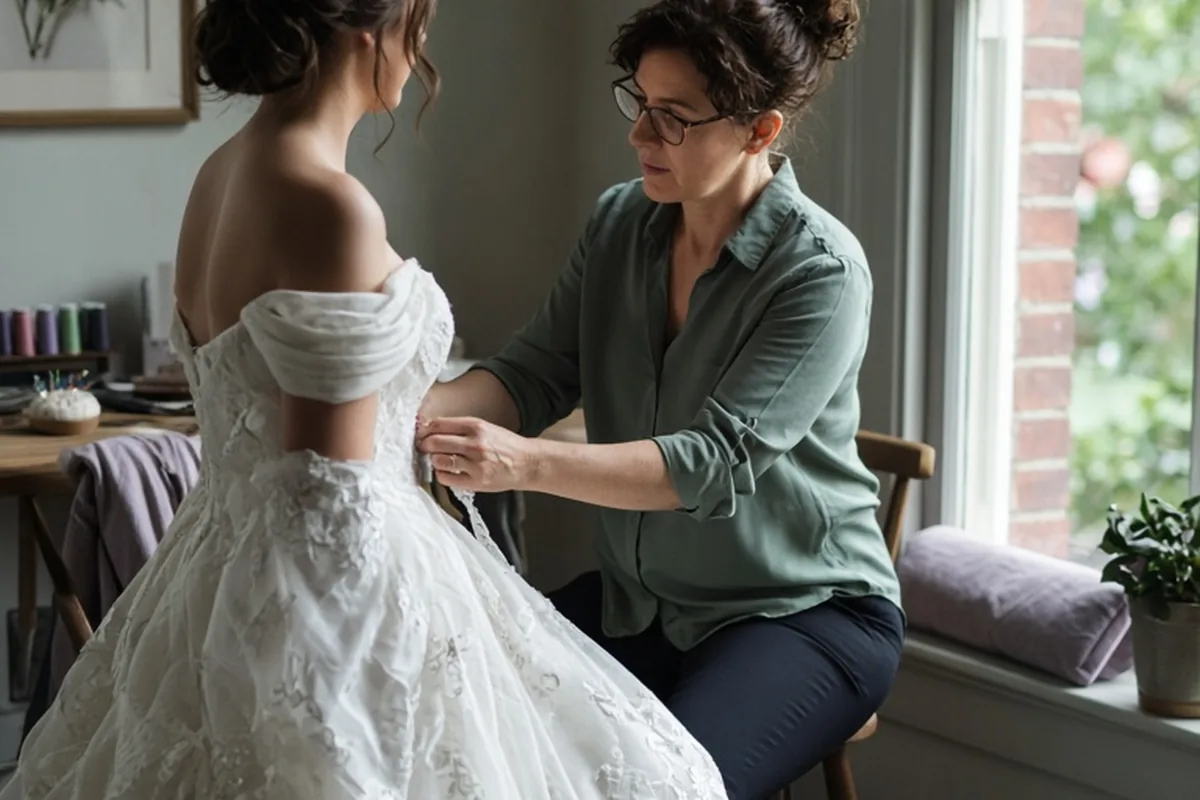
To save on wedding dress alterations, order a gown size matching your largest measurement, select designs with simpler hem structures, finalize exact wedding shoes and foundation garments before your first fitting, and schedule appointments several months in advance to avoid rush fees. Requesting itemized estimates from independent tailors rather than defaulting to flat boutique packages also helps identify where labor charges accumulate across hemming, taking in side seams, and constructing complex bustles.
Bridal alterations represent one of the most unpredictable expenses in wedding planning because the final tailoring cost depends heavily on garment construction, fabric sensitivity, and the precision required to support structured bodices without discomfort.
Ordering the Right Gown Size to Minimize Structural Restructuring
Bridal sizing rarely corresponds to standard ready-to-wear clothing dimensions, which leads many shoppers to misjudge which size to purchase. Bridal gowns are built around rigid measurement charts established by individual designers for bust, waist, and hip proportions. Because taking in a seam requires less deconstruction than letting out seams that lack adequate seam allowances, standard practice suggests ordering to fit the largest individual body measurement. However, ordering several sizes too large creates unnecessary labor because a tailor must dismantle armholes, neckline boning, and intricate shoulder seams to rescale the garment.
Before approving a dress order, review the manufacturer size chart alongside your current measurements taken by an experienced fitter. If your measurements sit between two sizes, examine the dress silhouette before deciding. An A-line or ballgown silhouette provides natural ease through the hips, meaning ordering strictly for your bust and waist measurements avoids paying for waist-down adjustments. Conversely, a fitted mermaid or sheath silhouette demands accurate hip dimensions. Making strategic sizing choices at the point of purchase eliminates hours of structural rework later.
Evaluating Gown Construction Details That Drive Alteration Labor
The decorative features and internal engineering of a wedding dress directly dictate how many hours a seamstress must spend completing standard adjustments. Gowns with deep horsehair braid hemline borders, multi-layered crinoline skirts, delicate lace appliqués that must be unstitched by hand before shortening, and extensive beadwork require specialized techniques. Each bead along a seam line must be removed prior to stitching to protect the sewing machine needle, and the beading must then be hand-anchored to prevent the remaining decorative work from unraveling over time.
If you want to keep tailoring expenses manageable, consider selecting dresses with clean fabric edges, unembellished side seams, or separate lace layers that can be shortened independently. Gowns with exposed illusion mesh or intricate back paneling also require meticulous hand-tacking when taking in the bodice. By identifying whether a dress features structural boning, integrated corsetry, or delicate applique before purchasing, you can accurately anticipate whether fitting adjustments will require standard machine sewing or dozens of hours of delicate hand restoration.
Wedding Dress Alterations Timing and Fitting Schedule Strategies
Tailoring timelines exert significant leverage over total alteration pricing because expedited schedules require dedicated overtime from specialized artisans. The standard alterations process typically involves three to four distinct appointments spanning two to three months. The initial fitting addresses structural fit, posture alignment, and pinning the hem. The second fitting refines the bodice tension and sets the bustle points. Subsequent appointments verify movement, sitting comfort, and final pressing or steaming.
Scheduling your initial consultation well before peak wedding season prevents rush surcharges, which can substantially increase labor bills on short-notice projects. Starting too early, however, introduces the risk of secondary alteration rounds if your body shape fluctuates significantly before the event date. The most cost-efficient window is to book your specialist early in your engagement while scheduling the actual hands-on fittings to commence roughly eight to ten weeks prior to the wedding date, securing both calendar availability and an accurate final fit.
Choosing Between In-House Bridal Boutiques and Independent Seamstresses
Bridal boutiques often offer in-house alteration packages designed to cover a broad suite of standard adjustments under a single flat rate. While this model provides budget predictability, the package price may exceed the true cost of simple modifications if your gown requires only a basic hem and a modest bustle. Conversely, flat packages can be advantageous for dresses requiring comprehensive reconstruction across multiple distinct areas.
Independent bridal tailors generally bill based on specific itemized modifications or an hourly rate tied directly to garment complexity. Sourcing an independent specialist allows you to pay solely for the exact labor your gown requires. When evaluating independent professionals, verify their specific portfolio working on bridal fabrics such as silk crepe, organza, tulle, and satin. Request clear quotes outlining standard tasks individually so you can compare the boutique flat-fee scope directly against custom itemized pricing.
Hemming, Bustling, and Bodice Tailoring Cost Reduction Tactics
The hemline and the bustle represent two areas where smart design choices prevent disproportionate tailoring fees. Shortening a full skirt containing five to eight tulle underlayers requires cutting and finishing every layer separately. Choosing a simpler under-skirt trim or selecting a single-layer fabric skirt simplifies the work. For skirts with ornate lace borders, tailors must detach the border, cut the body fabric to the correct length, and reattach the lace border seamlessly, which demands extensive bench time.
Bustle design also affects your final bill. An American over-bustle, which lifts the train using exterior buttons or hooks, often requires fewer pick-up points than a French under-bustle that secures multiple folded ribbons beneath the skirt. Discussing the number of bustle anchor points with your seamstress helps you balance the aesthetic drape of the train with structural security and labor costs. Opting for a manageable three-point to five-point bustle structure rather than a complex multi-point system keeps construction straightforward and prevents accidental tearing during the reception.
Managing Footwear, Undergarments, and Foundation Wear Early
Changing your shoes or foundation garments after your first fitting is one of the most common causes of duplicate alteration charges. A skirt hem is measured to skim the floor based on an exact heel height, sole thickness, and natural standing posture. If you switch from high heels to platform wedges or flat sandals between appointments, the entire skirt must be repinned, trimmed, and resewn from scratch.
Similarly, the presence of built-in bra cups, shapewear, corsets, or backless adhesive foundations alters the torso length and circumference. Asking your tailor to sew supportive soft cups directly into the bodice can eliminate the need for costly specialized bridal lingerie while streamlining the garment interior. Bring the exact shoes, underwear, and any intended slips to every single fitting appointment to guarantee that every pin placed in the fabric reflects the permanent configuration of your wedding day outfit.
Itemized Written Estimates and Contract Verification Checklist
Clear financial communication protects both the client and the tailor from misunderstandings regarding the scope of work. Before leaving your gown with any specialist, ask for an itemized breakdown that separates individual line items such as taking in side seams, shortening shoulder straps, adjusting the hem, building the bustle, and adding custom modifications like sleeves or bra cups. Ensure the written agreement explicitly states the scheduled completion date, the number of included follow-up fittings, and any fees associated with final garment steaming.
Review whether the quote operates as a binding flat contract or an estimate subject to change if additional internal work is discovered during deconstruction. Clarify the shop policy regarding insurance coverage while your gown is in their care, along with payment milestones across the fitting timeline. Having a documented breakdown ensures that if you choose to decline optional modifications to stay within your spending targets, the adjustments can be removed cleanly without administrative ambiguity.
Frequently asked questions
Can I save money on wedding dress alterations by choosing a corset back instead of a zipper?
Yes, converting a zipper closure to a lace-up corset back or choosing a corset style initially can reduce alteration needs. Corset backs offer flexible adjustment across the bust and waist, accommodating minor size variations without requiring structural seam reconstruction.
How many fittings are normally needed to complete bridal gown alterations?
Most bridal alterations require two to four separate fittings over several weeks. The initial appointment focuses on structural pinning, the second checks fit adjustments and sets the bustle, and the final session confirms comfort and verifies the finished hem.
What items should I bring to my first wedding dress alterations appointment?
Bring the exact shoes you plan to wear during the ceremony and reception, along with your planned undergarments, shapewear, and any hair accessories or veil that might influence your posture. Having these exact items ensures the hemline and bodice fit remain completely accurate.
Why does hemming a lace wedding dress cost more than hemming plain satin?
Lace gowns with scalloped borders require the tailor to painstakingly detach the lace edging by hand, shorten the base fabric, and then re-appliqué the lace border back onto the hem. Plain satin skirts can simply be measured, cut, and stitched in a single process.
Your next step
Take your intended wedding shoes and undergarments to an initial consultation with an experienced bridal tailor to request a detailed, itemized quote before committing to any non-essential structural adjustments.