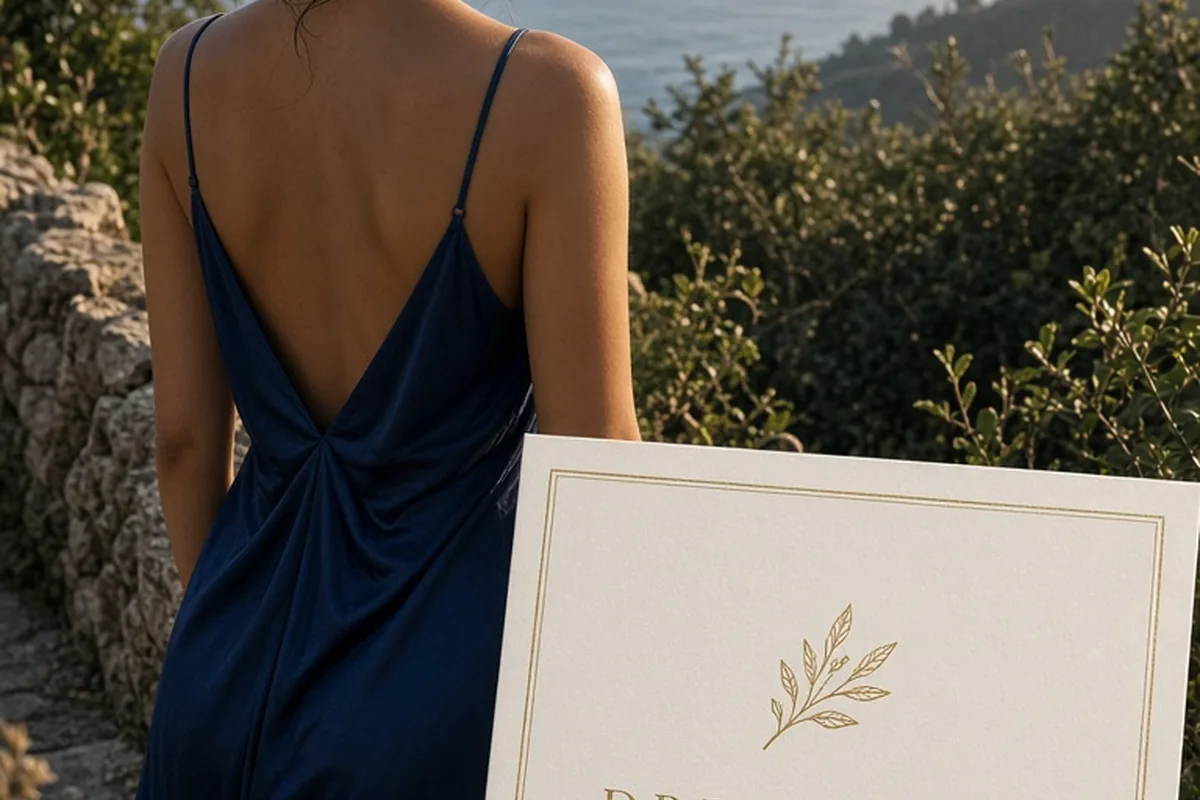
For a wedding of approximately 100 guests, state your dress code on the bottom lower right of the formal invitation card or on an accompanying details card. Use established terms such as Black-Tie, Formal or Black-Tie Optional, Cocktail Attire, or Semi-Formal. Pair the formal term with a one-line clarification on your wedding website describing footwear suitability, venue terrain, or seasonal weather so guests can plan comfortably.
Managing guest expectations for a mid-sized wedding of roughly 100 people strikes an ideal balance between formal celebration and personal connection. Because 100 guests typically represent distinct social circles, varying age groups, and different regions, providing explicit, courteous attire guidelines prevents confusion and ensures everyone feels confident and appropriately dressed.
Placing Attire Guidelines Across Invitations, Details Cards, and Digital Hubs
Traditional stationery etiquette dictates that the primary wedding invitation should remain clean, uncluttered, and centered on the hosts, the couple, and the ceremony logistics. When communicating attire to 100 guests, traditional formal standards permit placing a short dress code phrase in the bottom right corner of the main invitation card only when the event is strictly Black-Tie or White-Tie. For all other dress codes, including cocktail, semi-formal, or casual attire, the established best practice is printing the guidance on a separate details insert card alongside venue notes and RSVP instructions.
A separate details card gives you the space to communicate clearly without crowding the formal invitation script. You can pair a concise label on the printed enclosure card with a direct link to your wedding website, where extended guidance lives. A group of 100 guests is compact enough that many will review your digital details page for specifics regarding outdoor lawns, shuttles, and temperature changes. Placing the baseline phrase on paper and the practical context online gives attendees all the tools they need to prepare.
Standard Wedding Dress Code Wording for 100 Guests Across Major Levels
Clarity starts with recognized standard terminology rather than creative or invented descriptors that leave guests guessing. The standard categories provide an immediate baseline for tailoring choices, dress lengths, and styling expectations across your entire guest list. When drafting wording for stationery or your website, select one established category and offer a straightforward one-sentence description.
For black-tie events, write: 'Black-Tie: Tuxedos and formal floor-length evening gowns.' For black-tie optional or formal affairs, use: 'Formal Attire: Tuxedos or dark suits with ties, and floor-length gowns or dressy formal midi dresses.' For cocktail celebrations, state: 'Cocktail Attire: Suits with or without ties, tailored separates, and cocktail or party dresses.' For semi-formal or dressy casual gatherings, write: 'Semi-Formal Attire: Blazers, slacks, collared shirts, cocktail dresses, jumpsuits, or dressy skirts.' Sticking to these recognized standards eliminates second-guessing across diverse friend groups and extended families.
Adapting Phrasing for Outdoor Settings, Unpaved Venues, and Variable Weather
A 100-person wedding frequently takes advantage of private estates, historic barns, botanical gardens, or coastal overlooks. These scenic venues often feature gravel paths, manicured grass, cobblestones, or open-air reception tents that present genuine wardrobe hazards if guests arrive unprepared. Rather than altering your core dress category to sound overly rustic, maintain the standard tier and add practical guidance regarding the environment.
Phrasing such guidance politely focuses on guest comfort and safety rather than arbitrary rules. For example, write: 'Cocktail Attire: The ceremony and cocktail hour will take place on a natural lawn. Chunky heels, wedges, or flat-soled formal shoes are encouraged.' For waterfront or coastal locations subject to sudden breezes, add: 'Semi-Formal Attire: Our dinner will be hosted outdoors near the water. We recommend bringing an evening wrap or light jacket for cooler evening temperatures.' This context allows guests to select functional fabrics and appropriate footwear while still honoring the formality of the event.
Addressing Modesty, House of Worship Guidelines, and Cultural Attire
If your ceremony takes place in a religious institution or follows specific cultural traditions that require particular attire, giving explicit instructions prevents uncomfortable surprises on the wedding day. Guests outside your immediate cultural or religious background appreciate direct, supportive explanations of what is required, what is optional, and what garments or coverings might be made available at the door.
When communicating these expectations, state the exact requirements with warmth and neutrality. For a church or sanctuary ceremony requiring covered shoulders, write: 'Ceremony Attire: We kindly ask that guests keep shoulders covered during the chapel service. Shawls, wraps, or jackets are welcome, and light wraps will also be provided at the entrance.' If you are welcoming traditional cultural garments, write: 'Traditional South Asian or Western Formal Attire: Guests are warmly invited to wear vibrant traditional attire or formal suits and evening gowns.' Clear invitations to participate reassure guests while respecting the sacred or cultural significance of the space.
Designing the Wedding Website FAQ to Address Nuanced Wardrobe Questions
Your wedding website serves as the practical companion to your printed paper suite, allowing you to answer nuanced wardrobe questions before guests reach out directly. A mid-sized guest count of 100 people generates fewer total inquiries than a massive ballroom wedding, but guests will still wonder about color restrictions, coat checks, and transition plans between ceremony and reception spaces.
Structure your online FAQ section with direct questions and actionable answers. Include a clear entry addressing colors to avoid, such as: 'What colors should guests avoid? We kindly ask that guests reserve white, cream, and ivory shades for the bridal party.' If your wedding includes a transition from daytime outdoor vows to a climate-controlled indoor reception, outline the schedule so guests understand how their wardrobe choices will hold up over the course of the afternoon and evening.
Setting Boundaries on Restrictive, Custom, and Thematic Dress Codes
Couples planning a 100-guest wedding sometimes consider custom or highly creative dress codes, such as 'desert chic,' 'coastal formal,' or curated monochromatic palettes. While themed aesthetics look striking in photographs, overly specific color requirements or obscure terms often create unnecessary financial pressure and anxiety for guests who must buy entirely new outfits to attend your celebration.
If you want a unified aesthetic without burdening your guests, ground your request in a standard category and treat color suggestions as optional inspiration rather than mandates. For example, write: 'Cocktail Attire: Earth tones and garden-inspired colors are welcome, but please wear whatever dressy attire makes you feel celebration-ready.' This approach gives guests creative guidance while accommodating personal budgets, existing wardrobes, and individual comfort levels.
Coordinating With Immediate Family and the Wedding Party to Guide Guests
In a gathering of roughly 100 people, word of mouth among close family members and wedding party attendants plays a major role in reinforcing your attire expectations. Extended family, mutual friends, and dates frequently consult parents of the couple or bridesmaids and groomsmen to verify what others are wearing before finalizing their choices.
Ensure your parents and wedding party are fully aligned on the formality tier, footwear considerations, and color expectations several weeks before invitations arrive. When close family members can clearly articulate that 'suits and mid-length dresses work great, but avoid stilettos because the lawn is soft,' that consistent message spreads naturally through your social circles, reinforcing the written guidelines across your entire guest list.
Frequently asked questions
Where should the dress code appear on the printed wedding invitation?
Place the dress code in the lower right corner of the primary invitation only for strictly Black-Tie or White-Tie events. For cocktail, formal, or semi-formal weddings, print the dress code on an accompanying details card or direct guests to your wedding website.
Is it rude to specify colors for wedding guests to wear?
Mandating exact color palettes can place an unwelcome financial burden on guests who must purchase new clothing. It is polite to suggest an optional color story as aesthetic inspiration, but rigid color requirements should generally be avoided unless culturally required.
How do I tell guests not to wear jeans or casual clothing politely?
Clearly designate an established standard such as 'Cocktail Attire' or 'Dressy Casual' on your details card and website FAQ. Proactively describing what to wear—such as tailored trousers, collared shirts, and cocktail dresses—sets clear boundaries without using negative or accusatory language.
What is the difference between formal and cocktail attire for a 100-guest wedding?
Formal attire implies floor-length evening gowns, elegant dressy midi dresses, and dark suits with ties or tuxedos. Cocktail attire is slightly more relaxed, welcoming shorter party dresses, tailored separates, and suits without requiring traditional black-tie accessories.
Your next step
Draft your dress code text using an established formality term, verify that any venue or footwear details are included on your details card draft, and publish the expanded attire FAQ to your wedding website before sending out invitations.