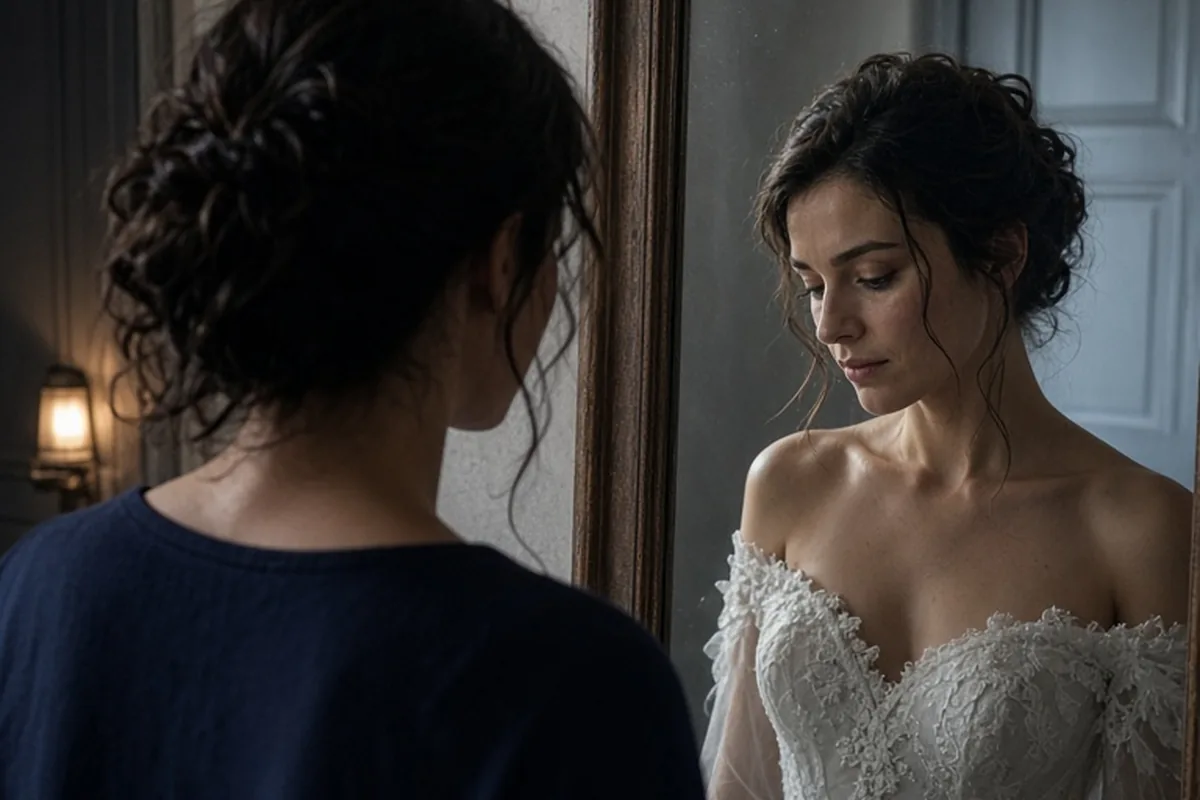
A complete wedding dress cost breakdown includes far more than the retail price tag on the hanger. The total expenditure typically divides across five core categories: the base designer gown, professional tailoring and bustle construction, specialized foundation undergarments and bridal accessories, shipping and local taxes, and post-wedding cleaning or preservation. Budgeting effectively requires allocating funds for alterations and finishing fees early, as custom structural adjustments can represent a substantial portion of your overall gown investment.
Shopping for bridal attire often begins with a single advertised retail figure, but the final invoice rarely matches that starting number. Understanding how boutiques, ateliers, and independent seamstresses structure their pricing allows you to plan your total wardrobe budget without unpleasant surprises before your final fitting.
The Base Wedding Dress: Fabric, Construction, and Sourcing
The primary line item on any bridal invoice is the base dress, and its wholesale and retail valuation stems directly from textile sourcing and internal architecture. Mass-market manufacturers rely heavily on synthetic fibers like polyester-based satin, stiff machine-woven tulle, and mass-produced chemical lace, which lower production costs while keeping garment silhouettes rigid. Conversely, independent ateliers and heritage fashion houses build gowns using weighted natural silk, four-ply crepe, French Chantilly lace, and individually placed appliqués. These delicate natural fibers command higher raw-material pricing, require specialized needlework, and carry higher customs or import duties when shipped from specialized textile mills overseas.
Internal gown engineering accounts for another major portion of the base price tag. Inexpensive off-the-rack garments often cut corners inside the bodice, leaving the bride reliant on external shapewear or separate adhesive undergarments for support. Finer couture garments integrate multi-layer canvas interfacing, steel-reinforced interior boning, padded cups, and elasticized waist stays directly into the bodice lining. When you pay for a higher-tier base gown, you are primarily purchasing this labor-intensive internal framework, which sculpts the silhouette, bears the physical weight of long trains or heavy beading, and keeps the bodice from collapsing or slipping over long hours of wear.
Bridal Alterations: Hemming, Bodice Resizing, and Bustle Engineering
Virtually every wedding dress requires professional tailoring, yet alterations are rarely included in boutique sample prices. Bridal sizing runs notably smaller and more rigid than contemporary ready-to-wear sizing charts, and designers manufacture standard samples to fit a standardized statuesque height. Unless you commission a bespoke pattern cut from scratch to your exact measurements, your gown will arrive in a standard size closest to your largest dimension, requiring an experienced fitter to taper seams, balance proportions, and align grainlines to your posture.
Alteration costs escalate based on garment complexity rather than the simple number of inches being taken in or let out. Shortening a clean crepe skirt with a plain edge is straightforward, but shortening a skirt bordered with horsehair braid, scallop lace trim, or graduated beadwork requires a technician to unpick, trim, and hand-stitch the border upward without distorting the pattern. Bodices featuring intricate side zippers or illusion mesh neckline panels must be completely disassembled to adjust bust darts or narrow shoulders. Additionally, installing a multi-point French or American bustle involves calculating weight distribution and sewing hidden reinforced loops, ribbons, or covered buttons so your heavy train stays off the reception floor.
Custom Surcharges: Size Splits, Hem Cuts, and Rush Production
Standard boutique orders assume typical manufacturing timelines and uniform factory patterns. When your physical proportions or wedding calendar fall outside those factory parameters, bridal houses apply specific line-item surcharges. One frequent charge is a split-size fee, which applies when a bride measures several sizes apart between the bust, waist, and hips. While choosing the larger size and altering it down is standard protocol, some designers offer pattern adjustments at the factory level for an extra charge, which can sometimes reduce subsequent tailor labor.
Production deadlines represent another variable that quickly inflates your total invoice. Traditional gown production spans several months because dresses are cut and assembled only after an authorized retailer submits a confirmed purchase order. If your wedding date requires delivery faster than standard manufacturing windows allow, designers levy mandatory rush production charges to prioritize fabric cutting and expedite shipping slots. Boutiques may also add their own administrative rush processing fee to manage accelerated fittings, and independent alteration studios often charge premium overtime rates if your final fitting takes place under a compressed timeline.
Foundation Pieces and Accessories: Veils, Undergarments, and Shoes
Achieving the intended aesthetic requires accessories and foundational support layers that should be factored directly into your bridal wardrobe budget. Specialized lingerie designed for bridal wear—such as backless longline corsets, high-compression seamless shorts, molded bustier cups, and deep-plunge bodysuits—often carries a higher cost than everyday intimate apparel due to reinforced boning and skin-toned friction linings. You must secure these exact foundation garments before your first fitting, because even a subtle change in heel height or bra padding alters your posture and changes the hemline distance from the ground.
Veils, capes, and overskirts also introduce substantial costs that surprise many first-time shoppers. A standard raw-edge chapel-length veil requires multiple yards of fine nylon or silk tulle, while cathedral-length veils adorned with matched hand-sewn lace or crystals can cost nearly as much as an entry-level wedding dress. If you plan to transform your reception look using detachable puff sleeves, sheer topper blouses, pearl-encrusted belts, or structured crinoline underskirts, record each element as a distinct accessory line item rather than treating them as minor afterthoughts.
Hidden Retail Overhead: Boutique Fees, Taxes, and Inbound Shipping
When calculating the true price of acquiring your gown, local taxes, freight costs, and salon administrative policies significantly affect your financial bottom line. Most bridal boutiques charge a dedicated inbound freight fee to ship the finished gown from the designer facility to the boutique showroom, covering private parcel tracking, freight insurance, and heavy-duty garment bags. State, municipal, and regional sales taxes also apply to the full purchase price of the dress and retail accessories in jurisdictions where apparel is taxable, which can quietly add hundreds of dollars to your final register receipt.
Boutique service policies also vary widely regarding appointment access and garment care prior to your departure. Some luxury salons require non-refundable appointment reservation fees during weekend peak hours, though many apply that fee toward your purchase if you buy during the visit. Furthermore, when your finished dress arrives from the factory, it is tightly folded and packed in shipping cartons. Professional steaming, pressing, hand-pressing pleated layers, and long-term climate-controlled storage between fittings can either be billed as a standalone service or wrapped into an in-house alteration package, making it essential to ask for itemized transparency upfront.
Post-Wedding Maintenance: Professional Cleaning and Archival Preservation
Your wedding dress budget does not conclude when you walk out of the venue at the end of the evening. A wedding gown collects microscopic sweat, skin oils, sugar from spilled champagne, and heavy grease and dirt deposits along the train hem during outdoor photos and indoor dancing. Standard consumer dry cleaners generally lack the solvent knowledge and tensioning equipment needed to treat delicate bridal fibers, sequins, metallic threads, and glued beading without melting components or staining natural silks yellow.
Bridal cleaning and archival preservation require specialized laboratory evaluation. A professional gown conservator identifies specific stain chemistry under blacklight inspection, cleans individual panels using gentle botanical or hydrocarbon solvents, and packs the folded gown into an acid-free, lignin-free textile preservation chest lined with neutral tissue paper. This service ensures your gown remains free from mold, permanent yellowing, and brittle fiber rot. Because preservation packages represent a distinct investment after the wedding day, budgeting for professional cleaning alongside your initial dress purchase prevents you from leaving a soiled gown hanging indefinitely in a closet.
Frequently asked questions
What percentage of my overall wedding dress budget should I reserve for alterations?
A sensible budgeting guideline is to allocate roughly seventy to eighty percent of your total bridal wardrobe funds for the base dress, reserving the remaining twenty to thirty percent for alterations and accessory items. If your chosen gown features layered lace hems, extensive beading, or requires substantial structural resizing, your tailoring costs will sit toward the higher end of that range.
Why are bridal alterations priced separately from the dress in most boutiques?
Boutiques price alterations separately because physical bodies do not match rigid factory molds, making it impossible to standardize tailoring needs across every customer. One person may only need a one-inch hem adjustment, while another requires narrowing shoulders, shortening straps, taking in the bust, and adding an intricate bustle. Charging a flat dress price that included unpredictable alterations would force simple-alteration clients to subsidize complex structural overhauls.
Are rush fees negotiable if my wedding date is close?
Designer manufacturing rush fees are almost universally non-negotiable because they cover factory overtime, logistics reprioritization, and air courier shipping to meet production targets. However, you can frequently bypass designer rush fees altogether by purchasing an off-the-rack sample gown directly from a salon floor or selecting a ready-to-ship piece from a bridal consignment studio.
How do I avoid hidden accessory costs at bridal appointments?
Before committing to any dress, ask the stylist to remove supplementary styling accessories such as veils, belts, and specialized underskirts so you can evaluate the gown on its own merits. Request an itemized price breakdown that clearly lists the gown, each accessory you tried, estimated shipping, and state sales tax before signing your purchase contract.
Your next step
Request a written, itemized estimate that details base gown costs, inbound freight, local sales taxes, and estimated alteration ranges before you place a non-refundable deposit.