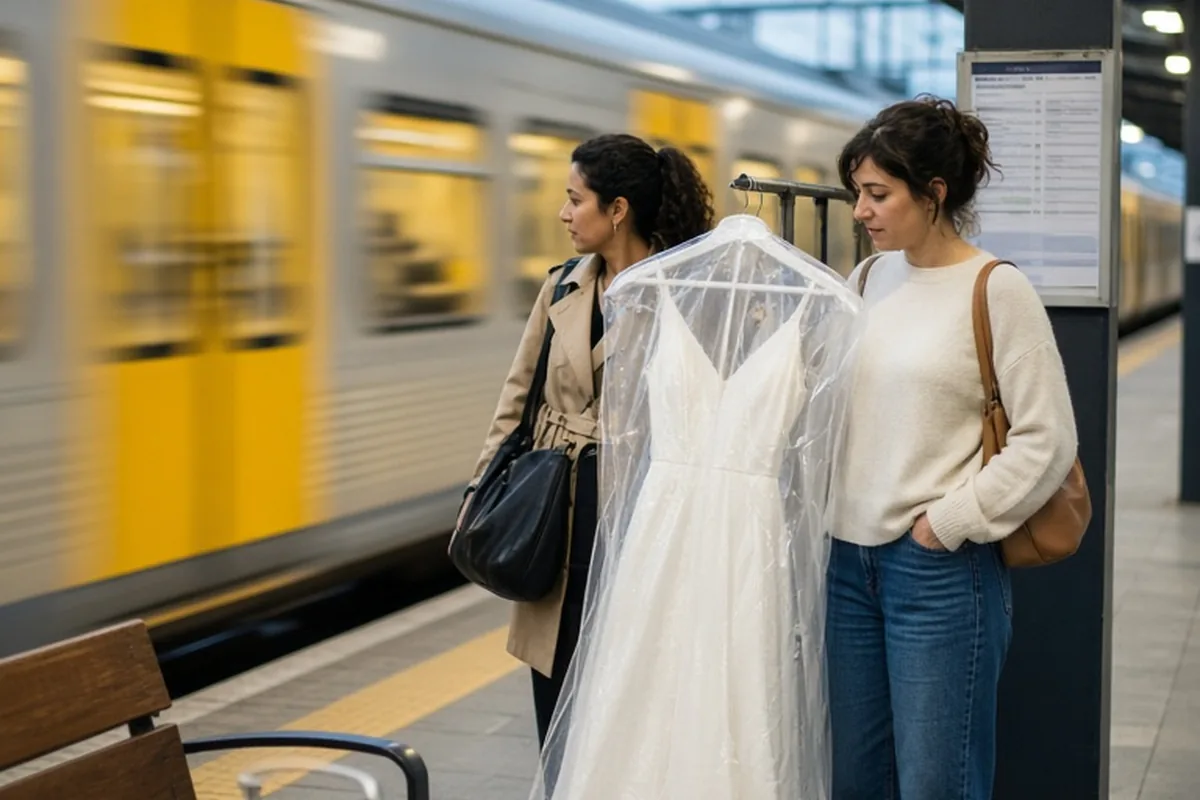
A complete wedding dress shopping budget accounts for far more than the gown's rack price. To establish a realistic spending plan, set a firm ceiling that covers four distinct categories: the gown itself, professional alterations, required day-of accessories, and post-event cleaning or preservation. Inquire about local alteration rates, boutique appointment policies, and delivery timelines before trying on garments to ensure your total attire investment remains fully aligned with your financial boundaries.
Stepping into a bridal salon without a granular spending plan often leads to emotional decision-making or sudden financial strain, largely because the retail sticker price represents only one component of the total attire expense.
Calculating the Total Wedding Dress Financial Commitment
A common pitfall during wedding dress shopping is conflating the retail tag on a boutique hanger with the final amount required to walk down the aisle. The purchase price of the garment represents an opening figure in a multi-step financial process. In addition to the primary textile, every bride must fund the structural adjustments necessary to make the dress fit, the specialized undergarments that support the gown architecture, local sales taxes, and shipping fees. When establishing your overall attire allocation, reserve a significant buffer between your total spending cap and the maximum price tag you permit a stylist to pull from the racks.
To establish this separation, divide your total attire allocation into distinct functional envelopes before booking your initial appointments. Designate one primary fund strictly for the gown deposit and final retail balance. Create separate secondary funds for professional tailoring, accessories, day-of beauty underpinnings, and garment aftercare. Operating with clear line items prevents the common scenario where an individual purchases a dress at the absolute upper limit of their resources, only to discover later that necessary alterations or essential foundation pieces exceed their remaining funds.
Budgeting for Bridal Alterations and Custom Structural Tailoring
Nearly every wedding dress requires professional tailoring, even when ordered in a standard designer size that corresponds closely to your measurements. Bridal manufacturers construct gowns according to standardized sizing charts, meaning a dress ordered to accommodate your bust measurement will likely be loose in the waist or hips, while the hem is cut to fit an exceptionally tall silhouette. Tailoring transforms a generic factory garment into a contoured, supportive piece of couture fitted to your exact posture, torso length, and shoe height.
The cost of alterations fluctuates wildly based on gown construction rather than the amount of fabric being removed. Hemming a simple, unadorned crepe skirt involves straightforward stitching, whereas shortening a multi-layered tulle ballgown with scalloped horsehair braid or intricate lace appliques requires a seamstress to painstakingly detach, trim, reposition, and hand-sew every motif. Similarly, taking in a bodice with built-in internal boning, delicate illusion mesh, or heavy beadwork requires hours of labor to reconstruct without distorting the structural symmetry. Complex bustle configurations, which lift and secure the train for dancing, also add tailoring charges depending on whether your dress requires an over-bustle, under-bustle, or multi-point French pickup.
How Gown Fabrication and Manufacturing Tiers Drive Retail Pricing
Understanding why two visually similar dresses carry drastically different retail prices helps you prioritize which craftsmanship elements justify your financial investment. Gowns produced from pure natural fibers such as silk faille, silk mikado, silk organza, or genuine French Chantilly lace cost substantially more to source and manufacture than synthetic alternatives like polyester crepe, nylon tulle, or machine-milled chemical lace. Natural fibers offer unmatched breathability, weight, and light-reflective qualities, but quality synthetic blends can provide durable structure and clean lines at a fraction of the raw material cost.
Internal engineering and embellishment methods represent the other major pricing divide. High-end bridal houses employ skilled artisans to apply hand-beaded Swarovski crystals, dimensional floral appliques, and hand-stitched corsetry with steel boning, waist stay ribbons, and integrated cup architecture. Lower-tier commercial manufacturers rely on machine-applied beading, adhesive lace motifs, and basic plastic boning. When evaluating gowns against your budget, examine the internal lining, seam allowances, and the flexibility of the boning to verify that the price tag reflects superior structural integrity rather than purely brand prestige.
Salon Consultation Fees, Freight Surcharges, and Rush Production
The logistics of ordering a wedding gown introduce several ancillary charges that shoppers frequently overlook during preliminary planning. Many upscale salons and indie boutiques now charge non-refundable appointment fees to reserve a dressing room and dedicated stylist, particularly for weekend slots or private VIP bridal suites. While some salons credit this fee toward the purchase of a gown, others retain it strictly as an administrative consultation fee. Clarify these booking policies before scheduling visits across multiple shops in a single weekend.
Production timelines also carry potential financial penalties. Standard made-to-order bridal gowns take several months to construct overseas, ship to the retailer, and clear customs before arrival for initial fittings. If you purchase your attire inside a condensed planning window, designers impose tiered rush production fees to expedite factory manufacturing, and salons charge premium air freight rates to ensure arrival in time for fittings. Furthermore, salons typically charge a mandatory shipping, handling, and insurance fee to transport the gown from the designer distribution hub to the retail storefront, in addition to applicable state and municipal sales taxes assessed on the final invoice.
Planning for Bridal Veils, Specialty Underpinnings, and Footwear
Accessories exert a disproportionate impact on your bottom line if left as spontaneous add-ons during styling appointments. Veils, in particular, often catch shoppers off guard. A simple raw-edge fingertip veil requires minimal construction, but cathedral-length veils crafted from English silk tulle, edged in crystal-encrusted lace, or finished with custom embroidered monograms can rival the cost of an entire ready-to-wear dress. Deciding whether you desire an heirloom-quality veil or an unembellished accent before shopping prevents high-pressure impulse purchasing in front of boutique mirrors.
Specialty undergarments represent an unavoidable technical investment that must be finalized prior to your first fitting appointment. Plunging backlines, deep illusion necklines, and strapless silhouettes require specialized foundation garments such as low-back adhesive bustiers, seamless shaping bodysuits, or specialty sewn-in bra cups. You will also need to finalize your ceremony and reception shoes early in the process, as seamstresses cannot measure your hemline accurately without the precise heel height, platform elevation, and toe profile you will wear on the wedding day.
Post-Wedding Gown Cleaning and Heirloom Preservation Expenses
A thorough attire budget extends past the wedding reception to address garment maintenance and long-term storage. Over the course of a wedding day, gown hems accumulate floor dirt, asphalt soot, grass stains, beverage splashes, and body oils. Standard dry cleaners lack the specialized solvent baths and delicate handling protocols required to clean wedding attire without melting glued beadwork, dissolving delicate lace adhesives, or yellowing fine silk threads.
Professional wet cleaning and museum-grade heirloom preservation represent a distinct professional service. Specialist conservators assess individual fabric weaves, pre-treat invisible sugar and perspiration stains that discolor over time, and seal the cleaned gown in an acid-free, lignin-free presentation chest lined with neutral tissue paper. If you intend to preserve your dress as a family keepsake, sell it through a luxury consignment portal, or donate it to an archival organization, factor professional cleaning into your initial wedding budget so you are not faced with an unmanageable cleaning bill immediately following your honeymoon.
Sourcing Opportunities: Trunk Shows, Sample Sales, and Consignment
There are several strategic purchasing avenues that permit you to acquire high-caliber bridal designs while keeping expenditures under control. Trunk shows, which occur when a boutique hosts a designer's entire newest collection for a limited weekend, frequently include promotional purchase incentives or complimentary customization options, such as raised necklines or extended train lengths. These events are ideal if you know which designer's aesthetic fits your vision and want access to unreleased inventory alongside targeted boutique incentives.
Sample sales and dedicated bridal consignment salons offer even steeper savings, allowing brides to purchase floor models directly off the rack. However, these opportunities demand rigorous scrutiny. Sample garments have been tried on by dozens of prospective brides and may suffer from stretched seams, broken zippers, missing beadwork, or makeup smudges along the neckline. When evaluating a sample sale gown, obtain a candid estimate from an experienced independent tailor regarding the cost of restoring the textile and altering the sample to your frame, ensuring that the discount on the rack is not completely negated by repair bills.
Communicating Boundaries and Managing Salon Stylist Interactions
Clear communication with your boutique bridal stylist is your strongest defense against budget overruns. When you complete your preliminary intake questionnaire or sit down for your styling consultation, state your firm gown-only ceiling, making sure to explicitly remind the stylist that this figure must leave room for taxes and alterations. Explicitly instruct the consultant not to pull dresses that exceed your ceiling, as falling in love with an out-of-reach gown resets your baseline expectations and turns gowns within your true price bracket into disappointing compromises.
Equally important is managing the voices of your entourage. Well-meaning friends and relatives often encourage brides to try on showstopping garments that far exceed established limits, promising that financial hurdles will resolve themselves later. Reiterate your financial boundaries to your guests before entering the salon, and request their support in keeping the focus on garments you can comfortably afford. If you find a potential gown, ask the boutique manager for a complete, written breakdown detailing the dress base price, freight charges, estimated local sales tax, and expected alteration ranges before putting down a non-refundable deposit.
Frequently asked questions
When in the wedding planning timeline should you establish your dress shopping budget?
You should lock in your attire budget as soon as your overall wedding budget and venue are finalized, typically nine to twelve months prior to the wedding date. Setting this spending boundary before booking appointments prevents you from visiting salons whose baseline inventory exceeds your comfortable purchasing range.
How do you obtain an accurate alterations estimate before purchasing a gown?
Ask the bridal stylist to review the specific structural components of the dress, noting how many skirt layers must be hemmed and whether lace or boning must be moved to take in the bodice. You can also photograph the interior construction and send the images to an independent bridal seamstress for a preliminary consultation estimate before signing the purchase agreement.
Can you negotiate wedding dress prices at traditional bridal salons?
Traditional bridal salons rarely negotiate on standard made-to-order gown prices due to strict designer vendor agreements that mandate minimum retail pricing. However, you can frequently negotiate on off-the-rack floor samples, ask for boutique incentive discounts during designer trunk shows, or request bundled savings on veils and accessories when purchasing your dress in the same transaction.
What is the difference between made-to-order and bespoke bridal gowns regarding cost?
Made-to-order gowns are manufactured in a standard predetermined factory size based on your closest measurement chart match, still requiring downstream alteration adjustments to fit your exact contours. Bespoke gowns are created entirely from scratch based on a custom pattern drafted specifically for your unique body, which demands multiple in-person fittings with a designer and commands a substantially higher production fee.
Your next step
Review your overall wedding financial plan, calculate your all-inclusive attire ceiling, and subtract a dedicated contingency buffer for alterations, taxes, and accessories before scheduling your first boutique appointment.