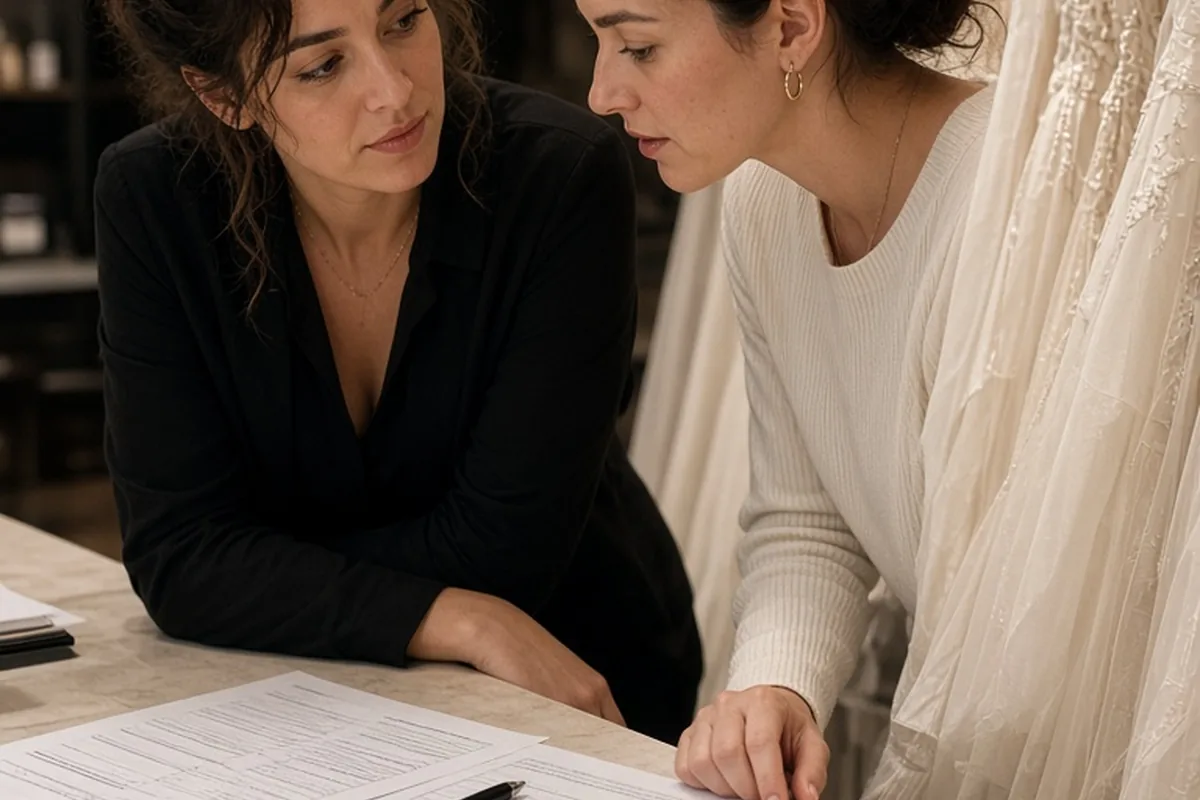
A complete wedding dress shopping cost breakdown includes the base gown price along with several essential secondary expenses: salon appointment fees, extensive structural alterations, specialized foundation garments, veil and jewelry accessories, rush production surcharges, shipping and sales taxes, and post-wedding professional cleaning or preservation. To establish an accurate total outlay, shoppers should request an itemized contract that separates manufacturing production costs from boutique service fees and local tailoring labor before signing.
Stepping into a bridal salon often introduces financial variables that extend far beyond the sticker price hanging from a sample hanger. Understanding how each tier of production, personalization, and post-purchase care influences your total balance enables you to budget realistically and navigate bridal consultations without unexpected surprises.
The Base Gown Invoice: Off-the-Rack, Made-to-Order, and Custom Atelier Production
The primary line item on any bridal ledger is the gown itself, yet the retail amount listed on the tag represents only the garment as designed, not a finished, body-ready ensemble. Bridal retail operates across distinct production models, each reflecting fundamentally different overhead structures, manufacturing timelines, and quality benchmarks. Off-the-rack purchases, such as salon sample inventory or ready-to-wear boutique stock, typically require an immediate upfront outlay and reflect previous try-on handling, minor floor wear, or discontinued silhouettes. These gowns eliminate manufacturer wait periods but may transfer hidden remediation costs to your tailoring balance if the piece sustained cosmetic strain or pulled threading during dressing room consultations.
In contrast, made-to-order dresses represent the dominant bridal boutique format. When you place a deposit on a made-to-order style, the salon measures your bust, natural waist, and fullest hip measurement, referencing the specific designer size chart to order the closest standard factory size. This process does not generate a custom pattern cut to your unique proportions; instead, it initiates standard factory cutting according to predetermined dimensions, leaving vertical fit, contouring, and strap positioning to secondary alteration professionals. At the apex of base pricing sits custom atelier work, where couturiers draft an individual paper pattern, build bespoke toile mockups, and execute hand-finished stitching. Evaluating base prices requires recognizing which category your prospective dress occupies so you do not mistake a factory-sized garment for a fully finished, ready-to-wear solution.
Boutique Appointment Charges, Try-On Policies, and Booking Deposits
Before you ever zip into a silhouette, the shopping experience itself may generate billing line items. Many modern bridal salons implement booking reservation fees, particularly for peak weekend slots, private dressing suites, or large entourage reservations. While some establishments treat this charge as non-refundable salon overhead to protect against late cancellations and missed appointments, others apply the booking balance directly toward the purchase of a gown during that initial appointment. It is crucial to verify whether this fee is forfeited if you decide not to purchase from their inventory or if you require a secondary follow-up visit before committing.
Elevated boutique experiences often carry tiered service charges that cover refreshments, extended styling consultations, or private floor access outside standard business hours. Beyond basic room reservations, certain salons enforce strict try-on policies, such as requiring clear shoe protection, limits on sample gown pulls per consultation, or handling deposits for high-value runway samples. Clarifying these salon policies prior to your arrival prevents friction during what should be an enjoyable exploratory process, ensuring you understand whether consultative guidance forms an independent expense or integrates cleanly into your broader purchase.
Bridal Alterations and Hemming: Why Tailoring Is Rarely Included
The single most common financial oversight in bridal preparation is assuming the retail boutique quote includes fitting adjustments. Standard made-to-order gowns are intentionally produced larger than average proportions across selective measurement points to allow seam allowances for contouring. Professional bridal alterations represent a separate trade requiring specialized artisanal techniques, delicate structural boning manipulation, and meticulous hand needlework that standard neighborhood dry cleaners are rarely equipped to execute.
Tailoring invoices break down into several distinct structural components. Bodice work involves taking in or letting out side seams, reshaping cups, shifting dart placement, narrowing straps, and resetting illusion mesh so the dress remains stable without shifting during movement. Hemming presents another major variable: dresses finished with horsehair braid trims, tiered crinoline petticoats, or scalloped Chantilly lace borders require seamstresses to detach, trim, and manually re-applique intricate borders along the circumference of multiple interior and exterior fabric layers. Additionally, installing a multi-point bustle, whether an over-bustle, under-bustle, or ballroom pick-up style, requires precise loop-and-button engineering to lift the train securely for your reception. Requesting an in-person alteration assessment before completing your purchase provides a clearer projection of these essential labor expenses.
Wedding Dress Fabric and Construction Differences That Influence Price Points
The underlying textiles, internal engineering, and decorative embellishments of a wedding gown dictate both the initial wholesale figure and subsequent handling requirements. Natural fiber textiles, such as mulberry silk faille, silk mikado, silk organza, and heavyweight silk crepe, command premium invoices due to raw fiber sourcing, exquisite drape, breathability, and demanding cutting tolerances. Conversely, high-grade polyester blends and synthetic tulles reduce initial material expenses while delivering crisp visual silhouettes, though synthetic textiles can retain body warmth and display different creasing behaviors under professional pressing irons.
Surface ornamentation significantly influences the labor intensity embedded within each garment. Hand-stitched seed pearls, Swarovski crystals, metallic bullion embroidery, and hand-placed three-dimensional floral appliques demand extensive artisan hours compared to mechanically produced brocade, printed jacquard, or machine-rolled lace yardage. Furthermore, high-end bridal designs incorporate complex internal corsetry, featuring flexible steel spiral boning, waist stay grosgrain ribbons, and integrated brassiere cups. These internal foundations provide superior posture and comfort throughout extended celebrations, reducing the need for separate foundation undergarments while naturally increasing the base cost of production.
Veils, Undergarments, Shoes, and Essential Accessory Line Items
A wedding day ensemble extends far beyond the gown, encompassing finishing accessories that quickly add up if omitted from initial planning. Veils represent an artistic focal point often billed completely separately from the dress. A fingertip-length cut-edge veil requires far less fabric and finishing labor than a cathedral-length veil bordered with matching hand-cut designer lace, heirloom embroidery, or blusher tiers. Many brides also invest in detachable elements, such as removable off-the-shoulder straps, bishop sleeves, sheer overskirts, or dramatic capes, which function as standalone accessory investments that alter both your look and your financial total.
Undergarments represent another functional expense critical to achieving the intended silhouette. Depending on your gown neckline and backline construction, you may require specialized backless bodysuits, seamless shaping briefs, adhesive lift tapes, or longline bustiers engineered without visible boning ridges. Footwear selections introduce both purchase costs and fitting implications, as alteration specialists require your exact wedding day shoe height during your initial hem pin-up session. Factoring in secondary day-of details, such as hairpieces, bridal jewelry, decorative belts, and emergency seam kits, guarantees your wardrobe budget reflects your entire finished presence rather than an incomplete garment.
Rush Deliveries, Shipping Logistics, and Local Sales Tax Considerations
Logistical variables, handling charges, and statutory fees routinely alter the bottom line of an official bridal contract. Standard designer production timelines generally span multiple quarters from the placement of a purchase order to warehouse delivery. If your wedding calendar demands an expedited timeline, fashion houses assess rush fees to prioritize factory cutting, accelerate freight manifests, or reallocate existing regional stock. These rush charges compensate garment workers for expedited schedules and cover express courier delivery from international ateliers directly to regional salons.
In addition to manufacturer handling surcharges, standard shipping charges cover domestic freight, regional distributor transfers, protective garment wrapping, and transit insurance against loss or damage before arrival. Once your dress crosses the counter, applicable municipal, state, and county sales taxes apply directly to the final invoice balance. Because luxury apparel tax rates vary significantly across geographical jurisdictions, purchasing in a district with differing tax structures can introduce meaningful variances into your out-of-pocket settlement. Clarifying whether freight, insurance, and taxes are bundled into the quote prevents last-minute accounting disputes when your gown arrives at the boutique.
Post-Wedding Cleaning, Gown Preservation, and Resale Preparation
Financial considerations surrounding a wedding dress do not conclude when the last dance ends; maintaining the physical integrity of the garment demands dedicated aftercare. Throughout outdoor photo sessions, reception meals, and high-energy dancing, gowns accumulate unseen soil, body oils, cosmetic transfers, and floor dirt along train undersides. Sugars from spilled beverages and acidic perspiration can dry clear initially, only to oxidize over subsequent months and develop dark, permanent yellowing if neglected. Routine commercial dry cleaning cannot safely handle delicate beadwork, illusion tulle, or specialty silks without risking melting, discoloration, or fabric fraying.
Professional wedding dress cleaning and museum-grade preservation represent vital closing expenditures. Preservation specialists deploy gentle, fabric-specific solvent baths, individualized hand spotting, and thermal testing to protect delicate appliques before sealing the sanitized gown in an acid-free, lignin-free display chest lined with neutral tissue paper. If your post-wedding objective involves consignment, direct online peer-to-peer resale, or heirloom storage for future generations, professional cleaning preserves textile elasticity and secures optimal resale valuation. Factoring these aftercare procedures into your primary budget prevents unexpected expenditures once the event concludes.
Frequently asked questions
Why do bridal salon alterations cost so much more than everyday tailoring?
Bridal gowns feature delicate fabrics, internal structural boning, multi-layer skirts, and intricate hand-sewn embellishments that cannot be altered with standard utility equipment. Adjusting a beaded bodice or shortening a scalloped lace hem requires hours of manual disassembly, precise resewing, and custom re-beading to preserve the designer silhouette without damaging fragile materials.
Is it possible to negotiate the price of a wedding dress at a boutique?
Bridal boutiques rarely negotiate the listed retail price on standard made-to-order designer gowns due to strict minimum advertised pricing agreements enforced by design houses. However, you can frequently negotiate non-retail incentives, such as discounted accessory packages, trunk show purchasing credits, waiving sample cleaning fees, or purchasing floor sample gowns directly off the rack at marked-down pricing.
When should I pay the balance on my wedding dress order?
Most bridal salons require an upfront commitment deposit before placing the official factory purchase order with the manufacturer. The remaining invoice balance, including any local sales taxes or agreed shipping fees, is typically due upon notification that the garment has arrived at the salon and passed quality inspection, well before your first fitting session.
How do rush fees affect the total wedding gown investment?
If your wedding timeline falls outside the designer standard production schedule, manufacturers charge expedited handling fees to prioritize your fabric cut and accelerate assembly. These fees increase progressively as the turnaround window tightens and often require upgraded expedited air freight to deliver the garment to your boutique on schedule.
Your next step
Before scheduling your first bridal salon appointment, establish a comprehensive wardrobe spending ceiling, subtract estimated regional tailoring and accessory allowances, and contact local salons to request an itemized contract preview detailing their consultation fees, alteration policies, and shipping terms.