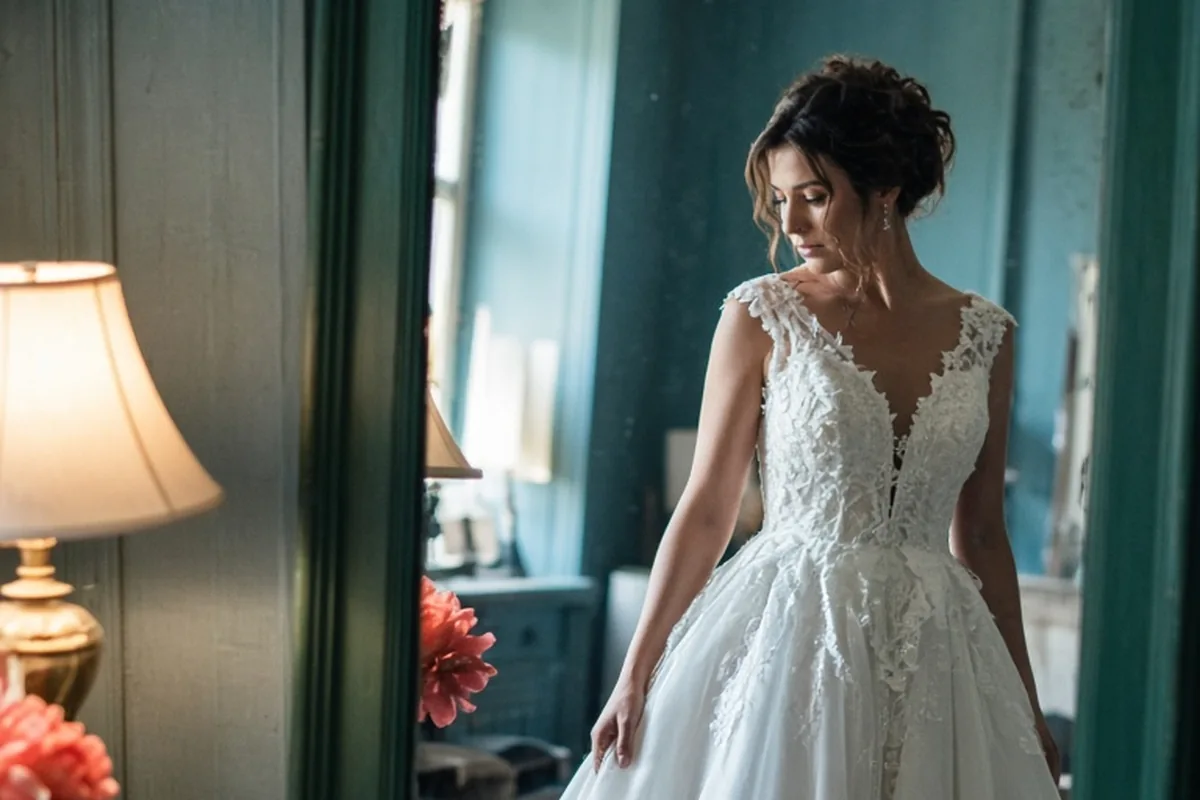
Wedding dress shopping for 200 guests requires balancing visual impact across a large venue with physical stamina and mobility. In a room arranged for 20 to 25 tables, dresses with clear architectural silhouettes, defined textures, or extended trains ensure you stand out from the back row. Simultaneously, fabric weight, secure internal construction, and robust multi-point bustles allow you to comfortably greet hundreds of attendees throughout the reception without fatigue or wardrobe damage.
A wedding with 200 guests fundamentally changes the physical and visual demands placed on your bridal attire. Unlike intimate gatherings where guests view your gown from a few feet away, a large-scale event features deep ceremony aisles, spacious banquet halls, and continuous movement across crowded rooms.
How Venue Proportions and 200-Seat Sightlines Dictate Silhouette
When hosting 200 guests, your ceremony layout will generally span 20 to 30 rows of seating or a wide semicircular seating arrangement. From the vantage point of guests seated in the rear rows, delicate micro-embroidery, subtle beadwork, and miniature lace motifs often blend together into a flat visual plane. To maintain a commanding presence across a long aisle or elevated altar platform, the silhouette itself must carry significant structural definition.
Classic ballgowns, structured A-lines, dramatic fit-and-flare cuts, and gowns with extended cathedral-length trains provide the necessary visual weight to anchor a cavernous ballroom, cathedral, or expansive outdoor lawn. If you prefer a sleeker silhouette such as a sheath or column dress, you can introduce volume and scale through strategic architectural additions. Detachable overskirts, dramatic shoulder capes, structural bow accents, or high-contrast graphic lace appliques allow a narrower gown to project clearly across large distances without getting lost in the surrounding decor.
Mobility Demands: Navigating 20 Tables and Continuous Greeting
A reception designed for 200 people typically requires 20 to 25 round dining tables or multiple long banquet rows, creating tight navigation corridors for the couple during table visits. Greeting this volume of guests means you will spend several consecutive hours walking, turning, leaning over place settings, and receiving hundreds of embraces. A gown that severely restricts natural hip movement or exerts heavy pulling force on the neck and shoulders can lead to significant physical exhaustion early in the evening.
During your boutique try-on sessions, test the gown under simulated event conditions rather than simply standing still on the elevated viewing pedestal. Take brisk strides around the showroom, practice sitting down squarely in a standard dining chair, lean forward as if hugging a seated friend, and check whether the bodice stays securely anchored without requiring constant manual readjustment. If a fitted skirt prevents you from stepping forward comfortably or restricts your ability to climb venue stairs, discuss with your stylist whether adding a subtle horsehair hem, front slit, or slightly relaxed skirt lining will improve your range of motion.
Bustle Mechanics and Weight Distribution for Long Receptions
Long trains provide exceptional grandeur during the ceremony processional, but an unbustled or poorly supported train is a severe liability on a packed dance floor with 200 guests. With dozens of people moving through the reception area, single-point button or hook bustles frequently snap under the accidental weight of passing shoes, causing the delicate train fabric to drag across the floor and create a tripping hazard.
For gowns supporting extensive layers of tulle, heavy satin, or intricate beading, ask your seamstress to install a reinforced multi-point bustle system, such as a multi-point French under-bustle, an Austrian gathered bustle, or a layered American over-bustle with clear structural anchors. Ensure your alterations specialist distributes the fabric weight across multiple internal loops or color-coded ribbons sewn directly into the gown's interior structural seams. Bring a trusted attendant to your final alterations appointment to document the fastening sequence on video, as securing a five-to-nine-point bustle on a multi-layered gown requires practice.
Fabric Performance Under Event Lighting and Flash Photography
Large reception venues rely on complex lighting designs, including professional pin-spotting, perimeter uplighting, moving dance floor fixtures, and high-output flash photography to illuminate a large crowd. Different bridal textiles react uniquely under high-intensity event lighting, and understanding these optical behaviors helps ensure your gown photographs with clarity and depth throughout the night.
Heavier, structured fabrics like silk mikado, royal satin, and heavyweight crepe absorb and reflect light with a clean, smooth sheen that retains its opacity even under powerful direct spotlights. In contrast, multi-tiered English net, organza, and textured chantilly lace diffuse light softly, creating depth in wide-angle room shots without casting harsh glares. When trying on gowns, ask your bridal consultant to dim the showroom overhead lights and take test photos using both direct flash and ambient side lighting to verify that the fabric lining remains entirely opaque and that all layered details photograph clearly.
Managing Dress Alterations and Structural Support for Extended Wear
A 200-guest wedding schedule typically spans ten to twelve continuous hours of wear, starting from pre-ceremony portraits through the final dance floor send-off. Standard off-the-rack gown construction often lacks the heavy-duty internal architecture required to keep a strapless or plunging bodice perfectly positioned across half a day of continuous activity.
Prioritize proper foundation engineering during your alterations timeline. Request the addition of flexible waist stays, sewn-in boning channels, reinforced bust cups, and silicone grip lining along the bodice neckline to lock the dress to your ribcage. When the waist stay carries the gravitational pull of the skirt and train, the top edge of the dress sits comfortably against the skin without digging in, pinching, or gradually sliding downward as you dance.
Evaluating a Single Statement Gown Versus a Reception Outfit Change
Couples managing a large guest list frequently weigh the benefits of wearing one versatile gown all day versus changing into a separate reception dress or bridal jumpsuit after the formal dinner. If your ceremony vision involves a heavy royal train, high-neck illusion sleeves, or expansive petticoats, changing into a streamlined second look can dramatically reduce physical fatigue and keep you energetic throughout hours of dancing and mingling.
However, transitioning into a second outfit requires stepping away from your celebration for 20 to 30 minutes to manage wardrobe, hair, and makeup touch-ups—time directly subtracted from hosting your attendees. If you prefer to stay on the reception floor without missing key moments, look for convertible modular designs such as gowns with zip-off lower train extensions, removable puff sleeves, or detachable cascading tulle overskirts. These modular features allow you to alter your visual silhouette instantly right at your table between courses.
Salon Ordering Timelines and Appointment Logistics for Large Weddings
Because planning a 200-person wedding involves coordinating numerous vendor deadlines and larger design concepts, purchasing your gown nine to twelve months prior to the event date provides the necessary buffer for standard production, shipping, and multiple fitting rounds. Standard bridal gown manufacturing takes anywhere from four to six months, with comprehensive alterations typically requiring another eight to twelve weeks.
When booking your boutique appointments, clarify the total head count of guests joining you in the salon. While it may feel natural to invite a large portion of your wedding party or family, bringing more than two or three trusted advisors into a fitting room often leads to conflicting feedback that clouds your personal judgment. Keep your shopping group small during the initial curation phase, and save larger reveals for your final fitting or pre-wedding gatherings.
Frequently asked questions
How long of a train is practical for a 200-guest wedding?
A chapel-length train measuring 3 to 5 feet from the waistline or a cathedral-length train measuring 6 to 8 feet provides excellent proportion for large aisles. Ensure you pair any train longer than 3 feet with a reinforced multi-point bustle to safely clear floor traffic during the reception.
Can I wear a minimalist sheath dress to a 200-person ballroom wedding?
Yes, a minimalist sheath works well if styled intentionally for scale. You can add visual depth across large room dimensions by pairing the clean silhouette with a dramatic cathedral veil, a detachable structured overskirt, or bold statement jewelry.
How many fittings are needed to secure a heavy gown for a large reception?
Plan on three to four separate fittings starting roughly two to three months before the wedding. The first fitting sets the hem and bodice structure, the second builds the multi-point bustle, and the final fitting confirms ease of walking and sitting.
Your next step
Schedule an initial salon appointment 9 to 12 months ahead of your date, focusing on testing silhouettes that combine defined visual presence with comfortable seated mobility and multi-point bustling options.