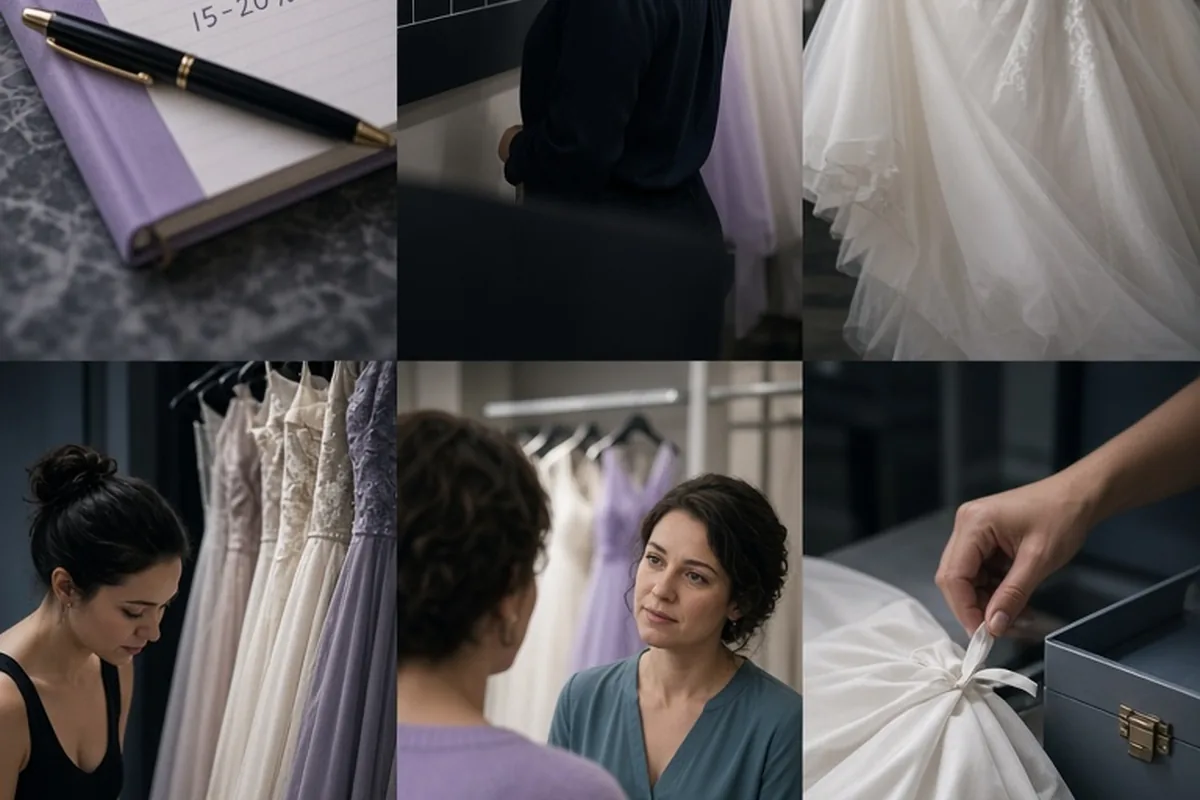
The most effective wedding dress shopping strategy starts with establishing an all-inclusive budget, beginning appointments nine to twelve months before your wedding, and keeping your entourage small. Focus on how silhouettes feel during movement rather than tag sizes, wear neutral seamless undergarments to appointments, and reserve roughly fifteen to twenty percent of your gown budget for alterations, taxes, and accessories.
Shopping for a wedding gown combines emotional milestones with logistical hurdles, production deadlines, and complex sizing systems. Approaching the boutique experience with structured planning helps you evaluate options confidently while avoiding unnecessary stress, unexpected costs, or rush fees.
Establishing Your True Wedding Gown Budget and Hidden Expenses
A common mistake when shopping for bridal attire is treating the price tag on the sample rack as the total investment. The sticker price reflects only the raw garment as manufactured, leaving out several mandatory services and components required to make the gown wearable for your event. To maintain control over your spending, determine your ceiling before walking into your first appointment and clearly communicate this figure to your bridal consultant before they pull inventory.
A realistic bridal budget accounts for custom alterations, local sales tax, delivery fees, and finishing accessories. Nearly every wedding dress requires tailoring to achieve an exact fit, and intricate work such as shortening multi-layered hems, taking in beaded side seams, or adding complex bustles can represent a substantial additional expense. Setting aside a dedicated financial buffer ensures that the cost of tailoring does not push you past your comfortable spending limit.
You should also calculate the price of functional accessories and long-term care early in your planning. Foundations such as specialized low-back shapewear, bust cups, petticoats, and shoes directly influence your fitting results. Furthermore, items such as custom veils, hairpieces, jewelry, and post-wedding dry cleaning or textile preservation should be factored into your wardrobe line item rather than treated as minor afterthoughts.
Mapping the Bridal Shopping Timeline from First Fitting to Final Pickup
Traditional designer bridal gowns are made to order rather than pulled from existing warehouse stock, which means manufacturing lead times frequently range from several months to half a year. Once the boutique places your order, the garment is produced according to the designer's production calendar and shipped to the salon. Starting your search nine to twelve months prior to the wedding date grants you access to full designer collections without incurring expedited production fees.
After the physical gown arrives at the salon, you will enter the tailoring phase, which typically requires two to three separate appointments over a span of two to three months. The initial fitting addresses structural adjustments through the bodice and establishes the correct hemline. Intermediate fittings refine the contouring and set the bustle points, while the final appointment serves as a quality check just weeks before the event.
If you are operating on an accelerated timeline, traditional made-to-order manufacturing may not be practical. In these instances, prioritize salons that sell sample gowns directly off the floor, host trunk sales featuring ready-to-ship inventory, or carry dedicated ready-to-wear bridal lines. Always verify guaranteed delivery dates in writing before submitting a non-refundable deposit.
Selecting Bridal Silhouettes and Fabrics That Fit Your Venue and Comfort
Every gown silhouette interacts differently with your venue environment, physical comfort, and aesthetic goals. An A-line silhouette remains a versatile choice because it balances structural support through the bodice with a skirt that flares gently over the hips, accommodating outdoor settings and formal halls alike. Ballgowns offer pronounced drama and structure but add physical weight and require extra floor clearance, making them ideal for grand indoor ballrooms and formal religious venues.
Fitted silhouettes, such as mermaid, trumpet, and column cuts, emphasize natural body lines and provide a streamlined aesthetic. However, these cuts can restrict high-stepping movement or wide strides, making it essential to test your range of motion during appointments. Empire waistlines and relaxed sheath designs offer lightweight ease, making them practical for beach ceremonies, garden receptions, and warm-weather celebrations.
Fabric selection dictates the weight, drape, and breathability of your gown. Heavy textiles like structured mikado, duchess satin, and brocade create crisp lines and architectural tailoring, but they retain heat. Conversely, lightweight materials like silk chiffon, organza, crepe, and airy tulle provide effortless movement and ventilation for warm environments. Balance visual appeal against physical weight so you feel unrestricted throughout a full day of wear.
Preparing for Bridal Salon Appointments and Sample Sizing Realities
Bridal sizing charts operate on historical European sizing scales that rarely correspond to modern ready-to-wear street sizing. A bride who typically wears a standard ready-to-wear size will frequently measure into a bridal tag size that is one or two sizes larger. Knowing this standard industry variance in advance prevents confusion or discouragement when the stylist reads the measurement chart.
Because salons carry only one or two sample sizes per dress design, stylists use specialized industrial clamps and modesty panels to simulate how an oversized or undersized sample will look when properly tailored to your frame. Keep an open mind while standing in front of the mirrors, recognizing that sample garments have been handled by many clients and will not sit perfectly until your personal order is custom-tailored.
Arrive at your appointment prepared with appropriate foundational garments. Wear neutral, seamless underwear and bring a strapless bra or preferred shapewear if you plan to wear foundation pieces on the wedding day. Bringing shoes with a heel height comparable to what you intend to wear will also help you evaluate the proportional balance of various skirt lengths and trains.
Managing Your Entourage Dynamics and Filtering Conflicting Opinions
While inviting a large group of friends and family to your appointments may sound exciting, large entourages frequently introduce conflicting perspectives that derail your personal decision-making. Every additional guest brings individual taste, generational preferences, and aesthetic biases into the fitting suite, which can quickly drown out your own instincts and create unnecessary decision fatigue.
Limit your shopping party to two or three trusted individuals who respect your personal style, understand your budget boundaries, and offer constructive feedback. Before the appointment begins, brief your guests on your preferred aesthetic, your venue requirements, and the spending parameters you have established so they can support your vision rather than imposing their own preferences.
Navigating Bridal Alterations and Custom Bustle Construction
Bridal alterations bridge the gap between a standard factory size chart and your specific anatomy. Standard bridal orders are made to the closest standard measurement bracket rather than custom-molded to your body, meaning nearly every dress requires bodice contouring, strap adjustments, and precise hemwork. Schedule your seamstress consultations well ahead of time to secure a spot during peak wedding seasons.
The bustle is a fundamental component of bridal tailoring that secures the gown train off the floor following the ceremony, allowing you to walk, dine, and dance safely during the reception. Your tailor can construct an American bustle, which lifts the train outward and fastens it to external points on the skirt, or a French bustle, which folds the fabric inward beneath the skirt using color-coded ribbon ties. Test the fastening mechanism thoroughly during your final fitting and ensure a member of your party learns how to secure it.
Finalizing the Purchase Contract and Delivery Inspection Details
Before placing your deposit, examine the purchase agreement closely. The contract should explicitly state the designer name, style number, precise colorway name, agreed-upon size ordered based on your bust-waist-hip measurements, and the estimated shipping window. Read the salon's cancellation, refund, and delayed delivery clauses carefully so you understand your protections in the event of manufacturing delays.
When the dress arrives from the manufacturer, inspect the entire garment thoroughly in the salon before taking it home. Examine the lace placement, check zippers and hook-and-eye closures, inspect beadwork for loose threading, and verify that there are no textile pulls, snags, or dye inconsistencies. Addressing manufacturing flaws immediately allows the salon to contact the designer for corrections before alteration work begins.
Frequently asked questions
How many bridal salons should I visit during my search?
Visiting two to three well-curated boutiques is generally ideal. Trying on gowns at more than three salons often causes visual fatigue and makes it harder to remember individual details across dozens of dresses.
What should I do if I fall in love with a gown above my budget?
If a gown exceeds your comfort limit, ask the stylist if the designer offers sample sale discounts, trunk show promotions, or simpler fabric versions. Avoid purchasing an over-budget dress that eliminates your tailoring and accessory funds.
Can a wedding dress be altered down if I lose weight before the wedding?
Most bridal dresses can safely be taken in up to two standard dress sizes without compromising the structural integrity or balance of the bodice. Taking a dress in beyond two sizes often requires rebuilding the bodice and moving delicate lace appliqués.
Do I need to buy my veil at the same salon where I purchase my dress?
No, you are under no obligation to purchase accessories from the same boutique. While ordering together ensures color matching, you can source veils and hairpieces separately once you know your dress shade and neckline.
Your next step
Book appointments at two reputable bridal boutiques that fit your budget, and gather your nude undergarments and shoe ideas to prepare for your first fitting.