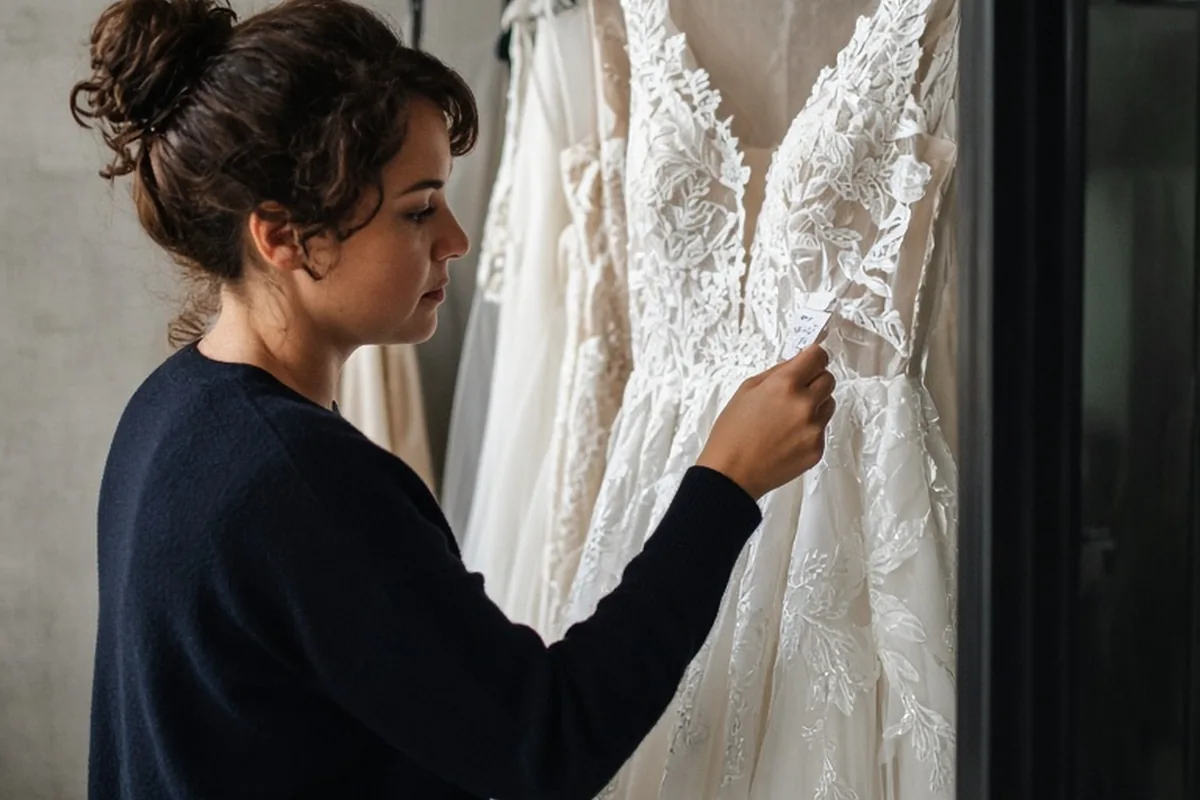
Wedding dress sizing typically runs one to two sizes smaller than standard ready-to-wear street clothing. A person who consistently wears a street size six or eight in US retail clothing will often measure into a bridal size ten or twelve. Bridal designers utilize structured, non-stretch garment construction and base their sizing charts on vintage European proportions rather than modern retail vanity sizing standards.
Stepping into a bridal salon often presents an immediate surprise when the size tag on a gown does not match the clothing currently hanging in your everyday wardrobe. Understanding how bridal manufacturers grade garments, how silhouette geometry dictates fit, and how to read designer charts allows you to order the correct baseline dress with confidence.
Why Wedding Dress Sizing Runs Smaller Than Street Clothes
The primary reason bridal sizing feels unfamiliar is the historical lineage of bridal manufacturing. Modern ready-to-wear fashion brands frequently adjust their sizing charts over time through vanity sizing, a practice where garment dimensions gradually expand so shoppers fit into smaller numerical tags. Bridal houses, by contrast, largely adhere to European haute couture sizing standards established in the mid-twentieth century. These charts remain relatively static, meaning a size ten in bridal reflects the physical dimensions of a size ten pattern draft from decades ago rather than modern retail specifications.
Construction methods also play a major role in how bridal sizing operates. Ready-to-wear garments, such as t-shirts, knit dresses, and stretch denim, incorporate synthetic elastane or flexible jersey weaves that accommodate several inches of natural body movement and variation across different body shapes. A bridal gown is typically engineered as an architectural garment composed of non-yielding textiles like silk mikado, structured jacquard, stiff organza, and heavy crepe. Because these materials possess zero inherent stretch, the dress cannot mold itself to the wearer unless it is ordered to match the body's widest physical landmarks.
How to Take Accurate Bridal Measurements for Designer Charts
Bridal sizing decisions depend on three core anatomical metrics: the full bust, the natural waist, and the full hip. Taking these measurements requires a flexible vinyl measuring tape held parallel to the floor, without pulling the tape tight enough to indent the skin or leaving it loose enough to slide down. Measuring over bulky clothing or athletic wear will distort the numbers, so you should measure while wearing seamless undergarments or the specific foundation pieces planned for the wedding day.
To capture the bust measurement, wrap the tape across the fullest projection of the chest and straight around the shoulder blades, keeping your arms relaxed at your sides rather than lifted. The natural waist is found at the narrowest point of the torso, generally located an inch or two above the navel where the body naturally creases when bending to the side. The hip measurement must cover the widest point of the lower body, which includes the fullest curve of the buttocks and hip bones, typically situated seven to nine inches below the natural waistline. Relying on everyday bra band sizes or pant waist labels will lead to incorrect chart comparisons, as bra sizing measures ribcage circumference rather than total bust projection.
Navigating Designer Size Charts and Handling Split Sizing
Every bridal designer produces an independent size chart with distinct proportions. For instance, one designer might build a size twelve pattern around a thirty-eight-inch bust, thirty-inch waist, and forty-one-inch hip, while another designer assigns those exact measurements to a size fourteen. Comparing measurements to the specific designer chart for the exact gown being considered is therefore necessary, rather than relying on a universal bridal size chart.
Most people do not align neatly with a single vertical column on a chart. It is common to measure as a size eight in the bust, a size ten in the waist, and a size twelve in the hips. This scenario is known as split sizing. Standard bridal industry protocol is to order the gown size that corresponds to your largest measurement. A professional tailor can easily remove excess fabric to take a dress in across smaller areas, but letting a gown out is strictly limited by the narrow interior seam allowances provided by the manufacturer. If a dress is ordered to fit the smallest metric, it may be physically impossible to zip or fasten over wider areas without purchasing matching fabric panels from the designer.
How Gown Silhouette Determines Which Body Measurement Matters Most
The silhouette of the wedding dress dictates which specific measurement acts as the deciding factor when choosing a size. In full ballgown and classic A-line designs, the skirt flares dramatically away from the body starting at the natural waistline. Because the skirt floats over the lower body with substantial ease, the hip measurement becomes functionally irrelevant to the dress size. For these fuller cuts, ordering to accommodate the bust and waist measurements ensures an accurate structural fit through the bodice while the skirt naturally accommodates the hips.
Conversely, fitted silhouettes—such as mermaid, trumpet, fit-and-flare, and sheath dresses—hug the torso continuously through the hips and mid-thigh. For these styles, the hip measurement is just as critical as the waist and bust. If a mermaid gown is ordered based solely on a narrow waistline without accounting for fuller hips, the skirt will pull horizontally across the thighs, restricting the ability to sit, walk, or climb stairs comfortably. For gowns with sleeves, additional anatomical checks like bicep circumference and shoulder-to-shoulder width must also be compared against the designer's armscye specifications.
Evaluating Fabric Rigidity, Interior Boning, and Illusion Mesh
The interior engineering of a gown strongly influences how forgiving the size will feel in practice. Gowns featuring internal corsetry, plastic or steel boning, waist stay ribbons, and built-in bra cups create a rigid structural cage. This cage provides significant bust support and maintains the shape of the dress, but it offers no flexibility around the ribcage. When choosing a size for a heavily boned bodice, leaning toward the larger measurement avoids excessive pressure on the ribs and prevents the top of the bodice from cutting into underarm tissue.
Illusion mesh and delicate lace appliqués present unique sizing considerations. Illusion tulle used on sheer backs, plunging necklines, and illusion sleeves cannot easily be stretched or expanded during alterations. If an illusion bodice is ordered too small, the sheer mesh will pull taut, creating visible tension wrinkles, tearing at the seam lines, or digging into the skin. Conversely, dresses crafted from modern stretch crepe or lined with knit jersey offer a slight degree of mechanical stretch, allowing for a closer baseline fit, though they still require standard tailoring for a clean drape.
Production Timelines, Body Changes, and Alterations Planning
Made-to-order bridal gowns typically require four to nine months for production and international shipping, followed by an additional two to three months for the alterations process. A common dilemma occurs when planning changes in body weight or muscle tone during this production window. Experienced bridal stylists consistently advise ordering the gown that matches your current physical measurements on the day the order is placed, rather than ordering a smaller size in anticipation of weight loss.
Planning a wedding introduces variable schedules, stress, and routine disruptions, making physical changes difficult to predict with precision. If weight loss occurs, a skilled bridal seamstress can systematically reduce the circumference of a gown by one to two sizes while preserving its structural balance and lace placement. If weight stays the same or increases, an undersized gown creates severe logistical issues, potentially requiring emergency rush orders for extra lace appliqués, fabric inserts, or converting a zip back to a lace-up corset back.
Sizing Realities for Sample Sales, Pre-Owned Gowns, and Off-the-Rack Buys
Purchasing an off-the-rack sample gown or a pre-owned wedding dress introduces distinct sizing variables that do not apply to brand-new factory orders. Floor samples in bridal boutiques are tried on by hundreds of prospective buyers over many months. This regular handling causes fabrics—especially bias-cut silks, crepes, and unlined tulles—to stretch out. A salon sample marked as a size ten may actually measure closer to a size twelve through the bust and waist due to natural fabric relaxation from repeated wear.
When evaluating pre-owned wedding dresses from consignment salons or secondary marketplaces, the sewn-in size tag can be deeply misleading. The previous owner likely had the gown professionally altered to fit their specific proportions, meaning a dress labeled as a size eight might have been taken in to match a street size two in the waist while leaving the bust unaltered. Before purchasing any pre-owned or final-sale gown, ask the seller for the current physical flat-lay measurements of the altered garment rather than relying on the manufacturer size tag.
Illustrative Scenarios
Navigating Split Sizing for a Fitted Crepe Gown
An illustrative buyer shopping for a fitted crepe mermaid gown measured thirty-five inches in the bust, twenty-seven inches in the waist, and forty-one inches in the hips. On the chosen designer chart, the bust corresponded to a size six, the waist aligned with a size six, but the hip measurement placed the buyer into a size ten. Because the dress was a fitted silhouette with minimal fabric stretch, the stylist recommended ordering the size ten based on the widest measurement.
Key point: Ordering to the largest measurement ensured the hips fit comfortably without seam strain, allowing the seamstress to take in the bodice and waist by two sizes during standard alterations for a clean, customized finish.
Frequently asked questions
How many sizes can a wedding dress realistically be taken in or let out?
Most wedding dresses can safely be taken in by one to two full numerical sizes without altering the structural integrity or proportion of the design. Letting a gown out is far more restricted, typically allowing for only a fraction of an inch to a single half-size, depending on the internal seam allowances provided by the designer.
Should I wear my wedding shoes and bra when being measured?
You should be measured wearing seamless undergarments or the specific shapewear you intend to wear under the gown. While shoes are not necessary for initial bust, waist, and hip circumferences, you will need your exact wedding shoes for subsequent alterations fittings to establish the correct hemline and train length.
What happens if my measurements fall between two sizes on a chart?
When your measurements fall directly between two sizes, the standard professional recommendation is to round up to the larger size. It is substantially easier and less expensive for an alterations specialist to remove excess fabric than to reconstruct tight seams with inserted gussets.
Does bridal sizing apply to bridesmaid dresses and mother-of-the-bride gowns?
Yes, formalwear manufacturers for bridesmaid dresses and evening wear also utilize specialized size charts that run smaller than everyday retail clothing. You should always consult each individual brand's sizing chart rather than ordering your standard high-street size.
Your next step
Locate a flexible measuring tape to record your current bust, waist, and hip numbers, then request the specific designer size chart from your bridal salon before finalizing your dress order.