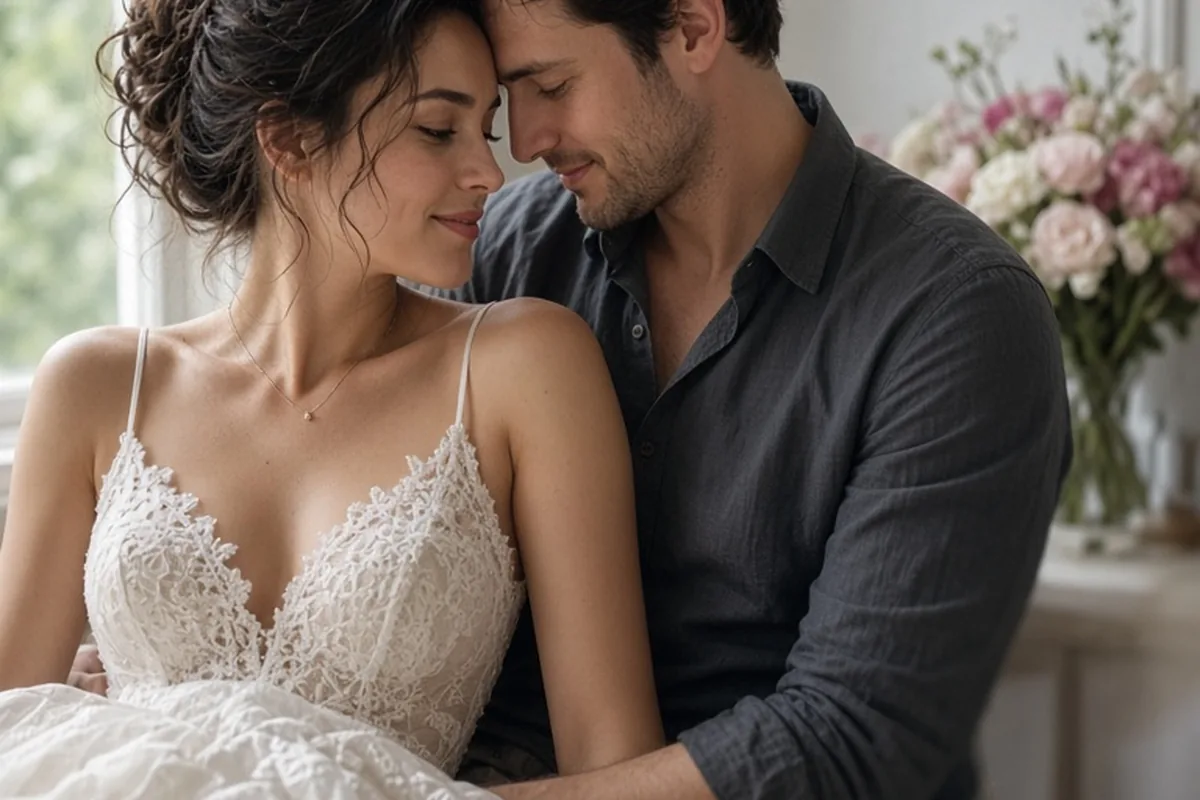
Wedding dress sizing is determined entirely by your individual body measurements—specifically your bust, waist, and hips—rather than your guest count. Bridal tag sizes typically run one to two sizes smaller than standard US street clothing. However, hosting a 100-guest wedding heavily influences structural tailoring choices. A mid-sized gathering requires substantial mobility for continuous table visits, hugging attendees, and navigating reception floor plans, making comfortable seam ease and secure bustling critical to your final fit.
Couples planning a wedding with approximately 100 guests often balance the intimacy of close family with the logistics of a full-scale celebration. While guest count never dictates the number on your dress tag, the physical demands of greeting, dining, and celebrating with a room of that scale fundamentally affect how your gown should be structured, fitted, and altered.
Decoding Bridal Sizing Charts Against Everyday Street Clothing
Bridal sizing operates on proprietary manufacturing specifications that date back to mid-twentieth-century European couture sizing charts, creating an immediate point of confusion for modern shoppers. When you step into a bridal salon, your consultant will measure three primary anatomical points using a flexible vinyl tape measure: the fullest part of your bust across the apex, your natural waist at its narrowest point above the navel, and the fullest projection of your hips and buttocks. These three numbers are compared against the specific designer's size grid, which rarely aligns with ready-to-wear high street sizing. A bride wearing a street size 8 in casual clothing will frequently measure into a bridal size 12 or 14 depending on the design house.
Because mass-market fashion brands employ vanity sizing to reflect smaller numerical designations over time, bridal houses maintain historical pattern blocks with very little mechanical give. Furthermore, formal gowns are constructed with woven fabrics such as mikado, crepe, organza, or structured satin, which lack the elastane blends commonly found in contemporary daywear. You must order your dress to fit the largest of your three measurements. If your bust and hips correspond to a bridal size 10 but your waist measures at a size 12, salon protocol dictates ordering the size 12. A gown can readily be altered down several sizes through side-seam adjustments, but releasing seams is limited by internal seam allowances, which often provide no more than one inch of extra fabric.
Spatial Demands: Why 100 Guests Change How a Gown Should Fit
A 100-person wedding occupies a distinct middle ground in event architecture, typically requiring between ten and twelve banquet rounds of eight to ten seats each, plus a designated head table, dance area, catering stations, and bar perimeter. Unlike an intimate elopement where a bride moves through open, unencumbered outdoor spaces, or a massive 400-person ballroom gala with sweeping aisles, a 100-guest layout creates dense spatial traffic. Circulating through twelve banquet tables means walking narrow clearance paths between pushed-back dining chairs, navigating dropped napkins, and frequently pivoting in close proximity to seated guests holding glassware.
Your gown's structural fit must anticipate this continuous physical contact. When greeting roughly 100 people during a receiving line or cocktail hour, you will bend forward, extend your arms for hugs, and twist your torso repeatedly. If an off-the-shoulder gown or heavily structured corset is altered purely for a stationary standing pose in a fitting room mirror, the armscyes (armholes) will cut into your shoulders, the boning will pinch your lower ribs, and the delicate illusion tulle neckline may tear under tension. Tailoring for a 100-guest gathering means requesting functional ease—deliberate millimeters of breathing space in the back bodice and upper arm band—so you can greet guests without garment resistance.
Bustle Engineering and Hem Heights for Mid-Sized Venue Layouts
The train of your wedding gown creates dramatic visual impact during the ceremony, but it becomes an immediate logistical hazard inside a 100-guest reception space. The bustle is the tailored system of internal ribbons, external clear buttons, or hidden hook-and-eye closures that lifts and secures your train off the floor after the ceremony. In a room populated by 100 guests, a train left dragging or an improperly engineered bustle will inevitably be stepped on by guests circulating toward the bar or socializing near the dance floor.
A standard single-point American over-bustle (where the center of the train loops over an exterior button at the lower spine) is rarely sufficient for heavier bridal textiles in an active reception environment. If an attendee accidentally stands on the fabric hem while you take a step forward, the sheer weight will snap a single thread loop instantly, leaving you carrying your train over your wrist for the remainder of the evening. For mid-sized guest counts, seamstresses generally recommend a multi-point French under-bustle, which tucks the train beneath itself using color-coded ribbon ties, or a five-point ballroom bustle that completely conceals the train folds along the waist seam. Multiple anchor points distribute dynamic tension across several reinforced structural seams, preventing sudden wardrobe failures when guests brush past your chair.
Tailoring Ease: Balancing Corset Structure With Reception Dining
Bridal fittings require balancing external silhouette support with internal comfort for a multi-hour banquet. In a 100-guest wedding, the couple typically sits down for a structured meal lasting between 60 and 90 minutes, followed by toasts and dessert. During this seated window, the human abdomen naturally expands, and your ribcage alters its angle against the spine. If a ballgown or fitted sheath is cinched to absolute skin tightness while you are standing upright during your first fitting, sitting down at your reception table will force rigid boning channels directly into your hip bones and diaphragm.
During your second and third alteration appointments, you should deliberately test the gown in a seated posture. Ask your tailor to check that the waist stay—the internal grosgrain ribbon sewn inside many high-end designer bodices to anchor the dress weight to your skeletal waist—is bearing the gown's weight rather than delicate zipper teeth or exterior decorative lace. A properly anchored waist stay prevents the dress from sliding downward when you sit and stand, eliminating the unconscious habit of pulling up the bodice throughout your dinner service. Ensuring a half-inch of seated ease around the high hip and lower ribcage allows you to eat your meal comfortably without experiencing shortness of breath or digestive compression.
Foundation Garments, Seam Allowances, and Final Fitting Windows
Your wedding dress sizing relies fundamentally on the foundation garments worn directly against your skin. A common mistake during the bridal journey is being measured at the initial salon appointment in casual everyday undergarments, and subsequently showing up to alterations appointments wearing high-compression shapewear, a padded plunge bra, or entirely different undergarments. Silicone cups sewn into the gown create an entirely different apex height and bust projection than a strapless longline bra, shifting your bodice measurements by up to a full inch in circumference.
Schedule your final fitting within three to four weeks of your wedding date to account for natural physiological shifts caused by stress, activity changes, and event planning demands. When checking the final seam allowances, confirm with your seamstress where the seam allowances remain intact. High-quality bridal gowns typically feature finished side seams with pressed-open allowances that allow the dress to be let out slightly if your measurements shift in the final weeks. Understanding whether your gown has serged raw edges or clean bound seams clarifies how much room remains for emergency adjustments before your 100-guest celebration begins.
Coordinating Attendant and Bridal Party Sizing for 100-Person Weddings
In a wedding with 100 guests, the bridal party typically consists of three to six attendants on each side, representing a visible proportion of the room's formal aesthetic. Bridal party dresses present distinct sizing hurdles because bridesmaid manufacturers, like bridal gown designers, construct garments on rigid size matrices that differ from everyday retail sizing. Attendants often order dresses across different geographic locations, which introduces measuring inconsistencies if they rely on amateur home measurements rather than professional tailoring tape checks.
To maintain aesthetic cohesion without forcing attendants into ill-fitting garments, establish a protocol where every bridesmaid is measured by a local alteration specialist or dry cleaner using a standard measuring guide before submitting their order. Remind your attendants that evening wear fabrics such as chiffon, satin, and velvet offer minimal stretch through the ribcage and bust line. Sizing up to accommodate their largest measurement and budgeting for local hem and strap alterations guarantees that the entire bridal party looks cohesive and moves comfortably alongside you throughout the ceremony, group portraits, and reception mingling.
Illustrative Scenarios
Balancing Silhouette and Room Navigation in a Historic Hall
A bride planning a 100-guest wedding inside a boutique historic venue selected a fitted crepe gown featuring a dramatic cathedral-length train and off-the-shoulder straps. During initial fitting sessions, the gown looked flawless while she stood static on the pedestal, but she felt restricted when raising her arms to chest height. Recognizing that her reception floor plan required moving past twelve dining tables and greeting family members throughout a cocktail hour, she worked with her tailor to modify the construction. The tailor added internal elastic gussets beneath the arm sleeves to permit full hugging mobility and replaced the planned single-button bustle with a reinforced five-point French under-bustle.
Key point: Static fitting room aesthetics do not reflect reception realities; incorporating functional arm ease and multi-point bustles ensures freedom of movement in mid-sized venue layouts.
Frequently asked questions
Can I determine my wedding dress size based on my wedding guest count?
No. Your wedding dress size is determined solely by your physical body measurements compared against a specific designer's bridal sizing chart. Guest count only influences how you tailor the gown for mobility, floor clearance, and bustle durability within your venue space.
How many fittings should I schedule before my wedding date?
Most bridal tailoring processes involve three distinct fittings across an eight to twelve-week period. The first session pins basic structural lines and hem length, the second tests bustles and fine contouring, and the third verifies final fit and movement close to the wedding date.
Why does my bridal gown size number run higher than my normal dress size?
Bridal manufacturers use historical pattern templates that predate modern retail vanity sizing standards. Consequently, bridal tag sizes routinely run one to two sizes larger numerically than ready-to-wear everyday garments.
What happens if my measurements fall between two different bridal sizes?
Salons uniformly recommend ordering the larger size that accommodates your broadest measurement. Taking in excess fabric along side seams during alterations is straightforward, whereas letting out a dress is strictly limited by internal fabric margins.
Your next step
Book an appointment with a professional tailor with your exact wedding shoes and foundation undergarments in hand, and request a fit assessment that tests both seated comfort and full arm mobility.