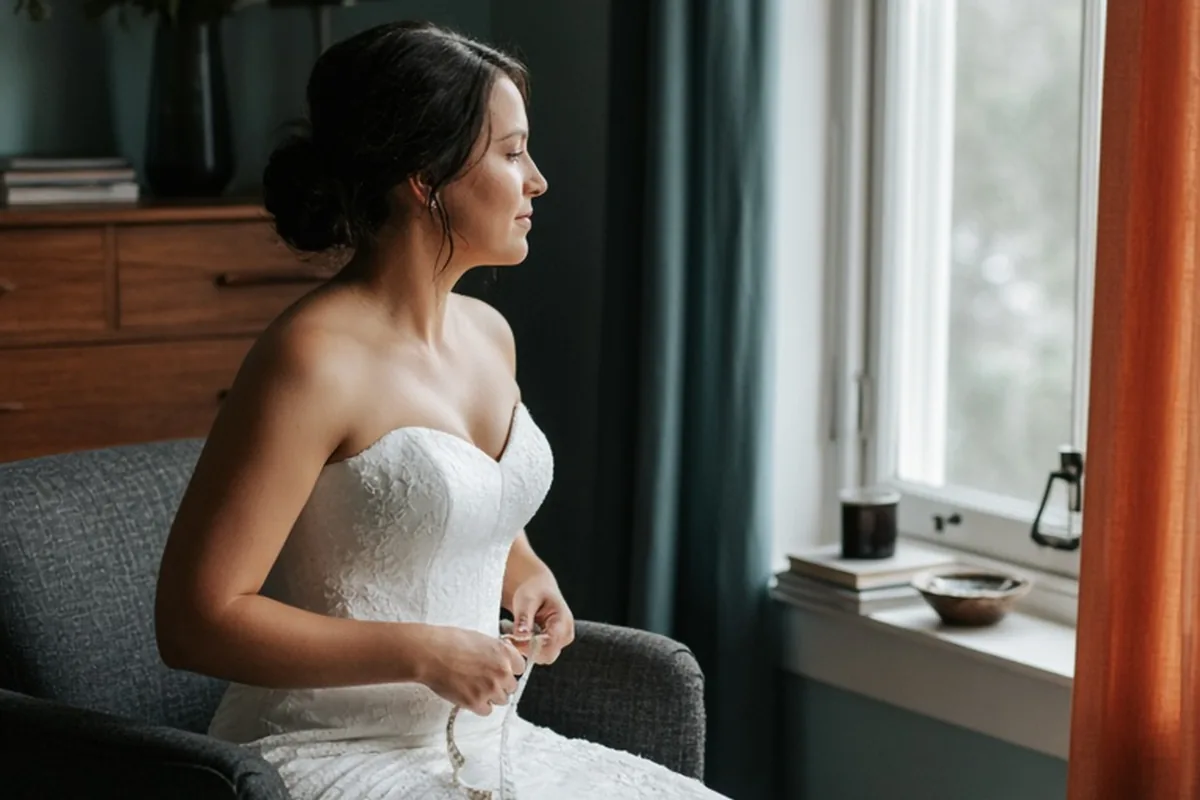
Bridal sizing differs significantly from standard street sizing, typically running one to two sizes smaller due to European tailoring charts and structured construction. For an intimate 50-guest wedding, sizing and silhouette choices must prioritize close-up comfort, seated posture, and effortless room navigation alongside exact bust, waist, and hip measurements. Always order to your largest measurement and allocate time for professional alterations to achieve a custom fit.
Planning a celebration with 50 guests offers a uniquely personal atmosphere where you spend quality time with every person in the room. This proximity changes how your wedding dress functions throughout the day, requiring a balance between formal style, movement, and physical comfort.
Understanding Bridal Sizing Charts Versus Everyday Street Sizing
One of the most surprising moments for many brides is discovering that their bridal size rarely matches the size on the tags of their everyday clothing. Bridal sizing charts are rooted in legacy European haute couture patterns that have remained largely unchanged for decades, whereas contemporary ready-to-wear clothing has evolved with vanity sizing and flexible, stretch-heavy textiles. As a result, a bride who consistently wears a standard US street size 6 or 8 will frequently measure into a bridal size 10, 12, or even 14 depending on the specific designer. This discrepancy is purely a production standard and has nothing to do with body changes.
Bridal garments are engineered with rigid internal structuring, such as boning, woven canvas, multi-layered linings, and fixed waist stays that do not stretch. Because these garments are designed with non-stretch woven fabrics like silk mikado, organza, crepe, or structured satin, there is zero tolerance for error around the ribcage and natural waist. Understanding this difference early in the shopping process prevents unnecessary stress and ensures you evaluate gowns based on how the proportions align with your skeletal frame rather than the arbitrary number stamped on the manufacturer tag.
How an Intimate 50-Guest Setting Impacts Dress Silhouette Choices
A 50-person guest count fundamentally changes the physical dynamics of your wedding day compared to a 250-person ballroom event. In a smaller gathering, you will not simply be standing on an elevated stage or viewing guests from a distant head table; you will be constantly greeting friends, weaving through restaurant dining tables, hugging every attendee multiple times, and sitting down for prolonged meals. Massive ballgowns with rigid crinolines or cathedral trains can create physical barriers in boutique venues, historic inns, or private dining rooms where space is cozy and aisle widths are narrower.
Silhouettes such as fluid A-lines, modified fit-and-flares, sleek sheaths, and column gowns excel in an intimate 50-guest environment because they allow natural movement without demanding a wide physical radius. A dress that allows you to turn your torso freely, step backward without tripping, and sit comfortably on standard banquet or bistro chairs makes interacting with your 50 guests effortless. When selecting your silhouette, consider whether the volume of the skirt allows you to pull up to a dinner table without gathering folds of heavy fabric on your lap.
Taking Accurate Bust, Natural Waist, and Hip Measurements
To determine your correct bridal size, you or a professional tailor must capture three core measurements using a flexible vinyl measuring tape: the fullest part of the bust, the narrowest point of the natural waist, and the widest point of the low hips. The bust measurement should be taken wearing whatever unpadded undergarments you plan to use, keeping the tape parallel to the floor across the shoulder blades. The waist measurement must reflect your natural indentation—usually an inch or two above the navel—taken while breathing out naturally rather than holding your breath.
The hip measurement requires special attention because bridal charts reference the widest circumference around the buttocks, not the pelvic bone. Stand with your feet together and wrap the tape around the fullest projection of your lower half. Once these three numbers are recorded, compare them to the specific designer size chart for the gown you are ordering. Designers vary widely: an Italian lace house may have narrower shoulder and ribcage ratios than an American contemporary label. Always identify which size accommodates your largest measurement, as taking a dress in through alterations is standard, whereas letting out a tight seam is limited by fabric seam allowances.
Evaluating Fabric Rigidity and Tactile Comfort for Close-Up Gatherings
In an intimate wedding of 50 guests, your gown will be viewed from inches away rather than from several rows back in a massive sanctuary. Guests will see the stitching details, touch the fabric during embraces, and notice how the garment drapes when you are seated. Heavier fabrics like brocade, stiff taffeta, or heavily beaded tulles can feel abrasive against your skin and warm up quickly in smaller indoor rooms, while lighter, breathable materials like silk crepe, silk chiffon, soft lace, and lightweight satin provide tactile ease and visual elegance.
Fabric selection also directly influences sizing tolerance. A four-ply silk crepe with a hint of elastane offers subtle ease across the hips and waist, making exact fitting more forgiving if your weight fluctuates by a few pounds prior to the wedding. Conversely, non-stretch duchess satin or stiff organza demands pinpoint precision during fittings because any pulling or strain across the bias will be immediately noticeable under ambient restaurant or candlelight lighting.
Planning Alterations and Proportion Adjustments for 50-Guest Venues
Bridal sizing charts produce gowns to a generic standard height, typically designed for a person who is 5 feet 8 inches to 5 feet 10 inches tall in heels. As a result, almost every bride requires alterations regardless of how closely their bust, waist, and hip numbers match the chart. For a 50-guest wedding, your alterations appointments should focus heavily on functional movement. Schedule your initial fitting roughly two to three months before the wedding date, bringing the exact shoes and undergarments you intend to wear so the hemline and torso length are calibrated perfectly.
During your fittings, test practical movements: practice sitting down in a firm chair, walking up a flight of stairs, raising your arms to embrace someone, and bending slightly at the waist. If your gown has a train, work with your seamstress to design a secure, straightforward bustle—such as an American over-bustle or a French under-bustle with clear color-coded ribbons. In a smaller venue, you will likely want to bustle your dress immediately after the ceremony so you can mingle freely during cocktail hour without guests accidentally stepping on your train.
Sizing Considerations for Made-to-Order Versus Off-the-Rack Gowns
Couples planning a 50-guest wedding often operate on varied timelines, from traditional year-long engagements to streamlined three-month plans. If you are ordering a standard made-to-order gown through a bridal salon, lead times typically range from six to nine months, followed by several weeks of alterations. When ordering made-to-order, the salon orders the closest standard size based on your measurements; the gown is not custom-sewn to your exact body shape, meaning post-delivery tailoring is still mandatory.
If your timeline is condensed, purchasing an off-the-rack sample gown or buying from a ready-to-wear boutique is a viable path. When buying off-the-rack, focus on finding a gown that fits your largest measurement—especially the shoulders, ribcage, and hips. A skilled tailor can easily reduce a bodice by one or two full sizes, reshape armholes, and shorten hems, but adding fabric to a sample that is too small requires sourcing matching lace or adding side panels, which can compromise the structural integrity and aesthetic balance of the dress.
Step-by-Step Gown Sizing and Fitting Protocol
Navigating bridal sizing successfully requires a methodical approach that removes guesswork from the ordering and tailoring phases. Begin by working with an experienced stylist or tailor who understands the nuances of individual designer blocks. Ensure that you do not order a smaller size under the assumption that you will lose weight before the event, as gowns can easily be taken in during final fittings, but letting seams out is strictly constrained by internal seam allowances.
Follow these concrete verification steps to ensure an accurate fit and seamless experience on the wedding day:
- Obtain professional bust, waist, and hip measurements using a vinyl tape measure over appropriate foundation wear.
- Review the specific brand sizing chart rather than generic online size guides before confirming your purchase.
- Select your dress size based on your single largest body dimension and plan to tailor down the remaining areas.
- Confirm your exact footwear and heel height prior to the first hemline pinning session.
- Conduct a full movement check during the final fitting, including sitting, hugging, and testing the bustle mechanism.
Frequently asked questions
Why is my bridal gown size larger than my regular dress size?
Bridal manufacturers use historical European sizing charts based on non-stretch formalwear patterns rather than modern vanity sizing. It is standard for a bridal gown tag to read one to two sizes larger than your everyday clothing.
What silhouette works best for an intimate wedding with 50 guests?
A-line, sheath, column, and subtle fit-and-flare silhouettes work exceptionally well for 50 guests. These styles provide easy mobility for mingling in smaller rooms, sitting comfortably during dining, and hugging guests without excessive skirt bulk.
How many fittings are typically needed to achieve the right fit?
Most brides require two to three alteration fittings over a period of six to eight weeks. The first session pins the structure and hem, the second refines the fit and bustle, and the final session confirms comfort and finish.
Your next step
Schedule a professional measurement session with your tailor or bridal stylist, bringing your planned footwear and foundation garments, to determine your accurate chart size before ordering your gown.