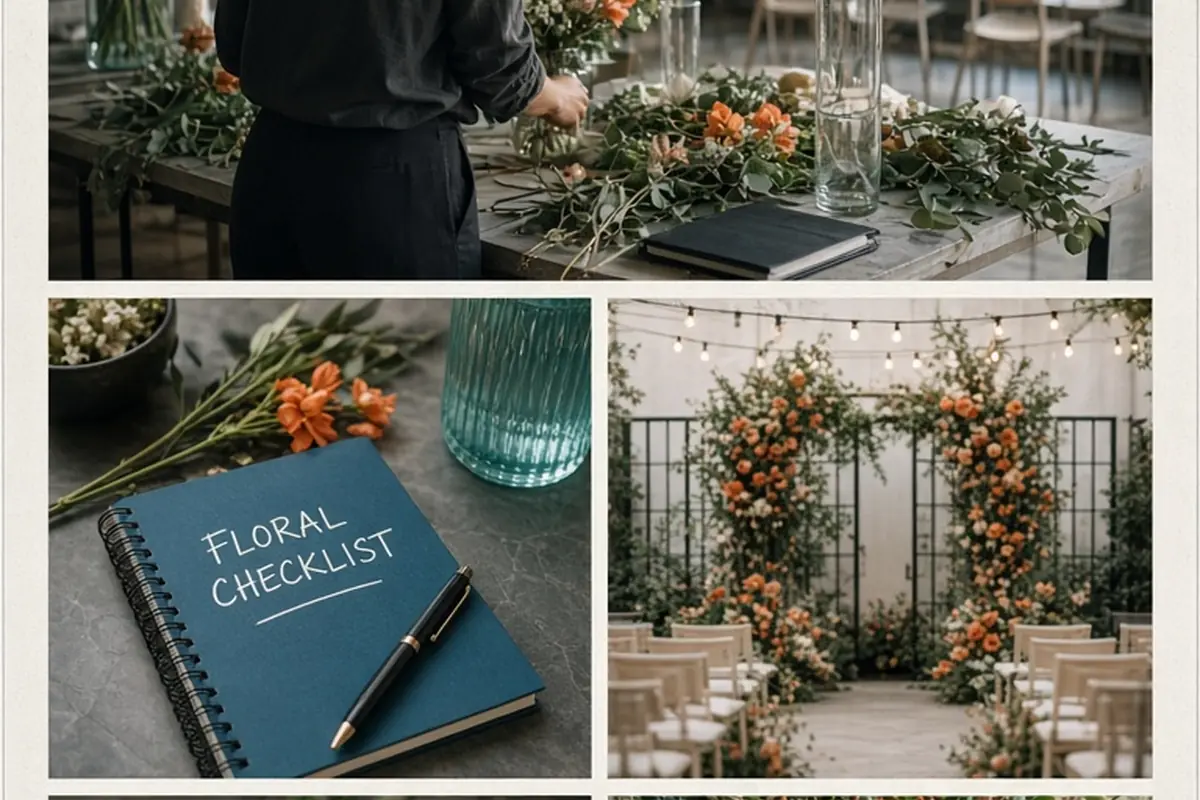
A complete wedding florist checklist outlines every floral arrangement you need across personal flowers, ceremony decor, cocktail hour, and reception styling, while tracking consultation questions, proposal comparisons, contract terms, and day-of breakdown logistics. Using a structured timeline ensures you secure your preferred floral designer, align seasonal stem selections with your budget, and clarify setup, repurposing, and teardown responsibilities well before wedding day setup begins.
Planning wedding flowers involves far more than choosing a color palette and collecting inspiration photographs. Translating a visual concept into a cohesive event requires coordinating stem durability, vessel rentals, venue access windows, temperature controls, and labor schedules across multiple locations on a tight timeline.
Personal Flowers and Wedding Party Floral Requirements
Personal flowers are typically the first floral items seen on the wedding day and the most heavily photographed during morning preparations and portrait sessions. Start your personal floral checklist by detailing the central bridal bouquet, confirming its intended silhouette, such as an organic loose garden style, a structured round posy, or a cascading arrangement. Clarify whether you want your bouquet wrapped in raw silk, trailing satin ribbon, or exposed stems, and determine if an additional, smaller toss bouquet is needed to avoid tossing the keepsake arrangement.
Next, itemize bouquets for adult bridesmaids, junior attendants, and flower girls. Flower girls may carry miniature nosegays, wear delicate floral crowns, or carry baskets filled with fresh, venue-approved tossing petals. Account for all boutonnieres needed across the wedding party and family circle, including the groom, best man, groomsmen, ring bearers, fathers, stepfathers, and grandfathers. Groom boutonnieres often feature a unique focal blossom or distinct accent foliage to subtly differentiate them from the rest of the wedding party.
Do not overlook specialty personal pieces for family members and ceremony participants who deserve recognition. Mothers, stepmothers, grandmothers, and officiants frequently receive pin-on corsages, wrist corsages mounted on metal cuffs or ribbon, or small floral clutch nosegays. If your wedding party includes ushers, readers, or guest book attendants, decide in advance whether they will receive mini boutonnieres or pocket square floral inserts. To protect delicate suit fabrics, ask your florist whether they supply floral magnets instead of traditional straight pins for boutonnieres.
Ceremony Floral Installations and Altar Decor
Ceremony spaces establish the atmosphere for the entire wedding and frame the couple during vows. Begin your ceremony checklist at the entryway, noting whether you require welcoming floral displays, greenery garlands framing the entrance doors, or floral accents adorning the wedding welcome sign and order-of-events easel. If you plan to define the ceremony walkway, specify aisle markers, such as posies tied to pew ends, hurricane lanterns surrounded by petal rings, or lush ground arrangements forming a growing floral meadow along the floor.
The focal point at the altar demands careful structural and logistical planning. Whether your venue calls for an arch, a four-post chuppah, a circular moon gate, hanging installations, or two large urns on pedestals, confirm the structural mechanics your florist plans to use. Inquire about how the installation will be weighted and secured against wind gusts for outdoor settings, or attached without damaging historic surfaces in indoor venues. If open flame is permitted, verify whether floral arrangements need glass chimney shields around accompanying pillar candles to comply with venue fire codes.
Reception Tables, Cocktail Hour, and Focal Point Centerpieces
Reception spaces require the largest volume of stems and vessels, making a comprehensive room inventory essential. Start with the cocktail hour and transition zones, listing petite arrangements for high-top cocktail tables, floral styling for the seating chart or escort card display, and accents for bar tops and lounge furniture. Adding floral touches to lounge coffee tables or guest book stations creates visual continuity as guests move from the ceremony to the main reception area.
For dining tables, decide on the balance between low compote centerpieces, elevated floral stands, and long running greenery garlands. Low arrangements should allow unobstructed conversation across the table, typically staying below fourteen inches in height, while elevated centerpieces should sit above twenty-four inches on slender stands. If your floor plan uses a mix of round and long farmhouse banquet tables, design complementary styles rather than identical setups to add dimension to the ballroom.
Detail the specialty display florals that complete the reception space. Note arrangements for the sweetheart table or head table, which often incorporate floral meadows along the table base or lush cascading displays across the tabletop edge. Confirm whether your baker expects fresh flowers delivered directly for the wedding cake, and specify arrangements for dessert stations, coffee bars, and band stages. For dramatic ballroom designs, determine if ceiling chandeliers or suspended floral trusses are feasible given the venue rigging points and load-in timelines.
Key Questions for Your Floral Designer Consultations
When interviewing prospective floral designers, your questions should focus on their operational capacity, design philosophy, and contingency planning. Ask to see full galleries from real weddings they have executed at your specific venue or under similar lighting and climate conditions, rather than relying exclusively on editorial styled shoots. Inquire about how many events they accept per weekend and whether the principal designer will personally oversee your on-site setup or assign a production team.
Understanding sourcing policies and backup plans protects your aesthetic vision when unpredictable market conditions arise. Ask your florist how they handle seasonal stem availability, unexpected crop freezes, or wholesale import shortages. Experienced florists include a stem substitution clause in their proposals, promising to substitute equal or higher value varieties that maintain the agreed-upon color palette and silhouette. Additionally, ask how they manage extreme weather conditions on-site, such as high heat or sudden rain for outdoor ceremonies.
Itemizing Floral Quotes, Service Fees, and Contract Clauses
A clear floral proposal should distinguish between the cost of raw floral product, rental hardware, and professional labor. When reviewing quotes, verify that each line item lists arrangement dimensions, general stem varieties, vessel styles, and quantities. Check whether rental items, such as compote bowls, tall stands, pedestals, arch structures, and candle glassware, are rented directly from the florist or require third-party sourcing, and clarify who is responsible for cleaning and returning them.
Labor and production fees represent a significant portion of a floral bill because they cover stem conditioning, studio arranging, refrigerated transport, on-site installation, and late-night breakdown. Ensure your proposal clearly states arrival times for morning setup, the number of crew members assigned to your event, and any fees associated with room flips between ceremony and reception. Confirm the terms for late-night strike services, which involve returning after midnight to dismantle installations, pack up rental vessels, and clear green waste in accordance with venue rules.
Review the contract terms regarding payments, cancellation schedules, and damage deposits. Standard floral contracts require an initial retainer to secure the calendar date, followed by scheduled interim payments and a final balance due several weeks prior to the event when stem orders are locked. Verify policies on adjusting table counts after RSVPs return, and confirm the threshold for lowering overall spend without penalty. Pay close attention to liability clauses regarding weather disruptions and force majeure circumstances.
Repurposing Florals Between Ceremony and Reception
Repurposing ceremony arrangements for the reception is an effective way to maximize your floral budget while maintaining design continuity. Aisle markers and ground meadows can be relocated to flank the front of the sweetheart table, encircle the band stage, or line the dessert station. Ceremony urns placed on pedestals can be moved during cocktail hour to frame the reception entrance, the photo booth backdrop, or the bar.
Successful floral repurposing requires precise logistical planning and dedicated staffing. Bouquets carried by the bridal party can double as centerpieces if pre-filled vases are placed on the head table, but relying on wedding party members to transport them often leads to damaged blooms or forgotten stems. If complex installations or heavy urns need relocation during the cocktail hour, ensure you have contracted your florist team or professional wedding coordinator to handle the move, keeping fresh water sources available to revive stems before guests enter the dining room.
Timeline and Final Week Floral Delivery Coordination
Coordinating delivery schedules across multiple locations ensures personal flowers arrive crisp for photographs and installations are completed before guest arrival. Eight to ten months before the wedding, research and book your floral designer, locking in design concepts and preliminary line items. At six to eight weeks out, conduct a formal review to adjust table centerpieces based on final RSVP counts, finalize ceremony focal structures, and confirm linen selections that complement your floral vessels.
Two weeks before the wedding, provide your florist with a detailed timeline that outlines delivery windows for getting-ready suites, photographer arrival times, and venue access hours for ceremony and reception setups. On the morning of the wedding, arrange for personal bouquets and boutonnieres to be delivered in fresh water with lint-free towels for stem drying before portrait sessions begin. Designate a trusted point person, such as your wedding coordinator, to receive floral deliveries, inspect boutonnieres, and verify that all personal tags match the recipients.
Frequently asked questions
How far in advance should I book a wedding florist?
Most couples book their wedding florist eight to ten months before their wedding date, especially if getting married during peak spring or autumn seasons. Booking early secures your date on the florist's production calendar, after which specific stem selections and arrangement counts can be refined as your guest list and floor plans finalize.
What happens if a requested flower variety is unavailable on my wedding day?
Professional floral contracts include a substitution clause allowing the designer to replace unavailable blooms with stems of equal or higher value. Reputable florists select alternatives that match the intended color, shape, and texture of the original design without altering the overall aesthetic.
Can I keep the rental vessels and vases after the reception ends?
Rental vessels, stands, and candle holders remain the property of the floral designer or rental company and must be returned intact at the end of the event. If you want guests to take flowers home, ask your florist to use disposable paper mache liners or provide separate wrapping stations for post-event stem distribution.
Your next step
Compile your preliminary guest count, venue floor plan, and inspirational color palette, then schedule initial consultations with three licensed local floral designers to review their portfolios and availability.