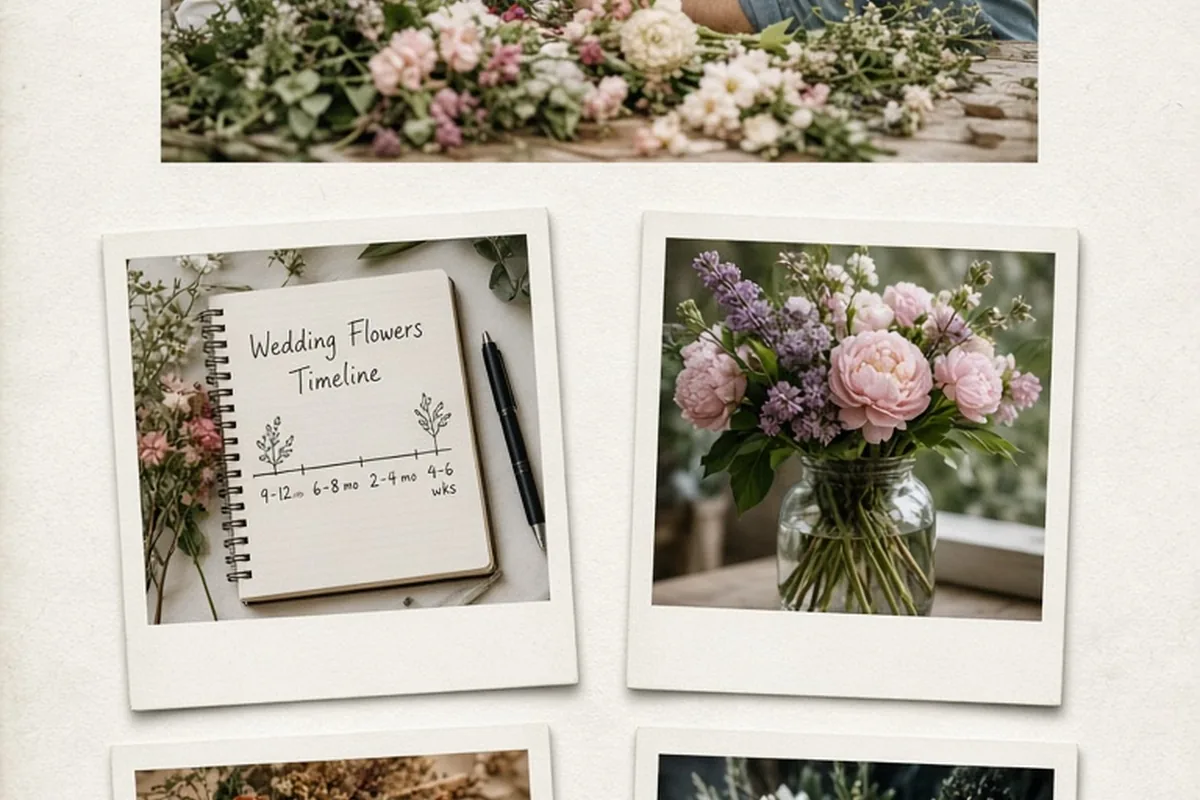
A wedding flowers planning timeline begins 9 to 12 months before the event by securing a floral designer and establishing a visual palette. At 6 to 8 months, couples match their color scheme to regional seasonal blooms. Between 2 and 4 months, stem recipes and mockups are refined. Final guest counts, table arrangements, and delivery logistics are confirmed 4 to 6 weeks prior to the wedding day.
Floral arrangements anchor the aesthetic tone of a wedding day, yet fresh flowers are agricultural products tied strictly to weather, geographic origin, and seasonal harvest windows. Designing a cohesive floral concept requires balancing desired visual styles with the reality of what local fields and global wholesalers can reliably supply during your wedding month.
Month-by-Month Floral Booking and Design Milestones
A structured floral timeline prevents last-minute compromises and ensures your preferred designer is available. The process begins 9 to 12 months out, immediately after securing your venue and setting an overall event budget. During this initial phase, research local independent florists and design studios whose natural aesthetic matches your vision. Rather than collecting lists of specific stems, gather broad color palettes, textural references, and venue layouts. Booking your florist early allows them to monitor wholesale market patterns, advise on structural venue constraints, and block out dedicated production days on their calendar.
Between 6 and 8 months before the wedding, schedule a formal creative consultation. Bring your confirmed floor plans, rental selections, bridal party attire colors, and ceremony backdrop requirements. Your florist will translate your conceptual imagery into a working floral recipe, highlighting which focal flowers will be at peak harvest and which foliage varieties will provide structural support. This is also the stage to discuss rental vessels, ceremony arches, hanging installations, and candlelight requirements to ensure all hardware is reserved.
Between 2 and 4 months out, finalize the floral recipe details and review a tabletop sample if your floral contract includes a live mockup. As RSVP deadlines near at the 4 to 6-week mark, provide your designer with exact table counts, bridal party numbers, family boutonniere quantities, and reception layout changes. The final two weeks are dedicated to logistical verification, including delivery access hours, venue load-in rules, teardown schedules, and hydration plans for delicate personal flowers.
Spring Floral Availability: Peonies, Ranunculus, and Lilacs
Spring offers one of the most celebrated floral windows of the year, characterized by soft textures, delicate petals, and fragrant branches. Early spring (March to April) brings bulb flowers such as tulips, narcissus, fritillaria, and hyacinths, alongside woody flowering branches like dogwood, cherry blossom, and quince. As mid-to-late spring arrives (May to early June), ranunculus, butterfly ranunculus, sweet peas, spirea, lilacs, and early peonies reach their peak. These stems provide natural movement and subtle tonal gradations that suit romantic, garden-style arrangements.
Working with spring flowers requires careful attention to temperature sensitivity and water requirements. Stems grown from bulbs often continue to lengthen after being cut, meaning arrangements designed with tulips or anemones can shift shape overnight if stored in warm environments. Furthermore, early spring weather can be unpredictable, causing harvest dates to fluctuate by several weeks. Florists managing spring weddings build flexibility into their floral recipes by selecting secondary focal blooms—such as double-petaled garden roses or carnations—that mimic the lush layering of peonies if unseasonable cold snaps delay regional harvests.
Summer Wedding Blooms: Garden Roses, Dahlias, and Sun-Tolerant Varieties
Summer weddings offer an abundant palette of vibrant, saturated colors and robust botanical textures. Early summer sees the continuation of garden roses, delphinium, campanula, and foxglove, while mid-to-late summer (July through September) brings the peak of local field-grown flowers including zinnias, cosmos, sunflowers, lisianthus, and the earliest dahlia harvests. These months provide incredible diversity in color and scale, allowing for dramatic, architectural floral designs.
The primary challenge of summer floral planning is heat management. High ambient temperatures and strong direct sunlight cause thin-petaled varieties to wilt rapidly, especially in outdoor ceremony arches or exposed bridal bouquets. Work with your floral designer to select heat-hardy focal blooms like lisianthus, garden roses, echinops, and textural grasses for unshaded daytime settings. Bouquets should be kept in climate-controlled water vessels until immediately before photos, and ceremony installations should be constructed with internal water tubes or foam-free hydration reservoirs to preserve freshness through evening receptions.
Fall Seasonal Textures: Chrysanthemums, Marigolds, and Dried Accents
Autumn floral design shifts focus toward rich depth, complex undertones, and sculptural botanical elements. September and October represent the absolute peak for field-grown dinnerplate dahlias, heirloom garden chrysanthemums, celosia, amaranthus, and marigolds. In addition to focal flowers, fall arrangements heavily utilize ripening fruits, berry branches like hypericum and privet, ornamental grasses, seed pods, and turning deciduous foliage to capture the organic feeling of the harvest season.
Fall weddings benefit from combining fresh stems with preserved or dried components such as bleached bracken fern, dried hydrangeas, and textural reeds. This combination adds architectural contrast and improves structural stability during fluctuating autumn temperatures, where daytime heat often gives way to sharp evening chills. When planning a fall palette, evaluate your venue lighting carefully, as moody burgundy, plum, and deep rust tones absorb light and may appear flat indoors without sufficient warm ambient illumination.
Winter Floral Choices: Amaryllis, Hellebores, and Evergreens
Winter weddings present an opportunity for sophisticated, high-contrast floral styling that leans into lush foliage, clean lines, and deep jewel or crisp monochromatic tones. Peak winter stems include Dutch and South American amaryllis, hellebores (winter roses), paperwhites, anemones with dark centers, and ranunculus. These focal flowers pair naturally with fragrant coniferous evergreens, magnolia foliage with velvety copper undersides, eucalyptus varieties, and winterberry branches.
Winter floral planning must account for global supply chain schedules and holiday wholesale closures. Wholesale flower markets experience significant price surges and tight availability around major holidays, particularly Christmas and Valentine's Day. If your wedding falls near these dates, confirm flower orders earlier than standard timelines and consider working with varieties that are less susceptible to holiday market competition. Additionally, extreme freezing temperatures during transit require insulated delivery vehicles to prevent petal frostbite and cell collapse.
Aligning Budget Realities with Seasonal Sourcing and Substitutions
Choosing in-season flowers is widely recommended to maximize quality, but seasonality alone does not guarantee a lower total cost. Highly sought-after seasonal flowers like peonies, garden roses, and imported orchids carry substantial baseline farming, harvesting, and freight expenses regardless of the month. The economic advantage of in-season blooms lies primarily in yield quality: stems harvested at their natural peak are larger, sturdier, and require fewer total stems to create a full, impactful arrangement.
To protect both aesthetic cohesion and budget integrity, establish a 'look and feel' substitution agreement in your floral contract. Rather than locking the florist into an inflexible stem count of specific rare flowers that could fail due to sudden weather events, permit them to substitute equivalent premium blooms that match your chosen color profile, texture, and scale. For instance, substituting lisianthus for delicate sweet peas or standard garden roses for out-of-season peonies maintains the overall design intent while avoiding costly emergency air-freight fees.
Logistics, Climate Control, and Day-of Floral Timeline Coordination
Flawless floral execution relies heavily on precise day-of timing, venue coordination, and environmental control. Professional florists typically begin processing stems three to four days before the wedding, stripping foliage, hydrating stems in temperature-controlled rooms, and timing the bloom opening so petals look optimal during the ceremony. Complex installations, such as ground meadows, arbor arches, and suspended greenery, require three to five hours of on-site labor before guest arrival.
Coordinate your floral delivery timeline directly with your photography schedule and venue access policies. Personal flowers—including bridal bouquets, bridesmaid posies, and boutonnieres—must arrive before pre-ceremony portraits begin, along with portable water vases to rest stems between photo sessions. If your plan involves repurposing ceremony elements (such as moving aisle arrangements to the head table), assign clear responsibility to the floral team or event planner to handle the transition smoothly without disrupting cocktail hour.
Frequently asked questions
What happens if a desired flower is out of season on my wedding date?
If a specific flower is unavailable or out of season, professional florists source visual alternatives with similar petal shapes, color depth, and texture. For example, high-petal-count garden roses or double-flowered lisianthus can replicate the visual softness of peonies when peonies are out of season.
How far in advance should I book my wedding florist?
Most couples book their wedding florist 9 to 12 months before the event date. This ensures designer availability, locks in delivery dates on production calendars, and allows ample time to align your aesthetic choices with seasonal flower cycles.
Can out-of-season flowers be imported for my wedding?
Many commercial flowers can be imported globally year-round, but doing so often increases costs and carries higher risks of transit damage or premature wilting. Relying on regionally in-season blooms generally yields fresher, larger, and longer-lasting arrangements.
When do I need to give the florist my final centerpiece and table counts?
Final guest counts, floor plans, and exact table numbers are typically due to your florist 4 to 6 weeks before the wedding. This gives the studio adequate time to place wholesale orders before supplier cut-off deadlines.
Your next step
Audit your target wedding date against your region's seasonal bloom windows, collect three to five core color references, and schedule consultations with prospective florists 9 to 12 months in advance.