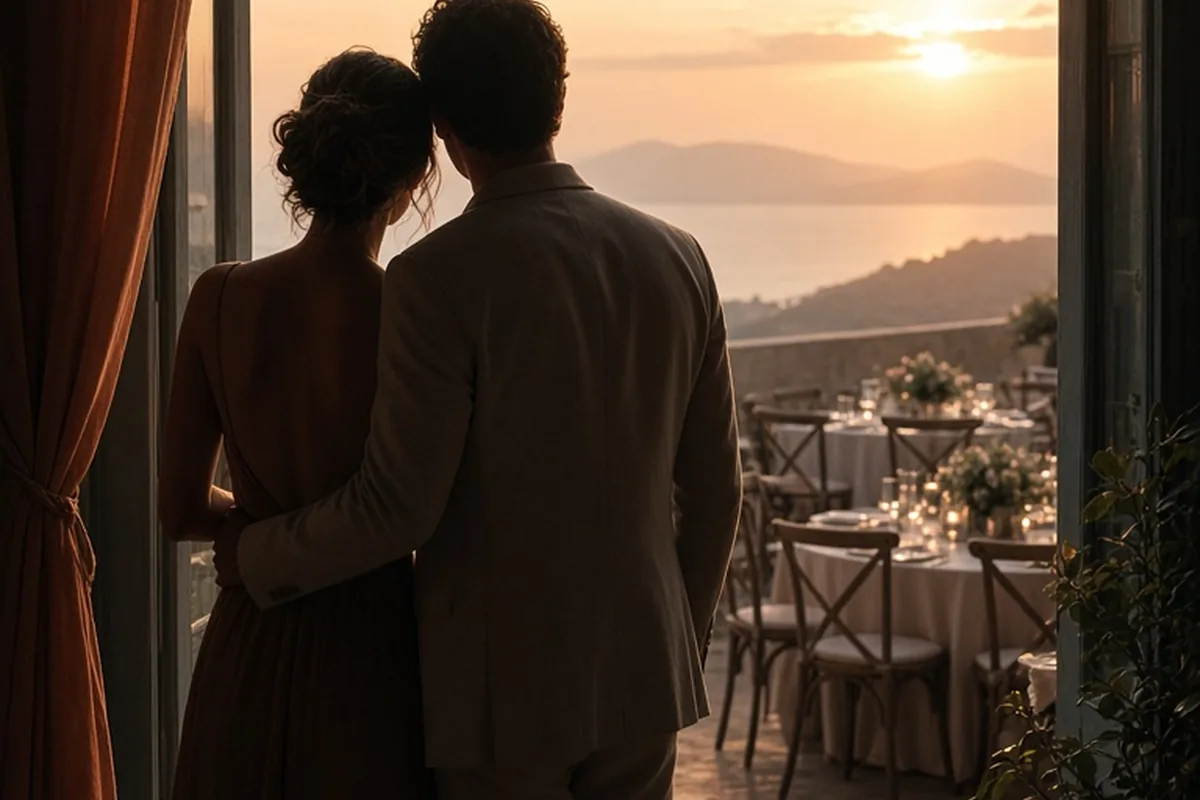
A wedding with 100 guests hits a natural sweet spot between an elopement and a large ballroom reception, offering enough scale for an energetic celebration while remaining small enough for personal hospitality. The most successful ideas for this headcount focus on distinctive non-traditional venues, communal banquet or family-style dining, residential-style lounge vignettes, and personalized place settings. By organizing the timeline to allow unhurried face-to-face conversations, couples can preserve an intimate, warm atmosphere throughout the entire gathering.
A guest list of one hundred people allows couples to step away from assembly-line banquet halls and design an experience centered on warmth, shared memories, and distinctive atmosphere. At this scale, every guest is typically someone both partners know and cherish, making thoughtful design choices feel deeply impactful rather than purely decorative.
Selecting Venues That Fit One Hundred Guests Without Wasted Space
A common pitfall when hosting a hundred attendees is booking a ballroom or banquet facility designed for several times that volume. Cavernous spaces dilute energy, create awkward walking gaps, and make a vibrant gathering appear sparsely attended. To preserve a sense of warmth, look for spaces naturally scaled to double-digit or low triple-digit gatherings. Boutique greenhouse atriums, walled courtyard gardens, private historic estates, renovated industrial carriage houses, and independent art galleries naturally embrace a group of this magnitude. These environments provide architectural character from the outset, eliminating the need to drape walls or build false partitions to create visual warmth.
When evaluating a location, inspect how the floor plan accommodates transitions between ceremony, cocktail hour, and dinner. A venue with distinct but connected zones allows guests to migrate smoothly without waiting in corrals or feeling displaced while staff flips the room. If a space requires flipping from the ceremony setup to dinner seating, ask the venue coordinator where guests will spend that transitional hour and how noise or service prep will be screened. Look closely at ceiling heights and surface materials as well. Exposed concrete and high glass reflect sound sharply, whereas wood beams, brickwork, and soft drapery keep acoustic levels comfortable during lively multi-person conversations.
Consider site access, climate management, and parking capacity early in your venue search. Mid-sized private properties often possess great charm but may lack dedicated commercial restrooms, coat check facilities, or paved parking lots. Before committing to a private estate or open-air site, verify whether temporary luxury restroom trailers, auxiliary power generators, or valet attendants will be required to keep the gathering comfortable. A site that natively includes commercial support infrastructure simplifies coordination significantly and protects your planning schedule from unexpected logistics hurdles.
Seating Layouts and Floor Plans That Encourage Natural Mingling
Traditional wedding layouts frequently arrange guests into isolated round tables spread across a large floor, which can unintentionally divide a hundred-person group into disconnected clusters. Instead, consider communal banquet tables arranged in long refectory rows, an open U-shape, or an elegant horseshoe pattern. Long wooden tables naturally draw eyes down the length of the room and encourage cross-table conversations, echoing the atmosphere of a festive family dinner. Alternating table widths also gives you space for low floral runners, taper candles, and sharing platters without crowding glassware and dinnerware.
Integrate residential-style lounge vignettes directly into the dining or reception room rather than banishing soft seating to an outer hallway or secondary lobby. Setting up two or three comfortable seating areas with plush armchairs, low coffee tables, and textured rugs near the perimeter gives guests an inviting spot to sit with an evening drink while staying connected to the music and toasts. When older relatives or guests who prefer not to dance can relax comfortably while still observing the celebration, the room stays unified and vibrant for hours longer.
Be intentional about sightlines and pathway clearance between tables. In a room arranged for one hundred people, waitstaff require unobstructed routes to deliver warm plates and clear glassware promptly. Position the couple's table in a central focal position where you can make natural eye contact with the surrounding tables rather than on an elevated, distant dais. Leaving generous aisles between long tables ensures that guests move freely between courses to visit childhood friends, former classmates, and extended family without bumping into chairs or interrupting servers.
Designing a 100-Guest Wedding Flow That Keeps the Day Feeling Intimate
One of the major advantages of a hundred-person gathering is the genuine opportunity to spend meaningful time with each attendee, but doing so requires a deliberate timeline. Standard receiving lines can feel transactional and consume a large block of post-ceremony daylight. An effective alternative is to host an extended cocktail reception where the couple joins the gathering immediately after private portraits, mingling casually over passed drinks and small bites before seated dinner begins.
You can also weave hospitality into the pre-ceremony arrival. Welcoming arriving guests with iced herbal teas, sparkling wine, or warm cider in cooler seasons encourages early arrivals to unwind, meet one another, and settle into the mood of the celebration. Arranging ceremony seating in a semi-circle or in the round surrounds the couple with their closest community, keeping every guest close enough to hear spoken vows clearly without reliance on heavy amplification. This circular or curving layout reinforces the emotional intimacy that defines a mid-sized event.
During the reception, avoid breaking up the evening with too many scheduled announcements or prolonged specialty events. Group speeches together during dessert or dinner service so guests can listen comfortably without enduring repeated pauses in the musical programming. When the schedule flows smoothly from course to course and into open dancing, guests remain immersed in the celebration, keeping the dance floor lively and the conversational energy consistently high through the final send-off.
Catering Formats That Deliver High Hospitality for One Hundred Diners
At one hundred attendees, food service becomes a central hospitality feature rather than a logistical hurdle. Unlike giant banquets that often rely on warming carts and simplified crowd-pleaser menus, a mid-sized guest count allows for culinary formats that feel customized and interactive. Family-style service is an exceptional match for this group size, combining the elegance of plated courses with the convivial energy of passing platters of roasted meats, seasonal vegetables, and warm flatbreads around long tables.
If you prefer a formal multi-course plated dinner, a hundred guests is a manageable volume for kitchen brigades to plate and serve while dishes remain hot and pristine. When selecting a plated format, explore elevated seasonal choices such as regionally sourced seafood, specialty pasta courses, or heirloom produce that might be cost-prohibitive or operationally unmanageable for much larger crowds. Make sure to consult your caterer regarding culinary pacing, ensuring all tables receive their main course within a narrow window so guests dine together harmoniously.
Beverage service logistics also require deliberate staffing. Even with an intimate crowd, a single bar station can create frustrating bottlenecks when guests first arrive at the reception. Setting up two separate service points for cocktail hour—or pairing a full bar with dedicated wine-tasting tables and passed welcome drinks—eliminates waiting lines entirely. Consider tailoring the drink offerings to reflect shared history, such as featuring local craft breweries from your hometowns or showcasing family wine favorites alongside carefully prepared non-alcoholic mocktails.
Thoughtful Guest Details and Keepsakes That Scale Elegantly
Personalized touches that feel impossibly labor-intensive for a wedding of three hundred people become entirely realistic and deeply moving at a one-hundred-guest scale. Consider writing individual, hand-written notes to each guest placed at their assigned seat. A few sentences thanking a friend for traveling, referencing a shared memory, or acknowledging a family elder's support creates a deeply personal moment before dinner service even begins. Such gestures turn a standard table setting into a cherished keepsake.
Interactive guest book concepts also flourish with this crowd size because you have enough entries to create a rich collection without running out of time. Audio guest books, where friends leave recorded voicemails on vintage rotary phones, yield a wonderful collection of warm greetings, laughter, and heartfelt wishes. Similarly, a Polaroid photo board where guests snap a self-portrait, slip it into an envelope, and write a quick note gives the couple an immediate tangible memory of everyone who attended, capturing candid expressions alongside formal attire.
When selecting favors, skip generic trinkets in favor of consumable, local goods that carry genuine meaning. Small jars of honey from an apiary near your family home, custom spice rubs mixed for home cooks, locally roasted coffee beans, or small boxes of fresh pastries from a neighborhood bakery offer genuine delight. Guests appreciate parting gifts that offer an immediate culinary experience or connect directly to the region where your wedding takes place, avoiding discarded clutter.
Vendor Team Coordination and Contracting for Mid-Sized Receptions
Contracting vendors for a hundred-person event requires a clear understanding of service minimums and staffing structures. Some catering and venue companies base their contracts on flat operational minimums rather than per-head rates, which means hosting one hundred guests may require higher per-guest expenditure to meet venue thresholds. When reviewing vendor estimates, ask explicitly how their base rates adjust for mid-sized counts and verify whether equipment rentals, table linens, and glassware are bundled or billed individually.
Photography and videography requirements also take on a specific character at this scale. While massive weddings often demand three or four shooters to cover distant parts of the room, a skilled solo photographer or a two-person team can thoroughly document a hundred guests without missing candid interactions. Discuss your shot list candidly, emphasizing that you want coverage of guest laughter and conversations alongside key ceremony moments. Because the gathering is compact, a photographer can capture nearly every attendee on film during the course of the day.
Finally, ensure your audio, lighting, and entertainment vendors are tailored for an intimate environment. A sound system configured for a massive outdoor amphitheater can easily overwhelm a mid-sized dining room, drowning out conversation and fatiguing guests. Discuss acoustic sound dampening with your musical acts or disc jockey, confirming that speakers will be focused specifically on the dance area while conversational zones remain quiet enough for relaxed talk. Balanced sound and warm, directional lighting will do more to establish an intimate, joyful mood than any single decorative piece.
Frequently asked questions
Is a wedding of 100 guests considered a small or mid-sized wedding?
A wedding with 100 guests is generally classified as an intimate mid-sized wedding. While micro-weddings typically host under fifty people and traditional celebrations often exceed one hundred and fifty, this headcount offers the operational benefits of an intimate gathering while still providing the party atmosphere of a larger celebration.
How do you ensure you talk to all 100 guests during the wedding?
Plan deliberate touchpoints throughout the schedule rather than relying on a rushed table-to-table tour during dinner. Attending your own cocktail hour, hosting welcome drinks before the ceremony, and choosing communal banquet seating allow for continuous, organic interactions without pulling you away from enjoying your own meal.
What is the best entertainment style for a 100-person wedding?
Live acoustic ensembles, three-to-five-piece party bands, or versatile disc jockeys who understand dynamic sound control all perform wonderfully for this group size. The key is maintaining proper volume moderation so guests can easily transition between dancing and conversation without leaving the main room.
Your next step
Draft your draft guest list down to exactly one hundred key names, then schedule site visits to historic properties, greenhouses, or private restaurant spaces that comfortably hold that exact capacity.