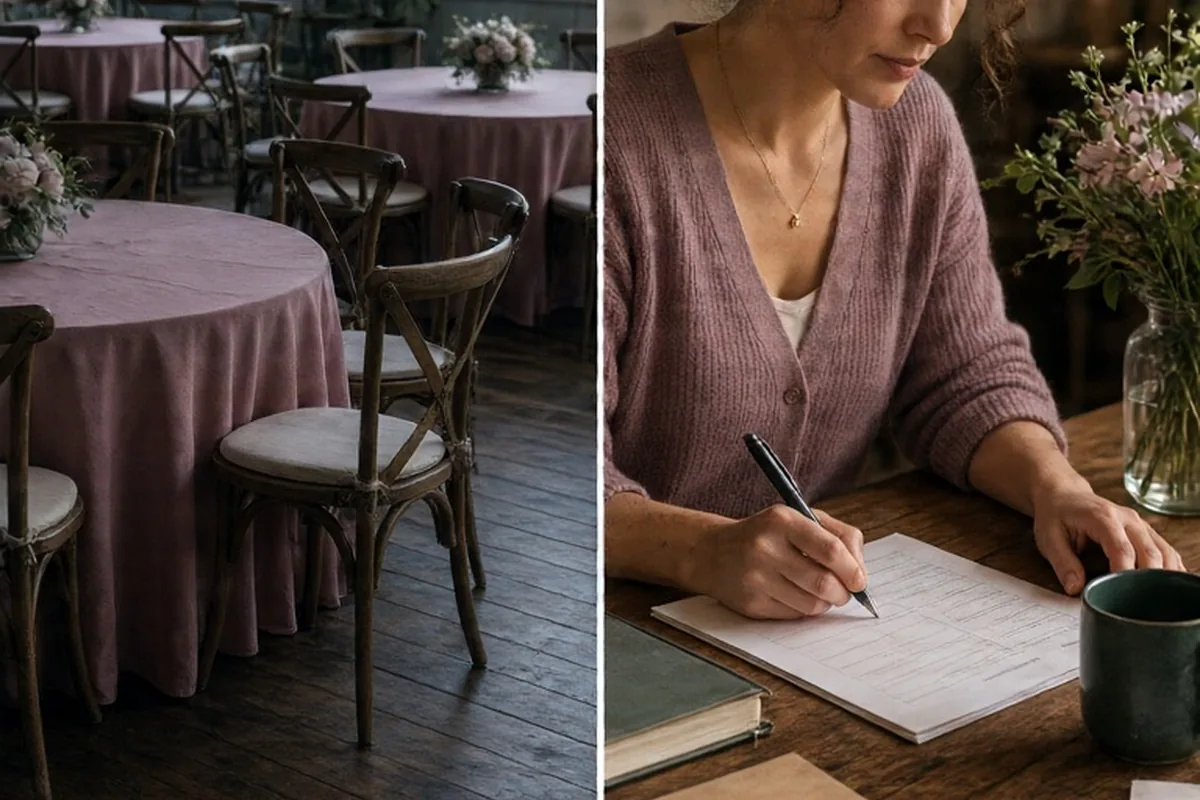
A wedding for 100 guests balances a sizable guest list with manageable logistics, but costs multiply rapidly across food, beverage, and table rentals. To save money without compromising hospitality, focus your savings checklist on three high-impact areas: selecting venues that include standard infrastructure like tables and chairs, tailoring catering formats and bar packages to reduce per-person service fees, and repurposing ceremony florals across your reception tables. Prioritizing guest experience while trimming duplicate vendor services yields the largest savings.
Welcoming one hundred family members and friends creates an energetic celebration, yet per-person expenses can escalate quickly if every detail carries standard vendor markups. Managing costs for a group of this size requires a clear evaluation of per-head efficiencies and contract terms rather than arbitrary aesthetic cuts.
Prioritizing Venue Infrastructure and Rental Inclusions
When planning for exactly one hundred guests, the physical venue dictates a substantial portion of secondary expenses. A raw space, such as an open field, industrial warehouse, or private estate, often appears cost-effective on initial rental fee quotes. However, hosting one hundred people requires foundational event infrastructure: ten to thirteen dining tables, one hundred ceremony chairs, one hundred reception chairs, auxiliary tables for catering and gifts, portable restrooms, adequate electrical power, and climate control. Sourcing these items individually from rental companies introduces separate delivery fees, setup labor, damage waivers, and late-night strike surcharges that frequently exceed the initial venue savings.
Conversely, venues with built-in infrastructure—such as established event halls, parks department clubhouses, historic properties, or boutique banquet spaces—usually bundle tables, standard chairs, basic linens, and dedicated catering prep kitchens into their baseline fee. Before signing a contract, build an itemized checklist comparing what the venue provides on-site against what you must rent independently. Inspect the condition and style of the included inventory in person; if the venue provides functional seating that aligns with your vision, you eliminate the expense of renting specialty furniture for a hundred attendees.
Streamlining Catering Service Styles and Menu Architecture for 100 Plates
Food and beverage service represents the largest per-guest financial commitment for a 100-person event. The structure of your menu and the style of service directly dictate both food quantities and front-of-house staffing levels. Plated multi-course dinners require high staffing ratios—often one server per ten to fifteen guests—along with plating cooks and dedicated bussing staff to deliver meals simultaneously. While a traditional buffet lowers front-of-house labor, it generally requires purchasing 10 to 20 percent more bulk food to prevent dishes from looking depleted before the final table goes through the line.
To optimize your catering budget, examine formats that balance labor hours with precise portion control. Family-style dining or chef-attended single-action stations offer a communal dining atmosphere while controlling ingredient volume better than open buffets. When designing the menu, focus on seasonal, regionally available produce and braised or slow-roasted proteins that hold quality well in banquet settings. Avoid requesting multiple individual protein selections on RSVP cards, which forces caterers to prepare excess margins for each dish to accommodate last-minute guest preference shifts. A unified dual-entree plate or a streamlined two-choice menu simplifies kitchen prep and lowers overall catering line items.
Restructuring Bar Packages and Beverage Calculations
Alcohol service for one hundred adults over a four-to-six-hour reception can generate steep costs if billed under flat-rate open bar packages. Standard all-inclusive beverage packages charge a fixed rate per person per hour, assuming continuous heavy consumption across the entire guest list. In reality, a standard gathering of one hundred people includes non-drinkers, light social drinkers, and designated drivers whose consumption does not match the package rate. Review whether your caterer or venue permits consumption billing, where you pay strictly for the bottles opened or drinks poured during the event.
Another high-value approach is securing a venue that permits client-provided alcohol paired with licensed, insured third-party bartending staff. Purchasing your own beer, wine, and spirits from wholesale beverage retailers allows you to avoid standard restaurant markups. Many independent liquor retailers also offer return policies for unopened, unchilled cases of wine and spirits with intact labels. Limiting your bar menu to two curated signature cocktails, two quality wine varietals, and two craft beer options significantly reduces the inventory required while preserving an upscale guest experience.
Repurposing Floral Arrangements and Selecting High-Impact Decor
For a 100-person reception, room layout typically calls for ten 60-inch round tables seating ten guests each, or eight to ten rectangular banquet tables. Purchasing intricate floral arrangements for every table, along with ceremony backdrops, aisle markers, and personal bouquets, drives floral costs upward due to stem counts and florist assembly labor. Instead of treating the ceremony and reception as separate design challenges, build a floral plan where every focal element serves two distinct functions throughout the day.
Design the ceremony altar installations, arch pieces, or ground urns so venue coordinators can transition them behind the sweetheart table or head table during cocktail hour. Ceremony aisle markers can be gathered and repurposed to decorate auxiliary spaces such as the guestbook station, bar top, and dessert display. Bridal and bridal party bouquets can double as tabletop centerpieces when placed in pre-set water vases on dining tables. For the remaining guest tables, alternate between low floral arrangements and cost-effective, non-floral alternatives like groupings of pillar candles in hurricane glass surrounded by loose greenery runners. Candlelight creates warmth across a 100-person dining room at a fraction of the cost of dense floral domes.
Optimizing Photography, Entertainment, and Vendor Coverage Hours
Vendor labor charges correspond directly to the total hours of on-site service contracted. A full-day, twelve-hour photography package is often unnecessary for a well-coordinated 100-person event where logistics are compact and guest transitions move swiftly. An experienced solo photographer can thoroughly document a 100-guest gathering over an eight-hour window by following an organized shot list, capturing pre-ceremony details, the ceremony itself, family portraits, and the major reception milestones through the first formal dances.
Evaluate your entertainment options with the same precision. A high-caliber solo disc jockey with professional sound engineering and emcee skills provides seamless musical flow and schedule management for a hundred guests at a fraction of the cost of a multi-piece live band, which requires additional sound staging, complex greenroom hospitality, and distinct hourly breaks. When negotiating contracts for all service vendors, review overtime rates and early arrival setup fees in advance so your day-of timeline avoids triggering unexpected billable hours.
Managing Paper Goods, Attire, and Incidental Guest Expenses
Traditional wedding stationery suites require multiple printed cards: save-the-dates, formal invitations, RSVP cards with pre-stamped return envelopes, reception detail cards, and individual menu cards for one hundred place settings. Printing, addressing, and mailing physical paper suites for fifty to sixty households incurs high paper manufacturing and postal costs. Transitioning to a hybrid system—such as a single high-quality printed invitation card directing guests to an informative wedding website with online RSVP tracking—lowers printing expenses and completely eliminates RSVP return postage.
Incidental hospitality expenses also accumulate quickly across one hundred attendees. Custom wedding favors, such as monogrammed trinkets or personalized novelties, are frequently left behind on tables at the end of the evening. Reallocate or eliminate favor budgets entirely; guests remember good food, engaging music, and comfortable seating far more than branded physical tokens. For wedding party attire, select accessible, off-the-rack styles or provide a broad color palette that allows attendants to wear items they already own or purchase within their individual comfort levels, minimizing alteration friction and boutique markups.
Reviewing Vendor Contracts for Service Charges, Gratuities, and Overtime Fees
Total event costs frequently deviate from initial estimates due to contractual administrative fees, taxes, and service charges added to venue and catering invoices. In the event industry, a service charge ranging from 18 to 25 percent is commonly added to the food and beverage subtotal. In many jurisdictions, this fee covers general venue operating overhead and administrative labor rather than direct gratuity distributed to the service staff. Review contract language carefully to distinguish between mandatory service charges, sales taxes, and discretionary gratuities to avoid unintentional double-tipping on large line items.
Examine secondary contractual fees before signing agreements. Inquire about cake-cutting fees, corkage charges for outside wine bottles, vendor meal requirements, and load-in or load-out restrictions. Venues with strict two-hour cleanup windows may force your decor and rental vendors to assign extra staff or charge late-night retrieval fees. Clarifying these logistics early allows you to negotiate terms or adjust your timeline before signing legally binding documents.
Tracking Guest Count Changes and Final Headcount Deadlines
Managing attrition within a 100-person invite list is a critical safeguard against budget overruns. When issuing invitations, expect that between 10 and 20 percent of invited guests may decline due to travel constraints, scheduling conflicts, or prior commitments. If you must hit a strict 100-person attendance target to fulfill a venue or catering minimum, use a tiered invitation structure, issuing primary invitations eight to ten weeks in advance and sending secondary invitations promptly as initial declines arrive.
Establish your final RSVP deadline at least two to three weeks ahead of your caterer's formal cutoff date. This buffer gives you sufficient time to follow up personally with non-responders and submit an exact headcount to your venue, caterer, and rental provider. Because caterers bill per plate based on the final submitted number regardless of day-of attendance drops, finalizing an accurate tally prevents you from paying for meals, rentals, and bar packages for individuals who are unable to attend.
Illustrative Scenarios
Balancing Infrastructure Costs for a 100-Guest Reception
A couple evaluating venues for their 100-guest wedding compared a scenic municipal park pavilion charging a nominal rental fee against a private historical hall with a higher flat fee. While the park pavilion appeared significantly cheaper on paper, hosting one hundred people there required bringing in outside generators, portable luxury restrooms, dining tables, chairs, and dedicated lighting rigs. After compiling binding quotes for external rentals, delivery logistics, and setup labor, the private hall—which included indoor climate control, prep kitchens, tables, and wooden reception chairs—proved more economical overall while reducing vendor coordination complexity.
Key point: Always calculate the total cost of necessary infrastructure, delivery fees, and rentals before assuming a bare venue space is more affordable than an inclusive facility.
Frequently asked questions
Is a buffet always cheaper than a plated dinner for 100 guests?
Not necessarily. While a buffet requires fewer waitstaff to serve tables, it demands a higher overall volume of food to keep display trays looking full and appealing throughout service. For a 100-person event, a streamlined plated meal with a single dual-protein option can sometimes cost less than an expansive buffet due to exact portion control and reduced food waste.
How many dining tables are needed for 100 seated wedding guests?
Seating one hundred guests generally requires ten 60-inch round tables seating ten guests each, or thirteen 60-inch round tables seating eight guests each for a roomier arrangement. If you choose standard 8-foot rectangular banquet tables, you will need approximately twelve to thirteen tables arranged in single or paired rows, plus additional tables for catering, gifts, and the DJ.
What is the most effective way to cut bar costs for a 100-person reception?
The most effective strategy is selecting a venue that allows you to bring your own beverages, purchased at wholesale prices from a retailer offering returns on unopened cases. If your venue requires an internal bar package, limit the offerings to a curated selection of two beers, two wines, and one or two signature cocktails rather than paying for a full-tier open liquor bar.
When should we submit the final guest headcount to wedding vendors?
Most caterers and venues require a final, legally binding headcount between fourteen and twenty-one days prior to the wedding date. Set your RSVP deadline for guests at least one week before the vendor deadline so you have time to track down unreturned responses and avoid paying for empty seats.
Your next step
Compile an itemized spreadsheet of your top three venue and catering contenders, calculating the total cost per guest including rentals, service fees, and taxes, before submitting non-refundable deposits.