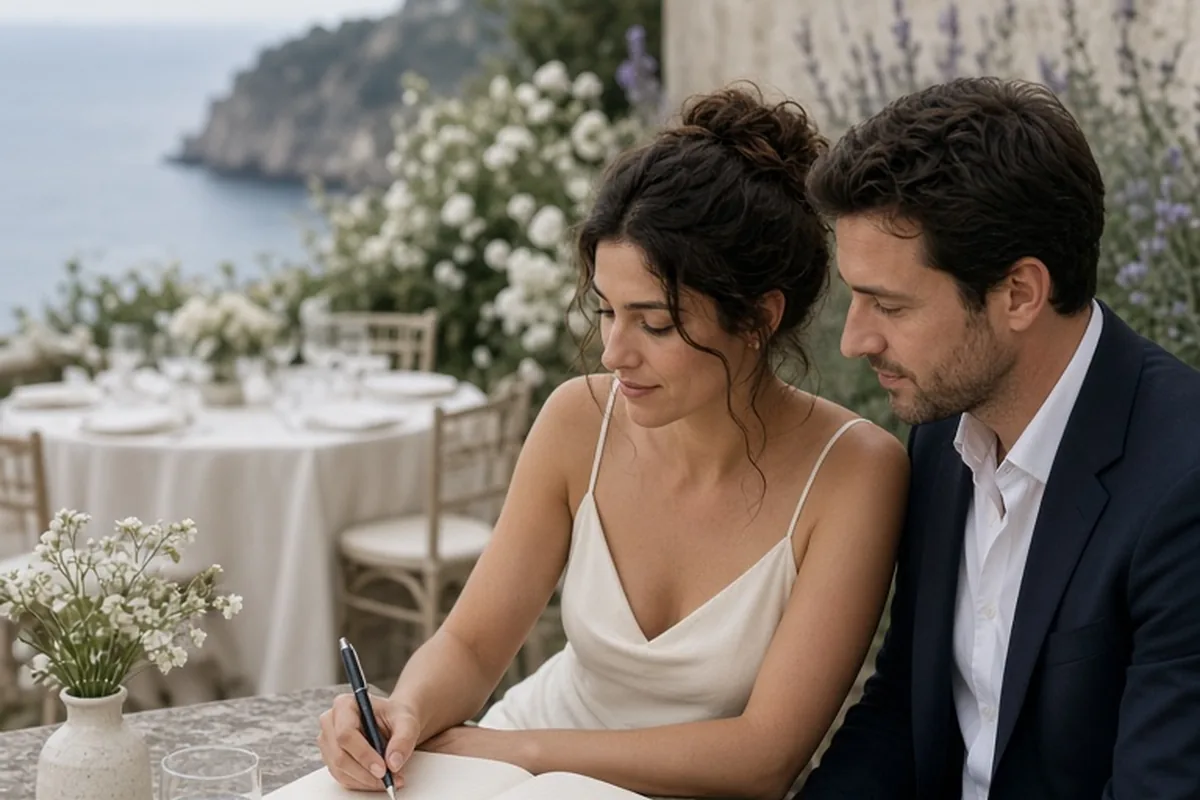
Planning a wedding for 20 guests centers on securing an intimate venue, creating an elevated guest experience, and coordinating a streamlined timeline. Your core checklist covers defining a total budget, booking a private dining space or boutique estate, arranging personalized multi-course catering, securing targeted photography coverage, sending tailored stationery, and building a relaxed day-of run of show that maximizes time spent with your guests.
A twenty-person micro-wedding shifts the focus from managing high-volume crowd logistics to curating a deeply intentional gathering for your inner circle. While smaller in scale, an intimate celebration requires structured planning across vendor contracts, design, hospitality, and scheduling so the day feels thoughtful rather than improvised.
The 20-Guest Wedding Planning Timeline from Booking to Day-Of
A smaller guest list condenses certain aspects of wedding planning, but securing top-tier vendors and unique spaces still requires advance preparation. Nine to twelve months before your wedding date, establish your overall spending limit and select a general location. At this stage, lock in your primary venue, ceremony officiant, and lead photographer. Because intimate parties do not require sprawling ballrooms, your venue options open up significantly to include private dining rooms, boutique inns, art galleries, and scenic outdoor preserves. However, these spaces often hold limited calendar availability for private buyouts, making early reservation essential.
Six to eight months prior, finalize your menu concepts, select your attire, and book any specialty service providers, such as an acoustic soloist, a bespoke baker, or a floral designer. Four to five months out, order custom paper goods or design digital invitations, collect dietary preferences, and finalize your floral vision. Two to three months before the date, conduct hair and makeup trials, purchase rings, and send out invitations with an RSVP deadline set for five weeks before the event.
During the final month, confirm exact guest counts with the caterer, submit seating floor plans, finalize day-of music cues with your musician or sound vendor, and compile your final vendor payment schedule. In the final week, assemble place cards, steam your attire, pack an emergency kit, and deliver decor elements to your coordinator or trusted point person.
- 9 to 12 months: Define budget priorities, draft the 20-person guest list, and secure the venue, officiant, and photographer.
- 6 to 8 months: Confirm catering style, book live acoustic musicians or floral specialists, and order wedding attire.
- 4 to 5 months: Send formal invitations with dietary inquiry cards and finalize color palettes and table linens.
- 2 to 3 months: Complete beauty trials, purchase wedding bands, and draft the ceremony script with your officiant.
- Final month: Lock in final guest counts, review the timeline with all vendors, print menus and place cards, and finalize balances.
Selecting and Securing the Right Venue for a 20-Person Guest List
The primary challenge when selecting a venue for twenty people is avoiding spaces that feel cavernous. A room built to host two hundred guests will swallow a party of twenty, dissipating the natural energy and intimacy of the gathering. Look specifically for spaces designed for smaller groups: historic libraries, private dining rooms within acclaimed restaurants, greenhouse conservatories, boutique bed-and-breakfast properties, or private residential estates. These environments offer built-in architectural character, reducing the amount of floral and structural decoration required to make the room feel complete.
When evaluating commercial venues, clarify whether the agreement is structured as a straight venue rental fee or a food and beverage minimum buyout. High-end restaurants frequently waive room rental fees if your party meets a predetermined minimum spend on dining and wine. For residential properties or private vacation rentals, confirm commercial event policies in writing, verify local amplified sound curfews, ensure adequate restroom capacity for twenty guests plus staff, and inspect on-site parking availability.
- Check room scale to ensure the layout feels full, cozy, and intentional rather than empty.
- Verify food and beverage minimum structures versus flat venue rental rates before signing.
- Review neighborhood noise ordinances, municipal event permit requirements, and parking logistics for private estates.
- Confirm restroom ratios, catering prep space access, and power supply for audio or lighting.
Curating High-Touch Food, Beverage, and Dining Formats
Catering for twenty people allows you to offer a culinary format that would be logistically impossible or cost-prohibitive at a large-scale wedding. Instead of standard banquet chafing dishes or limited two-option plated menus, you can provide an elevated dining experience. Consider a five-course tasting menu paired with regional wines, an interactive chef-table dinner, or a lavish family-style feast served along a single communal banquet table. With a small group, caterers can accommodate detailed dietary preferences and allergies down to the individual seat without disrupting kitchen timing.
Bar service can also become a personalized focal point. Rather than a standard speed bar, you can offer a curated cocktail menu featuring premium spirits, personalized signature drinks with custom garnishes, and tableside wine service during each course. When negotiating catering contracts, verify staffing ratios. For an intimate seated dinner, a ratio of one server per six to eight guests ensures prompt, attentive service, empty plate clearance, and seamless beverage refills throughout the evening.
- Explore multi-course tasting menus, wine-paired dinners, or high-end family-style dining.
- Collect specific dietary preferences directly on your RSVP cards for custom kitchen preparation.
- Plan for a higher staff-to-guest ratio to maintain refined, attentive table service.
- Incorporate personalized beverage touches, such as custom cocktail menus or curated vintage wines.
Sourcing Vendors Tailored to an Intimate Micro-Wedding
Hiring vendors for a 20-person wedding requires a different approach to scope and service hours. Standard wedding photography packages often span eight to ten hours to capture sprawling bridal parties, extensive decor setups, and late-night dance floors. For twenty guests, a focused four-to-six-hour photography package is usually sufficient to capture getting-ready portraits, the ceremony, family formals, cocktail hour, and the beginning of dinner. Discuss documentary or candid-heavy approaches with your photographer, as they will be working in close proximity to your guests throughout the day.
For entertainment, full ten-piece reception bands are rarely suitable for small spaces. Instead, consider a solo acoustic guitarist, a classical string duo, or a jazz trio for the ceremony and cocktail hour. If you transition to a playlist for dinner and lounging, invest in a quality sound system with balanced sound dispersion so background music enhances conversation without overwhelming the room. When hiring florists, focus your budget on a lush ceremony backdrop that can be repurposed behind your dining table, along with detailed centerpieces that look immaculate at eye level.
- Inquire about partial-day or micro-wedding photography coverage to match your condensed schedule.
- Prioritize acoustic musicians, string duos, or curated ambient audio over large live bands.
- Repurpose floral installations from the ceremony alter to the head table or dining room fireplace.
- Brief your officiant on creating a warm, conversational ceremony tone suited for an intimate circle.
Designing the Single-Table Layout and Tablescape Details
The visual centerpiece of a twenty-guest wedding is almost always the dining table. A single long imperial table or a soft U-shaped layout brings everyone together, encouraging collective conversation and shared toasts across the entire group. Because you are decorating only one or two tables rather than fifteen separate rounds, you can allocate your decor budget toward high-impact, tactile elements: heavy linen or velvet tablecloths, handmade ceramic dinnerware, crystal glassware, custom cloth napkins, and tapered beeswax candles in varying heights.
Personalization can extend directly to each guest's place setting. With twenty attendees, you have the opportunity to write individualized, handwritten notes on the back of place cards or menu cards, thanking each person for the role they have played in your lives. Incorporate personalized place cards, individual bread loaves with flavored butters, or bespoke favor boxes containing artisanal treats that reflect your heritage or relationship history.
- Arrange a single long banquet or U-shape table configuration to foster unified group conversation.
- Invest in premium tactile rentals, including specialty glassware, flatware, and textured linens.
- Include handwritten welcome messages or personal thank-you notes at each guest setting.
- Use low floral arrangements and varied candle heights to maintain open sightlines across the table.
Managing Guest List Boundaries and Expectation Etiquette
Limiting a guest list to twenty people requires strict criteria and clear communication. A typical breakdown includes immediate family members (parents, siblings, and grandparents) and a small handful of lifelong friends. When boundaries are strict, it is common practice to omit casual acquaintances, coworkers, and extended relatives like second cousins. Clearly communicate your micro-wedding concept early to prevent hurt feelings, framing the decision around your desire for a quiet, personal ceremony rather than budget constraints or exclusion.
Address the topic of plus-ones and children directly on your invitation envelopes and wedding website. In a twenty-person format, every individual presence changes the dynamic of the room. It is entirely standard to invite only established long-term partners rather than offering open plus-ones. If you plan to host a larger, casual post-wedding celebration or backyard reception at a later date, mention that plan to extended family and friends as a way to share the milestone without expanding the ceremony guest count.
- Establish clear inclusion criteria early, such as immediate family and closest confidants only.
- Address invitations specifically to named individuals to clarify plus-one boundaries gracefully.
- Communicate your choice of an intimate format with warmth and consistency across extended family.
- Consider hosting a casual secondary party later if you wish to celebrate with a wider social circle.
Day-Of Run of Show and Flow Coordination
The timeline of a twenty-person wedding moves much faster than a large-scale event. Group movements, such as seating guests for the ceremony or transitioning from cocktails to dinner, take five minutes instead of thirty. Build a relaxed schedule that allows for genuine lingering, unhurried conversations, and extended toasts. A typical micro-wedding schedule might feature a 30-minute ceremony, a 60-minute cocktail hour, a 2.5-hour leisurely multi-course dinner, followed by an hour of relaxed socializing, dessert, and open toasts.
Even without a massive guest count, having a dedicated logistical coordinator is invaluable. If you choose not to hire a professional day-of coordinator, designate a trusted professional vendor (such as a private venue manager or catering lead) rather than a guest to manage vendor arrivals, oversee dinner timing, coordinate audio cues, and handle payments. This keeps your twenty guests fully immersed as attendees rather than working staff on your wedding day.
- Account for rapid transition times between the ceremony, cocktail hour, and dinner seating.
- Allocate generous time blocks for unhurried dining, storytelling, and spontaneous toasts.
- Designate a venue manager or professional coordinator to oversee day-of vendor logistics.
- Prepare an emergency kit with sewing supplies, stain remover, basic medication, and phone chargers.
Frequently asked questions
Do I need a wedding coordinator for only 20 guests?
While not strictly required, a day-of coordinator or an attentive on-site venue manager is highly recommended. They handle vendor deliveries, cue music, monitor kitchen timing, and resolve unexpected logistical issues so you and your guests can enjoy the celebration without managing tasks.
How long should photography coverage last for a 20-person wedding?
Most couples find that four to six hours of coverage is ideal for a micro-wedding. This window captures final getting-ready moments, the ceremony, formal family portraits, cocktail hour, and dinner toasts without requiring paying for unused late-night coverage.
Can we still have dancing and traditional events with 20 guests?
Yes, you can include first dances, cake cutting, or open dancing if that aligns with your vision. However, many couples opt for a lounge-style atmosphere with background music, unhurried conversation, and extended multi-course dining instead of a traditional high-energy dance floor.
How do we handle invitations and RSVPs for a small guest count?
You can send custom paper invitation suites or high-end digital invitations about eight to ten weeks before the event. Because the guest count is small, you can follow up personally with any unconfirmed guests immediately after your RSVP deadline passes.
Your next step
Draft your definitive 20-person guest list and set your total budget today, then begin reaching out to private dining venues and boutique spaces to check calendar availability for your target dates.