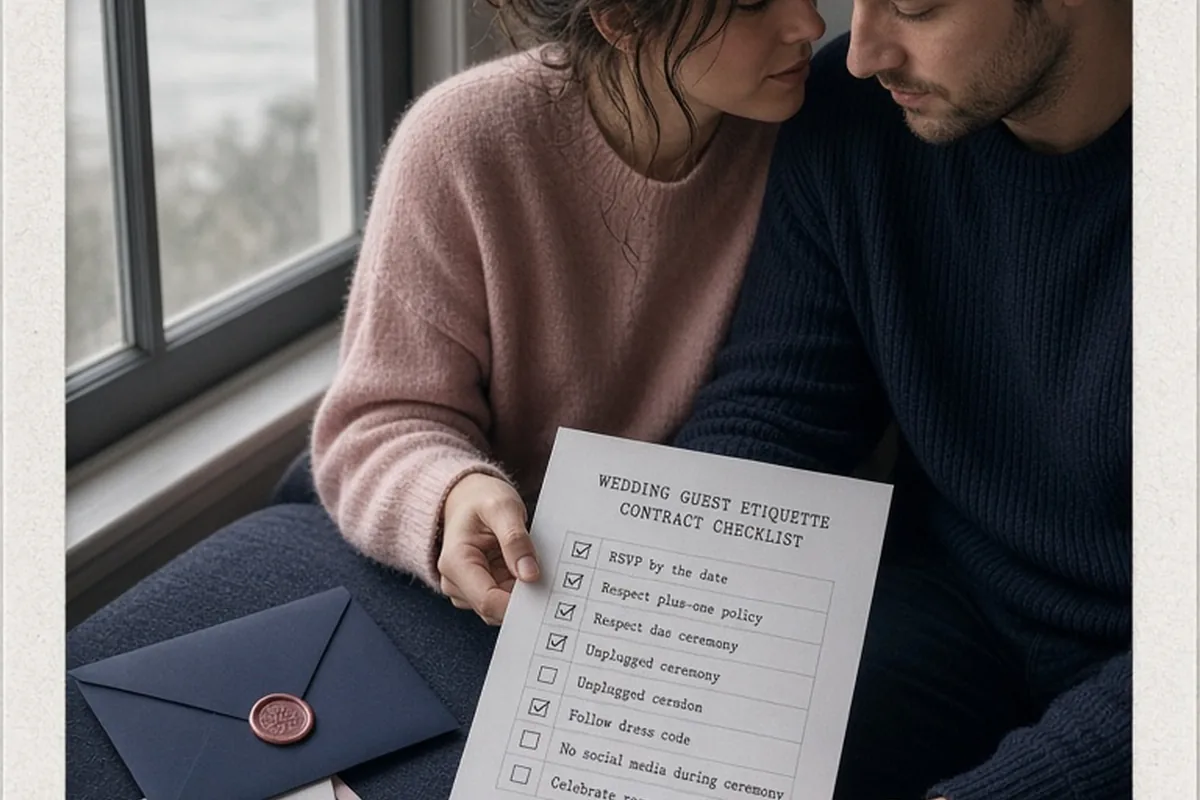
A wedding guest etiquette contract checklist is a structured framework that outlines mutual expectations between hosts and attendees. While rarely a legally binding document, it functions as a clear social compact covering essential responsibilities: honoring RSVP deadlines, adhering to specified plus-one policies, respecting ceremony photo restrictions, following dress codes, and engaging responsibly during the event. It prevents misunderstandings, eliminates costly last-minute surprises, and ensures a seamless celebration for everyone involved.
Navigating modern wedding logistics requires explicit communication, as evolving social norms around digital privacy, guest attire, and event costs frequently create awkward tensions. Putting etiquette expectations into a clear, organized checklist allows couples to share boundaries diplomatically while giving attendees a transparent guide on how to celebrate thoughtfully and considerately.
Drafting the Wedding Guest Etiquette Contract Checklist on Your Invitations
The foundation of any guest agreement begins with the invitation suite and wedding website. When couples leave invitation details ambiguous, guests are forced to guess about plus-ones, children, and deadlines, which frequently leads to awkward corrections later. Clearly printing the specific names of invited individuals on both the outer envelope and the RSVP card eliminates ambiguity from the start. Digital RSVP tools also allow hosts to lock response fields to only the designated party members, preventing attendees from manually adding uninvited companions or children.
Establishing a firm response timeline is equally critical for vendor coordination and budget management. Caterers, rental companies, and venue managers require final headcounts weeks prior to the event date to order supplies, finalize seating arrangements, and schedule service staff. Setting an RSVP deadline at least four to five weeks before the wedding gives the couple adequate time to follow up with non-responders before submitting contractual numbers to their vendors. Couples should state the exact deadline date prominently on physical reply cards and digital portals alike.
- Address invitations specifically to invited individuals rather than using open-ended family titles.
- Specify the exact RSVP deadline with day, month, and year across all correspondence.
- Use digital RSVP forms that restrict entries to pre-loaded guest names to prevent unexpected additions.
- Include dietary preference prompts directly on the response card to accommodate allergies safely.
Setting Clear Attire Expectations and Interpreting Modern Dress Codes
Attire confusion remains one of the most common sources of pre-wedding anxiety for guests and frustration for couples. To ensure guests dress appropriately without stress, hosts should provide a defined dress code along with brief contextual notes on the event website. Standard terminology such as Black-Tie, Formal, Cocktail, or Casual should be accompanied by practical guidance regarding the environment, such as uneven lawn surfaces requiring block heels, historic venues requiring shoulder coverings, or fluctuating evening temperatures in outdoor spaces.
For guests, the fundamental rule of attire etiquette is respecting the requested formality level while avoiding any clothing that competes with the couple. Traditional protocol dictates avoiding shades of white, ivory, cream, and champagne unless the hosts explicitly request an all-white guest aesthetic. Guests should also avoid overly casual fabrics like distressed denim or athletic wear unless specified. If an invitation lists an unfamiliar theme or hybrid category, consulting the wedding website or asking a member of the wedding party well in advance is far better than guessing.
- Define the dress code using standard industry terms alongside specific venue surface and weather notes.
- Guests must avoid white, off-white, and bridal-adjacent hues unless explicitly requested by the couple.
- Choose footwear suitable for the setting, noting gravel, grass, or historic flooring limitations.
- Respect cultural or religious modesty guidelines noted for sacred ceremony venues.
Establishing Unplugged Ceremony Guidelines and Social Media Boundaries
An unplugged ceremony policy allows the couple to share an intimate moment without a sea of glowing screens interrupting the view or blocking professional photographers. When couples decide to enforce a phone-free ceremony, clear signage placed at the venue entrance, a brief note in the printed program, and a polite verbal announcement from the officiant before the processional provide effective reinforcement. These reminders explain the boundary constructively, emphasizing that professional media teams are capturing the moment so guests can remain fully present.
Guests are expected to honor these boundaries completely by keeping phones silenced, stowed away, and out of the center aisle throughout the ceremony. Even during receptions where phone use is encouraged, etiquette dictates holding back on publishing photos or videos of the newlyweds until the couple has had the opportunity to post their own first official images. Furthermore, guests should never post unflattering candid photos, disclose private venue locations in real time, or broadcast livestream footage without prior permission.
- Position visible signage at the ceremony entrance stating that devices must be silenced and stowed.
- Have the officiant make a warm, direct announcement regarding device rules before the processional begins.
- Guests must keep devices out of aisles to prevent obstructing hired photo and video professionals.
- Wait until the couple shares their own wedding media before posting photos of them online.
Managing Plus-Ones, Children, and Guest Capacity Boundaries
Navigating guest list limits requires consistent boundary enforcement from hosts and gracious understanding from invitees. Every additional attendee directly impacts venue fire codes, per-person catering fees, table arrangements, and bar packages. Couples should decide on consistent criteria for plus-ones—such as offering them to married, engaged, or cohabitating partners—and apply that standard uniformly across their social circles to minimize hurt feelings. Clearly phrasing the invitation with 'We have reserved 1 seat in your honor' sets clear, personal limits.
When an invitation does not list a guest or child's name, attendees should accept the invitation as written without asking the couple to make an exception. Contacting a busy couple to negotiate an extra seat puts undue emotional and financial pressure on them during planning. If childcare constraints or travel hurdles prevent attending solo, a guest should politely decline on the RSVP card with warm wishes, rather than bringing an uninvited person to the venue.
- State the exact number of reserved seats explicitly on both digital and physical reply cards.
- Apply standard criteria for plus-ones consistently across all family and friend groups.
- Never show up with unlisted children, companions, or substitution guests without prior host approval.
- Submit a prompt decline if attending without children or a partner is not feasible for your household.
Navigating Travel Schedules, Group Accommodations, and Weekend Timelines
For destination weddings or events involving multiple out-of-town guests, couples should provide comprehensive logistical details early. Reserving hotel room blocks at varying price points, sharing local transportation recommendations, and publishing a clear weekend schedule help guests plan their travel budget efficiently. Couples should also explicitly indicate which auxiliary events—such as welcome drinks, morning-after brunches, or golf outings—are fully hosted versus self-pay, preventing any awkward bill-splitting moments at the table.
Guests traveling to multi-day celebrations are responsible for booking their accommodations before published cutoff dates, as hotel blocks automatically release unsold rooms back to general inventory weeks ahead of time. Attendees must also prioritize punctuality for scheduled shuttles, ceremony start times, and seated dinners. Arriving late to a ceremony can disrupt the entrance or lock attendees out of the chapel until the processional finishes, creating avoidable friction for everyone involved.
- Secure room blocks and provide airport transfer details at least six to eight months in advance.
- Clarify which weekend itinerary gatherings are hosted meals versus optional, self-pay activities.
- Book reserved lodging before hotel block cutoff dates to secure discounted group pricing.
- Arrive at least fifteen to twenty minutes prior to the published ceremony time to ensure smooth seating.
Handling Gifting Traditions, Registries, and Day-Of Celebration Hospitality
Gift-giving etiquette has evolved significantly alongside online registries, cash funds, and direct shipping options. Hosts should house registry information exclusively on their wedding website or an auxiliary details insert, keeping direct registry references off formal ceremony invitations to maintain traditional decorum. Couples must also ensure a secure, designated card box is monitored during the reception and commit to sending personalized, handwritten thank-you notes within three months of the wedding date.
Guests should focus on selecting items directly from the couple's curated registry or contributing to their established home or honeymoon fund. Bulky, boxed gifts should ideally be ordered online and shipped directly to the couple's home address prior to the wedding day, relieving the hosts and their families from transporting heavy packages at the end of the reception. At the event itself, guests should enjoy the hospitality responsibly, treating venue staff and bartending teams with respect throughout the night.
- Host registry links on your event website rather than printing them on the main formal invitation.
- Ship physical registry items directly to the couple's home rather than carrying large boxes to the venue.
- Provide a secure, monitored drop box for monetary cards and personal letters at the reception.
- Send personalized handwritten thank-you messages to all gift contributors within three months.
Frequently asked questions
Is a wedding guest etiquette contract legally binding?
No, a wedding guest etiquette contract is not a legal document. It serves as a social agreement and clear communication tool to help couples and attendees navigate expectations regarding RSVPs, dress codes, photo policies, and venue conduct.
How do couples politely tell guests that children are not invited?
Address the invitation strictly to the adult individuals and state the policy clearly on the wedding website FAQ page. A phrase like 'While we love your little ones, our celebration will be an adults-only event' communicates the rule clearly and warmly.
What should an attendee do if they need to change their RSVP after the deadline?
Contact the couple directly and immediately with an honest, concise explanation. If a sudden emergency prevents attendance, apologize for the inconvenience so the couple can notify their caterer and update their seating chart as early as possible.
How long do guests have to send a wedding gift?
While traditional etiquette guidelines allowed up to a year, modern protocol recommends sending a wedding gift within two to three months of the celebration. Shipping gifts directly through the couple's digital registry before the wedding date is the most convenient approach.
Your next step
Audit your current wedding invitation suite or event website today to ensure all RSVP deadlines, dress codes, plus-one policies, and ceremony photo guidelines are clearly defined before sending them to guests.