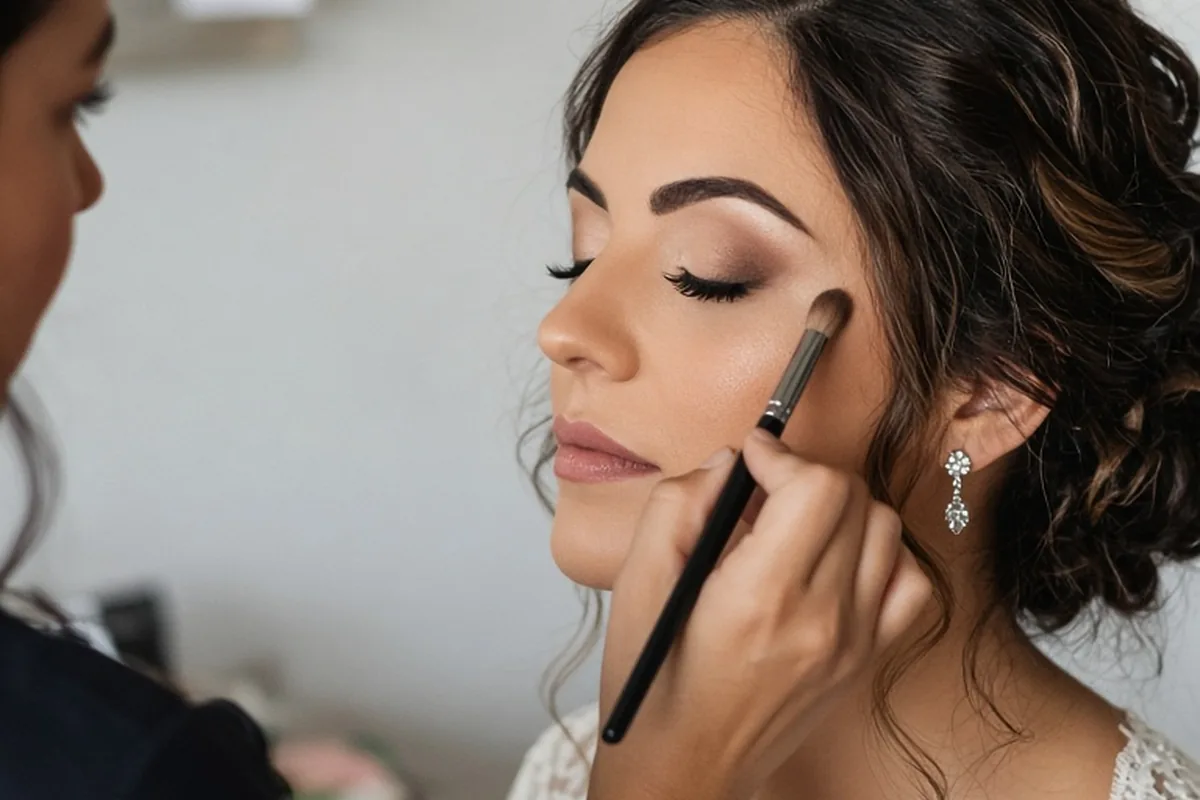
A wedding makeup artist cost depends on artist experience, geographic region, service location, bridal party size, and whether packages bundle trials, premium lashes, or touch-up kits. Because independent professionals and beauty agencies establish proprietary rate cards rather than standardized pricing, quotes vary significantly. To determine your actual expense, request itemized estimates separating bridal application, attendant services, travel surcharges, preview trials, and day-of hourly standby fees.
Securing bridal beauty services requires balancing aesthetic expectations against event timelines and formal vendor agreements. Understanding how makeup artists structure their rates ensures you budget accurately, avoid unanticipated day-of surcharges, and select a reliable professional equipped to deliver long-lasting results.
The Core Service Components Included in Bridal Beauty Contracts
Bridal beauty contracts represent specialized event services rather than everyday salon appointments. A comprehensive bridal quote typically covers an extensive consultation, tailored skin preparation, customized foundation formulation, precision eye makeup, contouring, custom false lash application, and specialized long-wear setting techniques designed to withstand tears, humidity, and multi-hour wear under high-definition photography. The bride's application requires significantly more time and product nuance than standard event styling, typically spanning sixty to ninety minutes of detailed work.
In contrast, services for bridesmaids, mothers, and attendants are structured as secondary applications that focus on complementary, cohesive aesthetics in a shorter window, usually thirty to forty-five minutes per person. Professional quotes distinguish between the lead bridal application and attendant services because the bride's service often includes exclusive access to luxury skincare products, specialized airbrush formulations, full-size or deluxe touch-up supplies, and extensive pre-wedding communication regarding scheduling and skin prep regimens.
Major Variables That Shift Wedding Makeup Quotes
Regional geography and local market demand serve as primary drivers for overall beauty costs. Artists operating in major metropolitan areas or premier resort destinations carry higher overhead expenses, commercial insurance rates, and product costs, which are reflected in their base rates compared to stylists in rural communities. The artist's level of demand, years of editorial or bridal experience, and industry reputation also influence pricing, with master artists and high-demand studio owners charging higher rates than newer independent contractors or junior associates.
The overall size of your wedding party directly dictates staffing logistics and total labor expenses. When a party requires more applications than a single stylist can execute within the morning timeline, the lead artist must hire and coordinate secondary artists or assistants. This introduces assistant placement fees or separate day-of labor minimums to ensure all attendants are finished on schedule without compromising application quality or pushing back photographer arrival times.
Budgeting for Bridal Preview Trials and Pre-Wedding Consultations
A makeup trial is a standalone, collaborative working session designed to test skin compatibility, assess product longevity, and refine the bridal look well before the wedding day. While some artists package one preview session directly into their premier bridal collections, many list trials as a separate line item. During this session, the artist analyzes your skin undertones, tests foundation formulations under both natural daylight and indoor lighting, experiments with lash styles, and documents the exact products used with photographic charts to ensure identical execution on the wedding morning.
Opting to skip a trial carries significant aesthetic and logistical risks, as unexpected allergic reactions, foundation oxidation, or stylistic miscommunications are difficult to resolve under tight wedding morning schedules. If you undergo major seasonal changes in skin tone or decide to alter your wedding theme or neckline, artists generally permit scheduling a secondary preview session, billed at their standard trial rate, to test the revised concept.
Hidden Service Fees, Travel Surcharges, and Scheduling Add-Ons
Travel fees are among the most common additions to an on-location makeup invoice. Most artists define a complimentary local service radius from their home studio or base zip code, applying a per-mile surcharge or standard federal mileage rate for distances beyond that perimeter. If your getting-ready location involves toll roads, paid hotel valet parking, remote access roads, or flights, those out-of-pocket expenses are passed directly to the client and should be explicitly outlined in the contract.
Timeline constraints can also trigger supplemental fees. Early morning start charges are routinely assessed if an artist must begin setup before standard business hours, such as before 6:00 AM or 7:00 AM, to accommodate early ceremonies or large bridal parties. Furthermore, if you request the artist to remain on-site after the initial morning applications to provide touch-ups during formal portraits, assist with veil placement, or transition your look for the reception, you will encounter hourly standby rates or second-look change fees.
Practical Approaches to Lower Your Wedding Party Beauty Bill
Couples seeking to manage beauty expenses can adopt several practical adjustments without sacrificing service quality. One effective method is booking services in-salon rather than requesting on-location travel, provided your morning schedule and venue proximity accommodate traveling to the studio. In-salon bookings eliminate travel surcharges, setup fees, and minimum headcount requirements that artists often impose for on-site travel on peak weekend dates.
Another viable approach involves prioritizing professional applications exclusively for the bride and immediate VIPs, allowing attendants the choice to opt in at their own expense or complete their own makeup. Additionally, scheduling your preview trial on the morning of your engagement photo shoot, bridal shower, or rehearsal dinner maximizes value by utilizing a single professional application for multiple wedding-related milestones.
Direct Questions to Ask Before Signing a Makeup Artist Contract
Before submitting a retainer, clarify hygiene and sanitation protocols to ensure client safety. Ask the artist to detail how they sanitize cream palettes, clean synthetic and natural hair brushes between clients, use disposable wands for mascara and lip products, and decant liquid formulas onto stainless steel palettes. Clear sanitation standards protect your bridal party from cross-contamination and reflect the professional caliber of the vendor.
Contractual emergency contingencies require equal scrutiny. Inquire about the specific backup plan if the lead artist encounters an unexpected illness, travel emergency, or severe delay on your wedding morning. Reliable artists and agencies maintain formal networks of peer professionals and should state in writing whether an equivalent associate artist will be dispatched or what portion of the retainer is refundable if a substitute cannot be provided.
How to Request, Compare, and Verify Local Vendor Quotes
When reaching out to prospective makeup artists, provide identical project parameters to obtain accurate, comparable estimates. State your wedding date, the exact get-ready address, the precise time everyone must be completed for photography, the total number of individuals requesting makeup, and whether you require a preview session or extended day-of touch-up coverage. Standardizing your inquiry ensures that every returned proposal accounts for all necessary labor, assistants, and travel costs.
Examine portfolios beyond curated highlight reels by requesting unedited galleries featuring clients with diverse skin tones, textures, and age groups in natural daylight. Review client feedback across independent wedding platforms, paying particular attention to comments regarding punctuality, adherence to the morning schedule, and calmness under pressure. Finally, verify that the artist maintains professional commercial liability insurance, which many high-end venues require before granting vendor access to bridal suites.
Illustrative Scenarios
Balancing On-Site Minimums with Group Timelines
An illustrative client organized a wedding morning with seven attendants at an off-site estate. Initial inquiries revealed that booking a single lead artist would require a 5:00 AM start time to finish all faces before morning photography, incurring an early morning surcharge. By reviewing full proposals, the client chose a bridal beauty team that included a lead artist and a contracted second artist for a flat assistant fee. This structure consolidated the styling window to three hours, eliminated early morning fees, and allowed the group to start at a relaxed hour without exceeding the planned beauty budget.
Key point: Comparing full timeline logistics alongside base rates reveals whether paying an assistant fee provides better practical value than absorbing early start surcharges.
Frequently asked questions
Is a bridal makeup trial mandatory before the wedding?
While not legally mandatory, most professional artists strongly recommend or require a preview session in their contracts. The trial allows both parties to test skin compatibility, evaluate how products hold up over several hours, and fine-tune colors to eliminate guesswork on the wedding day.
How far in advance should I book my wedding makeup artist?
Bridal beauty professionals typically book peak dates nine to twelve months in advance, especially for Saturday dates in popular wedding seasons. Booking early secures your date on their calendar and locks in current package pricing before annual rate updates.
Are gratuity and tips included in the makeup contract total?
Some beauty agencies and artists automatically include an 18 to 20 percent gratuity fee on the final invoice, while independent artists may leave tipping entirely to the client's discretion. Review your contract's payment schedule to clarify whether gratuity is already factored into the balance.
What is the difference between airbrush and traditional bridal makeup?
Airbrush makeup uses a specialized compressor to mist fine layers of silicone or water-based foundation across the skin, offering lightweight, water-resistant coverage that performs exceptionally well in heat. Traditional makeup relies on liquid, cream, or powder formulas blended with brushes and sponges, allowing for highly customized texture adjustments on dry or textured skin.
Your next step
Compile your wedding morning timeline, venue location, and confirmed party count, then request detailed, itemized quotes from three local beauty artists to compare service terms and travel policies.