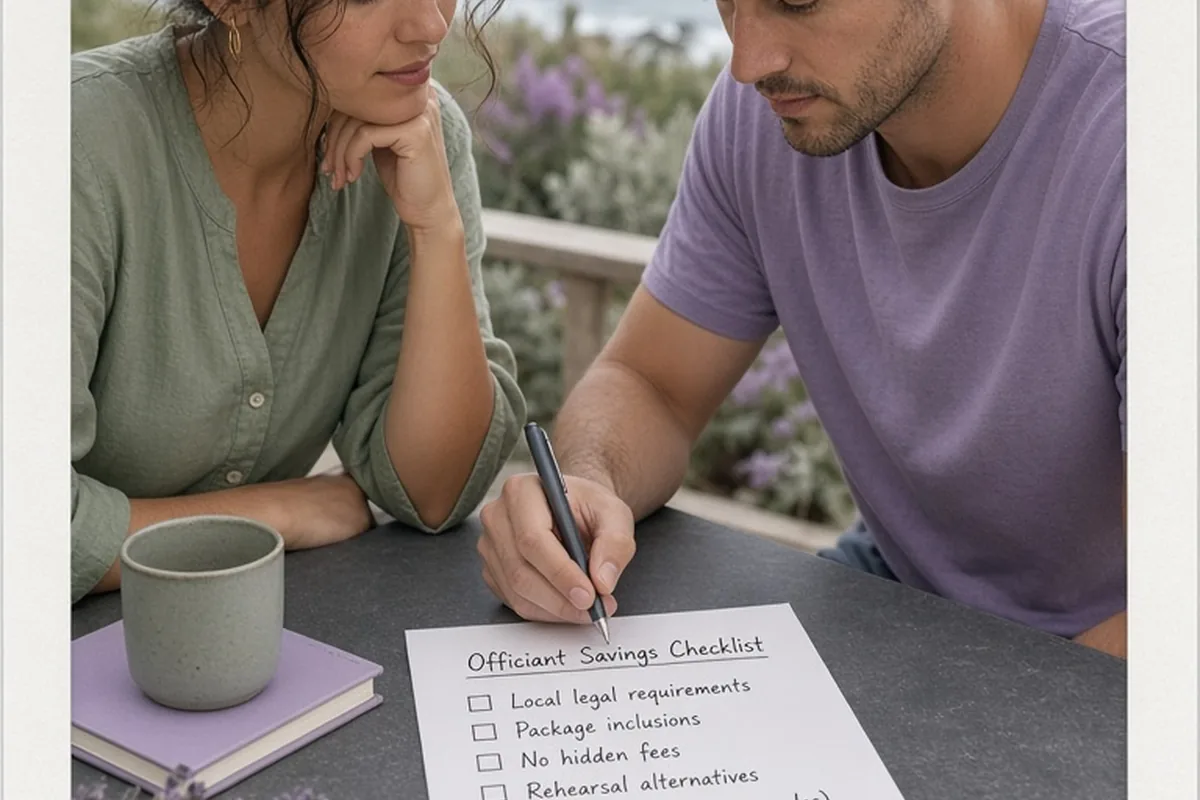
A wedding officiant savings checklist helps couples reduce ceremony expenses by evaluating professional versus lay officiants, auditing contract line items, minimizing rehearsal and travel surcharges, and streamlining custom script development. By identifying baseline legal requirements early, comparing standard service packages against itemized fees, and managing logistical requirements such as marriage license handling and sound equipment, couples can significantly trim ceremonial costs while ensuring their marriage remains fully legally binding.
Planning a memorable ceremony does not require overspending on ceremonial leadership, yet officiant fees often carry unexpected add-ons for rehearsals, travel, and custom script revisions.
Verify Local Legal Requirements and Officiant Categories
Before making budget decisions or eliminating potential ceremony leaders, you must establish the legal baseline for your specific wedding jurisdiction. Marriage laws vary significantly by state, county, and municipality within the United States. Certain regions permit any ordained individual, including those ordained online through universal ministries, to solemnize a marriage, while others require specific county-level registration, a temporary civil officiant license, or an established religious affiliation. A few jurisdictions even allow self-solemnization, eliminating the legal requirement for a third-party officiant altogether.
Failing to confirm these statutory rules early can create costly emergencies close to your wedding date. For example, if you plan to save money by having a close friend lead the ceremony, discover two weeks prior that your county clerk requires an extensive background check or a notarized credential submission, you may face rush processing fees or have to hire a certified professional on short notice at premium rates. Contact your local county clerk or marriage bureau to obtain written rules on who may legally sign your marriage license and what documentation must accompany the returned certificate.
- Check state and local statutes regarding online ordination validity and municipal registration mandates.
- Determine whether your jurisdiction permits self-solemnization or requires a deputy commissioner of civil marriages.
- Confirm the exact timeline and return requirements for submitting the completed marriage license after the ceremony.
Audit Professional Officiant Package Inclusions and Hidden Fees
Professional officiants generally offer multiple package tiers, ranging from a simple legal signing to fully bespoke ceremonial productions. When gathering quotes, look beyond the headline rate to evaluate what is included. Basic packages often cover a brief, standardized ceremony script and the administrative filing of your marriage license. Premium tiers frequently bundle unlimited script revisions, extensive relationship interviews, attendance at your rehearsal, and coordinated cue management with your sound engineer or musician.
Hidden fees can quickly inflate a seemingly affordable quote. Officiants may charge extra for travel beyond a specific mileage radius, parking or toll reimbursements, holiday weekend premiums, or prolonged waiting periods if the ceremony starts behind schedule. Request an itemized proposal detailing the baseline ceremony fee, travel thresholds, overtime rates, and rehearsal attendance costs so you can accurately compare multiple professional bids against your budget.
- Request itemized pricing for basic civil signings, standard scripted ceremonies, and custom narrative scripts.
- Ask about travel surcharges, including mileage thresholds, parking allowances, and overnight lodging requirements.
- Clarify overtime policies to understand fees charged if the processional starts late due to photography delays.
Calculate the True Cost of a Friend or Family Officiant
Inviting a loved one to officiate is widely considered the ultimate budget-saving strategy, but the financial savings are rarely absolute. While a friend may not charge a professional service fee, several ancillary expenses usually accompany this choice. You may need to cover their ordination fee, local county registration fees, application notarizations, and travel or accommodation expenses if they live out of town. In addition, couples often purchase a formal thank-you gift or host a celebratory dinner to express their appreciation for the significant time investment.
Operational gaps also introduce indirect costs. An inexperienced friend will not typically know how to run a rehearsal, coordinate processional timing with the venue staff, or test the sound equipment for vocal projection and wind interference. If you hire a professional day-of coordinator specifically to compensate for an amateur officiant, or if you must rent dedicated amplification equipment because your officiant does not own a wireless microphone system, the savings of bypassing a professional vendor can evaporate quickly. Weigh these hidden operational costs against the cost of an experienced celebrant.
- Tally administrative expenses, including ordination certificates, clerk registration fees, and document notarizations.
- Account for appreciation costs such as thoughtful gifts, rehearsal dinner invitations, and potential travel subsidies.
- Assess whether you need additional rentals, such as a ceremonial binder, lapel microphone, or day-of coordination support.
Eliminate Rehearsal Fees Through Alternative Walk-Through Methods
Having your officiant attend a formal rehearsal the day before the wedding is one of the largest optional line items in a ceremony contract. Officiants frequently charge a dedicated rehearsal fee equal to half or more of their ceremony rate because it requires an additional block of time, evening travel, and venue coordination. Unless your ceremony involves complex religious rituals, intricate choreography, or numerous participants who require detailed staging instruction, an officiant's physical presence at the rehearsal is rarely mandatory.
You can eliminate this expense by running the rehearsal independently with your venue coordinator, wedding planner, or a detail-oriented member of the wedding party. The primary purpose of a rehearsal is establishing the processional order, spacing at the altar, microphone handoffs, and the recessional exit. You can review the script, cue markers, and positioning with your officiant via a thirty-minute video call prior to wedding week, allowing you to run the physical staging at the venue without incurring extra professional labor charges.
- Schedule a virtual pre-wedding call with your officiant to finalize ceremonial cues, pauses, and mic transitions.
- Designate a venue coordinator or trusted friend to run processional timing and bridal party spacing at the venue.
- Provide a printed order-of-service timeline to all wedding party members in advance to streamline the walk-through.
Streamline Custom Ceremony Scripting to Avoid Revision Upgrades
Customization is a major driver of professional celebrant costs. Bespoke services that involve writing personalized love stories, interviewing family members, and conducting multi-round editorial reviews require hours of preparation, which is reflected in higher tier pricing. Couples who want a personalized ceremony without paying top-tier custom rates can often select a standard ceremony package and supply their own vow inserts, curated readings, and personal touches within an existing template structure.
To keep scripting costs down, ask potential officiants if they offer a modular script library. Many professionals maintain a selection of standard secular, spiritual, interfaith, or contemporary templates that allow couples to mix and match elements such as the opening welcome, declaration of intent, ring exchange wording, and closing blessing at no additional charge. By drafting your own vows and choosing pre-written readings, you achieve meaningful personalization while keeping your officiant in their most economical package tier.
- Select a standard modular template and customize it using your own readings, personal vows, and chosen blessings.
- Avoid multi-round custom narrative development packages if your priority is a concise, meaningful ceremony.
- Submit all script adjustments and approved readings well before contractual deadlines to avoid rush revision fees.
Negotiate Scheduling, Bundling, and Off-Peak Ceremonies
Vendor flexibility can unlock significant savings when securing an officiant. Peak wedding dates, particularly Saturday afternoons and evenings during late spring and early autumn, command maximum rates. If you are hosting a weekday wedding, a Sunday morning brunch celebration, or an intimate morning ceremony prior to an evening reception, ask officiants if they offer reduced rates for non-peak time slots that do not conflict with their primary weekend bookings.
Bundling services represents another practical savings avenue. Some professional officiants offer combined packages that include day-of coordination, premarital coaching, audio equipment rental, or acoustic ceremony music. Alternatively, independent officiants who work frequently with your chosen venue or photography team may offer modest referral discounts. Always ensure that any bundled vendor possesses genuine competency in ceremony management rather than simply tacking on an underperforming add-on service.
- Inquire about non-peak discounts for Friday, Sunday, weekday, or daytime ceremony schedules.
- Explore bundled services where a single professional or team provides ceremony sound, officiating, or coordination.
- Ask venue coordinators if they have trusted officiants on their preferred vendor lists who offer venue-partner discounts.
Complete the Wedding Officiant Savings Checklist
A structured checklist ensures you evaluate every financial and operational detail before signing a contract or assigning ceremony duties. Work through these specific checkpoints systematically during your vendor search and budget allocation phases to protect your funds and eliminate last-minute administrative surprises.
Maintain all documentation, written quotes, and municipal filing instructions in a centralized wedding folder. Tracking these requirements prevents duplicated effort, ensures transparent communication with your ceremony leader, and guarantees your marriage paperwork is handled accurately without incurring unnecessary fees.
- Legal Verification: Confirm municipal registration requirements, self-solemnization allowances, and license turnaround deadlines with your local clerk.
- Candidate Screening: Compare at least three written, itemized quotes outlining baseline ceremony fees, travel allowances, and script inclusion tiers.
- Package Selection: Choose a mid-tier or standard modular script package, supplying your own personal vows and readings to avoid custom writing surcharges.
- Rehearsal Decision: Opt out of in-person officiant rehearsal attendance in favor of a virtual planning session and a coordinator-led physical walk-through.
- Logistical Audit: Confirm who provides the sound equipment, stands, and ceremonial binder to avoid duplicate equipment rentals.
- Contract Review: Check for clear terms regarding late starts, mileage caps, payment schedules, and legal filing responsibilities after the ceremony.
Frequently asked questions
Is it always cheaper to have a friend officiate our wedding?
Not necessarily. While a friend may not charge a professional fee, you must account for ordination costs, local jurisdiction registration fees, gifts, and potential rentals like microphones or sound systems. Inexperienced officiants may also necessitate hiring a day-of coordinator to manage ceremony staging, which can offset the initial savings.
Can we legally eliminate an officiant entirely to save money?
This depends entirely on your location. A select number of states and jurisdictions permit self-solemnization, allowing couples to legally marry without an officiant or third-party witnesses. You must verify whether your specific state and county permit self-solemnization before choosing this approach.
What is the most effective way to lower a professional officiant's quote?
The most effective approach is declining optional add-ons, such as in-person rehearsal attendance and full-custom narrative script writing. Choosing a standard ceremony template, providing your own vows, and booking a professional who lives close to your venue to avoid travel fees will significantly lower the total cost.
Are officiant travel fees standard practice?
Yes, most professional officiants include a standard travel radius, such as 25 to 30 miles, in their base package. Travel beyond that threshold typically incurs a per-mile surcharge, toll reimbursement, or lodging coverage for destination venues. Hiring a local professional minimizes these extra line items.
Your next step
Contact your local marriage license bureau today to confirm legal officiant requirements, then request itemized, baseline-only quotes from three local professionals.