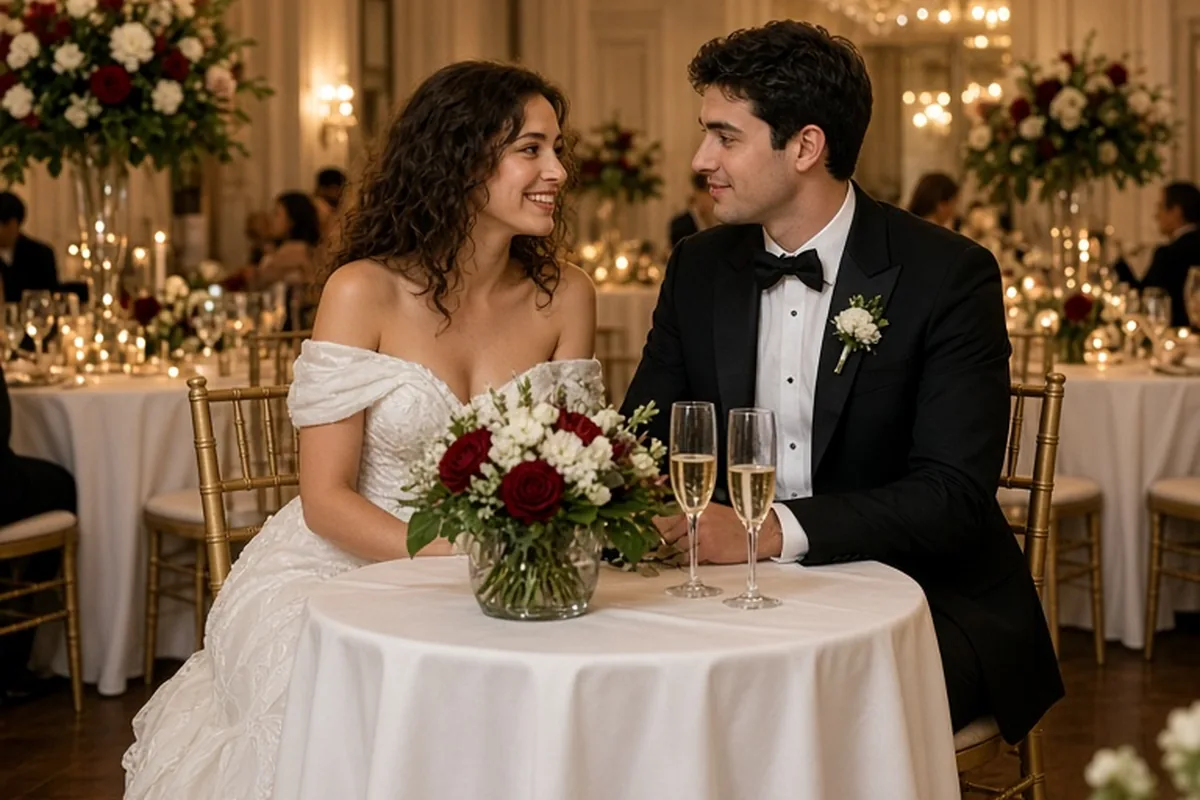
At a wedding reception, the newlyweds sit at a central sweetheart table or head table, flanked by their wedding party or immediate family. The tables closest to the couple are reserved for parents, grandparents, and siblings. Next come extended family and close friends, while colleagues and acquaintances sit farther out. If parents are divorced or remarried, host etiquette recommends giving each parent their own hosted table to honor their role and prevent discomfort.
Arranging a wedding reception seating chart is one of the most socially sensitive stages of wedding planning, balancing spatial logistics with family diplomacy and guest comfort.
Choosing Between a Head Table, Sweetheart Table, and King's Table
The focal point of any reception layout is where the couple sits, and this initial decision determines the flow of the entire room. Traditionally, couples sat at a long head table facing the room alongside their bridesmaids and groomsmen. While this setup highlights the wedding party, it frequently separates attendants from their significant others and dates, leaving partners stranded at unfamiliar tables across the room. Modern hosting etiquette increasingly views this separation as an unnecessary inconvenience for the people who dedicated time and money to support the wedding day.
A sweetheart table provides an intimate alternative by seating only the newly married couple at a small table facing their guests. This option offers the pair a brief chance to talk and eat together amid a busy reception schedule. More importantly, it frees the bridal party to sit at surrounding tables with their spouses, dates, or mutual friend groups. A sweetheart table also neutralizes potential family disputes over who sits closest to the couple, as no single parent or friend group takes precedence over the other.
A King's table presents an elegant middle ground that is gaining popularity. This arrangement uses an oversized, double-sided banquet table where the couple sits alongside the wedding party and their dates, or alongside immediate family members. Because guests sit on both sides facing one another rather than in a single line looking out at the crowd, it encourages natural conversation and creates a communal dinner atmosphere. Choosing between these three setups comes down to your venue footprint, bridal party size, and how much private time versus social engagement you prefer during dinner.
Placing Parents, In-Laws, and Blended Families Without Friction
Host tables traditionally flank the couple's table, occupied by parents, grandparents, officiants, and very close family friends. In a straightforward family structure, both sets of parents share a single primary table with grandparents and siblings who are not in the wedding party. This arrangement symbolizes the joining of two families and gives both sets of parents an equal place of honor near the dance floor and speeches. However, cramming too many relatives into one round table can create uncomfortable crowding, so separating parents into two distinct tables of honor—one for each family—is completely acceptable and standard practice.
Blended family arrangements require thoughtful diplomacy rather than rigid adherence to vintage rulebooks. When parents are divorced, do not seat them together out of a misplaced sense of tradition unless they maintain an exceptionally warm, cooperative friendship. Forcing estranged parents to share breadsticks and champagne invites unnecessary tension on a celebratory day. Instead, assign each biological parent their own hosted table equidistant from the couple. Seat each parent alongside their current spouse, immediate relatives, and close family friends who offer emotional support and positive energy.
Equidistance is the central rule of fairness when managing separated parents. If the mother of the bride sits at Table 1 directly beside the dance floor, placing the father of the bride at Table 14 in the back corner communicates an intentional hierarchy that guests and family members will immediately notice. Keep both tables on the same sightline toward the head table. If step-parents raised the bride or groom alongside biological parents, acknowledging their role with equal seating visibility preserves harmony and honors the care they contributed.
Organizing the Bridal Party and Plus-Ones Comfortably
If you select a traditional head table, you must decide how to handle wedding party dates. Seating plus-ones with strangers while their partner sits on display at an elevated table can leave dates feeling isolated during cocktails and dinner. If space permits, extending the head table into a U-shape or placing a wide banquet table allows dates to sit directly opposite or beside attendants. When venue space prevents including dates at the main table, group all bridal party significant others together at a single, prime table positioned right next to the head table so couples can reconnect immediately once speeches conclude.
When you opt for a sweetheart table, dividing your wedding party into two or three peer-focused tables is usually the most considerate approach. Group attendants by social familiarity, such as childhood friends, college roommates, or family siblings. This allows attendants to unwind, enjoy their meals, and laugh freely without the stiffness of being watched by an entire banquet hall. Ensure these attendant tables remain near the front of the room, reflecting their honored status in the celebration.
Grouping Extended Family, College Friends, and Work Colleagues
Once VIP tables are designated, arranging remaining guests depends on creating natural conversational affinity. Start by clustering guests who share common history or shared interests: extended maternal relatives, high school friends, graduate school peers, or current office colleagues. People enjoy receptions most when they are seated with at least two or three individuals they already know. Resist the urge to mix unrelated groups entirely in an attempt to force new friendships, as social mixing naturally occurs later around the bar and dance floor.
When you have small clusters of two or three people who do not belong to a larger defined group, pair them with guests who share comparable life stages, humor, or conversational styles. For example, seat a couple from your neighborhood with another couple who shares similar hobbies or creative professions. Place outgoing, friendly acquaintances at tables that might otherwise feel quiet, as a warm conversationalist helps break the initial ice. Avoid designating an obvious catch-all table where completely unrelated solo guests are grouped together, which often feels dismissive.
Navigating Difficult Guest Dynamics, Estrangements, and Solo Guests
Every wedding guest list contains complicated interpersonal histories, from bitter relationship breakups among mutual friends to long-standing ideological disagreements between relatives. Seating etiquette does not require pretending these rifts do not exist; it requires designing a buffer that keeps the peace. If two guests have a volatile history, seat them at opposite sides of the room with their backs facing one another's tables. Ensure neither party has to cross the other's immediate path to access the bar, buffet line, or restrooms.
Solo attendees who do not have a plus-one deserve special consideration. Never create a singles table, which highlights unattached status and frequently makes guests uncomfortable. Instead, integrate single guests into tables where they share genuine connections, such as alongside a married cousin they like or former classmates who can easily include them in shared memories. When a guest truly knows no one besides the couple, seat them next to your most empathetic, welcoming friends who naturally engage newcomers in warm conversation.
Practical Room Layouts: Proximity to Speakers, Restrooms, and Dance Floors
Good seating etiquette extends beyond social relationships into physical comfort and venue ergonomics. Older relatives and grandparents should be seated at tables close enough to see and hear speeches clearly, but far enough away from heavy DJ speakers and subwoofers to avoid overwhelming noise. Position older guests and attendees with limited mobility along wide, unblocked aisles that offer smooth paths to exits and restrooms without requiring them to weave between packed chairs.
Conversely, younger peer groups, college friends, and bridal party attendants thrive when placed right alongside the dance floor. These tables naturally generate high energy, cheer loudly during introductions, and quickly transition onto the floor once music begins. Families with young children or infants should be seated along the perimeter near hall exits, giving parents a quick, quiet escape route if a toddler becomes fussy during toasts or dinner service.
Sightlines deserve careful auditing before finalizing table coordinates. Avoid placing tables behind large architectural pillars, decorative draping, or catering staging areas where guests feel excluded from the main action. If round banquet tables feature tall floral centerpieces, verify that arrangements are either low enough to talk across or elevated high on thin pedestals above eye level, ensuring guests can converse freely without leaning around foliage.
Escort Cards, Place Cards, and Seating Charts: Guiding Guests to Their Seats
A common etiquette question is whether to assign specific chairs or simply assign tables. For plated dinners with pre-selected meal choices, assigning specific seats using place cards is virtually mandatory for catering staff, who rely on place card indicators to distribute beef, fish, or vegetarian entrees correctly. For buffet, family-style, or cocktail-style receptions, assigning guests to a designated table while allowing them to choose their own seat at that table offers an ideal balance of order and autonomy.
To direct guests efficiently into the dining space, display a large seating chart or an alphabetical escort card table near the entrance of the cocktail hour transition area. Always alphabetize guest names by last name rather than grouping names by table number. When charts are listed by table number, guests are forced to scan every single table list to find their names, causing bottlenecks and delays at the venue doors. Clear signage and legible typography ensure guests find their tables smoothly, setting a calm and welcoming tone for the reception dinner.
Frequently asked questions
Can we have open seating instead of a formal seating chart?
Open seating works well for casual gatherings under fifty guests, but it often causes confusion at larger weddings. Without assigned tables, groups struggle to find enough contiguous empty chairs, leaving couples split apart and pushing latecomers to awkward single seats. Assigning tables keeps dinner service running on schedule.
Where should the wedding officiant sit during the reception?
If the officiant is a close friend or family member, seat them with their natural social circle or family group. If the officiant is a hired professional or member of the clergy who accepts your reception invitation, etiquette calls for seating them at a table of honor alongside parents or grandparents.
How should we handle seating children and teenagers?
Young children under age eight are almost always happiest seated directly beside their parents so meals and supervision remain manageable. Older children, pre-teens, and teenagers can either sit with their immediate families or share a dedicated youth table if there are enough cousins or peers of similar ages to make it fun.
What is the best way to seat divorced parents who do not get along?
Seat each parent at their own hosted table with their respective partners, close relatives, and supportive friends. Position both tables at identical distances from the newlyweds on opposite sides of the room, ensuring equal honor without putting them in direct proximity.
Your next step
Sketch your venue floor plan, decide between a sweetheart or head table, and assign guests to tables by natural social affinity while honoring physical accessibility needs.