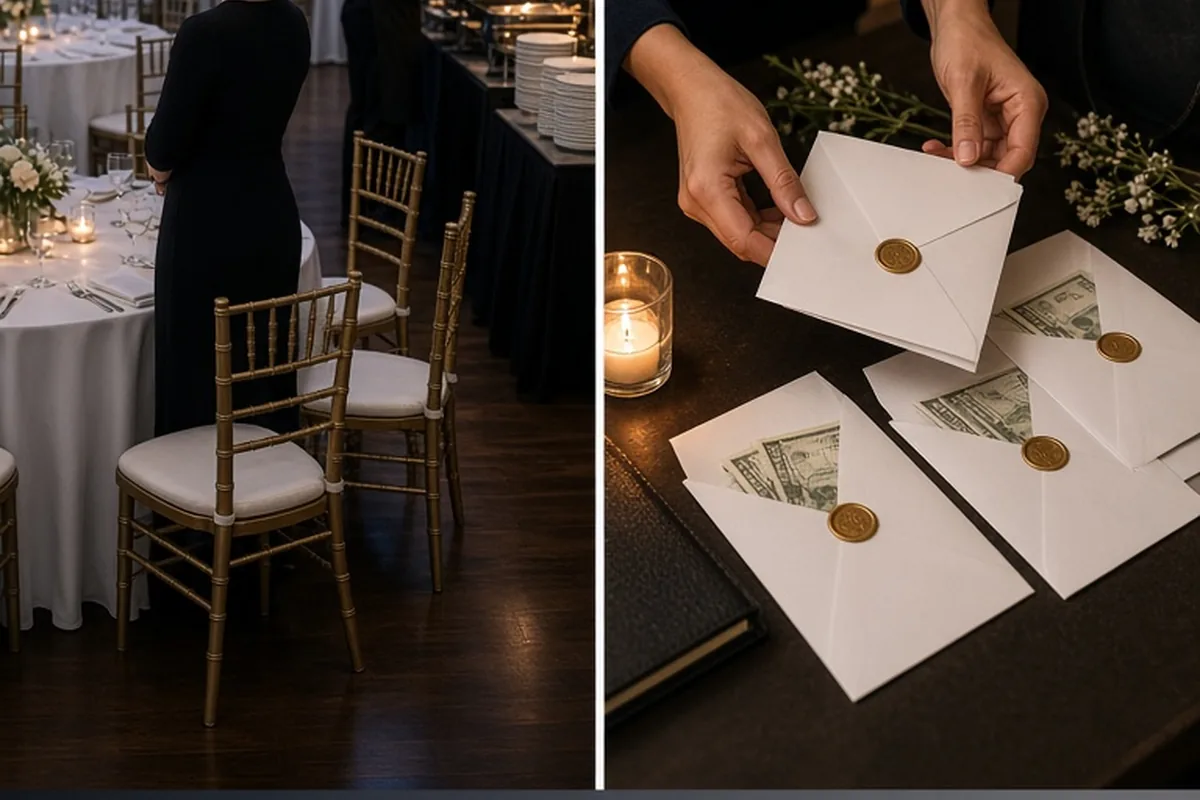
Wedding vendor tipping etiquette for a 100-guest wedding centers on distinguishing mandatory service fees from voluntary gratuities, calculating staff-to-guest ratios, and recognizing whether a vendor owns their business or works as an employee. For a 100-person event, catering, bartending, and transport teams scale directly with your headcount, while creative leads such as photographers, planners, and DJs operate on flat service tiers. Review contracts early to verify pre-included gratuities before preparing labeled cash envelopes for day-of distribution.
Planning a wedding for approximately 100 guests creates a distinct operational footprint: large enough to require a substantial service crew, yet intimate enough that individual vendor contributions are clearly felt throughout the day.
Deciphering Catering and Bar Staff Gratuities for a 100-Person Reception
Food and beverage service represents the largest staffing component for a 100-guest reception. At this guest count, a seated dinner typically requires ten tables of ten or twelve to fourteen smaller configurations, necessitating a defined ratio of banquet servers, bussers, food runners, and kitchen staff. Buffet and family-style meals alter these staffing demands slightly, but the core principle remains consistent: catering staff work in teams where gratuity is often shared among front-of-house and back-of-house personnel.
When evaluating catering tipping, begin by examining your contract's Banquet Event Order (BEO). Many caterers include a mandatory gratuity line item calculated as a percentage of food and beverage totals, distinct from an administrative or operational fee. If gratuity is already factored into the final balance, additional tipping is entirely optional and reserved for exemplary service. If no gratuity is built in, couples customarily provide a lump-sum tip for the catering manager to distribute among the waitstaff, or distribute flat cash amounts per server and kitchen crew member.
Bartenders also scale with your 100-guest headcount. A common ratio is one bartender per 50 to 75 guests, meaning a 100-person wedding generally utilizes two bartenders to prevent long lines. Verify whether your venue or bartending service allows a physical tip jar on the bar counter. If you prefer a seamless, hospitality-focused atmosphere without guest-facing tip jars, clarify this in advance and provide a direct gratuity to the bartending team at the end of the evening.
Tipping Lead Wedding Planners, Coordinators, and Venue Managers
Managing the logistics of a 100-guest celebration involves extensive timeline execution, vendor load-in oversight, and guest flow management. Wedding planners and month-of coordinators dedicate significant hours leading up to and throughout the event. In wedding etiquette, tipping business owners has historically been considered optional, as they set their own pricing structures. However, modern practices view tipping an owner-operator who goes above and beyond as a thoughtful gesture of appreciation.
If your coordinator or planner is an employee of a larger planning firm or venue, a monetary tip is standard practice. Employee coordinators do not retain the full contract fee, making direct gratuities a meaningful component of their compensation. Flat cash gratuities or a percentage of the total coordination fee are both common approaches, accompanied by a heartfelt personal note.
Venue managers and on-site event staff require a clear distinction between administrative roles and physical day-of execution. An on-site venue coordinator who manages facility access, restroom sanitation, temperature control, and load-out logistics serves a vital operational function. If your venue provides dedicated setup and maintenance crews, consider allocating a pooled tip for the facilities team who handle heavy furniture transitions and post-reception cleanup.
Gratuity Guidelines for Photographers, Videographers, and Entertainment
Creative professionals work long, continuous hours capturing and pacing your 100-guest event. Photographers and videographers often work eight to ten hours without extended breaks, orchestrating group portraits, emotional moments, and reception details. Similar to planners, many lead photographers own their studios, where a cash tip is optional but welcomed, particularly after demanding timelines or challenging weather conditions.
Second shooters, lighting technicians, and photography assistants are almost always hourly contractors or studio employees rather than business owners. Providing a dedicated cash tip to second shooters and assistants directly acknowledges their physical labor and attentive support throughout the day. Handing these envelopes out toward the end of their contracted coverage window ensures all working team members are recognized.
Reception entertainment directly influences the energy of a 100-guest dance floor. A single DJ with an audio technician operates differently than a multi-piece live band. For solo DJs, a flat cash tip at the conclusion of the evening is customary if they managed sound cues, announcements, and dance floor momentum effectively. For live bands consisting of several musicians and sound engineers, couples typically provide a flat per-musician cash tip, which can be distributed by the band leader during load-out.
Managing Beauty Teams, Florists, and Setup Delivery Crews
Hair stylists and makeup artists are service professionals operating in an environment closely aligned with standard salon tipping practices. For a 100-guest wedding, the bridal party, mothers, and select family members often receive beauty services on-site. Gratuity is standard across the beauty industry, typically calculated as a percentage of the total service cost or provided as an individual cash amount per person styled.
Verify whether your beauty contract includes an automatic travel fee or service charge, as well as whether tipping is already calculated into the final invoice. If your attendants pay for their own hair and makeup on the morning of the wedding, communicate tipping expectations in advance so guests are prepared, or cover the overall gratuity yourself as a host gift.
Floral designers, rental companies, and transport drivers handle demanding physical setups and tight delivery windows. Florists who design and install custom centerpieces, ceremony arches, and floral installations for ten or more tables invest substantial on-site labor. While the lead floral designer may not require a tip if they own the business, delivery drivers, setup crews, and teardown staff who return at midnight to strike rentals benefit greatly from flat cash tips per crew member.
Distinguishing Mandatory Service Charges from Discretionary Gratuities
One of the most frequent points of confusion in wedding budgeting is the difference between a service charge and a gratuity. Contracts for catering, venues, and transportation often include a line item labeled as a service charge, production fee, or administrative fee, commonly ranging from 18 to 25 percent. In most jurisdictions, an administrative or service charge is retained by the company to cover operational overhead, insurance, equipment maintenance, and baseline wages—it is not automatically paid out to the front-line staff as a tip.
To avoid double-tipping or unintentionally withholding gratuity from hourly staff, ask your venue coordinator and caterer for explicit written clarification. Ask specifically: 'What percentage of the service charge is distributed directly to the banquet servers, bartenders, and kitchen staff as gratuity?' If the contract explicitly states that the service charge is distributed as gratuity to working staff, you do not need to add an additional percentage tip on top of the bill.
Reviewing your Banquet Event Order line by line prevents costly assumptions. If the service fee is strictly operational, you can calculate a separate discretionary tip based on the subtotal before taxes and administrative fees. Understanding these definitions gives you complete financial clarity while ensuring event staff receive equitable compensation for executing your 100-person event.
Organizing and Delegating Cash Envelopes on the Wedding Day
The wedding day moves quickly, making it impractical for the couple to handle financial transactions during the event. Preparing labeled cash envelopes several days before the wedding ensures that tipping is executed smoothly without adding stress or distraction to your celebration.
Begin by drafting a master tipping worksheet that lists every vendor, whether their gratuity is pre-paid or due on the day of the event, the exact dollar amount allocated, and the designated distribution timing. Place the cash into sealed envelopes clearly marked with the vendor's name, their role, and the recipient's name if dealing with individual assistants or crew members. Including a brief handwritten thank-you card inside each envelope adds a personal touch.
Delegate envelope distribution to a trusted individual who will be present throughout the day and sober during key transition points. Common choices include the maid of honor, best man, a parent, or an independent wedding coordinator. Group the envelopes chronologically: morning beauty teams receive theirs upon completion of styling, delivery drivers upon equipment drop-off, and reception staff, musicians, and photographers near the end of their contracted service hours.
Meaningful Alternatives to Cash Tips When Wedding Budgets Are Maxed
Hosting a 100-guest wedding involves substantial financial commitments, and couples occasionally find their contingency funds depleted near the event date. When personal financial limits prevent generous cash gratuities across every single category, there are several high-impact professional gestures that vendors value immensely.
Detailed, five-star online reviews on platforms such as Google Business, wedding directories, and social media directly drive future bookings for small business owners and independent contractors. Writing a detailed review that names specific staff members and highlights their professionalism, punctuality, and problem-solving skills provides long-term commercial value that often exceeds a modest one-time tip.
Additionally, allowing vendors to use professional photos from your photographer for their marketing portfolios, sending a personalized physical thank-you card after the event, and offering direct word-of-mouth referrals to engaged friends and family are powerful ways to express gratitude. Professional courtesy, warm hospitality, and clear communication throughout the planning process are always deeply appreciated by wedding service teams.
Illustrative Scenarios
Auditing a 100-Guest Reception Contract to Clarify Staffing Gratuities
A couple hosting a 100-guest ballroom reception noticed a 22 percent operational fee on their catering estimate. Unsure whether this covered banquet staff tips, they scheduled a clarification call with the venue director. The director confirmed that 15 percent of the fee was pooled among servers and kitchen staff, while 7 percent went to administrative overhead. Because staff gratuity was largely addressed in the contract, the couple prepared only smaller supplemental cash envelopes for the lead banquet captain and two bartenders who managed high-volume cocktail service.
Key point: Requesting a clear written breakdown of service charges reveals whether staff gratuity is already factored into your contract, preventing redundant spending while ensuring front-line workers are properly compensated.
Frequently asked questions
Do you tip wedding vendors who own their own business?
Tipping business owners is traditionally optional because they establish their own service rates and retain full profits. However, modern etiquette supports giving a modest cash tip or personal gift to owner-operators who deliver outstanding service, manage unexpected challenges, or exceed your contractual expectations.
When is the correct time to hand out vendor tip envelopes on the wedding day?
Timing depends on the vendor's working schedule. Beauty teams are typically tipped upon finishing hair and makeup in the morning, delivery drivers receive tips upon successful setup, and photographers, coordinators, DJs, and catering captains are handed their envelopes near the conclusion of their coverage hours.
What is the difference between a service charge and a gratuity on a wedding invoice?
A service charge is a mandatory administrative fee retained by the company to cover operating overhead, equipment, and baseline labor costs. A gratuity is a direct tip given to the service workers who physically executed your event. Always confirm with your vendor whether any portion of a service charge is distributed directly to staff.
Your next step
Pull all your vendor contracts today to create a master spreadsheet that highlights whether gratuity is already included, identify which roles involve independent assistants, and prepare your day-of cash envelopes.