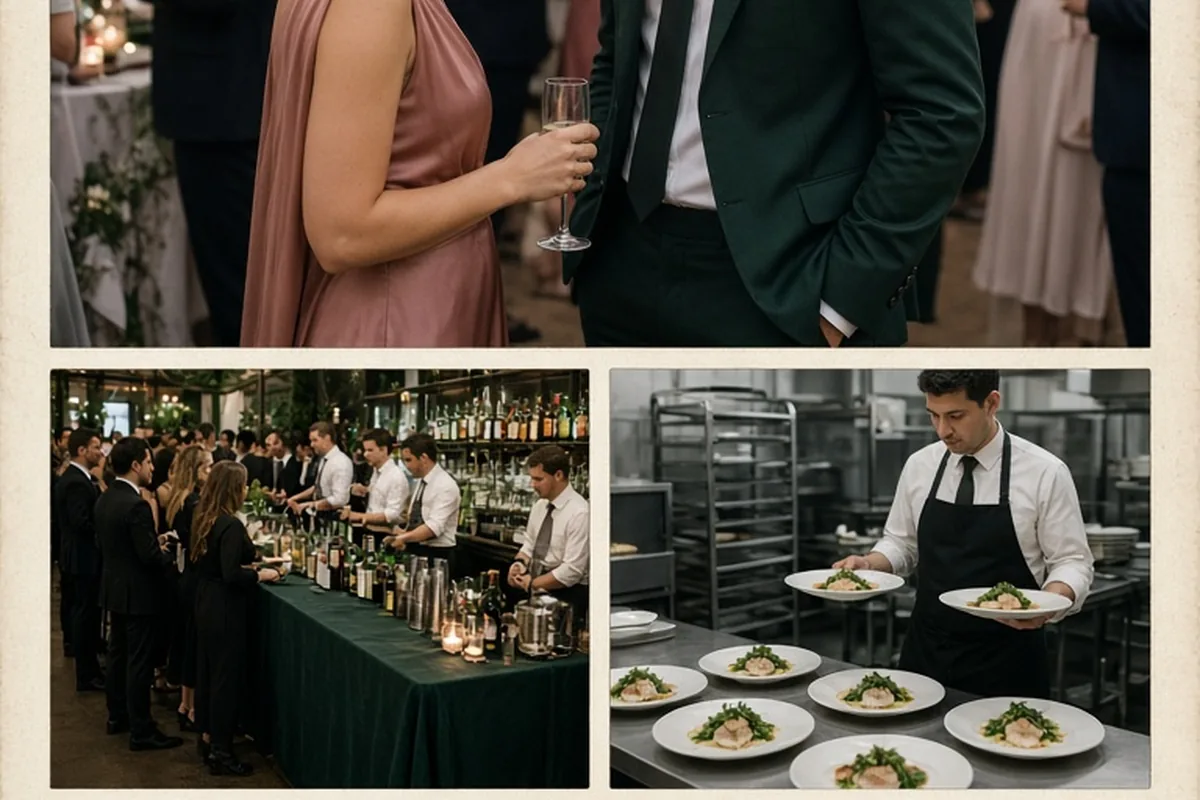
Planning wedding vendors for a 200-guest event requires scaling every service to handle high guest volume without bottlenecks. A complete vendor roster for this size includes a high-capacity venue, full-service caterer with adequate floor staff, multi-station bartending, two-person photography and videography teams, professional sound and entertainment, floral and event designers, comprehensive rental providers, and a multi-person day-of coordination team. Prioritize vendors experienced with large-scale crowd management, dedicated service stations, and strict timeline execution.
A wedding reception with two hundred guests shifts your planning from simple party hosting into complex event production. At this volume, minor operational oversights—such as an undersized bar, insufficient kitchen staging, or an understaffed service crew—lead directly to long queues, cold entrees, and timeline delays. Selecting the right vendor team requires evaluating operational capacity and logistics alongside creative portfolios.
Core Vendor Team Needed for a 200-Guest Wedding Reception
A 200-guest wedding requires a vendor team structured around high-volume throughput. Solo operators who perform well at intimate gatherings of fifty to eighty people frequently struggle when managing the sheer scale of two hundred attendees. Your primary team must include an event venue licensed and physically rated for at least 220 to 250 occupants to account for staff, an experienced full-service catering company, a licensed bartending service, a lead planner or coordinator with assistant support, a two-person photography team, a dedicated videographer, an entertainment provider equipped with venue-filling sound equipment, a floral designer with installation assistance, and an event rental supplier.
Depending on your venue type, you may also need auxiliary service providers such as professional valet or parking attendants, luxury mobile restroom suppliers, generator technicians for power distribution, and a multi-stylist hair and makeup team to prepare the wedding party on schedule. When evaluating vendor candidates, ask specifically about their recent experience with events of two hundred guests or larger. A vendor accustomed to large weddings understands how crowd dynamics affect load-in schedules, service pacing, and noise distribution throughout the reception space.
Catering Staffing and Kitchen Logistics for Two Hundred Guests
Food service at a 200-person reception is a major operational undertaking where service style directly dictates vendor staffing requirements. For a traditional plated dinner, caterers typically schedule one server for every ten to twelve guests (roughly sixteen to twenty servers total) to ensure all tables at a given station receive hot meals simultaneously. Buffet service requires fewer floor servers—often one per twenty to thirty guests—but demands two distinct, double-sided buffet lines so that two hundred people can move through the meal service in under forty minutes rather than enduring an hour-long queue.
Back-of-house kitchen capabilities are equally critical. Inquire whether your venue has a certified commercial staging kitchen or if your caterer must supply mobile hot boxes, prep tables, and portable convection ovens. In raw spaces, historic estates, or tented fields, catering vendors require a dedicated catering tent with dedicated electrical circuits and running water access. Clarify how the catering team handles busing, dishware turnaround, water refills, and dietary restriction management, as managing twenty individual vegan or gluten-free meals across twenty distinct tables requires dedicated expediting staff.
Beverage Management, Bar Stations, and Guest Line Flow
Beverage service is the most common operational bottleneck at a large wedding. A single bar station cannot adequately serve two hundred adults during a fast-paced cocktail hour or immediately following dinner toasts. Best practices for a 200-guest reception require at least two distinct bar locations, staffed by a minimum of three to four professional bartenders and one to two dedicated barbacks who restock ice, glassware, and garnishes without interrupting pour service.
To keep lines moving during peak transition moments, arrange for self-service water and lemonade stations near the ceremony exit, along with tray-passed signature drinks or sparkling wine upon arrival at the cocktail area. Work with your bar vendor to verify licensing, general liability insurance, and liquor liability coverage. If you are sourcing your own alcohol, consult your bartending company on calculated case quantities and confirm who supplies coolers, draft systems, recycling disposal, and the hundreds of pounds of ice necessary for chilling inventory and serving drinks over a six-hour window.
Photography, Videography, and Audio Coverage Across Large Layouts
Capturing a 200-person wedding thoroughly requires multi-camera coverage. A solo photographer cannot simultaneously capture wide-angle crowd reactions during toasts, intimate emotional moments between the couple, and cocktail hour details happening in another room. Securing a contract that includes a lead photographer and a designated second shooter ensures comprehensive documentation, smoother family formal groupings, and backup equipment redundancy throughout the entire celebration.
Audio reinforcement demands equal attention from your DJ or live band vendor. In large ballrooms, historic venues, or outdoor pavilions accommodating twenty dinner tables, sound quickly dissipates or echoes. Ask your sound technicians about supplemental wireless speaker distribution, dedicated subwoofers, and frequency management for wireless microphones. Proper speaker placement prevents front-row guests from being overwhelmed by high decibel levels while allowing guests seated in back corners to hear vows, announcements, and toasts clearly.
Event Rentals, Space Sizing, and Venue Capacity Verification
A venue stating a maximum capacity of two hundred people is often too small for a comfortable 200-guest wedding reception. Maximum capacity ratings frequently assume theater-style seating without dining tables, a dance floor, a band stage, bar stations, or buffet lines. For two hundred seated guests using standard 60-inch round tables (seating eight) or 72-inch rounds (seating ten to twelve), you will need twenty to twenty-five guest tables, plus sweetheart or head tables, gift tables, dessert displays, and service stations.
Your rental order must account for accurate physical quantities and built-in contingency buffers. Order approximately five to ten percent extra plates, flatware sets, and drinking glasses beyond your confirmed headcount to accommodate dropped utensils, table resets, and multiple drink orders per person. If your venue does not include adequate permanent restrooms, event sanitation guidelines suggest providing luxury mobile restroom trailers featuring multiple separate stalls for women and men to prevent long bathroom lines during band intermissions.
Day-Of Coordination and Vendor Load-In Schedules
Managing eight to twelve independent vendor companies arriving across a single day requires dedicated professional coordination. A day-of coordinator or full wedding planner manages the logistical master timeline, issues loading dock passes, confirms arrival windows, and directs delivery trucks to avoid blocking venue access paths. With two hundred guests, a lead coordinator needs at least one assistant to manage guest transit, lineup cues, and vendor check-ins simultaneously.
Your coordinator will oversee time-sensitive transitions, such as moving two hundred guests from an outdoor ceremony lawn into a cocktail space while staff flips the ceremony chairs for dinner seating. They also serve as the central point of contact for vendor troubleshooting—such as a blown fuse on the catering line or a delayed floral delivery—allowing the couple and their families to enjoy the celebration without managing operational problems.
Contract Clauses, Power Riders, and Staff Meal Obligations
Contractual obligations expand significantly with a large vendor roster. Check your vendor contracts for mandatory vendor meal clauses. At a 200-guest wedding, you may employ between ten and twenty on-site vendor professionals—including photographers, videographers, planners, musicians, sound engineers, and lighting techs—who require a hot meal during dinner service. These vendor meals must be counted in your catering totals and coordinated so crew members eat while guests are dining, ensuring they are ready when open dancing begins.
Review each vendor contract for technical riders and infrastructure prerequisites. Live bands, professional DJ setups, photo booths, espresso carts, and mobile catering units often draw substantial electricity that standard household outlets cannot support. Confirm with your venue whether dedicated circuits are available at each setup point or if your lighting and sound vendors need to supply auxiliary distribution boxes or quiet generators to avoid tripping breakers during the event.
Frequently asked questions
How many bartenders do you need for a 200-guest wedding?
Plan for at least three to four bartenders distributed across two separate bar stations, plus one to two barbacks for restocking. This staffing level prevents lengthy lines during cocktail hour and immediately following dinner toasts.
Is one photographer enough for a 200-person wedding?
A two-person photography team is strongly recommended for two hundred guests. A second photographer captures alternate angles, candid guest moments, and cocktail hour details while the lead photographer conducts formal family portraits.
How many tables are needed to seat 200 wedding guests?
You will need twenty 72-inch round tables (seating ten guests each) or twenty-five 60-inch round tables (seating eight guests each). You should also allocate additional floor space for head tables, cake displays, and service stations.
How many vendor meals should we budget for a 200-guest event?
Expect to provide meals for ten to twenty vendor professionals who work on-site through the reception, including photographers, videographers, planners, DJs or band members, and audio technicians. Confirm exact numbers with each vendor four weeks before the event.
Your next step
Request itemized staffing plans and equipment riders from your caterer, bar service, and entertainment vendors to verify that their crew sizes and electrical requirements match the scale of a 200-guest celebration.