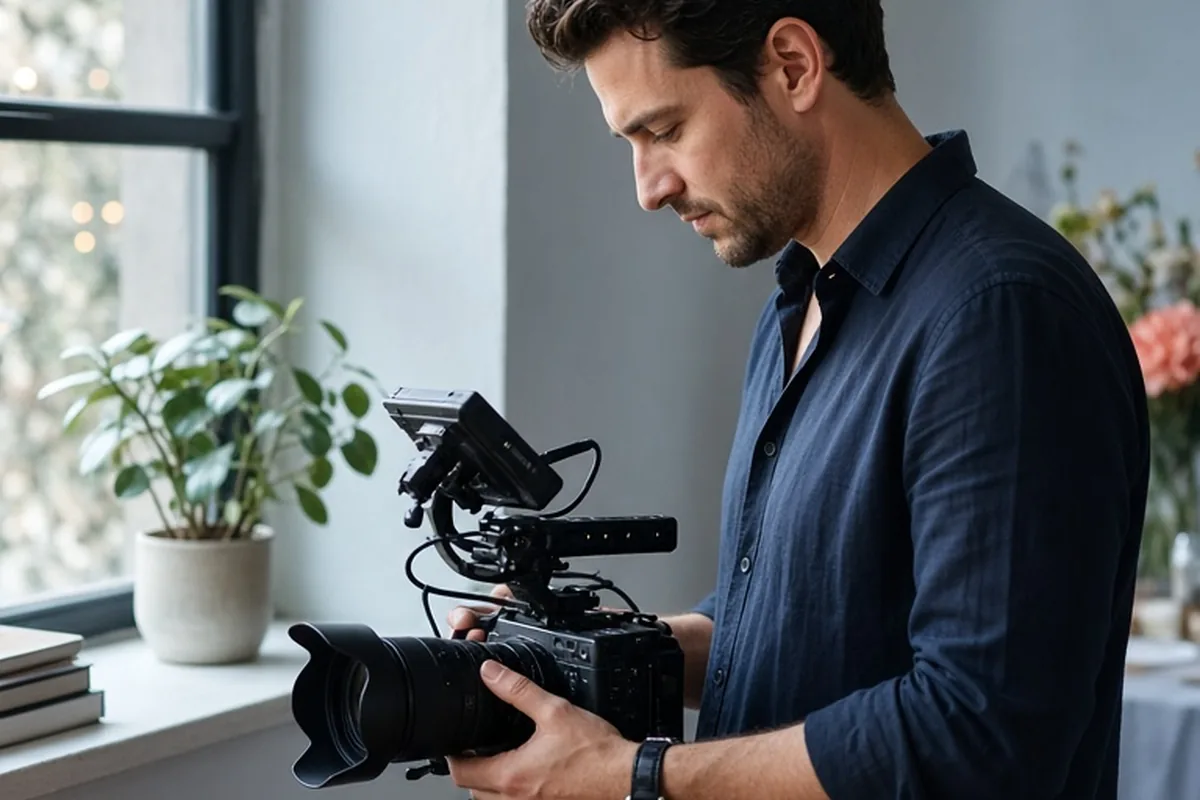
A wedding with 150 guests generally functions best with a two-person videography team booked for eight to ten hours. This guest count creates multiple simultaneous moments across ceremony, cocktail, and reception spaces that a single shooter cannot easily capture alone. A primary filmmaker records core events like vows and speeches, while a second cinematographer captures guest reactions, atmosphere, and secondary angles without interrupting the natural flow of the day.
A guest list of 150 people sits right at the threshold where wedding logistics shift from intimate to expansive. At this scale, your celebration has enough momentum and visual energy to produce a lively, cinematic film, but it also introduces real scheduling, sound, and spatial challenges that require deliberate technical planning.
Determining Crew Size: Single Shooter Versus a Two-Person Team
The primary question couples face when planning videography for 150 guests is whether to hire a solo filmmaker or a two-person crew. With 150 attendees, seating arrangements during the ceremony usually span fifteen to twenty rows, and dinner tables spread across a large ballroom or outdoor lawn. A single videographer must constantly choose between filming the couple or moving through the crowd to capture family reactions. This often results in missed micro-moments, such as a grandparent wiping away a tear while the couple recites their vows at the altar.
A two-person team solves this coverage gap by dividing responsibilities cleanly throughout the day. While the lead cinematographer focuses on tight, beautifully framed shots of the couple, the second shooter operates on a wider focal length or wanders the perimeter to gather candid guest interactions. This dual perspective proves especially valuable during the grand entrance, parent dances, and toasts, where the emotional impact of the film relies as much on the audience reaction as it does on the person holding the microphone.
Solo videographers can still work effectively for couples on stricter budgets, provided expectations are aligned early. If you hire a single filmmaker for a 150-person event, they will typically rely on one or two locked-off, unmanned tripod cameras to provide secondary wide angles during the ceremony and speeches. However, unmanned cameras cannot track sudden movement, re-focus dynamically, or adjust exposure if lighting conditions change mid-ceremony, making an active second operator the more reliable option for dynamic coverage.
Managing Audio Capture in Mid-Sized Ceremony and Reception Spaces
Audio clarity is often the deciding factor between an amateur clip and a professional wedding film. In a room with 150 guests, ambient room noise multiplies quickly from shifting chairs, chatter, glassware, and venue HVAC systems. Relying solely on the built-in microphone attached to a moving camera will produce hollow, echoey sound dominated by nearby audience members rather than the vows or speeches.
Professional videographers solve this by deploying multiple discrete recording devices across the venue. During the ceremony, they will place small wireless lavalier microphones on the groom, the officiant, and occasionally the bride's dress or nearby podium. Because the couple stands close together at the altar, a discreet microphone on one partner readily captures the audio of both individuals without requiring intrusive handheld equipment.
Reception sound requires direct collaboration between your videographer and your entertainment vendor. A skilled filmmaker connects a dedicated digital recorder directly into the DJ or band soundboard to pull clean, uncompressed audio feeds of toasts, introductions, and musical performances. Because soundboards can occasionally peak or suffer signal drops, experienced videographers also place backup audio recorders near the house speakers to ensure no spoken words are lost.
Designing a Filming Schedule for a 150-Guest Wedding Flow
Coordinating the timeline for 150 guests requires building realistic buffer periods into your day. Moving a crowd of this size from a ceremony lawn into a cocktail space and subsequently seating them for dinner takes anywhere from fifteen to twenty-five minutes. Your videographers need these transitional windows to break down camera tripods, move lighting stands, reset audio equipment, and secure beauty shots of the untouched reception space before guests enter.
Most weddings of this scale require an eight to ten-hour coverage window to properly tell the story from pre-ceremony preparations through major reception milestones. An eight-hour package typically starts toward the tail end of hair and makeup, covering detail shots, first looks, the full ceremony, family portraits, and the first hour of open dancing. A ten-hour package extends through formal send-offs, late-night snacks, or extended dancing sets where guest energy reaches its peak.
Plan dedicated time for video portraits alongside your photographer during late afternoon golden hour. While your photographer captures still poses in rapid succession, your videographer needs brief periods of continuous movement, such as walking together, gentle swaying, or natural laughter. Allocating fifteen to twenty minutes of uninterrupted portrait time during cocktail hour ensures your film contains fluid, romantic footage without keeping you away from your guests for too long.
Comparing Film Deliverables: Highlight Reels, Documentaries, and Raw Footage
Wedding videography packages feature diverse terminology that can confuse couples comparing proposals. The most common centerpiece deliverable is the cinematic highlight film, which ranges from three to seven minutes in length. This edit weaves together the best visual moments of the day set to licensed music, layered with snippets of vows, speeches, and ambient crowd cheers to tell an emotional, fast-paced story ideal for sharing with friends and family.
Couples hosting 150 guests frequently request a longer documentary edit or feature film in addition to the highlight reel. A documentary edit runs between thirty and ninety minutes, presenting the ceremony, speeches, and formal dances in chronological order with minimal artistic trimming. This format is designed for personal archival viewing on future anniversaries, ensuring you can re-watch entire speeches and family toasts exactly as they happened in the room.
Another key deliverable to consider is the raw footage archive. Raw footage consists of all unedited video clips and separate audio files recorded throughout the day, delivered on an external hard drive or cloud storage drive. While unedited clips contain shaky camera resets, lighting adjustments, and background chatter, having this archive guarantees that every brief guest interaction and humorous dance floor moment is preserved for the future, even if it did not make the final edited film.
Balancing Lighting Footprint and Discreet Filming in a Crowded Venue
In a reception space accommodating 150 guests, physical space is at a premium between dining tables, buffet lines, the bar, and the dance floor. It is critical to understand your videographer's visual style and equipment footprint before signing a contract. Some filmmakers operate with a heavy production style that uses multiple continuous LED light panels on tall stands, while others specialize in low-light camera sensors and natural ambient illumination.
While off-camera reception lighting creates crisp, high-contrast images on the dance floor, overly bright lights can occasionally make guests feel self-conscious and reluctant to dance. Inquire how the filmmaker handles dim banquet halls and candlelit spaces. Skilled videographers use compact, diffused lighting mounted directly on camera bodies or tucked unobtrusively into room corners, providing enough light for sharp focus without blinding your guests or ruining the venue ambiance.
Discretion also extends to how the videography team collaborates with your still photographer. High-caliber vendors communicate before the wedding day to coordinate shooting angles, lens choices, and ceremony positioning. When both teams work in harmony, they avoid stepping into each other's frames or creating a wall of camera gear between you and your seated guests during emotional moments.
Contract Terms, Payment Structures, and Vetting Criteria
When evaluating videography proposals, look closely at the cost breakdown and service inclusions. Standard contracts outline total hours on site, the exact number of shooters provided, travel allowances, meal breaks, and the delivery timeline. Delivery schedules for edited wedding films typically vary from eight to twenty-four weeks depending on the season and the complexity of the edits, so confirm these parameters in writing to prevent post-wedding miscommunication.
Examine the contract for music licensing terms and revision policies. Commercial copyright laws prohibit videographers from using popular top-40 radio tracks without expensive commercial licenses; reputable filmmakers license high-quality independent music through dedicated platforms to ensure your video can be shared online without copyright strikes. Additionally, check whether your package includes one round of complimentary editing revisions to adjust music balance or swap specific guest clips.
Before making a deposit, ask prospective videographers to share two or three full-length wedding galleries rather than relying exclusively on social media teaser clips. Reviewing a complete delivery lets you evaluate their consistency across challenging scenarios, such as echoing acoustics in large ceremony halls, harsh outdoor midday sunlight, and dark reception ballrooms with extensive guest movement.
Frequently asked questions
How many hours of videography coverage do I need for 150 guests?
Most weddings with 150 guests require eight to ten hours of continuous coverage. This duration allows the crew to film final prep details, the complete ceremony, cocktail hour atmosphere, toasts, and the peak energy of the dance floor without rushing the timeline.
Can one videographer successfully film a 150-person wedding?
A solo videographer can document the day using a combination of handheld filming and static tripod cameras, but they cannot capture simultaneous reactions from both the couple and guests. For comprehensive coverage of a crowd this size, a two-person team is strongly recommended.
Why can't my videographer use my favorite mainstream song in the video?
Commercial copyright laws restrict filmmakers from using copyrighted commercial music without purchasing expensive public distribution licenses. Professional videographers use licensed music platforms to ensure your video remains legally compliant and will not be muted or removed when posted online.
What audio equipment should a wedding videographer bring for 150 attendees?
A professional setup includes wireless lavalier microphones for the couple and officiant, a direct soundboard patch recorder for the DJ or band, and backup ambient microphones. This combination ensures crisp speech delivery during vows and toasts while filtering out room echo and table chatter.
Your next step
Review your venue layout and reception schedule with prospective videographers to confirm that their proposed crew size, audio plan, and lighting footprint fit your 150-guest celebration comfortably.