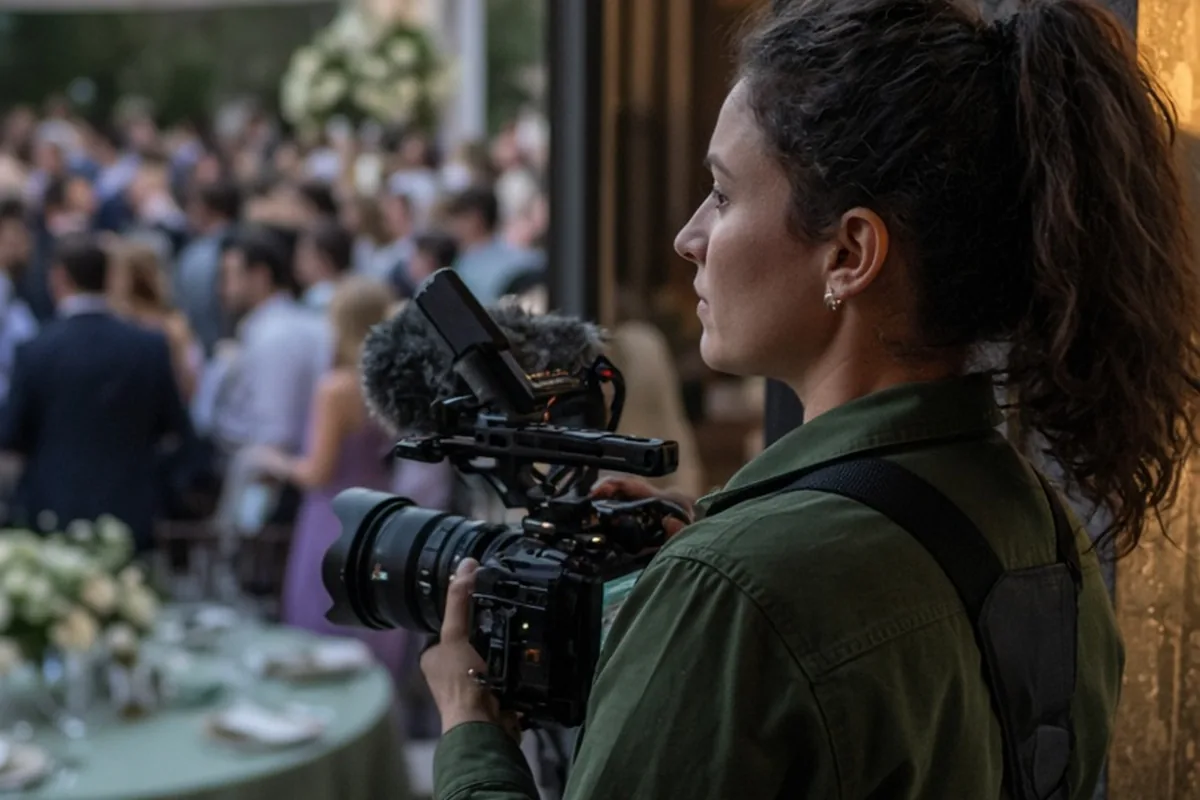
For a wedding with 200 guests, booking a two-person videography team with 8 to 10 hours of coverage is standard. A guest count of this size introduces simultaneous events, larger reception layouts, and louder ambient sound, making it difficult for a solo videographer to document emotional reactions, ceremony angles, and crowd energy simultaneously. Prioritizing multi-mic audio feeds and coordinated timeline planning ensures full coverage of your day.
Planning videography for a 200-guest wedding requires balancing intimate personal moments with the lively energy of a substantial crowd. Because larger weddings involve expanded venues, complex schedules, and numerous concurrent interactions, your videography plan must account for logistical scope well beyond basic camera operation.
Determining Crew Size: Why 200 Guests Usually Demands Two Videographers
A wedding with 200 guests crosses the threshold where single-camera coverage becomes structurally limited. At this scale, the schedule typically involves concurrent activities that a single operator cannot physically bridge. For instance, while one partner finishes morning preparations at a private suite, the other may be taking pre-ceremony portraits across the property. During the ceremony, one camera must remain locked on the couple at the altar to ensure smooth, uninterrupted vows, while a second camera captures the processional, family tears, and guest reactions from the center aisle. A solo shooter attempting to cover both positions inevitably compromises framing or misses sudden emotional expressions.
The reception phase presents even greater coverage demands with 200 guests seated across roughly twenty tables. When key milestones occur—such as the grand entrance, toasts, or first dance—having a primary shooter on a gimbal or handheld rig alongside a secondary shooter on a tripod ensures that cutaways to laughing or crying guests do not interrupt the continuous recording of the main event. A second videographer also manages backup audio monitoring, lens swaps, and lighting adjustments while the lead videographer stays focused on the couple. While a highly skilled solo videographer can capture a basic documentary record, a two-person crew is necessary to create dynamic, cinematic storytelling that captures both the couple and their community.
Managing Venue Footprints and Spatial Challenges for 200-Person Receptions
A gathering of 200 guests requires a spacious venue, such as an expansive ballroom, a large vineyard lawn, an industrial warehouse, or a framed sailcloth tent. These vast spaces create optical and physical challenges for videography teams. Long distances between the sweetheart table, the dance floor, the bar, and peripheral dining tables mean that operators must frequently change lenses or reposition heavy support gear. In low-light evening environments, camera sensors need supplemental illumination to avoid grainy, muddy footage. A professional team will coordinate discreet off-camera lighting stands or subtle bounced lights to illuminate key focal points without blinding guests or washing out the room ambiance.
Camera movement also requires careful planning when maneuvering around twenty or more dinner tables, catering staff, and bustling service stations. Videographers must use compact stabilization rigs rather than bulky track systems that could create tripping hazards in crowded aisles. When touring prospective venues or conducting a virtual walkthrough with your videographer, identify designated camera perimeters around the dance floor and ensure clear sightlines exist between the main seating area and the toast podium. Establishing these spatial boundaries early prevents guests from accidentally blocking critical angles during once-in-a-lifetime moments.
Audio Capture Strategies for Large Crowds and Room Acoustics
Audio quality is fifty percent of a compelling wedding film, and a room filled with 200 people generates significant background noise. Between the murmur of dinner conversation, the clinking of glassware, reverberation off hard floors or high ceilings, and HVAC systems running in large event halls, relying on on-camera microphones produces hollow, unintelligible sound. Professional videographers solve this by implementing a layered, redundant audio recording plan across multiple capture points.
For the ceremony, the videographer should place discrete wireless lavalier microphones on the officiant and the partner delivering spoken vows, while also tapping directly into the primary sound board managed by your DJ or sound engineer. During the reception toasts, the videographer should record an independent feed from the master mixing console while placing secondary handheld field recorders on the toast podium or microphone stand as a fail-safe. This multi-source redundancy ensures that if a microphone drops signal, a speaker moves off-axis, or the venue sound system pops, pristine audio remains available to cleanly layer over the cinematic visual footage in post-production.
Structuring the Day-Of Timeline for Continuous Coverage
To adequately cover a 200-guest wedding, most couples require an eight- to ten-hour coverage window. Larger weddings naturally take longer to navigate because moving 200 people between spaces—such as transitioning from a ceremony lawn to a cocktail terrace, or herding guests into the dining room for dinner—adds fifteen to thirty minutes of transition time to every phase of the day. If your coverage window is too short, your videographer may run out of booked hours before open dancing, late-night food stations, or formal send-offs take place.
When drafting your master timeline with your wedding planner, build in fifteen-minute buffer blocks between major events. This allows videography teams to relocate heavy tripods, change batteries, re-format media cards, and test audio levels before the next event begins. Ensure your contract covers the complete arc of the day: morning prep, first looks, pre-ceremony details, full ceremony coverage, cocktail hour atmosphere, reception entrances, speeches, parent dances, open dance floor energy, and your planned exit. Rushing through these milestones without buffer time often results in hurried compositions and elevated stress for everyone involved.
Evaluating Wedding Videography Packages and Deliverable Styles
Videography packages vary widely in their post-production deliverables, and understanding the differences helps you choose the right product for your preferences. The most common centerpiece deliverable is a highlight film, typically running three to seven minutes in length. This edit weaves together the best visual moments of the day, set to licensed music and underscored by the most poignant snippets of your vows and toasts. For a 200-guest wedding, a highlight film provides a fast-paced, shareable keepsake that showcases the scale, beauty, and emotional tone of the celebration.
In addition to a highlight film, couples hosting large weddings often benefit from longer formats. A feature film, typically ten to twenty minutes long, provides a more comprehensive narrative that includes extended sections of speeches, full guest reactions, and longer ceremony scenes. Many studios also offer a separate documentary edit or raw footage archive. A documentary edit is a multi-camera, lightly color-graded cut of the entire ceremony and all toasts shown in continuous real time. Clarify with prospective vendors whether their standard quote includes full-length edits or if those files must be added as separate line items.
Contract Terms, Venue Restrictions, and Insurance Requirements
Venues that accommodate 200 or more guests almost universally enforce strict vendor compliance policies. Nearly all established hotels, historic estates, and formal event centers require outside vendors to submit a Certificate of Insurance showing standard commercial general liability coverage before setting foot on property. When vetting videographers, verify immediately that they carry valid liability insurance and can name your venue as an additional insured on their policy certificate without assessing extra administrative fees.
Review your vendor agreement carefully for clauses regarding equipment backup policies, illness contingencies, meal provisions, and delivery schedules. Because editing high-resolution video files from two or more cameras requires substantial processing, post-production turnaround times typically range from eight to twenty-four weeks depending on the studio's seasonal workload. Ensure the contract explicitly defines delivery methods—such as an interactive online streaming gallery, a digital download link, or a physical hard drive—and outlines how raw footage requests and future archive retrieval are handled.
Coordinating Between Your Videographer and Photographer on Event Day
At a large wedding, your photographer and videographer must work as a unified visual team rather than competing for the same physical space. Both vendors share the goal of documenting critical moments, but their technical requirements differ: photographers capture discrete frozen frames, while videographers require uninterrupted continuous movement and clean ambient sightlines. If they do not communicate in advance, one vendor can easily walk into the background of the other's shot or block a key angle during the ring exchange.
Facilitate an introductory email between your photo and video teams three to four weeks before the wedding so they can review the timeline, discuss preferred lighting styles, and divide coverage locations. Experienced teams will alternate who takes the lead during couples' portraits, share audio feeds or off-camera lighting setups during the reception, and coordinate their aisle positioning during the processional. Confirming that your photo and video teams have compatible shooting styles—such as both working in a documentary, candid fashion rather than heavy staging—ensures a seamless workflow throughout the day.
Frequently asked questions
Can a single videographer successfully cover a 200-guest wedding?
While a solo videographer can capture basic documentary coverage, they will have to choose between filming the couple or filming guest reactions during key moments. For a 200-guest wedding with multiple locations and large spaces, hiring a lead shooter with a second shooter ensures comprehensive coverage of simultaneous events.
How many hours of videography coverage are needed for 200 guests?
Most 200-guest weddings require eight to ten hours of continuous coverage. This duration allows the crew to document morning preparation, first looks, the full ceremony, guest cocktail hour, formal speeches, and the energy of open dancing without rushing between events.
Should we get raw video footage from our videographer?
Acquiring raw footage is an excellent way to preserve unedited archival video of every toast, guest interaction, and dance floor moment that did not make the final highlight film. Check whether your videographer includes raw files on an external hard drive or offers them as an optional package add-on.
When should we book our wedding videographer?
Established wedding videographers typically book their dates nine to fourteen months in advance, especially for peak weekend dates. Securing your videographer early ensures availability and allows ample time to coordinate technical logistics with your venue and photography team.
Your next step
Draft your master day-of schedule and request sample full-length wedding films from prospective videographers to verify how they capture 200-guest crowd dynamics before signing a contract.