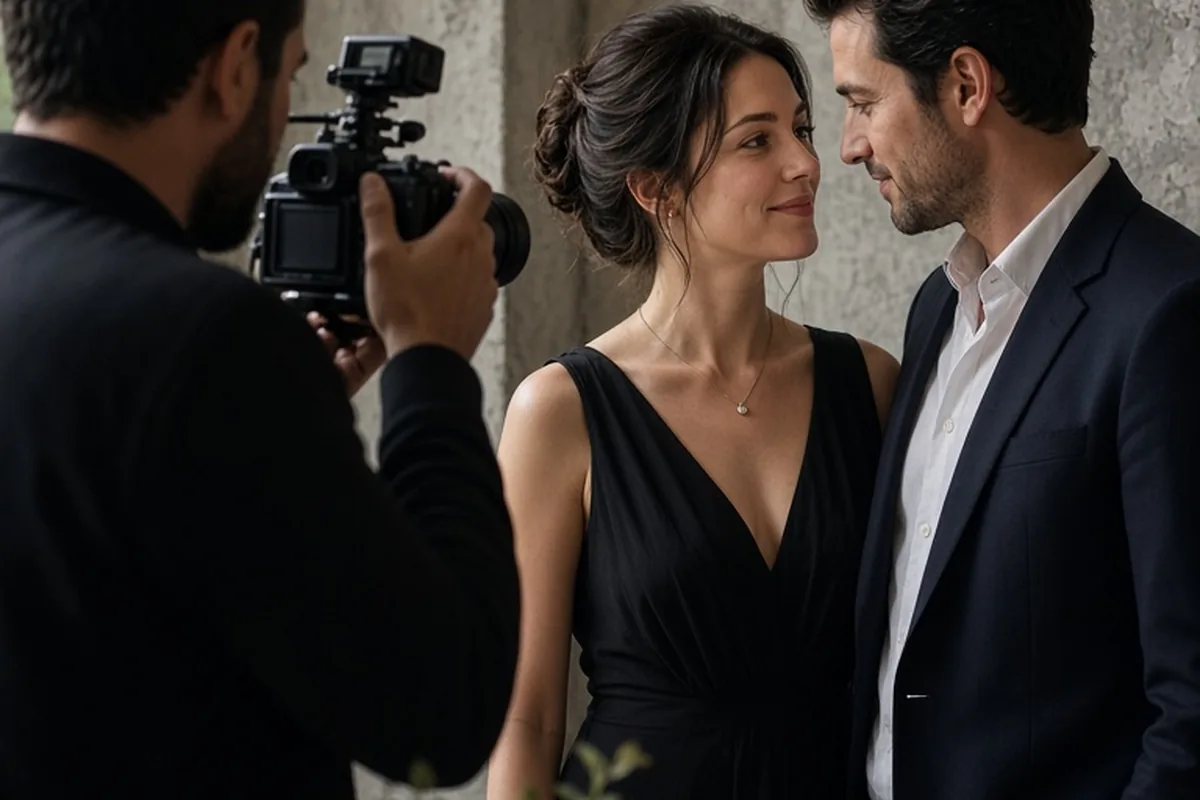
Hiring a wedding videographer for 50 guests usually requires a single skilled camera operator rather than a multi-person crew. Because an intimate crowd leaves nowhere for bulky gear to hide, prioritize a filmmaker who relies on compact mirrorless cameras, prime lenses, and discrete clip-on lapel microphones. Look for coverage packages focused on candid guest interactions, ceremony sound, and a curated highlight film rather than elaborate production setups designed for large ballrooms.
An intimate wedding of fifty guests changes the entire atmosphere of a celebration, shifting the focus from grand spectacle to close personal connections. When planning videography for this scale, the primary goal is documenting genuine moments without turning your ceremony or dinner into a crowded film set.
Wedding Videographer Coverage for 50 Guests: Solo Shooters Versus Multi-Camera Setups
A 50-guest wedding sits in an ideal middle ground between an elopement and a full-scale banquet. At this guest count, couples often wonder whether one videographer is enough or if a second shooter is necessary to cover both sides of the celebration. In almost all circumstances, an experienced solo videographer is more than capable of capturing the day thoroughly. With only fifty attendees, the physical footprint of the gathering is compact, allowing one mobile professional to move quietly between conversations, family greetings, and decor details without missing key activities.
Bringing a second camera operator into a room of fifty people can inadvertently alter the event dynamics. In a small space, two operators with tripods, gimbals, and equipment bags can feel noticeable, making guests self-conscious and stifling unscripted reactions. The exception is a wedding where the partners are getting ready at locations miles apart at the exact same hour, or where the ceremony architecture strictly prohibits any mid-service repositioning. Even in those scenarios, many solo filmmakers simply place a locked-off, unmanned tripod camera in the back to catch a wide angle while they operate the primary roving camera manually.
Choosing a solo shooter also protects your overall budget and reduces logistics. Feeding and coordinating with a single professional is straightforward, and communication during the event is streamlined. When you interview prospective filmmakers, ask directly how they manage single-operator logistics. A capable professional will explain their workflow for transitioning between the processional, vows, and rings without interrupting the emotional flow of your service.
Managing Equipment Footprint in Intimate Ceremony and Dining Spaces
The physical environment of a 50-guest wedding tends to feature smaller historic chapels, private dining rooms, family estates, or boutique garden courtyards. These charming venues rarely offer wide service aisles or secluded corners where a production crew can stash gear cases. When evaluating portfolios, pay close attention to how the filmmaker works in restricted spatial layouts, because cinema-grade rigs with massive matte boxes, counterweights, and floor lighting can dominate a small dining room.
Ask prospective filmmakers about their typical working kit. Modern full-frame mirrorless cameras produce cinema-quality imagery while maintaining a low visual profile. Filmmakers who prioritize handheld shooting, lightweight monopods, and small motorized gimbals blend naturally into the background. They can weave around seated guests during toasts without blocking sightlines or bumping into table arrangements, preserving the ambiance you worked hard to design.
Artificial lighting requires special scrutiny in tight quarters. Large softboxes on tall light stands present tripping hazards in narrow dining areas and can wash out candlelight or ambient cafe lighting. Inquire whether your videographer works with fast lenses that gather ample natural light or if they rely on portable, battery-powered LED accent panels bounced off walls. A thoughtful vendor will adjust their gear footprint to respect the scale of the room rather than forcing an arena-style setup into an intimate dinner.
Capturing Crisp Audio When Room Acoustics and Background Murmurs Change
Sound capture presents unique acoustic considerations at a 50-person gathering. At a reception with two hundred guests, a constant blanket of ambient chatter masks small background noises, but in an intimate gathering, singular sounds stand out. Glasses clinking, distant kitchen doors, or a sudden gust of wind in an outdoor garden can register clearly on recordings. Consequently, relying strictly on on-camera shotgun microphones is insufficient for high-quality intimate wedding films.
Professional videographers solve this by deploying dedicated secondary audio recorders. For the ceremony, the officiant and one or both partners should ideally wear tiny wireless lavalier microphones clipped neatly to clothing or hidden beneath lapels. These microphones capture clear, close-proximity voice recordings regardless of whether the speaker whispers their vows or project across the aisle. If you are having live musicians, such as an acoustic guitarist or cellist, ask how the filmmaker plans to record their performance directly from the soundboard or with an isolated field recorder.
During speeches and toasts, audio strategy is equally critical. In many 50-guest receptions, couples forgo a traditional public address system because the dining room is small enough for people to speak unamplified. However, speech audio recorded from across a room without amplification sounds hollow and reverberant. Confirm that your videographer carries handheld recording devices or discreet tabletop microphones so that family memories, toasts, and laughter are preserved with clarity even if you do not rent an amplified loudspeaker system.
Structuring Your Timeline Around Natural Guest Interaction
Intimate weddings naturally move at a different cadence than large-scale productions. There are fewer moving pieces, which means events rarely run forty minutes behind schedule simply from herding crowds. However, intimate gatherings also lack the rigid, segmented programming that fills out a large banquet schedule, such as extensive receiving lines, formal grand entrances, or lengthy table visits. Your videographer needs to understand this flow so they can capture storytelling moments during relaxed conversation periods.
When drafting your day, avoid packing the schedule with staged video activities that pull you away from your guests for extended periods. A 50-guest event is memorable precisely because you have time to converse with every person present. If a videographer requests ninety minutes of scripted portrait poses following the ceremony, you will miss nearly your entire cocktail hour. Instead, negotiate a portrait window of twenty to thirty minutes, allowing the filmmaker to capture natural movement while freeing you to return to your celebration.
Work with your filmmaker to identify quiet, spontaneous segments of the timeline that yield compelling footage. Casual conversations during lawn games, unprompted hugs during dessert, and shared laughter around an outdoor fire pit offer rich narrative material. Brief your vendor on key relationships ahead of time so they recognize your childhood mentor or your partner's grandmother without needing you to point them out during the party.
Selecting Deliverables: Choosing Between Highlight Reels and Full Edits
Videography packages are typically structured around the final edited deliverables, which dictate how many hours of post-production labor the filmmaker must invest. For a 50-guest wedding, your priority should be intentional storytelling that reflects the emotional closeness of the gathering. A cinematic highlight film running between three and six minutes is usually the centerpiece deliverable. This format weaves vows, speeches, and visual moments into a focused, shareable narrative that holds your attention for years to come.
In addition to a highlight film, consider whether you want archival edits of your full ceremony and toasts. Because intimate vows and speeches tend to be deeply personal and unhurried, having a separate, documentary-style cut where the ceremony plays from processional to recessional in chronological order is valuable. This delivery format does not require stylized cinematic pacing; it serves as a complete, real-time archival record of the vows you exchanged and the words spoken by your family.
Be clear about raw footage expectations before signing a contract. Raw footage consists of hundreds of unedited video and audio clips straight from the camera cards, complete with shaky transitions, focus adjustments, and ambient chatter. While having the raw files offers peace of mind for archival preservation, reviewing them requires specialized software and significant computer storage space. Clarify whether raw footage is included on an external hard drive, offered as an add-on, or omitted entirely in favor of finished narrative edits.
Reviewing Contracts, Cancellation Terms, and Vendor Collaboration
Securing a wedding videographer requires careful review of legal and logistical clauses tailored to independent creative professionals. Pay close attention to clauses regarding technical failure, equipment redundancy, and data management. Inquire whether your videographer shoots with cameras featuring dual memory card slots, which create immediate internal backups of every take in real time, and ask about their post-event data storage protocols before files are formatted from the cards.
Your contract should clearly outline the turnaround timeline for finished deliverables. Wedding video post-production requires audio mixing, color grading, music licensing, and narrative assembly, which often takes anywhere from eight to twenty-four weeks depending on the vendor's seasonal workload. Ensure the agreement explicitly names the delivery mechanism, whether it is an online digital streaming link, a downloadable high-resolution gallery, or a physical USB drive, alongside terms for requesting minor edit revisions.
Finally, coordinate communication between your videographer and your still photographer well ahead of the event. Because an intimate wedding has less physical buffer space, these two visual vendors must work in seamless harmony rather than competing for identical camera angles during the ceremony aisle walk or cake cutting. Introducing them via email and verifying that both understand your preference for unobtrusive, documentary-style coverage guarantees that neither professional steps into the other's frame.
Understanding Realistic Cost Drivers and Quote Variables for Intimate Coverage
Because wedding videography pricing varies significantly across geographic regions and market tiers, evaluating proposals requires looking past the final dollar total to examine the underlying fee structure. Videographers generally price their services based on total on-site coverage hours, post-production complexity, equipment overhead, and commercial music licensing fees. For a 50-guest event, you do not necessarily need ten or twelve hours of coverage; six to eight hours is frequently sufficient to capture preparations through the initial reception dances.
When comparing proposals, request itemized breakdowns to see what is included in standard packages versus optional add-ons. Common variables that shift quotes include travel fees for venues outside the vendor's home radius, the inclusion of licensed songs versus generic royalty-free tracks, drone aerial footage, and expedited delivery schedules. If your venue has flight restrictions due to local wildlife or nearby municipal airports, paying extra for drone coverage is unnecessary.
To obtain accurate quotes, supply prospective vendors with your exact venue location, estimated timeline, and desired deliverables from the initial inquiry. Ask whether they offer bespoke packaging for smaller weddings or weekday celebrations, as some professionals provide tailored half-day rates when comprehensive all-day production packages exceed what a 50-guest celebration genuinely requires.
Illustrative Scenarios
Balancing Space and Sound in an Historic Courtyard
A couple planning a 48-guest ceremony in an enclosed brick courtyard initially considered hiring a two-person video team with motorized stabilizer rigs. Recognizing that the courtyard aisle was only four feet wide, they consulted with a solo filmmaker who proposed a low-profile setup consisting of one camera on a slender monopod and an unmanned stationary camera behind the back row of chairs. To handle street noise from an adjacent avenue, the filmmaker fitted both partners and the officiant with miniature clip-on recorders hidden under lapels.
Key point: Opting for a solo operator with discrete audio equipment prevented physical crowding in narrow spaces while ensuring clean vow clarity against ambient environmental sounds.
Frequently asked questions
Does a 50-guest wedding really need a videographer?
While photography captures frozen moments, videography preserves the spoken cadence of your vows, the inflection of toasts, and the movement of guests. For an intimate wedding where every attendee is a close friend or family member, hearing those voices and seeing natural interactions creates a dynamic personal keepsake that photography alone cannot duplicate.
How many hours of videography coverage should we book for fifty people?
Six to eight hours of coverage is typically ideal for a 50-guest celebration. This window provides enough time to document the final stages of getting ready, the ceremony, portrait sessions, dinner toasts, and the first hour of social dancing without paying for late-night filler footage.
Can our videographer also operate a drone at our venue?
Drone capabilities depend on local aviation regulations, weather conditions, and venue property rules. Many boutique venues or urban courtyard spaces prohibit drone flights, so verify your site's aerial policies and check whether your videographer holds appropriate commercial flight credentials before adding drone footage to your package.
How can we keep the camera from feeling intrusive to our guests?
Hire a filmmaker who specializes in documentary or candid wedding styles rather than commercial, highly posed productions. Let them know in advance that preserving an organic, relaxed atmosphere is your top priority, which prompts them to use longer focal length lenses that capture close-up emotional reactions from a respectful distance.
Your next step
Draft your ceremony and reception layout with your venue coordinator today to identify camera placement zones before reaching out to prospective solo videographers.