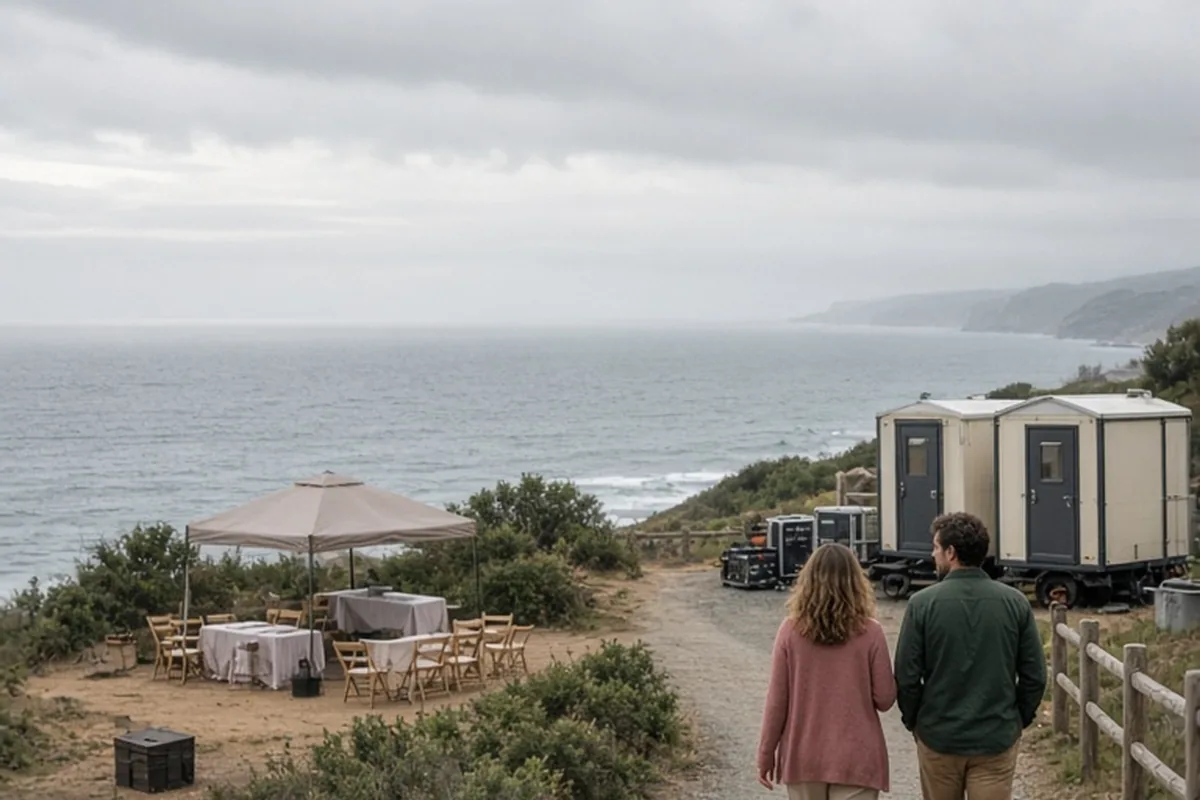
Planning a wedding without a traditional commercial venue for 50 guests requires transforming a private backyard, public park, or open outdoor space into a self-sustaining event site. Success depends on bringing in essential utility infrastructure, including dedicated power sources, portable restroom trailers, weather-resistant tenting, and staging areas for food service. While bypassing a conventional venue eliminates strict rental packages, hosts must independently manage local municipal permits, noise curfews, parking logistics, event insurance, and day-of vendor coordination to ensure a seamless experience.
A guest list of 50 people offers an ideal middle ground between an intimate micro-wedding and a large-scale gathering. However, taking full control of the location means assuming the operational responsibilities typically handled by a banquet hall or event estate.
Evaluating Non-Venue Locations for a 50-Guest Gathering
When choosing a setting outside of standard wedding venues, the primary options typically include private residential properties, family-owned rural land, public community parks, scenic national or state forest clearings, and rented private estates. A 50-person group requires enough contiguous space to accommodate a ceremony area, a dining configuration with multiple tables, a dance floor or central social zone, and dedicated vendor staging. Residential backyards should offer at least 1,500 to 2,000 square feet of usable, relatively flat ground to avoid overcrowding once tables, chairs, and service stations are placed.
Beyond flat acreage, the property must be accessible for heavy commercial transport. Delivery trucks carrying rental tents, tables, portable restrooms, and catering equipment require clear road clearance, wide driveway access, and overhead clearance free of low-hanging tree branches or utility wires. Public lands and municipal parks present attractive natural backdrops but often introduce strict operational constraints, such as prohibitions on stakes in the ground, bans on amplified sound, restrictions on glass containers, and rigid departure schedules that leave minimal time for setup and teardown.
Calculating Electrical Power and Restroom Requirements
Standard residential electrical systems are rarely equipped to handle the simultaneous electrical draw of professional event equipment. A standard 50-person reception requires power for high-wattage sound equipment, specialty lighting strings, catering warming boxes, coffee urns, and restroom trailer pumps. Attempting to run these items off standard outdoor home outlets will frequently trip breakers. To prevent power failures, rent a towable, whisper-quiet generator rated between 20kW and 30kW, paired with an electrical distribution box to separate entertainment circuits from food service and lighting lines.
Sanitation is equally critical. For 50 guests attending an event lasting four to six hours, residential indoor plumbing can quickly become overwhelmed, leading to slow drainage or septic strain. The industry standard for outdoor events is approximately one restroom station per 25 to 35 guests to prevent lengthy lines. A two-stall luxury restroom trailer—which includes private flushing toilets, running water, interior lighting, and climate control—provides a sanitary, self-contained solution with its own water supply and holding tanks, keeping guest traffic out of private home interiors.
Navigating Municipal Permits, Noise Laws, and Liability Coverage
Hosting a 50-person event on non-commercial land triggers local municipal regulations that do not apply to licensed event spaces. Check with the city or county zoning department regarding residential event rules, amplified sound permits, and street parking regulations. Most suburban and urban municipalities enforce residential noise curfews beginning between 9:00 PM and 10:00 PM, meaning amplified music must conclude or transition to an indoor or silent-disco format at that time. If using public parkland, obtain special-use park permits several months in advance, verifying whether the permit grants exclusive use of the area or merely allows the gathering in a shared space.
Insurance coverage is a mandatory safety measure when operating without a venue's umbrella policy. Standard homeowner policies frequently exclude commercial-scale gatherings and alcohol-related liability claims. Purchase a private event general liability policy with an endorsement for host liquor liability, typically carrying a coverage limit of at least one million dollars per occurrence. If third-party caterers, tent rental providers, or mobile bartending services operate on the property, require each company to provide a Certificate of Insurance listing the property owner as an additional insured before setting foot on site.
Catering and Beverage Setup Without a Commercial Kitchen
Serving a multi-course meal to 50 guests without an on-site commercial kitchen requires specialized catering styles. Standard catering operations rely on cold storage, prep tables, running hot water for sanitization, and cooking equipment. Self-contained food trucks are among the most practical options for open-air, non-venue weddings because they supply their own cooking equipment, prep surface, and refrigeration. Alternatively, hiring a full-service drop-off caterer with insulated transport boxes (cambros) and portable chafing stations allows food to be safely prepared off-site and assembled under a designated 10x10 or 10x20 catering prep tent.
Bartending services must adhere to regional liquor laws, particularly regarding whether alcohol can be served openly or requires a licensed server. Even when self-purchasing alcohol to control costs, hiring TIPS-certified or state-licensed bartenders mitigates liability, manages consumption rates, and prevents underage access. Plan on providing a dedicated beverage chilling area with ample commercial ice chests, clean ice for mixing drinks, and a graywater collection bucket for drink disposals, as dumping citrus and sugary liquids directly onto grass will damage lawn turf and attract stinging insects.
Tent Sizing, Ground Stabilization, and Weather Planning for 50 Guests
Weather contingencies cannot be treated as an afterthought when there is no permanent building to retreat into during rain, excessive heat, or high winds. A 50-guest seated dinner with round banquet tables (seating eight to ten people each) requires roughly 600 to 750 square feet of covered space. If adding a dedicated 12x12 dance floor, a buffet line, a bar area, and musician or DJ space under the same shelter, plan for a tent sized at least 30x30 feet (900 square feet) or 30x40 feet (1,200 square feet) to ensure comfortable movement without overcrowding.
Evaluate the terrain before selecting tent anchoring methods. Pole tents are structurally held by tension and require driving stakes three to four feet into surrounding grass or dirt, making them unsuitable for concrete driveways, packed gravel, or areas with shallow buried utility pipes. Frame tents stand freely and can be secured with heavy water barrels or concrete ballast weights, making them versatile for mixed surfaces. Include solid subflooring or interlocking plastic event tile over soft or unlevel grass to prevent guest footwear from sinking and to protect lawns from heavy foot traffic during damp conditions. Secure solid or cathedral sidewalls on standby in case of driving wind or lateral rain.
Parking Arrangements, Shuttle Options, and Site Accessibility
A gathering of 50 attendees typically generates 20 to 30 guest vehicles, alongside delivery vans, catering trucks, mobile bar trailers, and vendor cars. Private driveways and residential streets cannot safely accommodate this volume of parked vehicles without blocking neighborhood traffic, emergency vehicle access, or neighbor mailboxes. If on-street parking is restricted, designate a nearby public lot, church, or commercial park-and-ride lot (with written permission) and hire a 14- to 24-passenger shuttle van to transport guests in short shifts to and from the event site.
Accessibility needs must be integrated into every path of travel from arrival to departure. Ensure the route from vehicle drop-off to seating, dining, and restrooms consists of flat, packed ground free of exposed tree roots, uneven flagstones, or steep turf inclines. If elderly guests or attendees using mobility devices are present, install temporary modular ramp access over steps and lay down smooth rubber walkway mats across grass. Provide clear pathway lighting along all outdoor routes, using low-voltage pathway fixtures or heavy-duty stake lights to prevent tripping hazards once the sun sets.
Managing Day-Of Logistics Without Dedicated Venue Staff
At a traditional wedding venue, on-site facility managers supervise vendor arrival times, monitor restroom supplies, handle electrical adjustments, and direct parking. When hosting without a venue, the hosts carry full liability for site management. Appointing family members to manage operations during the celebration often leads to missed moments and logistical bottlenecks. Hiring a dedicated day-of event coordinator—or an independent event operations manager—ensures a qualified professional handles vendor load-in schedules, verifies generator fuel levels, guides catering timelines, and troubleshoots utility disruptions.
Develop a comprehensive site map and operational run-of-show document shared with all vendors at least two weeks before the wedding date. The site map must clearly label delivery unloading zones, generator locations, water spigots, electrical hookup boxes, waste stations, and vendor parking areas. Post-event cleanup requires an equally detailed strategy: rent a commercial-size roll-off dumpster or schedule a designated junk-removal service for the morning after the event, as standard residential curbside trash bins cannot hold the volume of catering waste, empty beverage containers, and floral debris generated by 50 people.
Frequently asked questions
Is it cheaper to host a 50-person wedding without a venue?
Not necessarily. While you avoid a dedicated venue rental fee, you must pay out-of-pocket for infrastructure rentals, including commercial tents, luxury restroom trailers, power generators, lighting, tables, chairs, and waste disposal. In many cases, bringing in complete off-grid infrastructure costs equal to or more than renting a venue that already includes these amenities.
How much space do I need for a 50-guest backyard wedding?
Plan on a minimum of 1,500 to 2,000 square feet of flat, usable outdoor space for a 50-person ceremony and seated reception. If you also plan to add a dedicated dance floor, buffet line, bar area, and catering prep tent, having 2,500 to 3,000 square feet allows for comfortable movement and proper separation between functional zones.
Do I need permits to host a 50-person wedding at a private house?
Requirements vary by city and county. Many municipalities require permits for amplified sound exceeding specified decibel limits, street parking restrictions, and temporary commercial-scale tents over a certain square footage. Always verify local noise curfews and zoning codes with your local city clerk or planning department.
How do you handle trash and cleanup for an off-grid wedding?
Fifty guests and food service will generate significant bulk waste that exceeds standard residential curb bins. Rent a commercial dumpster or contract with a local hauling service for next-day pickup, and set up labeled, discreet multi-stream bins for compost, recycling, and landfill waste near the bar and catering prep zones.
Your next step
Draft a complete site map of your prospective location, marking exact zones for power, restrooms, catering, and dining, then contact local municipal offices to confirm permit and noise requirements before signing vendor contracts.