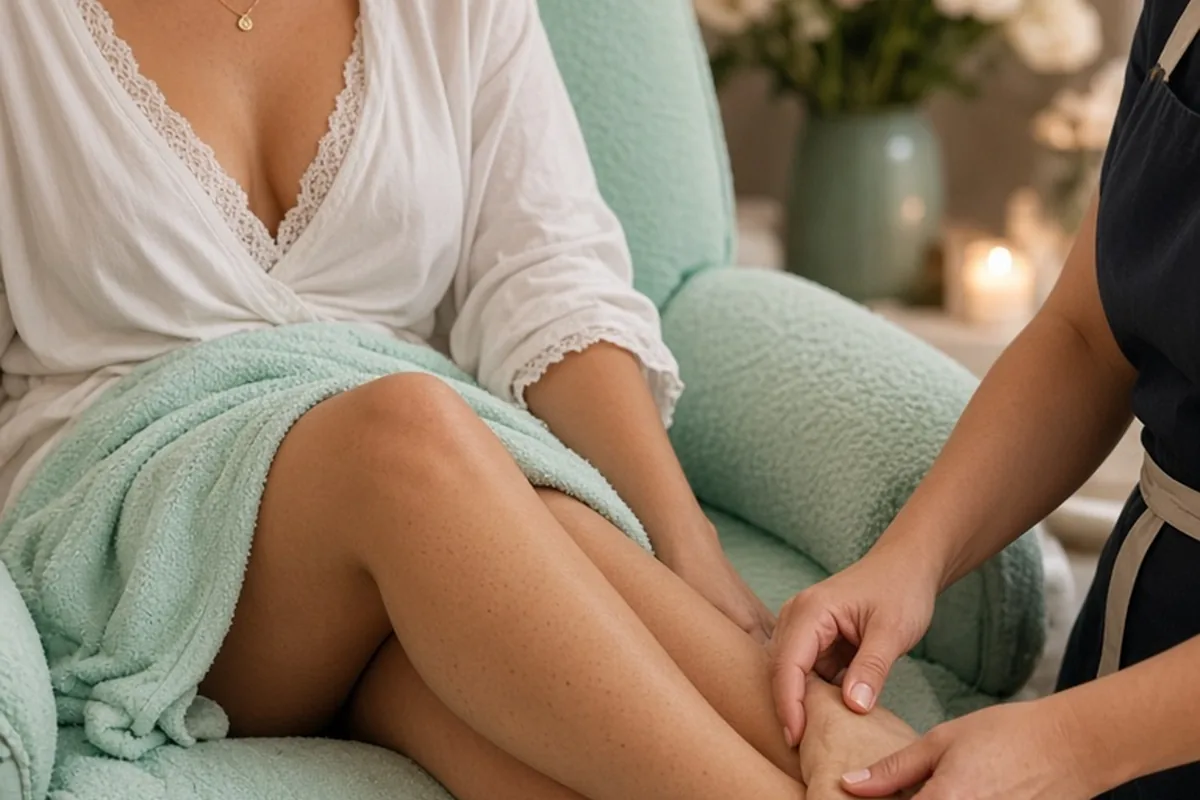
A wedding pedicure involves a warm foot soak, exfoliation, gentle callus smoothing, nail shaping, cuticle care, a hydrating massage, and precise polish application. Many salons add specialty treatments like paraffin wax, collagen booties, or foot masks to ensure your skin is supple, radiant, and comfortable for open-toe wedding shoes and hours of standing.
Preparing for a wedding involves countless details, and foot care deserves intentional planning since you will likely spend hours standing, dancing, and posing for photos. Understanding each step of the pedicure process helps you choose the right treatments and avoid common timing mistakes.
Initial Consultation and the Relaxing Foot Soak
Your wedding pedicure begins with a brief consultation where your nail technician asks about your wedding date, your footwear style, and your preferred aesthetic. If your wedding shoes feature open toes, slingback straps, or delicate mesh, your technician will pay closer attention to heel smoothness, nail length, and color coordination. This conversation is also the time to mention any skin sensitivities, allergies, or past experiences with ingrown nails so the technician can adjust their tools and products accordingly.
After the consultation, your feet are submerged in a warm foot bath infused with Epsom salts, essential oils, or soothing bath teas. The warm water softens thickened skin around the heels and balls of the feet while loosening the cuticles around each toenail. This step is not merely functional; the warm soak also helps relieve muscle tension and reduces foot fatigue from running wedding-week errands, allowing you to settle into a calm mindset before the hands-on care begins.
Nail Trimming, Shaping, and Safe Cuticle Care
Once your feet have soaked for ten to fifteen minutes, the technician removes one foot at a time to begin trimming and shaping. Professional nail artists typically trim toenails straight across before gently rounding only the very outer corners with a fine-grit file. This square-with-soft-edges shape looks elegant in open-toe shoes while preventing the nail edges from curving inward and causing painful ingrown nails during your reception dance.
Cuticle work follows nail shaping. A conditioning cuticle softener is applied to the base of each nail plate, and the technician uses a sanitized stainless steel or wooden pusher to gently ease the cuticles back. High-end bridal pedicures focus on gentle pushing and conservative trimming of loose, dead hangnails rather than aggressive cutting of the living cuticle border. Leaving the healthy cuticle intact acts as a natural barrier against bacterial entry, which is essential to avoid redness or swelling in the days leading up to your ceremony.
Skin Exfoliation and Gentle Callus Management
The exfoliation phase targets rough patches, dry skin, and built-up calluses along the heels and outer edges of the feet. Technicians usually apply an exfoliating scrub made with sea salt, sugar crystals, or gentle fruit enzymes, buffing it across the feet and lower calves in circular motions. This sloughs off dead surface cells, leaving the skin noticeably softer and ready to absorb moisturizing lotions.
For tougher calluses on the heels, the technician uses a professional foot file or buffing paddle with disposable grit pads. It is important to note that reputable salons avoid using metal razor blades or credo scrapers, as shaving calluses too thin can cause tenderness, bleeding, or rebound skin thickening right before your big day. Instead, controlled manual buffing smooths the skin safely without compromising the natural padding your feet need when wearing formal dress shoes.
Hydrating Treatments, Paraffin Dips, and Lower Leg Massage
Bridal pedicures frequently incorporate upgraded hydration steps that go beyond a standard salon service. Technicians often wrap the feet in warm, damp towels infused with eucalyptus or lavender, apply a rich clay or sheet mask, or dip each foot into warm paraffin wax. Paraffin wax coats the skin in a soothing thermal layer that opens pores, traps moisture, and softens dry heels, leaving the feet looking exceptionally smooth in photos.
Following hydration treatments, the technician performs an extended massage on your feet, ankles, and calves using a rich emollient cream or body butter. This massage stimulates blood circulation, eases tightness in the arches, and reduces mild fluid retention or puffiness in the ankles. If you plan to wear high heels, ask your technician to spend an extra moment working the plantar fascia along the bottom of the foot to relieve tension before the wedding day.
Selecting Between Gel Polish, Regular Lacquer, and Subtle Accents
Deciding on the right polish finish is one of the most critical choices in a wedding pedicure. Gel polish cured under an LED lamp is widely favored for weddings because it dries instantly with a glass-like shine and resists chipping for up to three weeks, making it ideal if you are heading straight from your reception to a beach honeymoon. However, traditional lacquer remains a popular option for those who prefer an easy, chemical-free removal process at home and do not mind waiting twenty to thirty minutes for full surface curing.
When it comes to color, brides frequently choose soft sheers, pale blush tones, crisp French tips, or milky nudes that complement their dress fabric without drawing attention away from their shoes. Others select a vibrant crimson or deep berry to create an intentional pop of contrast against ivory satin, or a soft baby blue as their traditional 'something blue.' Discuss whether you want micro-fine shimmer or clean, glossy cream finishes, and test the shade against your shoe swatch beforehand if possible.
- Gel polish provides immediate dry time, zero smudging risk, and high gloss that lasts through your honeymoon.
- Traditional lacquer offers gentle wear and straightforward at-home removal without salon soaking.
- French tip pedicures create a clean, elongated aesthetic that pairs seamlessly with classic white or lace footwear.
- Subtle chrome finishes or milky glazed top coats offer a modern, luminous alternative to standard opaque nudes.
Optimal Scheduling: When to Book Your Appointment
Timing your pedicure correctly ensures that your toes look flawless while eliminating wedding-week stress. The optimal window to get your bridal pedicure is one to two days before your wedding ceremony. Booking within this timeframe gives the skin enough time to absorb oils fully and allows any mild redness from exfoliation to dissipate, while keeping your polish completely fresh and chip-free.
Avoid scheduling your pedicure on the morning of the wedding, as salon appointments can run behind schedule and wet lacquer risks smudging when rushing into formal shoes. Similarly, booking more than four days in advance increases the risk of accidental scuffs, cuticle dryness, or subtle regrowth around the nail bed. If you are coordinating pedicures for your wedding party, book a dedicated group block two days prior so everyone can relax together without time pressure.
Post-Pedicure Maintenance and Foot Comfort on the Big Day
Maintaining your pedicure results between your salon visit and your walk down the aisle requires minimal yet consistent care. Apply a drop of nourishing cuticle oil or rich foot balm every evening before bed to keep the skin around your toenails hydrated and prevent dryness caused by air conditioning or seasonal weather. If you chose regular polish, wear open-toed sandals or flip-flops leaving the salon and avoid tight closed-toe footwear for at least six to eight hours.
On the wedding day itself, prepare your feet for long hours on the dance floor by addressing potential friction points before slipping into your shoes. Apply anti-blister balm or clear silicone patches inside shoe straps that rest against your heel or toes. Keeping a travel-sized cuticle oil pen in your bridal emergency kit allows your maid of honor to add a quick dab of sheen to your toes right before detail photographers arrive for getting-ready photos.
Frequently asked questions
How long does a wedding pedicure appointment take?
A standard wedding pedicure usually takes between forty-five and seventy-five minutes. Upgraded options that include paraffin wax, extended massage, or intricate nail art may extend the appointment up to ninety minutes.
Should I match my pedicure color to my bridal manicure?
Matching your toenails to your fingernails is a classic approach, but it is not mandatory. Many brides choose a subtle neutral or sheer pink on their hands while wearing a bolder shade or classic French design on their toes.
Can I get a pedicure if I have an ingrown toenail or blister?
You should inform your technician immediately so they can avoid irritating tender areas, but salons cannot treat medical conditions. If you have an infected ingrown nail or open blister, visit a podiatrist before your salon appointment.
Should I shave my legs right before a wedding pedicure?
It is best to avoid shaving your legs for at least twenty-four to forty-eight hours prior to a pedicure. Shaving can create microscopic nicks in the skin, which increases the risk of irritation or infection from salon foot baths and scrubs.
Your next step
Check your wedding-week calendar today to reserve your pedicure appointment one or two days before the ceremony, and choose open-toe sandals to wear home from the salon.