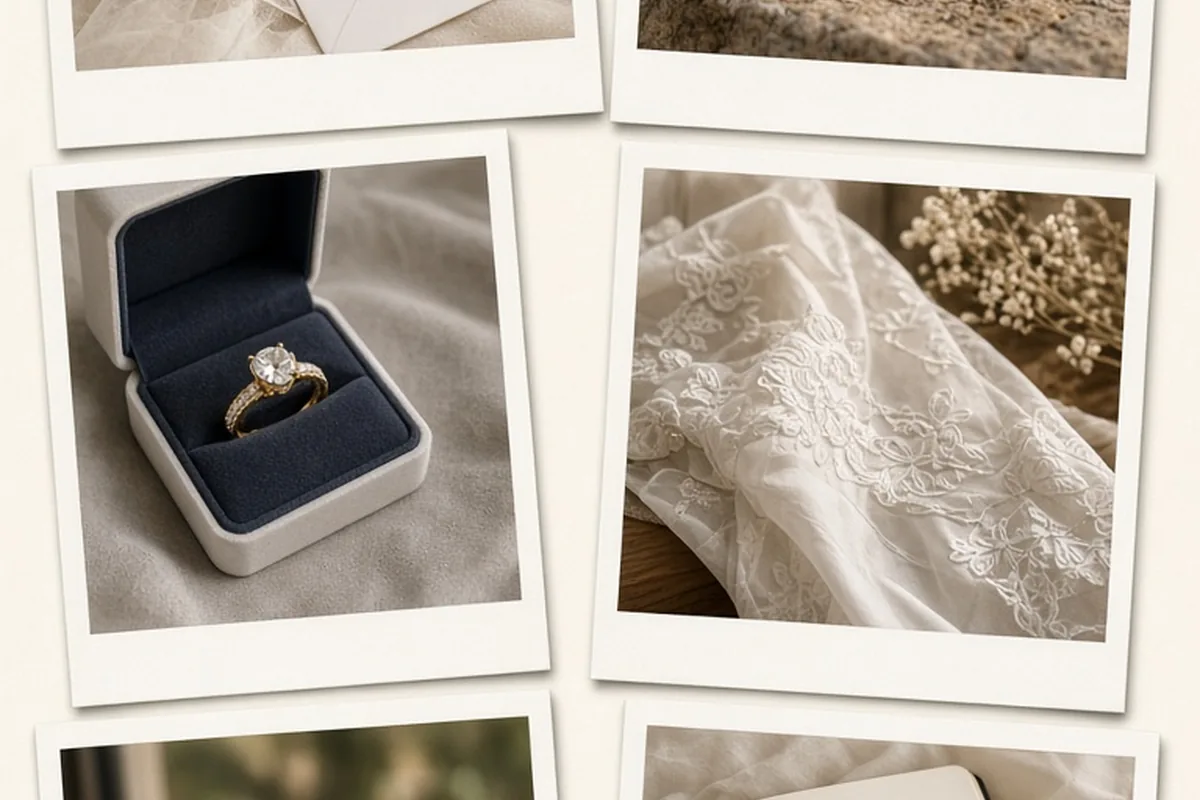
A bridal set is a coordinated pair of rings consisting of an engagement ring and a matching wedding band designed to fit together seamlessly. Jewelers craft these sets with aligned metal profiles, matching gemstone settings, and complementary contours so both pieces sit flush on the finger without awkward gaps or abrasive friction, creating a unified visual presentation.
Selecting bridal jewelry involves balancing long-term comfort, aesthetic harmony, and daily durability, particularly when deciding how two rings will interact on the same finger over decades of wear.
Bridal Sets Versus Wedding Sets and Individual Rings
Jewelry terminology can often cause confusion during the ring shopping process. A bridal set specifically refers to a two-piece collection designed exclusively for the bride: the engagement ring and its complementary wedding band. In contrast, a wedding set—sometimes marketed as a trio set—traditions include three rings: the bride's engagement ring, the bride's wedding band, and the partner's wedding band. Understanding this distinction prevents purchasing misunderstandings when browsing collections online or visiting retail jewelers.
Purchasing rings individually allows a buyer to pair entirely distinct aesthetics, such as combining a modern solitaire with an antique filigree band. However, buying standalone rings often creates structural mismatches where the center stone's basket prevents the band from sitting flat against the finger. A bridal set eliminates this guesswork by offering a pre-engineered pairing crafted from the start to align in height, curve, and metal thickness.
Common Structural Styles and Ring Alignments
The structural interaction between the engagement ring and wedding band defines how a bridal set looks and feels. A flush-fit set features an engagement ring with an elevated setting or high basket, allowing a completely straight wedding band to slide underneath the center stone and rest directly against the engagement shank. This classic alignment provides a clean look and gives the wearer the freedom to wear the straight band entirely on its own if desired.
Contoured and notched sets are engineered for low-profile engagement settings or wider gemstone halos where a straight band cannot sit close. A contoured band curves gently around the perimeter of the center stone, while a notched band features an exact cutout that locks against the head of the engagement ring. Another distinct style is the ring jacket or enhancer, which consists of a split dual-band design that surrounds the engagement ring on both sides, transforming a simple solitaire into a wider, multi-row presentation.
- Flush-fit sets: A high-set engagement ring sits tightly against a traditional straight wedding band without gaps.
- Contoured sets: The wedding band curves specifically along the silhouette of the center diamond or halo.
- Notched or shadow bands: The band contains a specialized indent designed to lock precisely into the engagement ring head.
- Ring jackets or enhancers: A dual-sided band structure that frames the engagement ring from top and bottom.
Key Aesthetic and Structural Benefits of a Coordinated Set
Visual continuity is one of the most compelling reasons to choose a bridal set. When side stones, pavé diamonds, or milgrain borders are involved, having them created by the same design house ensures that gemstone dimensions, diamond color grades, and prong styles match exactly. A standalone band purchased years later or from a different maker might feature slightly larger accent stones or different metal prong thicknesses, creating a subtle visual discordance.
Beyond appearance, structural longevity is a major mechanical advantage of bridal sets. Rings that rub unevenly against one another experience accelerated metal erosion over time. When an engagement ring basket constantly grinds against the side of an incompatible wedding band, the metal thins, prongs can weaken, and accent stones risk loosening. Bridal sets are manufactured to share contact points evenly, minimizing abrasive wear and protecting the integrity of both settings.
Practical Trade-Offs and Flexibility Considerations
Despite their distinct advantages, bridal sets present specific trade-offs that wearers should evaluate. The most significant drawback involves the solo wearability of contoured or notched wedding bands. When an engagement ring is removed for sports, travel, gardening, or manual labor, a deeply curved or asymmetrical band can look incomplete or awkward when worn by itself. If you plan to wear only your wedding band on active days, a flush-fit set with a straight band is usually more versatile than an interlocking contour.
Another limitation is the restriction on future style flexibility. Buying a matched pair commits you to a single unified look, leaving less room to incorporate family heirlooms, vintage bands, or spontaneous anniversary additions without disrupting the set's symmetry. Furthermore, replacing a lost band from an intricate custom set can be more complex and expensive than replacing a standard standalone band, as the replacement must match the specific curves of the surviving ring.
Metal Compatibility and Wear Rates
Material consistency is essential when wearing two rings stacked on one finger. Precious metals possess different hardness ratings; for example, 14-karat gold is harder and more scratch-resistant than 18-karat gold due to its higher proportion of alloy metals, while platinum is denser and behaves differently under friction than white gold. If you pair an 18-karat engagement ring with a 14-karat band, the harder 14-karat alloy will slowly wear away the softer 18-karat metal over time.
Bridal sets naturally prevent this issue because both rings are cast from identical metal alloys and undergo the same finishing treatments. In white gold sets, both rings will require rhodium replating on the same schedule, preventing the uneven yellowing that occurs when two white gold rings are purchased at different times or treated with different plating thicknesses. Maintaining identical metals preserves both the structural thickness and the color tone of the stack.
Wearing Logistics and the Decision to Solder
Tradition dictates wearing the wedding band closest to the heart, meaning the wedding band is placed on the finger first, followed by the engagement ring stacked on the outside. During a wedding ceremony, wearers often temporarily switch their engagement ring to the right hand so the officiant and partner can place the wedding band directly onto the left ring finger, after which the engagement ring is moved back to complete the stack.
Couples often debate whether to solder their bridal set into a single permanent unit. Soldering connects the rings at the base of the shank, preventing them from spinning independently, eliminating metal-on-metal friction, and keeping complex contoured designs permanently aligned. However, soldering permanently removes the option to wear either ring independently. Jewelers generally recommend wearing the set unsoldered for several months to assess comfort and habits before committing to permanent fusion.
How to Select the Right Bridal Set for Your Lifestyle
Selecting the ideal bridal set requires looking beyond showroom aesthetics and evaluating your everyday routine. Stacked rings create a wider profile on the finger, which compresses tissue more than a single narrow band. Consequently, many wearers find they need to size up by a quarter or half size for the stack to sit comfortably during warm weather or physical activity. Always test the fit of both rings worn together rather than assessing comfort using only the engagement ring.
Your profession and hobbies should also influence setting height. High-profile flush sets allow maximum light and straight-band flexibility but can snag on gloves, knitwear, or equipment. If you work in healthcare, childcare, or active trades, a lower-profile bezel or contoured set with recessed stones may offer superior daily security. Balancing setting height, band width, and solo wearability ensures your bridal set remains practical for years of continuous wear.
Illustrative Scenarios
Balancing Daily Utility and Cohesive Design
An illustrative buyer who works in a laboratory setting wanted a low-profile engagement ring that would not catch on latex gloves but still wanted a diamond-accented band for formal occasions. Choosing a pre-matched bridal set with an integrated contour allowed the low-set solitaire to rest securely against the accent band without leaving a gap. When working in the lab, she opted for a simple silicone band, returning to the complete matched set for daily lifestyle wear.
Key point: Selecting a bridal set engineered for low-profile settings provides gap-free elegance without compromising hand safety in specialized work environments.
Frequently asked questions
Can you buy an engagement ring first and add the matching bridal band later?
Yes, most major jewelry designers maintain matching bands in their catalog for specific engagement ring settings. However, purchasing them together or noting the exact model number ensures the band will not be discontinued or altered in manufacturing dimensions before you buy it.
Do bridal sets cost less than purchasing two rings separately?
Bridal sets are frequently priced slightly lower as a package than purchasing an identical engagement ring and wedding band as individual items. Retailers often offer bundle pricing, and buying together reduces separate shipping, resizing, or custom design fees.
How do you properly clean and maintain a bridal set?
Clean your bridal set regularly using warm water, mild dish soap, and a soft-bristled toothbrush to remove oils trapped between the two stacked bands. Schedule an annual inspection with a professional jeweler to check prong tightness, assess friction wear, and reapply rhodium plating if the set is white gold.
Your next step
Before choosing a bridal set, try on both rings together to verify their stacked comfort, evaluate how the band looks when worn alone, and confirm that both pieces share the exact same metal alloy for balanced long-term durability.