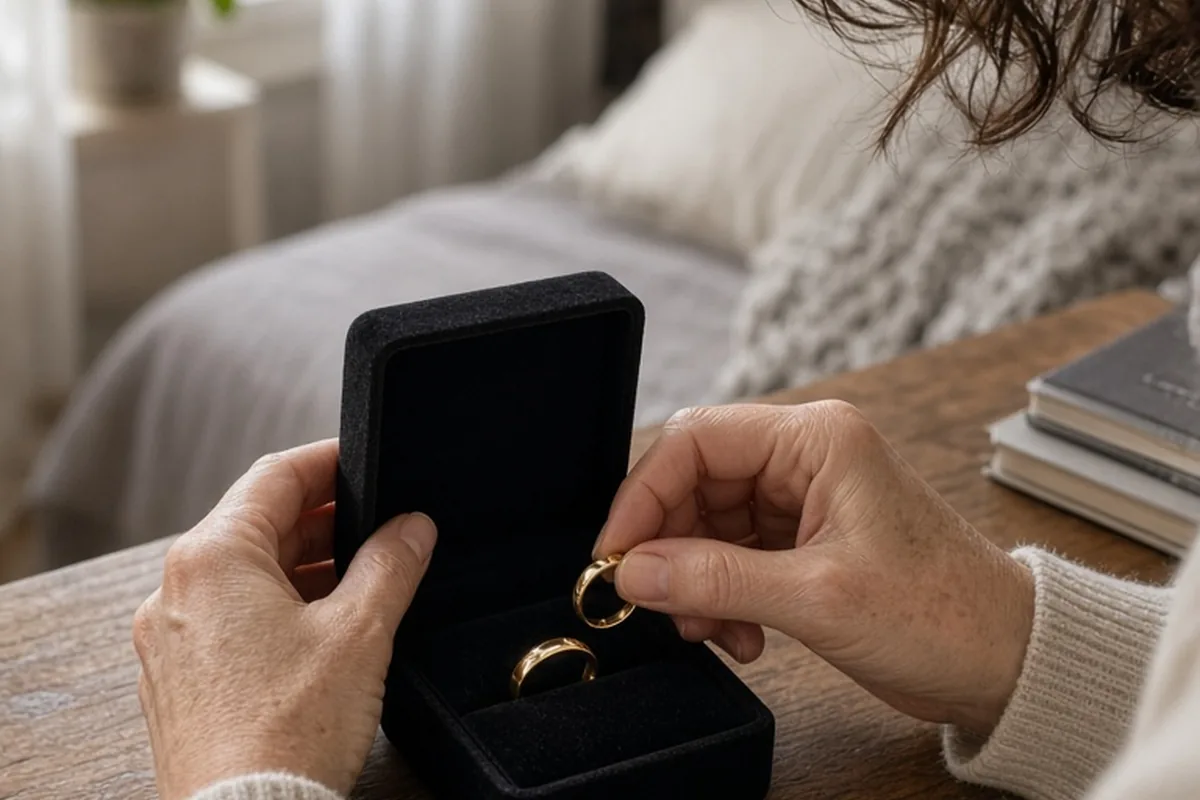
After the death of a spouse, you can choose to continue wearing the wedding ring on a different finger or necklace, repurpose the metal and gemstones into a new custom piece of jewelry, preserve the set in a secure memorial shadow box, pass it down as an intentional family heirloom, or sell or donate the proceeds to a meaningful cause. There is no mandatory timeline, so the best initial choice is often keeping the rings safe until you feel ready.
Navigating personal belongings after losing a spouse or partner can feel overwhelming, and few physical items carry as much emotional weight as wedding and engagement bands. Because jewelry represents years of commitment, personal identity, and shared history, deciding what to do with these pieces requires both emotional gentleness and practical clarity.
Pausing Before Making Permanent Decisions About the Rings
In the initial weeks and months following a loss, emotional exhaustion and acute grief can cloud long-term judgment. Rushing to alter, sell, or distribute precious jewelry often leads to lingering regret because changes made to precious metals and custom settings cannot always be undone. If you are unsure what feels right, placing the wedding rings in a secure jewelry box, home safe, or safe deposit box allows you to step back until your emotional perspective stabilizes.
Giving yourself permission to wait does not mean avoiding the reality of your loss. Instead, it protects your options. Trends in memorial keepsakes or well-meaning advice from relatives might urge you toward a quick decision, but grief follows individual timelines. Taking several months or even a year to observe how you feel on significant dates, anniversaries, and quiet days will help you determine whether you prefer private daily contact with the ring, a transformed wearable piece, or an archival preservation method.
Wearing the Wedding Ring in a New or Modified Way
Continuing to wear a deceased partner's band or your own set is a common comfort for surviving spouses. Some people choose to keep their rings on the traditional left ring finger indefinitely, while others prefer shifting them to the right hand to mark a conscious transition in their life journey while honoring the enduring bond.
If the partner's ring is a different size, professional jewelers can easily resize gold, platinum, or silver bands to fit your right ring finger, middle finger, or thumb. For rings made from alternative metals like tungsten carbide, titanium, or ceramic that cannot be resized through traditional methods, adding an interior sizing guard or choosing a different finger provides a non-destructive workaround.
Another classic approach is stringing the band onto a durable gold, platinum, or woven chain to wear close to your heart as a pendant. When wearing a heavy ring on a chain, select a substantial chain style such as a wheat, box, or cable chain that can support the daily friction of the ring without wearing down the precious metal links over time.
Repurposing Wedding Rings and Gemstones into Custom Keepsake Jewelry
Redesigning rings through a custom jeweler allows you to blend physical memories into a design tailored for your current life. Gold and platinum can be melted down and re-cast into a signet ring, pendant, bracelet charm, or pocket piece. Meanwhile, diamonds, sapphires, and other accent stones can be unset and rebuilt into everyday stud earrings, modern bezel-set necklaces, or stacked eternity bands.
Combining both your band and your partner's band into a single piece offers a symbolic fusion of two lives. Jewelers can intertwine two metal bands into a rolling ring, solder the two rings together into a wider statement piece, or set individual gemstones from both rings into a single constellation or journey pendant. This approach keeps the raw materials intact while removing the outward appearance of an active marital band if you feel ready for a subtle aesthetic shift.
Before commissioning custom work, ask the jeweler about their specific experience with sentimental heirloom remodeling. Request to see their portfolio of remodeled pieces and clarify how they handle scrap metal credits, casting methods, and stone setting. A reputable bench jeweler will provide sketches, 3D renderings, and precise stone mapping so you know exactly how each original gem will be incorporated.
Preserving the Rings in Display Boxes and Memorial Art
If you do not wish to wear the jewelry but want it visible in your home, archival display provides a respectful, permanent home for the set. Custom shadow boxes that combine the wedding bands with dried flowers from an anniversary, a framed wedding photograph, handwritten notes, or a beloved watch create an intentional tribute space in a bedroom, study, or private nook.
Specialty artisans also create glass art, custom crystal paperweights, and ceramic ring holders that securely hold or encase non-metal elements or display the jewelry under museum-grade glass domes. If you choose an open or semi-open display inside the home, ensure the location is out of direct sunlight to prevent photograph fading and away from high-traffic household areas where delicate items could be knocked over or misplaced.
For safety reasons, consider the foot traffic in your home when deciding where to display valuable fine jewelry. If service workers, contractors, or frequent visitors enter the space, an archival box kept inside a locked armoire or a display featuring high-quality replicas with the genuine rings locked in a fireproof safe may provide better peace of mind.
Passing Wedding Rings Down as Family Heirlooms
Gifting wedding jewelry to adult children, grandchildren, or close nieces and nephews is a traditional way to keep family history alive. Some families designate the original engagement ring for the next generation's proposal, while others pass the bands down to be used directly in a future ceremony or broken down into matching sister pendants or birthstone accents for several descendants.
Clear communication is essential when distributing jewelry among family members to prevent misunderstandings or hurt feelings. If you have multiple children or heirs, discuss your intentions openly or write a dated letter of instruction detailing who receives which piece. If one child receives the primary diamond ring, you might balance the legacy by gifting other sentimental items, watches, or family heirlooms of equivalent personal or monetary value to their siblings.
When gifting rings to younger family members who may not be ready to wear or securely store fine jewelry, consider retaining the items in your safe until a major life milestone, such as a college graduation, wedding, or landmark birthday. Accompanying the piece with a handwritten card documenting the original purchase story, wedding date, and personal memories turns a material object into a rich historical artifact for future generations.
Selling or Donating Wedding Rings for Meaningful Causes
For some surviving spouses, holding onto the physical jewelry brings painful associations or runs counter to their personal philosophy. Selling the rings and redirecting the monetary value toward a cause your partner championed—such as an animal shelter, medical research foundation, community scholarship, or environmental trust—transforms metal and stone into living positive impact.
You can also use the proceeds from selling the rings to fund a personal tribute project. Surviving partners frequently use these funds to plant a memorial tree, install a dedicated park bench, support their children's educational savings accounts, or take a commemorative trip to scatter ashes in a place that held deep shared significance.
If you decide to sell, obtain an independent appraisal from a certified gemologist who does not buy jewelry before approaching buyers. This gives you an accurate understanding of the secondary market value versus the original retail replacement value. You can sell through estate jewelers, specialized auction houses, vetted online consignment platforms, or local bullion buyers, comparing quotes to ensure you receive a fair return.
Navigating Legal, Estate, and Insurance Steps for Fine Jewelry
Before modifying, gifting, or selling any valuable jewelry following a death, verify that the estate administration process allows you to do so. In many jurisdictions, personal effects pass directly to the surviving spouse, but specific provisions in a will, prenuptial agreement, or probate proceeding could outline specific allocations for family heirlooms that must be legally resolved first.
Update your personal property insurance policies once you decide where the rings will reside. If you shift from wearing the rings daily to keeping them in a safe deposit box, your insurer may adjust your scheduled personal property rider to reflect a lower risk profile. Conversely, if you remodel the stones into a brand new piece, obtain a fresh insurance appraisal to cover the replacement cost of the new design under your current homeowner or renter policy.
Keep thorough records of all appraisals, gem certificates, and receipts in a single folder with your own estate documents. Documenting the provenance of the gemstones, the metal purity stamps, and the design details ensures that your future heirs will have all the necessary verification information without needing to guess the origin or quality of the pieces.
Frequently asked questions
Is it considered improper to keep wearing my wedding ring after my spouse dies?
No, there is no universal etiquette or timeline for when you must remove a wedding ring. Many surviving partners wear their bands for years or the rest of their lives, while others switch fingers or remove them when they feel ready. The decision is entirely personal.
How much does it usually cost to repurpose a wedding ring into a new piece?
Custom remodeling costs vary widely depending on the complexity of the new design, whether additional metal or stones are added, and the labor required for casting and stone setting. Simple resets for a single solitaire into a pendant or bezel ring typically cost far less than complex multi-stone custom fabrication. Requesting detailed quotes from multiple local custom jewelers will help you establish realistic figures.
Can two different colored gold rings be melted together?
Melting different gold purities or colors (such as mixing 14k yellow gold with 18k white gold) can create unpredictable metal alloys with uneven color and structural weaknesses. Bench jewelers usually recommend combining multi-colored bands through mechanical fabrication, such as interlocking rolling bands, soldering separate bands side by side, or using the metal from one ring as a decorative inlay rather than mixing them in a single crucible.
What should I do if my family members disagree about who should inherit the rings?
If family disagreements arise, consult the official will or estate plan first to confirm legal ownership. If the choice rests with you, setting the rings aside in safe storage until emotions cool down prevents impulsive conflicts. Open, compassionate conversations about family history and offering alternative meaningful keepsakes can also help resolve tension.
Your next step
Place the wedding rings in a secure home safe or jewelry box today, giving yourself a dedicated period of time to consider your personal options without feeling pressured to make an immediate change.