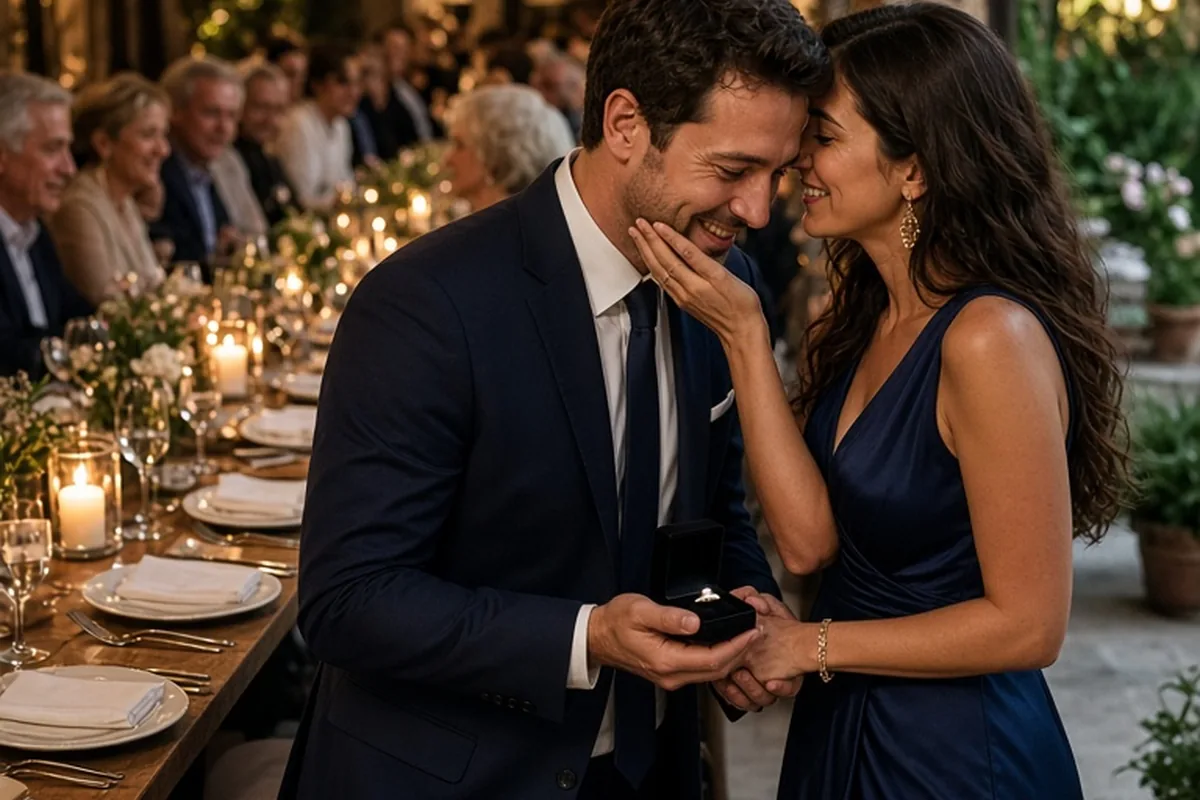
When responding to a marriage proposal, match your answer to your genuine feelings rather than social pressure. If you are thrilled, give a clear yes such as, 'Yes, absolutely, I want to spend my life with you.' If you feel unprepared, ask for time with honesty: 'I love you deeply, but marriage is a major step and I need us to talk through our future first.' If your answer is no, offer a direct, compassionate decline without leaving false hope.
A marriage proposal can trigger an intense rush of adrenaline, surprise, and emotion, leaving you searching for words even when you already know how you feel about your partner. Having clear language in mind helps you stay grounded, honor your own boundaries, and respond with kindness and sincerity.
How to Say Yes When You Are Ready and Excited
When you genuinely want to marry your partner, your primary goal is to provide unmistakable clarity. In high-emotion moments, people often default to gasping, crying, or repeating phrases like 'are you serious' without actually uttering an affirmative answer. While emotional expressions are natural, your partner is waiting on bended knee or holding a ring box, listening intently for a definitive confirmation. Clear verbal assent removes ambiguity and lets the celebration begin without lingering confusion.
Simple, expressive phrases work best because they cut through the shock of the moment. You might say, 'Yes, absolutely, there is nothing I want more,' or, 'Yes, I would love to spend the rest of my life with you.' If you tend to freeze when put on the spot, even a heartfelt 'Yes, a thousand times yes' carries emotional weight while keeping your response unambiguous. Once you say the word, stepping in for an embrace, a kiss, or helping them stand up signals that the question has been fully answered and received with joy.
If you want to add personal depth in the moment, you can mention one specific quality you cherish about your partnership. Saying something like, 'Yes, building our life together has been my favorite adventure,' grounds your answer in your shared history. Keep your initial response brief enough so you can both breathe, take in the atmosphere, and enjoy the immediate connection before rushing to notify friends or post updates.
Saying Yes While Keeping Crucial Life Discussions Open
Sometimes you know with certainty that you want to marry your partner, yet you also recognize that critical practical discussions remain unfinished. You might have unresolved questions about financial management, where you will live, or family planning timelines. Agreeing to become engaged does not mean you must sign a marriage certificate tomorrow; engagement itself is an intentional period designed for joint planning and formalizing shared expectations.
In this scenario, you can deliver an enthusiastic yes while framing the engagement as an active collaborative phase. A practical phrase to use is, 'Yes, I want to marry you, and I look forward to using our engagement to work through our plans for our home, finances, and future together.' This approach validates your commitment to the relationship while gently setting an expectation that practical realities must be addressed before walking down the aisle.
Be careful not to sound like you are issuing legalistic terms or deflating the romance during the proposal itself. Keep the tone warm, loving, and focused on partnership. By confirming your shared goal of marriage while acknowledging the work ahead, you establish an honest foundation that prevents unvoiced assumptions from turning into pre-wedding conflict later.
What to Say When You Need Time to Process the Question
A proposal can arrive completely out of sequence with your personal timeline. You might care deeply for your partner and see long-term potential, yet feel unready to make a lifetime legal and emotional commitment without further reflection. Needing time is not an automatic rejection, but handling this response requires immense care, because a hesitation in this moment will inevitably feel vulnerable and disorienting to the person asking.
The most constructive response validates the partner's vulnerability first, states your care clearly, and explains your need for a deliberate conversation. You can say, 'I love you and I appreciate how much thought and love went into asking this. Because marriage is such a major commitment, I need some time to process this so we can talk through our future together thoughtfully.' Avoid giving an impulsive, reluctant 'sure' simply to relieve the immediate awkwardness, as backtracking later creates significantly deeper pain.
Follow your initial response by establishing a private, safe space to continue talking. Step away from public view or onlookers, hold their hands, and assure them that you want to have an honest discussion rather than brush the moment aside. While it is unfair to leave someone in open-ended limbo indefinitely, taking a few days to talk through mutual goals, personal readiness, and lingering concerns is far healthier than rushing into an engagement you do not fully support.
How to Politely and Firmly Decline a Proposal
Turning down a marriage proposal is one of the most difficult interpersonal moments you may ever face. When you know that marriage is not something you want with this person, kindness requires absolute clarity rather than soft ambiguity. Using phrases like 'not right now' or 'maybe in a few years' when you actually mean 'never' prolongs distress and prevents both of you from moving forward honestly.
Deliver your decline with calmness and direct compassion. A clear way to phrase this is, 'I care about you and value the time we have spent together, but I cannot say yes. I do not see marriage in our future, and you deserve a partner whose goals align completely with yours.' This phrasing avoids placing petty blame, acknowledges the weight of their gesture, and leaves no false hope for a future reversal.
Expect emotional pain, silence, or disappointment, and do not expect your partner to comfort you about having to say no. Allow them space to absorb the answer without trying to force an immediate cheerful friendship. If the proposal involved an expensive ring or personal gift, leave the item with them respectfully. Ending a proposal with firm honesty is painful in the short term, but it preserves fundamental dignity for both individuals.
Navigating Public Marriage Proposals When Caught Off Guard
Public marriage proposals introduce intense external pressure. Surrounded by cheering strangers, family members with cameras, or restaurant staff, the natural human urge is often compliance simply to escape public scrutiny. However, accepting a public proposal solely to avoid a scene creates severe complications once the crowd disperses and you have to confront your actual feelings in private.
If your answer is a joyful yes, let your enthusiasm show and enjoy the collective cheer. But if your answer is uncertain or a firm no, focus on reducing public spectacle while protecting both your dignity and your partner's feelings. You can gently say, 'You mean so much to me, let's step outside to somewhere quiet so we can talk about this just the two of us.' This response acknowledges the gravity of the question without performing for the audience, providing a graceful exit from the spotlight.
Once you are in a private setting, deliver your genuine thoughts without anger about the public setting. Your partner may have genuinely believed you would love a grand gesture, or they may have misjudged your comfort level with public attention. Address the answer to the marriage question first, and save discussions about their choice of setting for after the initial emotional dust has settled.
What to Discuss in the First Forty-Eight Hours After the Question
Regardless of whether the answer was an ecstatic yes or a request for more conversation, the period immediately following a proposal is emotionally charged. Adrenaline often clouds practical judgment, making it easy to jump straight to social media announcements, ring resizing, or unsolicited advice from relatives before the two of you have even caught your breath together.
If you accepted the proposal, use the first forty-eight hours to establish personal communication boundaries. Decide together whom you want to call personally before making any broad public announcements. Take time to celebrate in private, sharing a quiet meal or a walk where you can reflect on what the engagement means to each of you. It is also wise to confirm that you are both aligned on engagement length and whether you want a long planning timeline or a quick path to the wedding.
If your answer was a pause or a refusal, the following two days should be dedicated to thoughtful, respectful evaluation. Give each other space to decompress from the initial shock. If you asked for time to talk, schedule a specific time to sit down in a quiet home environment to discuss the specific factors that gave you pause, such as career timelines, emotional compatibility, or lifestyle expectations, ensuring that both voices are heard with patience.
Illustrative Scenarios
Handling an Unexpected Public Proposal with Grace
During a crowded family reunion dinner, David suddenly stood up, tapped his glass, and knelt before Elena with an heirloom ring. Elena loved David, but they had never discussed whether they wanted children or where they would live after graduate school. Feeling the eyes of forty relatives on her, Elena's immediate impulse was to shout yes just to defuse the intense room pressure. Instead, she took David's hand, smiled warmly, helped him up, and whispered that she loved him deeply but wanted to step into the garden so they could talk one-on-one. Away from the crowd, Elena affirmed her commitment to their relationship while clearly explaining that she needed them to align on their core life plans before formally getting engaged.
Key point: Stepping into a private setting protects both partners from crowd pressure and prevents an impulsive commitment that overlooks unresolved practical questions.
Finding Simple Words Through Freezing and Overwhelm
Marcus planned a quiet morning hike with Priya, culminating at an overlook where he asked her to marry him. Priya had anticipated this milestone for months and knew without a doubt that she wanted to spend her life with Marcus. However, when the moment actually arrived, the surge of adrenaline caused her to freeze entirely. She spent thirty seconds staring in silence, worrying that she needed an eloquent, movie-worthy speech to match the scenery. Seeing Marcus's expression turn anxious, Priya dropped the pressure for poetic perfection, laughed through happy tears, and said, 'Yes, absolutely yes, I want to marry you.'
Key point: Clear, simple affirmation is always more meaningful and reassuring to your partner than attempting to formulate a polished, elaborate speech under intense emotion.
Frequently asked questions
Is it acceptable to ask for a few days to think about a marriage proposal?
Yes, it is entirely reasonable to ask for time to process a lifelong commitment. Marriage carries substantial legal, emotional, and financial implications, and taking a brief pause to reflect is healthier than offering an unconsidered yes under social pressure. Reassure your partner of your genuine affection and agree on a specific time to talk through your thoughts openly.
What should I say if I love the proposal but do not like the engagement ring?
Focus entirely on the question and your commitment to your partner first, keeping your verbal response centered on your shared future. Avoid critiquing the jewelry during the proposal itself, as your partner is emotionally vulnerable in that moment. You can gently address design modifications, band adjustments, or exchange options a few days later in a private, supportive conversation.
How do I respond if a partner proposes before we have ever talked about marriage?
A surprise proposal without prior conversations about marriage indicates mismatched expectations, making honesty essential. You can say that you value the relationship, but because marriage is a major step you have not yet discussed together, you need to talk through mutual goals and readiness before deciding. This acknowledges the gesture without committing to a milestone you have not prepared for.
Can a relationship survive if one person says no or asks for time?
A relationship can survive and even grow stronger if the pause leads to constructive, honest communication about goals, values, and readiness. However, if the decline stems from fundamental incompatibilities, such as conflicting desires regarding children or core lifestyles, turning down the proposal often brings necessary clarity that allows both people to pursue paths that truly suit them.
Your next step
Take ten minutes today to write down your non-negotiable expectations regarding finances, career, and family, and initiate a relaxed conversation about your long-term relationship timeline before any proposal occurs.