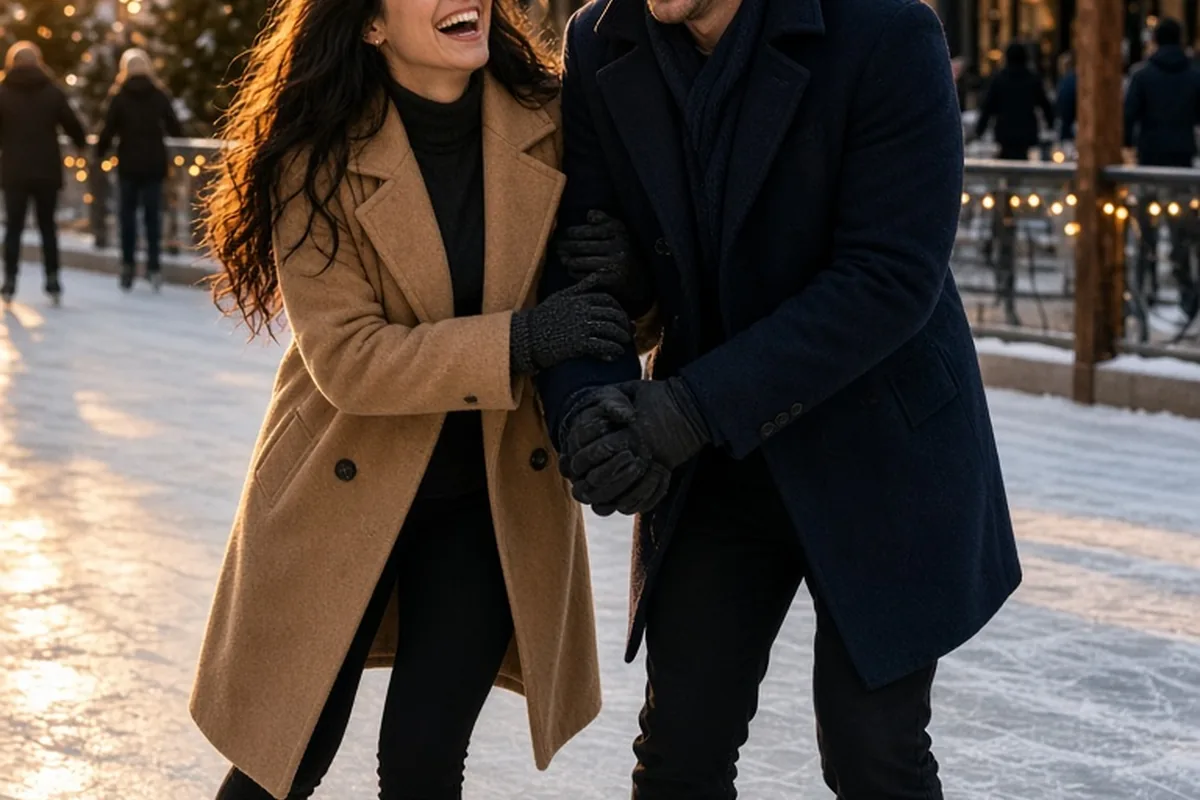
Winter engagement photo ideas work best when they embrace cold-weather texture, intimate movement, and seasonal contrast rather than fighting the temperature. Successful concepts include fireside cabin setups, snow-dusted evergreen trails, festive city street walks with warm drinks, ice-skating dates, and candlelit greenhouse portraits. To make these work comfortably, layer tailored wool coats over thermal base layers, schedule sessions around low afternoon golden hour light, and plan built-in warm-up breaks so your expressions look relaxed and candid rather than strained by the cold.
Planning an engagement session during the colder months offers couples distinct visual advantages, from quiet scenic landscapes and rich garment textures to soft, flattering sunlight that stays lower in the sky all afternoon. Preparing thoughtfully ensures you capture memorable, authentic images while staying physically comfortable throughout the entire shoot.
Choosing Snowy Outdoor Landscapes That Provide Natural Depth
A blanket of fresh snow can create an ethereal, minimalist background, but wide fields of unbroken white often appear flat on camera without structural elements to frame the composition. Look for outdoor locations that naturally introduce depth, contrast, and visual anchors. Dense evergreen forests, rustic split-rail fences, exposed granite boulders, or winding mountain paths break up the monotone scenery and give your photographer clear leading lines. The deep green foliage of spruce and pine trees catches snow along its branches, providing rich texture that emphasizes the subject couple rather than washing out the scene.
When scouting an outdoor winter location, consider how accessible the terrain remains after a snowfall. A mountain overlook that requires a steep uphill trek in deep powder may leave your clothing wet and your energy depleted before the camera even comes out. Choose regional parks, tree farms, or nature preserves with maintained access roads and cleared footpaths. Arriving at a spot where you can walk comfortably in insulated winter boots before changing into photograph footwear keeps your wardrobe pristine and prevents you from slipping on hidden patches of packed ice.
Intimate Indoor and Fireside Settings for Cold Weather Portraits
Outdoor shoots are not the only way to capture the romance of the season. Balancing an outdoor portrait segment with an intimate indoor location gives you the warmth of winter aesthetics without the physical strain of prolonged sub-freezing exposure. A historic timber cabin, an upscale mountain lodge lounge, or a private residence with a working stone fireplace provides a cozy, tactile environment. These spaces allow for relaxed interactions where you can kick off heavy outerwear, share a wool throw blanket, and hold warm mugs of tea, coffee, or hot cider while leaning into each other naturally.
Another compelling indoor alternative is a public or private greenhouse or botanical conservatory. Glasshouses preserve bright ambient daylight while surrounding you with vibrant tropical foliage, blooming camellias, or desert flora, creating an unexpected juxtaposition against the winter weather outside. Before booking or arriving with professional photography gear, check the venue's photography policy, permit fees, and visiting hours, as many conservatories limit tripods, commercial sessions, or wardrobe changes during general public admission.
Active Date-Night Winter Engagement Photo Ideas
Posing motionless in cold weather often leads to tense shoulders, forced smiles, and visible shivering. Structuring your shoot around a shared activity keeps your body moving, creates genuine micro-expressions, and tells an authentic story about how you enjoy spending time together. Ice skating at a decorated downtown rink or a safe, frozen park pond provides natural kinetic energy. Holding hands while gliding, helping each other balance, or laughing through minor wobbles naturally produces candid, romantic moments that traditional stiff poses cannot replicate.
If skating does not suit your style, consider a relaxed walk through a festive downtown district lined with historic architecture and evening market lights. Strolling arm-in-arm, window shopping, or stopping outside an artisanal bakery lets your photographer capture movement, atmospheric background blur, and casual affection. You can also visit a local tree farm, walking between rows of conifer trees or carrying a vintage toboggan together. Active concepts give your hands a clear purpose, eliminating the common awkwardness of wondering where to place your arms when posing in heavy outerwear.
Wardrobe Layering Strategies That Look Elegant and Retain Warmth
The primary challenge of styling winter engagement photos is staying warm without looking bulky on camera. The solution lies in high-performance, low-profile base layers worn under structured outer garments. Start with fitted thermal tops and leggings made from thin merino wool or technical synthetic fibers. These trap body heat close to the skin while sitting completely flat beneath tailored trousers, heavy denim, or knit dresses. Avoid bulky cotton sweatshirts or multiple thick shirts that bunch around your shoulders and waistline.
Your outerwear serves as the primary visual anchor for outdoor portraits, so invest thought into coat selection. Structured wool overcoats, tailored trench coats, and shearling-lined jackets provide defined silhouettes that flatter the frame while blocking wind chill. Choose mid-thigh or knee-length cuts to create clean lines and movement in walking shots. Complete the look with deliberate accessories, such as ribbed cashmere beanies, blanket scarves with muted patterns, and leather gloves lined with fleece. Selecting accessories in complementary textures adds visual richness and allows you to shed or swap pieces between setups to vary your final gallery without full outfit changes.
Managing Winter Lighting, Golden Hour, and Weather Contingencies
Winter daylight behaves differently than summer sunlight. Because the sun sits at a lower angle throughout the day in the northern hemisphere, shadows are softer and midday light is significantly less harsh than in July. However, days are dramatically shorter, and the golden hour—the period of warm, directional light right before sunset—can begin as early as mid-afternoon depending on your latitude. Coordinate closely with your photographer to establish a precise timeline that accounts for early dusk. A session scheduled for four o'clock in mid-December may leave you working in complete darkness before you finish your shot list.
Winter weather can also shift rapidly from gentle snowfall to freezing rain or biting wind chill. Establish clear contingency triggers with your photographer ahead of time. While light, dry snowflakes falling through the air can create breathtaking atmosphere in photographs, sleet, driving rain, or winds exceeding comfortable thresholds will ruin hairstyles and make authentic smiles impossible. Decide whether your backup plan involves shifting into an indoor studio, relocating to an enclosed venue, or choosing a flexible reschedule date within the same seasonal window.
Styling Color Palettes and Textures Against Neutral Winter Backdrops
Snowy landscapes and bare deciduous trees create a natural palette dominated by cool whites, grays, and muted browns. If you wear stark black, your silhouettes may appear harsh and heavy against high-key snow. Conversely, wearing solid pure white can cause you to blend directly into the background, obscuring your form. The most successful winter wardrobes incorporate rich jewel tones, warm earth tones, and varied fabric textures that stand out gently against seasonal surroundings.
Consider colors such as forest green, deep burgundy, navy, camel, cinnamon, or slate blue. If you prefer a softer, neutral aesthetic, opt for creams, oatmeal, and soft taupes rather than crisp bleached whites. Pairing contrasting textures—such as a chunky cable-knit sweater next to a smooth wool coat, or suede boots against structured corduroy—adds dimensional interest to close-up engagement portraits. Coordinate your clothing so your colors harmonize without matching identically; for example, one partner might wear a camel overcoat over an ivory sweater while the other wears deep olive wool with neutral pants.
Packing Essentials and Comfort Logistics for Freezing Temperatures
Physical comfort directly governs how relaxed and happy you look in your final images. Red noses, watering eyes, and stiff fingers cannot always be retouched easily, so treating comfort as a technical requirement produces far better portrait results. Prepare a dedicated gear tote to keep in your vehicle or carry between shooting spots. Pack disposable air-activated hand and toe warmers, tucking them inside your gloves, pockets, and boots during transitions. Bring a thermos filled with warm water, herbal tea, or cocoa to sip between setups to raise your core temperature.
Bring a heavy, oversized emergency coat and slip-on insulated boots to wear between camera takes. When your photographer pauses to adjust lenses, test light settings, or walk between vantage points, bundle up immediately. Drop the heavy outer layers only when the camera is ready to shoot. Additionally, pack tissue packs for cold-induced sniffles, translucent powder to address wind-chilled redness, and a hydrating lip balm to prevent dry lips from catching the light unevenly.
Frequently asked questions
What should we wear on our feet for a snowy engagement session?
Wear warm, waterproof boots with reliable traction for walking through snow, ice, or muddy trails between shots. If you want to photograph dressier shoes or leather heels, pack them in a tote bag and swap into them only once you are standing safely at the exact shooting location.
Can engagement rings get lost more easily during cold weather shoots?
Cold temperatures cause fingers to constrict slightly, which can make rings slip off unexpectedly. Check the fit of your engagement ring before heading outside, and keep your hands tucked safely into pockets or gloves whenever you are moving between portrait spots.
How long should an outdoor winter engagement photo session last?
Most couples find that 45 to 75 minutes of total outdoor shooting is ideal before cold fatigue sets in. Structuring the session with a short car warm-up break in the middle or splitting time between an outdoor scenic area and an indoor cafe helps maintain high energy and natural expressions.
Your next step
Reach out to your photographer today to check their local sunset timing for your preferred month and agree on a weather backup location before finalizing your wardrobe.